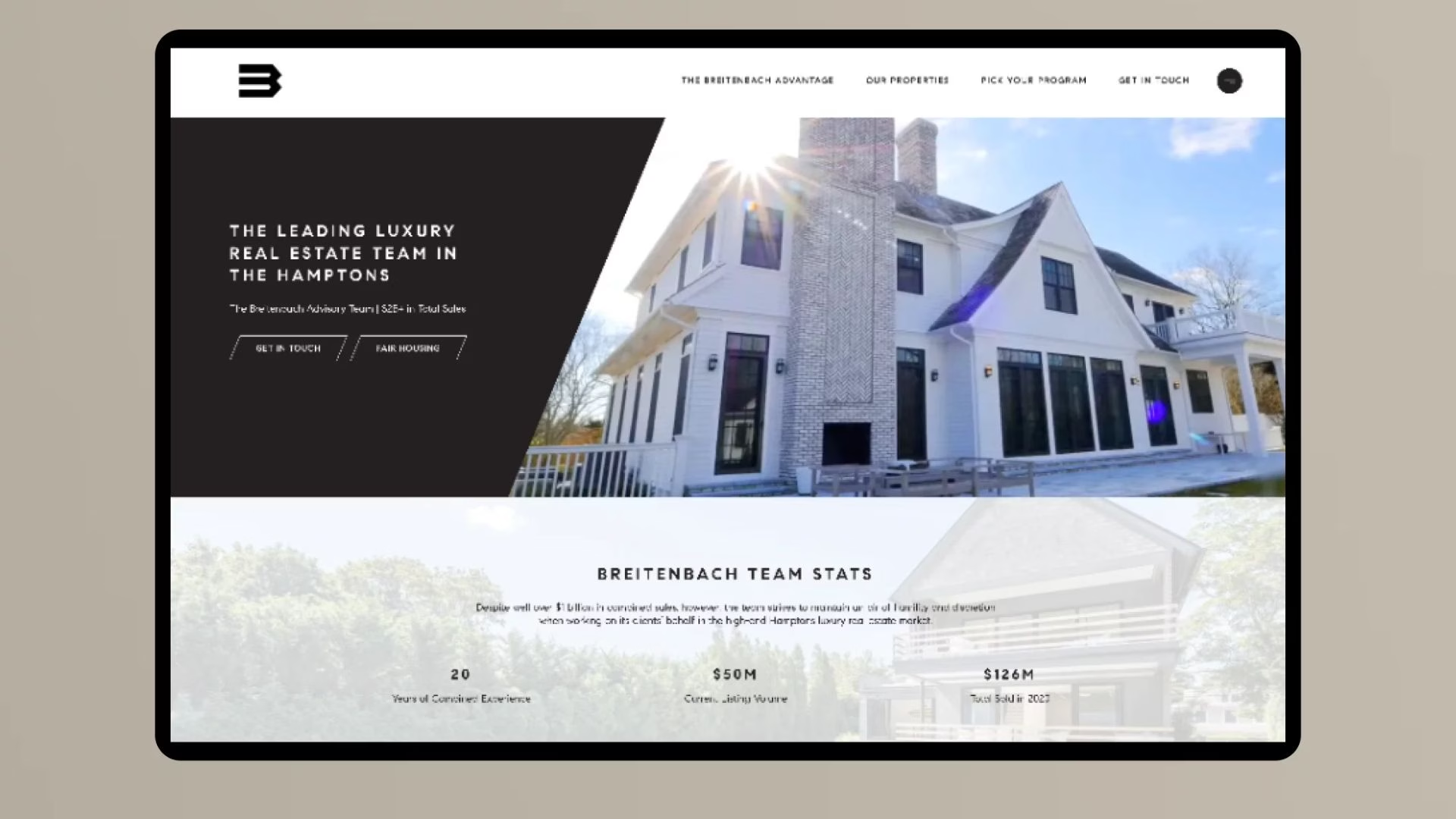
An SSL certificate, good branding, and nine other elements your real estate website needs.
In 2026, your real estate website is often the first conversation you have with a potential client, and that conversation happens before you ever pick up the phone. According to NAR data compiled by HousingWire, reputation is the number-one factor sellers weigh when selecting an agent (35%), with honesty and trustworthiness ranking second at 21% (HousingWire, 2026). Both of those qualities are communicated, or undermined, by your website long before a prospect reaches out. Knowing how to build trust on a real estate website is no longer optional. It is the difference between a site that generates leads and one that sends visitors to your competitor. This guide breaks down the 13 elements every real estate agent’s site needs to earn that trust, with specific benchmarks, implementation steps, and the data behind each recommendation.Key takeaways
- Visitors form a trust judgment about your website in roughly 53 seconds, so every element on the page must reinforce credibility within that window.
- A regularly updated blog, active social profiles, and a detailed agent bio signal that your business is current and engaged.
- Security basics like an SSL certificate and a published privacy policy are table stakes for both search rankings and visitor confidence in 2026.
- Testimonials that describe specific client situations outperform generic praise when it comes to converting browsers into leads.
- Site speed matters more than most agents realize: Google recommends a Largest Contentful Paint (LCP) under 2.5 seconds, and pages that miss that threshold lose visitors before a single listing loads.
- The average real estate website conversion rate is 4.7%, and every element on this list is designed to push your site above that benchmark.
1. A blog on your real estate website
Research shows that visitors decide whether to trust a website within roughly 53 seconds (Contempo Themes, 2026). A regularly updated blog is one of the fastest ways to signal that your site is active, your market knowledge is current, and you are invested in helping the people who land on your pages. Beyond the trust signal, useful blog posts also improve your search visibility by giving search engines fresh, keyword-relevant content to index.Topic selection for your real estate blog
Write about the questions your clients actually ask. Neighborhood guides, market updates, first-time buyer checklists, and local event roundups all perform well because they match the search queries real prospects type into Google. Avoid writing only about your own listings. A blog that answers questions positions you as a resource, not just a salesperson.Publishing frequency and consistency
Aim for two to four posts per month. That pace keeps your site looking active without overwhelming your schedule. If writing is not your strength, consider a content marketing service that can produce posts on your behalf while you review and approve each one before it goes live.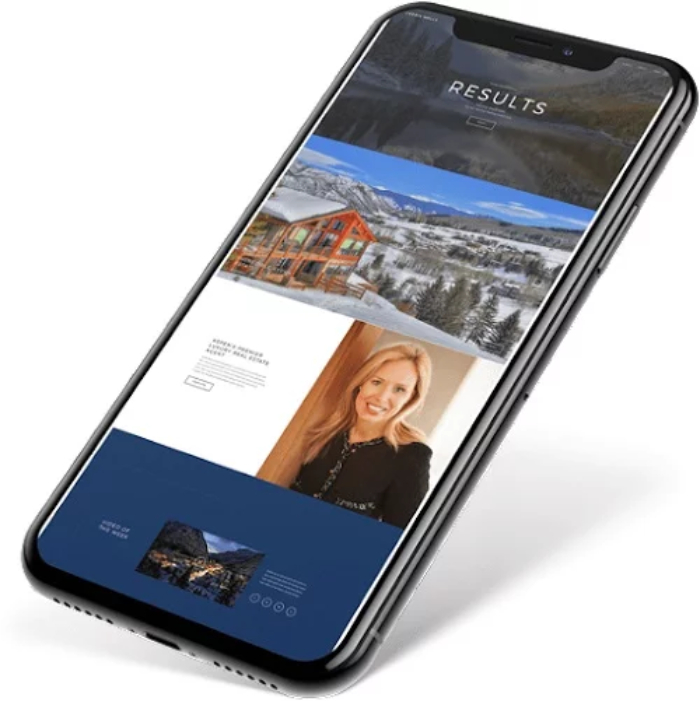
2. Links to active social media profiles
Active, linked social profiles give visitors a way to verify your activity and reach you on their preferred platform. When a prospect clicks through to your Instagram or LinkedIn and sees recent posts, market commentary, and client interactions, it reinforces the impression that you are engaged and accessible. Place social icons in your site header or footer so they appear on every page. Make sure the profiles you link to are actually active. A dormant Facebook page with a last post from 2023 does more harm than having no link at all.3. A privacy policy on your real estate website
Every real estate website collects some form of visitor data, whether through contact forms, property search tools, or analytics tracking. A published privacy policy tells visitors exactly how their information is handled. State clearly that contact details are kept confidential and will not be shared with or sold to third parties. In 2026, consumers expect this transparency, and many browsers and search engines flag sites that lack a privacy policy. Place a link to it in your site footer where visitors can find it without searching.4. Trust badges and professional affiliations
Membership logos from organizations like the National Association of Realtors (NAR), the Better Business Bureau, or your local Chamber of Commerce act as third-party endorsements. They tell visitors that your business has been vetted by an organization with standards. A quick note on terminology: “Realtor” is a trademarked term that applies specifically to NAR members, so display the Realtor badge only if you hold that membership. Place trust badges near your contact form or in your site footer where they are visible at the moment a visitor is deciding whether to share their information.5. A detailed agent bio that builds trust on your real estate website
Your bio is where prospects decide whether they want to work with you as a person, not just as a licensee. A vague two-sentence summary does not give them enough to make that decision.What to include in your real estate agent bio
- Background: Where you grew up, how long you have lived in your market area, and what drew you to real estate.
- Education and credentials: Degrees, designations (GRI, CRS, ABR), and any specialized training.
- Family and personal interests: A few details that make you relatable, such as hobbies, volunteer work, or community involvement.
- Track record: Number of transactions closed, total sales volume, or years of experience.
- Differentiators: What you do differently from other agents in your market, whether that is a niche specialty, a marketing approach, or a service guarantee.
Professional photos that support your bio
Include at least one high-quality headshot and, if possible, a few lifestyle photos that show you in your market area. Prospects want to picture working with you, and a professional image makes that easier than a cropped selfie.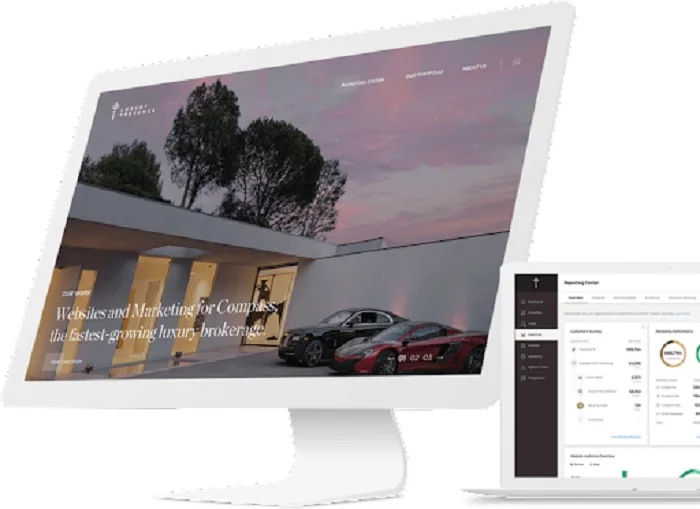
6. A clear way to get in touch with your team
That principle applies directly to your contact experience. If a visitor has to click through three pages to find a phone number, the friction erodes the trust your design worked to create. Keep the path from “interested” to “in touch” as short as possible.“By creating a great user experience, you establish your credibility and build trust, which makes leads even more likely to share their details with you.”
Isabella Savini, Director of Product at Luxury Presence
7. A lead capture strategy for your real estate website
Lead capture is the process of collecting contact information from website visitors who are interested in your services. In 2026, the average conversion rate in the real estate industry is 4.7%, which means roughly 95 out of every 100 visitors leave without providing their information. A well-placed lead capture strategy closes that gap. The most effective approach is to offer something of value in exchange for an email address or phone number. That could be a neighborhood market report, a home valuation tool, a buyer’s guide, or a downloadable checklist. The key is that the offer must feel worth the trade. A generic “sign up for our newsletter” prompt rarely performs as well as a specific, useful resource tied to the visitor’s intent. Place your lead capture forms where intent is highest: on listing detail pages, at the end of blog posts, and on landing pages built around specific searches. Avoid pop-ups that cover the entire screen within seconds of arrival. They interrupt the experience and undermine the trust you are trying to build.8. An SSL certificate
A Secure Sockets Layer (SSL) certificate is a digital certificate that encrypts data sent between a visitor’s browser and your web server. It also verifies your website’s identity, which prevents bad actors from creating a fake version of your site.What an SSL certificate does
SSL protects every piece of information a visitor submits through your site, from contact form entries to property search preferences. In 2026, Google treats HTTPS (the protocol enabled by SSL) as a ranking signal, meaning sites without it may rank lower in search results (Google Search Central, 2026). Browsers also display a “Not Secure” warning on sites that lack SSL, which is an immediate trust killer for any visitor considering sharing their contact details.How to verify your real estate website has SSL
Look at your site’s URL in a browser. If it starts with “https://” and shows a padlock icon, your SSL certificate is active. If it shows “http://” or a “Not Secure” label, contact your hosting provider or website platform to install one. Most hosting plans include SSL at no additional cost.9. Easy navigation and fast loading time on your real estate website
A confusing menu structure or a slow-loading page tells visitors that working with you might be just as frustrating. Your site’s navigation and speed are direct proxies for the experience you deliver as an agent.Core Web Vitals benchmarks for real estate websites
Google’s Core Web Vitals set the performance standard for every website in 2026. The most important metric for real estate sites is Largest Contentful Paint (LCP), which measures how quickly the main content of a page becomes visible. Google recommends an LCP of under 2.5 seconds (Google Core Web Vitals, 2026). Pages that miss this threshold are more likely to rank lower in search results and lose visitors before a single listing image loads. Test your site for free using Google’s PageSpeed Insights tool at pagespeed.web.dev.Navigation best practices
- Keep your main menu to five or six items: Home, About, Listings, Blog, Contact, and one optional category like Neighborhoods or Sellers.
- Use descriptive labels. “What We Do” is vague. “Buy a Home” or “Sell Your Home” is clear.
- Make sure your site is fully responsive on mobile devices. In 2026, 69% of buyers use a mobile device or tablet during their home search.
- Create dedicated landing pages for specific needs, such as a first-time buyer page or a relocation page, so visitors can find relevant information without clicking through unrelated content.
10. Clean, error-free copy
Websites with clear, well-written content are more likely to earn a visitor’s confidence. Spelling mistakes, grammatical errors, and awkward phrasing signal carelessness, and carelessness is the last quality a prospect wants in the person handling their largest financial transaction. Have your content written or reviewed by a professional copywriter. Before publishing any new page or blog post, run it through at least two rounds of proofreading by different people. A fresh set of eyes catches errors that the original writer will miss every time.11. Testimonials that build trust on your real estate website
Buyers and sellers in 2026 are specifically looking for testimonials from people who faced challenges like theirs, not just generic praise. That means the most effective testimonials name the specific situation the client was in and the result you delivered.How to collect real estate testimonials
Reach out to past clients within two weeks of closing, while the experience is still fresh. Ask them to describe the challenge they faced, what you did to help, and the outcome. A short, specific story is far more persuasive than a vague “great agent, highly recommend.” If possible, ask for a headshot or a photo from closing day to accompany the testimonial.Where to display testimonials on your real estate website
Place testimonials on your homepage, your about page, and near your contact form. The homepage placement catches visitors early. The about page placement reinforces your bio. The contact form placement provides reassurance at the exact moment a visitor is deciding whether to reach out. Consider adding a dedicated testimonials page as well, and link to it from your main navigation.That reaction, shared by Jade Mills about the impact of a strong web presence, captures exactly what a well-designed real estate website should accomplish. When your site communicates credibility before the first phone call, the sales conversation starts from a position of trust rather than persuasion.“We looked at your website, you’re hired.”
Jade Mills, Coldwell Banker Realty
12. Strong branding across your real estate website
Your brand is what visitors remember after they close the tab. Consistent branding, including your logo, color palette, typography, and tone of voice, creates a sense of professionalism and cohesion that reinforces trust on every page. Here is a quick audit checklist for your site’s branding:| Branding element | What to check | Where it should appear |
| Logo | High-resolution, consistent placement | Header of every page, favicon |
| Color palette | Two to three primary colors used consistently | Buttons, headings, backgrounds, links |
| Typography | One to two fonts, consistent sizing hierarchy | Headings, body text, navigation |
| Tone of voice | Matches your target market (approachable, authoritative, warm) | All written content, CTAs, bio |
| Photography style | Consistent editing, lighting, and framing | Headshot, listing photos, blog images |
13. Listings and a strong search feature
No real estate website is complete without property listings and a search tool that lets visitors filter by location, price, property type, and features. In 2026, 43% of buyers begin their home search by looking for properties online, and photos (41%) and detailed property information (39%) are the most useful website features they cite (Realtor.com, 2026). Make sure every listing on your site includes high-resolution photos, a detailed description, key property specs (beds, baths, square footage, lot size), and neighborhood context. Your search tool should load quickly, return accurate results, and work well on mobile. If your IDX feed is slow or your search filters are limited, visitors will leave for a site that makes the process easier.Sources
- HousingWire, “70 Real Estate Statistics to Watch for 2026 Market Trends,” 2026: https://www.housingwire.com/articles/real-estate-statistics/
- Contempo Themes, “What Real Estate Clients Expect From Websites in 2026,” 2026: https://contempothemes.com/real-estate-clients-expect-websites-2026/
- Realtor.com, “How Realtor.com Is Building Trust and Gaining Ground in Real Estate Search,” 2026: https://www.realtor.com/homemade/how-realtor-com-is-building-trust-and-gaining-ground-in-real-estate-search/
- Google Search Central, “HTTPS as a Ranking Signal,” 2026: https://developers.google.com/search/docs/crawling-indexing/https
- Google Core Web Vitals, “Largest Contentful Paint (LCP),” 2026: https://web.dev/lcp/
FAQs
Expert website design services
Every day, Luxury Presence creates and manages real estate websites for some of the biggest agents, teams, and brokerages in the country. Learn how we can transform your online presence.

About the author

Marketing Manager
Kate Evans is a content marketing strategist at Luxury Presence, the leading growth platform for high-performing real estate professionals. She develops data-driven editorial content and supports SEO strategy and brand voice frameworks that help agents attract qualified leads and establish market authority. Her published work covers topics including CRM strategy, social media marketing, and digital growth, supporting thousands of agents in scaling their businesses through modern marketing.