Real estate SEO in 2026 is no longer just about ranking on Google. AI-powered search tools like ChatGPT, Perplexity, and Google’s AI Overviews now shape how homebuyers and sellers discover agents, neighborhoods, and market data. The agents who show up in both traditional search results and AI-generated answers will capture the largest share of high-intent leads over the next 12 months. This guide breaks down 13 real estate SEO strategies you can put to work right now, covering everything from Google Business Profile setup to answer engine optimization, so your website and your name stay visible no matter where your next client starts their search.
Find It Fast
Key takeaways
- Real estate SEO delivered an estimated 1,389% ROI in 2025, with agents typically breaking even after just ten months of steady work. That return continues to hold in 2026 as organic search remains one of the lowest-cost, highest-quality lead channels for agents.
- Answer engine optimization (AEO) is now as important as traditional SEO. Your brand needs to appear in AI-generated answers from tools like ChatGPT and Google AI Overviews, not just in the ten blue links.
- Google Business Profile is the fastest path to local visibility without paid ads. Reviews, accurate service areas, and regular activity directly influence whether you appear in map results.
- Hyperlocal content drives outsized results. The Guthrie Schofield Group ranked for 6,147 non-branded keywords in Google’s top 10 within six months by publishing neighborhood-level content consistently (Source: Luxury Presence Case Study: Guthrie Schofield Group, 2025).
- Technical performance matters more than ever. Page speed, mobile experience, and structured data all affect rankings, AI citations, and lead conversion rates.
- You need new metrics. Tracking mentions, sentiment, and citations in large language model (LLM) answers is now part of a complete SEO measurement framework alongside GA4 and Google Search Console.
What is real estate SEO?
Real estate SEO is the practice of making your website visible in the searches homebuyers, sellers, and referral sources use when they look for market information, properties, or an agent in a specific area. To rank well, search engines look for content that is original, written by someone with real expertise, and genuinely useful to people searching in your market.
Search engines also evaluate off-site trust signals. Positive reviews on your Google Business Profile, links from reputable websites pointing to your content, and consistent mentions of your brand across the web all tell Google that your site deserves to rank. Your site must also be technically sound, meaning search engines can access your pages, understand what each one covers, and include them in results without crawl errors or slow load times.
When your content quality, trust signals, and technical health all align, search engines show your website to more people. In 2026, that same alignment also determines whether AI tools like ChatGPT and Google AI Overviews reference your content in their answers.
Should real estate agents use SEO in 2026?
The data tells one story. Agents who have done the work tell another.
What Jade describes is the compounding effect of SEO: once your site earns authority in your market, it keeps generating leads month after month without requiring you to increase your ad spend. That compounding effect is why SEO remains the foundation of a durable online presence heading into 2026 and beyond.
What is AEO? Does it differ from SEO?
While SEO focuses on ranking your website in traditional search results, AEO (answer engine optimization) helps your brand earn mentions and citations inside the AI-generated answers that homebuyers and sellers now see in tools like ChatGPT, Perplexity, and Google AI Overviews. This distinction matters because the way people search is splitting into two paths, and you need to be visible on both.
Many prospects now ask an AI tool a question before they ever type a query into Google. If your name appears as a cited source in those AI answers, or if the AI mentions you positively as a local expert, you build credibility long before a prospect is ready to hire someone. AEO does not replace SEO. It extends it. The same signals that help you rank in Google, such as authoritative content, strong backlinks, and consistent brand mentions, also feed the large language models that power AI search. The difference is that AEO adds a layer of strategy around how your content is structured, cited, and referenced so that AI tools can extract and attribute it accurately.
13 Real Estate SEO Strategies for 2026
Below are the most effective ways to strengthen your real estate SEO in 2026. Each strategy includes the reasoning behind it and a clear next step you can act on this week.
1. Set up your Google Business Profile
Your Google Business Profile (GBP) is one of the easiest ways to gain local visibility without paying for ads. It controls whether you appear when prospects search for agents, neighborhoods, or real estate services near them.
Google ranks profiles based on three factors: relevance, distance, and prominence. That means you need accurate business details, clearly defined service areas, and steady activity to stay competitive. Add photos regularly, keep your hours current, and publish short posts that demonstrate your local knowledge so Google treats your profile as active and trustworthy.
Reviews carry heavy weight in the prominence calculation. Make asking for a review a routine step with every satisfied client. A strong GBP helps you surface in local map results, which is often the first thing your audience sees when searching for an agent in your area.
2. Find out what your audience is searching
Google rewards content that answers the real questions your audience asks. You need to know exactly what those questions are before you write a single word.
Tools like SEMRush show you the keywords people use when researching neighborhoods, comparing agents, or looking for homes. Prompt research tools like Profound reveal the early questions people ask AI tools and which competitors already appear in those answers.
Using both gives you a clear picture of what content to create so you can show up in AI search and traditional search at every stage of the client journey.
Pro tip: Use Mangools’ Reddit threads finder to locate forums where homebuyers and sellers discuss topics where you can lend your expertise. Search for a keyword like “buying a home in Los Angeles” and click on a Reddit thread to visit the page. Copy the forum content into ChatGPT and ask for a summary of common questions and complaints your target audience has. Use those insights to shape articles that address real concerns, not just generic topics.
3. Create helpful, in-depth content
Search engines and LLMs reward content that covers every natural question a prospect might ask about a topic (Growth Memo, 2025). Thin pages that skim the surface get outranked by thorough guides that go deep.
Break your content into clear sections with descriptive headings so search engines and AI tools can parse the structure and purpose of each part. Go beyond surface-level explanations by adding local data, first-hand market insights, and examples that are specific to your area. The more thorough and authoritative your content is, the more likely search engines and AI tools are to reference it, which grows your brand visibility across both channels.
4. Define your SEO success metrics
Your SEO goals should map to metrics that show real progress in search visibility, engagement, and lead generation. Below are the indicators agents should track, organized by the tools that measure them.
GA4 (Google Analytics 4)
- Organic traffic: Measures how many people find your site through search. GA4 reports this as sessions and users.
- Engagement time and bounce rate: Shows how long visitors stay on your page and whether your content matches their intent.
- Conversions: Tracks lead forms, calls, and other actions that turn visitors into opportunities.
Google Search Console (GSC)
- Click-through rate (CTR): Indicates whether your titles and descriptions convince searchers to click.
- Impressions: Shows how often your pages appeared in search results, even if no one clicked. Rising impressions indicate growing visibility.
SEO tools like SEMRush and Ahrefs
- Keyword rankings: Shows how your pages rank for the terms your audience searches.
- Backlinks: Measures the number of reputable sites linking to you, which signals trust and authority to Google.
LLM visibility tools like Profound and Scrunch
- Mentions: How often your brand is named in AI-generated answers.
- Sentiment: Whether those mentions describe your brand positively.
- Citations: How often AI tools use your content to answer questions and cite your page as a source.
5. Automate basic SEO tasks
ChatGPT and similar AI tools can handle repetitive SEO work so you spend more time with clients and less time on manual tasks. They speed up research, content preparation, and on-page adjustments without requiring advanced technical skills. Here are the tasks worth automating first:
- Meta descriptions: Generate or rewrite engaging descriptions tailored to your target keyword.
- Title tags: Produce click-ready titles that match search intent and your brand voice.
- Keyword clustering: Group related keywords so you know which topics to cover together for stronger rankings.
- Internal link suggestions: Identify natural linking opportunities to help search engines understand your site architecture.
- Content briefs: Create structured outlines with keywords, talking points, and recommended headers.
- Competitor summaries: Pull insights from ranking pages to see which topics your content should address.
6. Add structured data to your real estate website
Structured data (also called schema markup) is code added to your site that tells search engines exactly what each page is about. It clarifies details like property information, business hours, reviews, and local service areas.
Adding schema makes it easier for Google and AI tools to present your content in rich results and AI-generated answers. A Search Engine Journal analysis found that pages with structured data markup saw measurably higher click-through rates in search results compared to pages without it. Tools like Schema Markup Generator and Schema Markup Validator allow you to add and test structured data without writing code from scratch.
Start with these schema types for your real estate website:
- LocalBusiness or RealEstateAgent: Covers your business name, address, phone number, service area, and hours.
- Article: Marks up blog posts and guides with headline, author, and publication date.
- FAQPage: Structures question-and-answer content so Google can display it as a rich snippet.
- Review: Highlights client testimonials with star ratings.
7. Earn backlinks through outreach
A backlink is a link from another website to yours. In real estate SEO, earning backlinks from reputable sites signals to Google that your content is trusted and worth ranking.
The most effective approach is to create content worth linking to, then reach out to sites whose audience would benefit from it. Build a spreadsheet with each prospect’s website, contact information, and niche. Write short, personalized emails explaining why their readers would find a link to your content useful. Local news outlets, community blogs, mortgage lender sites, and home improvement publications are strong targets for real estate backlink outreach.
8. Share your expertise on off-site platforms
AI models tend to mention brands that people search for frequently. Building name recognition directly increases your chances of showing up in AI-generated answers.
Share helpful, experience-driven real estate advice on podcasts, community newsletters, guest articles on reputable websites, and social media posts where your expertise can spread naturally. As more people mention and search your name across the web, you create the trust signals that LLMs use to determine which professionals are credible in a given market.
Treat brand awareness as an ongoing practice. The agents who invest in off-site visibility in 2026 are the ones whose names will appear when a prospect asks ChatGPT, “Who are the best real estate agents in [city]?”
9. Get mentioned on Reddit forums where LLMs source data
Google signed a data licensing agreement with Reddit in 2024 that gives Google’s AI systems access to Reddit content for training and search purposes (Reuters, 2024). Other AI systems also draw on Reddit forum conversations as part of their training data. Being active in relevant Reddit communities may indirectly improve how often your expertise appears in AI-generated answers.
These practices keep you visible without crossing community lines:
- Start by commenting, not posting. Reddit communities are cautious of new users. Replying to questions first shows you are there to help.
- Reach at least 250+ karma before posting. Karma is Reddit’s trust metric. Low-karma accounts often get filtered out or overlooked.
- Include your brand in your handle. This lets people know who you are without forcing brand mentions into every comment.
- Build relationships with moderators first. A friendly message helps you avoid mistakes that could get posts removed.
- Engage with power users. These are highly active members who shape the tone and visibility of conversations. Positive interactions help you get noticed.
- Avoid creating your own subreddit unless you can commit significant time. Running a Reddit community requires daily moderation and is closer to a full-time job than a marketing task.
10. Strengthen your technical performance
Technical performance covers two areas that directly affect both your rankings and your conversion rate: page speed and mobile experience. Google evaluates both through Core Web Vitals, and in 2026 these signals carry more weight than ever.
Page speed
Your site, and any data it pulls from external sources like your Internet Data Exchange (IDX) listing feed, needs to load fast. Every fraction of a second counts. You will lose visitors and conversions if people bounce after waiting too long to read or interact with your pages.
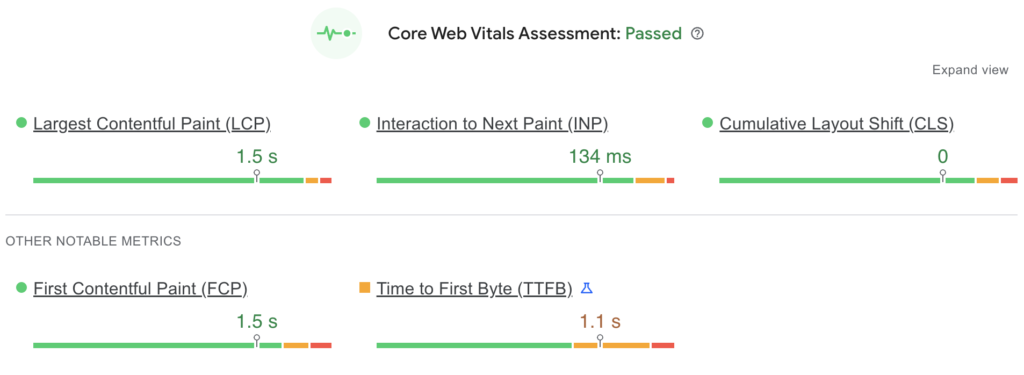
Google’s Core Web Vitals set clear benchmarks: your Largest Contentful Paint (LCP) should be under 2.5 seconds, and your Cumulative Layout Shift (CLS) should be under 0.1 (web.dev, 2024). Start by checking your scores on Google’s PageSpeed Insights, which grades your site across these metrics and provides a prioritized list of issues to fix.
Mobile experience
As of 2025, 60% of searches happen on mobile devices (Statista, 2025), and that share has continued to grow into 2026. Google uses mobile-first indexing, meaning it evaluates the mobile version of your site before the desktop version when determining rankings (Google Search Central, 2023).
Start with a responsive website design that adjusts layout and content based on the visitor’s device. Responsive design also reduces the chance that visitors land on an error page or encounter unreadable content. Test your site on multiple screen sizes and pay close attention to tap targets, font sizes, and image scaling.
11. Be accessible and ADA-compliant
Websites are areas of public accommodation, which means all visitors need to be able to use every feature. One in four Americans has a disability (CDC, 2024), ranging from mobility issues that make website menus difficult to navigate to visual impairments that make it hard to interpret images. Accessibility improvements also benefit your SEO because they help search engines understand your content more accurately.
- Make links descriptive. Avoid phrases like “click here,” which do not tell users or search engines what kind of content they will find.
- Use alt text on all images, which helps Google understand your page’s content and rank in Google Images.
- Use accurate title and heading tags that help readers and screen readers recognize they have landed on the right page.
12. Make images work for search
Image search is an underused channel for real estate agents. Google Image Search receives millions of views per month, and Google’s multi-search feature (combining text and images) rewards agents who pair high-quality listing photos with well-structured metadata.
To get your images working for search, include your focus keywords in file names, write descriptive alt text for every image, and add captions that match your topic. For listing photos, use file names like “123-main-street-living-room-austin-tx.jpg” rather than “IMG_4582.jpg.” These small changes help your images appear in both standard image search and the visual results that increasingly show up in AI Overviews.
13. Build a content hub around your market
A content hub is a collection of interlinked pages organized around a central topic, such as “Moving to [City]” or “Selling a Home in [Neighborhood].” The hub page covers the broad topic, and supporting pages go deep on subtopics like school districts, market trends, local amenities, and transaction timelines. Internal links connect every supporting page back to the hub and to each other.
This structure signals to search engines and LLMs that your site has depth and authority on the topic. It also keeps visitors on your site longer because each page naturally leads to the next question they would ask. Agents who build content hubs around their farm areas tend to rank for dozens or even hundreds of long-tail keywords that individually have low search volume but collectively drive significant traffic.
Strategy summary
| Strategy | Why it matters | Key action | Recommended tool or metric |
| 1. Google Business Profile | Controls local map visibility | Complete your profile and request reviews after every closing | Google Business Profile dashboard |
| 2. Audience research | Ensures you create content people actually search for | Run keyword and prompt research before writing | SEMRush, Profound |
| 3. In-depth content | Earns rankings and AI citations | Cover every natural follow-up question in each article | Organic traffic (GA4) |
| 4. SEO metrics | Proves ROI and guides decisions | Set up dashboards in GA4, GSC, and an LLM visibility tool | GA4, GSC, Profound, Scrunch |
| 5. Automate SEO tasks | Saves hours on repetitive work | Use ChatGPT for meta descriptions, title tags, and content briefs | ChatGPT or similar AI tool |
| 6. Structured data | Helps search engines and AI tools parse your content | Add LocalBusiness, Article, and FAQPage schema | Schema Markup Generator, Schema Markup Validator |
| 7. Backlink outreach | Builds trust and domain authority | Create a prospect list and send personalized outreach emails | Ahrefs, SEMRush (backlink reports) |
| 8. Off-site expertise | Grows brand signals that feed AI answers | Appear on podcasts, guest posts, and community newsletters | Brand mention tracking (Profound) |
| 9. Reddit presence | Feeds LLM training data with your expertise | Comment helpfully, build karma, include brand in handle | Reddit karma score |
| 10. Technical performance | Affects rankings and conversion rates | Hit Core Web Vitals benchmarks (LCP under 2.5s, CLS under 0.1) | Google PageSpeed Insights |
| 11. ADA compliance | Required by law and improves SEO | Add alt text, descriptive links, and proper heading structure | WAVE accessibility checker |
| 12. Image SEO | Captures traffic from image and multi-search | Use keyword-rich file names, alt text, and captions | Google Images, GSC (image search data) |
| 13. Content hub | Builds topical authority across your farm area | Create a hub page with interlinked supporting articles | Keyword rankings (SEMRush) |
Glossary of SEO and AEO terms
SEO (search engine optimization)
The practice of improving your website so it ranks higher in search engine results for the terms your audience searches.
AEO (answer engine optimization)
The practice of structuring your content and brand signals so AI-powered search tools cite or mention you in their generated answers.
LLM (large language model)
The AI technology behind tools like ChatGPT and Google AI Overviews that generates text-based answers by drawing on large datasets of web content.
IDX (Internet Data Exchange)
The MLS listing feed displayed on agent websites, allowing visitors to search active listings directly on your site.
Schema (structured data)
Code added to your website that tells search engines exactly what each page is about, such as business details, article metadata, or FAQ content.
CTR (click-through rate)
The percentage of people who see your listing in search results and click through to your website.
Core Web Vitals
A set of Google metrics that measure page speed, visual stability, and interactivity. The three main signals are LCP (loading), CLS (layout shift), and INP (responsiveness).
FAQs
About the author

Manager, Search and AI Visibility
Thomas Gregorich is an SEO and AI search strategist helping brands win visibility across traditional search and AI-powered answer engines. His work spans technical SEO, content strategy, and programmatic optimization, building systems that scale organic growth through automation and AI.