

As of the 2022 NAR Member Profile, 66% of all Realtors are female, a figure that continues to define the profession heading into 2026. That single number tells a story of an industry that has shifted from 100% male membership at its founding to one where women in real estate now represent the clear majority of practicing agents. But the number also raises a harder question: if women dominate the agent ranks, why do they still hold a fraction of leadership roles and earn significantly less than their male counterparts? This article examines the data behind that gap, profiles the women closing it, and outlines what brokerages and allies should do next.
Key takeaways
- Women make up roughly two-thirds of all Realtors in 2026, yet hold only about 14% of leadership positions in the real estate industry.
- Female agents in commercial real estate earn approximately 30% less than male agents in comparable roles, according to The Chicago Association of Realtors.
- Single women homebuyers have outpaced single men every year since 1981, reshaping both demand patterns and agent specialization.
- Networking, mentorship, technology adoption, and continuous skill development are the four strategies most frequently cited by high-performing women in real estate.
- Organizations like the Women's Council of Realtors and internal brokerage programs are creating measurable pathways for female agents to move into leadership.
- Dawn McKenna Group grew annual sales from $250 million to over $600 million in two years, demonstrating what becomes possible when women lead teams at scale.
The history of women in real estate
When the National Association of Realtors (a trade association whose members are licensed real estate professionals bound by a code of ethics) was founded in 1908, its membership was 100% male. Women were absent from the profession entirely. That began to change as more women entered the workforce in the mid-twentieth century. Real estate attracted female agents because of its flexible hours and high earning potential, two factors that remain strong draws in 2026. But flexible scheduling did not mean equal footing. Female real estate agents had to build careers inside a system shaped by institutionalized bias and rigid stereotypes about who could sell property, manage transactions, and close deals. A turning point came in 1974, when the Equal Credit Opportunity Act removed the requirement for a male cosigner on home loans (Urban Institute). That single legislative change gave women financial autonomy in the housing market, both as buyers and as professionals who could nurture relationships with a growing base of female clients. The result was a steady, decades-long increase in female participation across every segment of the industry.
Where women in real estate stand in 2026
The numbers tell a clear story. Women now make up approximately two-thirds of all practicing Realtors, a ratio that has remained stable heading into 2026. Single women homebuyers have outpaced single men as buyers every year since 1981, creating a demand-side dynamic that further reinforces the value of women agents who understand this client base. Female-led real estate startups are also reshaping the market. Divvy Homes, a property technology company focused on making homeownership more accessible, was founded by Adena Hefets. Hefets drew on her own childhood experience to redesign the rent-to-own model for a new generation of buyers. Companies like Divvy represent a pattern: women are not just filling agent roles, they are building the platforms and business models that define how real estate operates.
| Milestone | Year | Significance |
| NAR founded with 100% male membership | 1908 | Women entirely excluded from the profession |
| Equal Credit Opportunity Act passed | 1974 | Women no longer required a male cosigner for home loans |
| Single women begin outpacing single men as homebuyers | 1981 | Demand-side shift that persists into 2026 |
| Women reach majority of NAR membership | Early 2000s | Female Realtors surpass male Realtors for the first time |
| Women represent approximately 66% of all Realtors | 2022 (most recent NAR Member Profile) | Two-thirds majority, a figure stable heading into 2026 |
Challenges women in real estate still face in 2026
Majority representation at the agent level has not translated into equal pay or equal access to leadership. According to a study by The Chicago Association of Realtors, women in commercial real estate are paid 30% less than their male counterparts. That gap is even wider for women of color, a disparity that compounds over the course of a career. The leadership deficit is equally stark. While women fill roughly 60% of agent positions, they occupy a small fraction of executive and ownership roles. Cultural biases, limited mentorship pipelines, and informal networks that still skew male all contribute to a bottleneck between the agent level and the C-suite.
"60% of agents are women, but only 14% of the leadership in the real estate industry is women."
— Michele Harrington, Chief Operating Officer, First Team Real Estate
That 14% figure, cited by Michele Harrington in a 2024 industry discussion, frames the central challenge for women in real estate heading into 2026. The profession does not have a recruitment problem. It has a promotion problem. Addressing it requires deliberate action from brokerages, trade organizations, and individual allies, not just awareness.
Women breaking barriers in real estate
Despite these structural gaps, women are redefining what leadership looks like in real estate. The profiles below illustrate three distinct paths to influence, each backed by measurable results.
Susan Daimler: leading a major real estate platform with authenticity
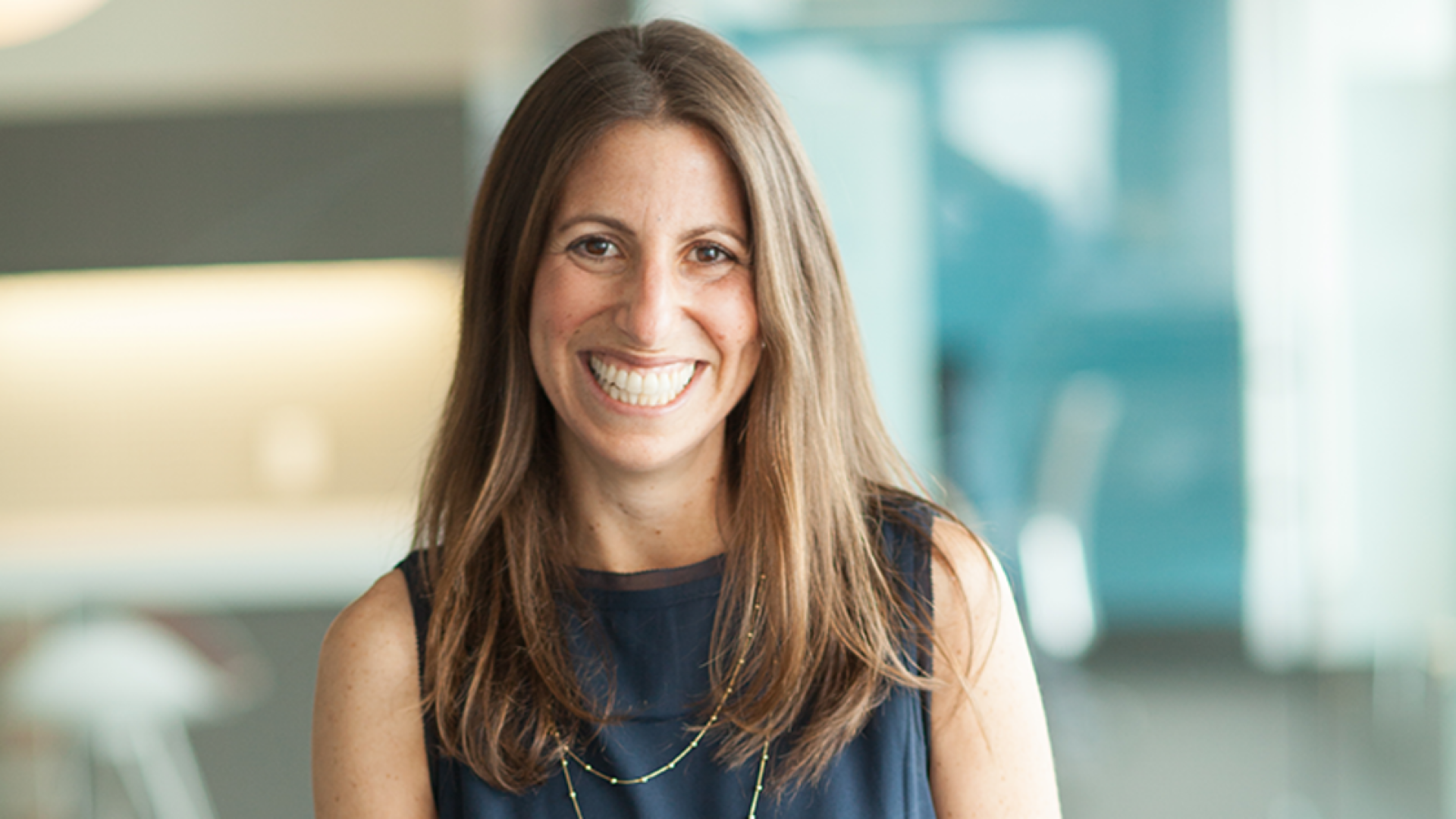 Susan Daimler serves as President of a major real estate platform, overseeing one of the largest real estate platforms in the world. Her rise was not defined by a single breakthrough moment but by a sustained commitment to self-reflection and honest leadership in an environment where men have historically held nearly every executive seat. Daimler has spoken publicly about balancing parenthood with professional ambition, framing that balance not as a limitation but as a source of clarity about what kind of leader she wanted to become.
Daryl Fairweather: bringing economic rigor to real estate
Daryl Fairweather serves as Chief Economist at Redfin, a national real estate brokerage and data platform. Her role places her at the intersection of two fields, economics and real estate, both of which have historically underrepresented women. Fairweather has published widely on housing affordability, migration patterns, and market forecasting. In a podcast interview with the Federal Reserve Bank of St. Louis, she discussed how sharing research openly can shape better policy and better business decisions across the industry.
Dawn McKenna: scaling a team from $250M to $600M+
Dawn McKenna, CEO of Dawn McKenna Group, offers one of the clearest case studies in what happens when a woman leads a real estate team with both ambition and discipline. McKenna grew her team from 7 agents to 15, expanded into 5 major markets, and saw annual sales climb from $250 million to over $600 million in just two years. She also reduced lead-to-client conversion time by 30% by investing in technology and brand infrastructure (Source: Luxury Presence Case Study: Dawn McKenna Group). McKenna has spoken publicly about using client feedback and failure as learning tools, a pattern that distinguishes agents who plateau from those who scale.
Strategies from leading women in real estate
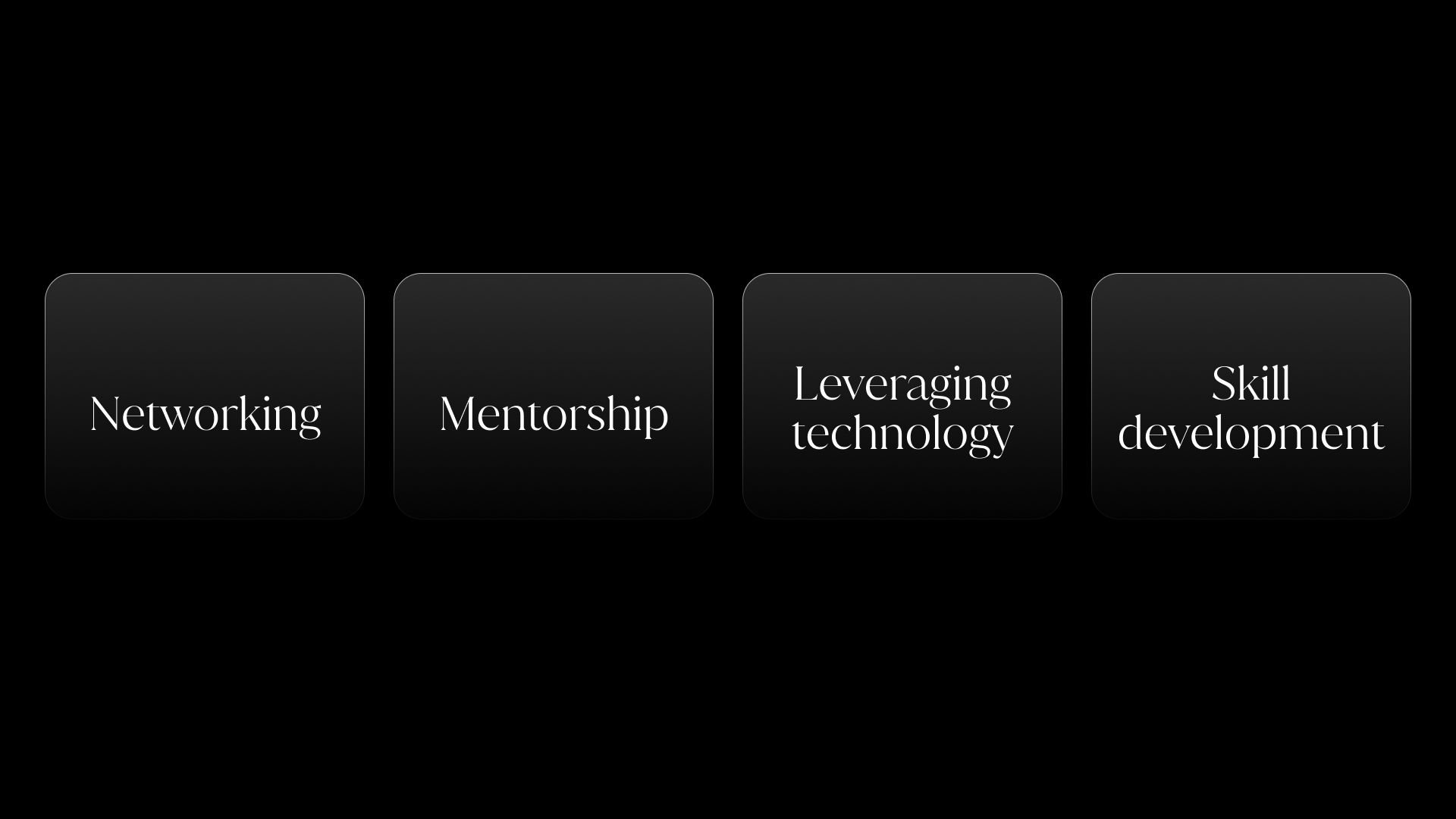 The women profiled above share more than ambition. They share a set of recurring strategies that any agent, male or female, can apply in 2026. Four patterns stand out.
Why is networking so important for women in real estate?
Networking creates access to referrals, partnerships, and market intelligence that no amount of solo effort can replicate. Neda Navab, US President of a national real estate brokerage, has made this point repeatedly. In an International Women's Day interview, Navab said: "You have to invest in your community. The people you surround yourself with matter. If you want to do extraordinary things, you've got to surround yourself with extraordinary people. It's as simple as that." For agents looking to put this into practice, the first step is showing up consistently in local and industry-specific groups. The Women's Council of Realtors, local board committees, and even informal mastermind groups all serve as entry points. The key is treating building relationships and expanding networks as a non-negotiable part of your weekly schedule, not something you do when business slows down.
How does mentorship help women in real estate?
A real estate mentor can compress years of trial and error into months of directed growth. Julia Lashay Israel, Head of Inclusion and Belonging at Keller Williams Realty International, experienced this firsthand. After receiving career-changing guidance early in her career, she co-founded Refocus University, a real estate training firm focused on career development and diversity. Her trajectory shows that mentorship does not just benefit the individual. It creates a multiplier effect when the mentee becomes a mentor.
"They paid for all of my marketing and kind of taught me the business, and I worked with some really great people that were amazing mentors."
— Anna Sherrill, Real Estate Agent
Anna Sherrill's experience reinforces the point. Early investment from mentors, whether financial or educational, can set the trajectory for an entire career. In 2026, brokerages that formalize mentorship programs for female agents are not just doing the right thing. They are building a stronger pipeline of future leaders.
How can women in real estate use technology to grow their business?
Real estate in 2026 is as much a digital business as a relationship business. Agents who treat their online presence as a core asset, not an afterthought, consistently outperform those who rely on referrals alone. Jade Mills, President of Jade Mills Estates and a top-producing agent for Coldwell Banker globally, is a clear example. With the help of Luxury Presence, Mills built a digital platform that functions as both a brand statement and a client acquisition channel. "People always tell me how beautiful my site is, and my clients love how beautifully their properties are displayed," Mills says. "My website has been a pivotal part of my brand, and it has been an incredibly effective way to get new clients."
What skills do successful women in real estate develop?
The most consistent pattern among high-performing female agents is a commitment to learning from data, not just instinct. Dawn McKenna treats client feedback as a diagnostic tool. Daryl Fairweather publishes research that challenges conventional market assumptions. Neda Navab invests in community knowledge. In every case, the skill being developed is the same: the ability to adapt quickly based on evidence rather than habit. For agents in 2026, this means staying current on market analytics, transaction technology, and client communication preferences. It also means being willing to examine what is not working and change course without hesitation.
How brokerages, organizations, and allies can support women in real estate
Individual ambition matters, but structural support determines whether that ambition has room to grow. Three categories of action are making a measurable difference in 2026.
Brokerages creating internal pathways
Real estate companies that offer formal mentorship programs, transparent promotion criteria, and continuing education are seeing stronger retention and performance among female agents. The key word is "formal." Informal mentorship helps individuals. Formal programs change cultures.
Organizations built around women's advancement
Industry organizations focused on the development of women Realtors provide structured growth opportunities that individual brokerages often cannot. The Women's Council of Realtors is the most established example, offering resources for personal brand building, peer mentorship, and leadership training. In 2026, these organizations are not optional extras. They are infrastructure.
The role of male allies
Men in leadership positions can do more than express support. They can sponsor women for leadership roles, share deal flow equitably, and use their platforms to advocate for pay transparency. Allyship is most effective when it is specific and measurable, not abstract. Every support network for women Realtors benefits from allies who show up with actions, not just words.
What Comes Next for Women in Real Estate
Women make up the majority of practicing agents, and the most successful among them share a common playbook: invest in relationships, seek out mentorship, adopt technology early, and never stop developing new skills. In 2026, the agents, founders, and executives profiled here show what becomes possible when ambition is paired with the right support systems. The brokerages and organizations that continue building formal mentorship programs, leadership pathways, and professional development resources will be the ones that attract and retain the strongest talent in the years ahead.
FAQs
Join a team shaping what’s next.

Ready to grow?
Turn your content into your best lead source
See how Luxury Presence helps agents turn website visits into closed deals