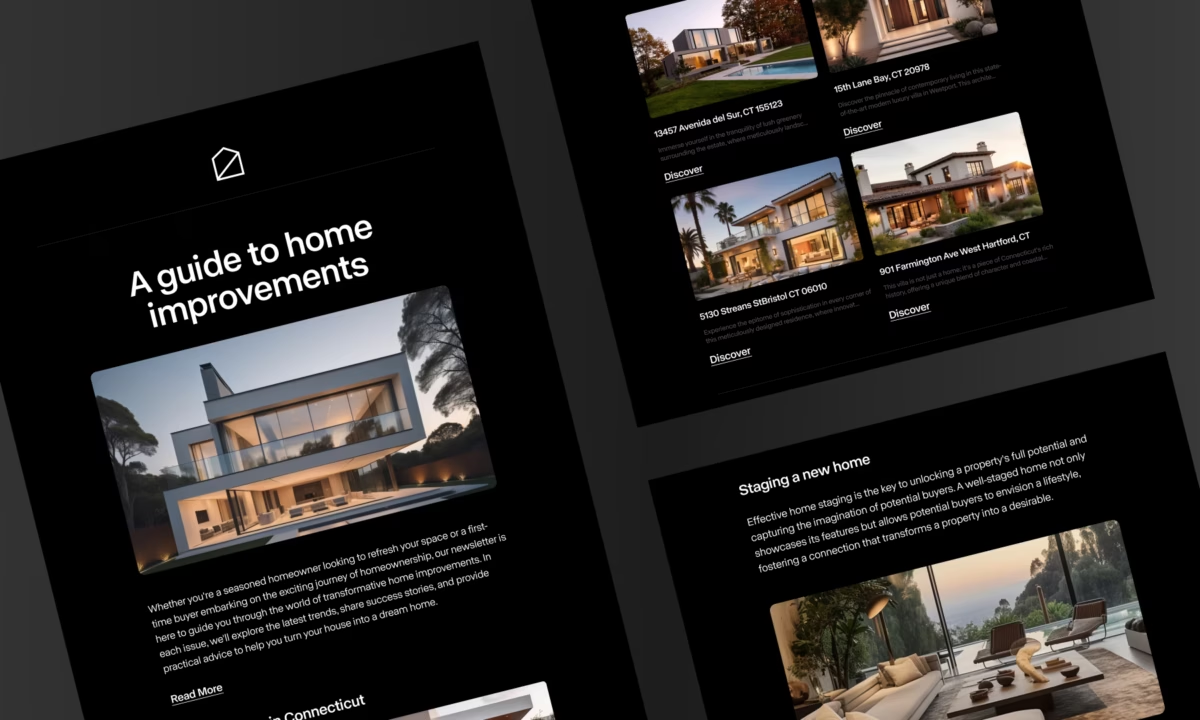

The strongest real estate brands in 2026 are not built on logos alone. They are built on identity systems that signal trust before a single conversation happens. The best real estate brands combine a distinct visual language, a clear value proposition, social proof that holds up under scrutiny, and a digital presence that works around the clock. These are the brands that attract clients, retain agents, and grow market share year after year.
What separates a forgettable brokerage from a brand people remember? It comes down to five specific pillars: visual identity, messaging clarity, third-party credibility, client experience, and digital discoverability. Below, we break down five real estate branding examples that demonstrate each pillar in action, along with the specific moves you can apply to your own business.
(Brokerage websites and brand materials evaluated in 2026.)
Key takeaways
- Every strong real estate brand in 2026 targets a specific audience identity, not a general market. Broad positioning is not a brand strategy.
- Visual consistency across your website, social profiles, signage, and print materials is the fastest way to build recognition and trust with prospective clients.
- Your value proposition must answer one question in a single sentence: why should a client choose you over every other agent in your market?
- Third-party credibility, including press mentions, client testimonials, and published case studies, does more for your reputation than any self-promotional copy.
- A brand-led digital strategy produces measurable business outcomes. One agent grew annual sales from $300M to $660M over three years after investing in brand and web presence (Source: Luxury Presence Case Study: Jade Mills, 2024).
What makes a real estate brand successful in 2026
A real estate brand is the sum of every impression a client forms about your business before, during, and after a transaction. It includes your visual identity, the words you use to describe your services, the way clients talk about you to their friends, and how you show up online when someone searches your name. In 2026, the bar for real estate brand identity is higher than it has ever been. Buyers and sellers research agents online before making contact, which means your website, social profiles, and search results are often your first showing. A strong brand does three things at once: it attracts the right clients, repels the wrong ones, and gives your existing clients a reason to refer you without hesitation. The five brokerages below each demonstrate a different pillar of brand strength. None of them rely on a single tactic. All of them have built systems that reinforce their brand at every client touchpoint.
| Brand | Primary brand pillar | Key differentiator | Market |
| Village Properties | Visual identity | Place-specific design tied to Santa Barbara lifestyle | Santa Barbara, CA |
| The Real Brokerage | Messaging clarity | Dual-audience messaging for agents and clients | North America (publicly traded) |
| Carolwood Estates | Third-party credibility | Press-driven authority from NYT, WSJ, Financial Times | Beverly Hills, CA |
| Beacham and Company | Customer experience | In-house marketing department for every listing | Atlanta, GA |
| SERHANT. | Digital presence | Content-driven visibility across every major platform | New York, NY |
1. Village Properties: Strong visual identity
Your visual identity is the face of your real estate brand and one of the most direct ways to communicate what you stand for. The core components are your logo, color palette, typography, and overall design. When these elements work together, your brand becomes instantly recognizable to the people you want to attract.
How Village Properties builds its brand identity
Village Properties, founded in 1982 and based in Santa Barbara, California, has built a visual identity that mirrors the specific aesthetic of its market. The muted, earthy color palette across its website and marketing materials reflects the region's natural landscape: sandy beaches, deep canyons, green rolling hills, and Mediterranean architecture. Every design choice is intentional and place-specific. The subtle use of architectural elements across the site signals the team's deep knowledge of local housing stock. This is not generic coastal branding. It is a visual system designed to connect with clients who identify with or aspire to the Santa Barbara lifestyle. As of 2026, Village Properties' design language remains one of the clearest examples of how a brokerage can use visual identity to claim a geographic market.
Why it works
Village Properties does not try to appeal to everyone. Its visual identity speaks directly to a specific buyer profile: someone drawn to coastal California living who values understated design over flashy presentation. By aligning every visual touchpoint with the character of its market, Village Properties positions itself as the obvious local choice rather than one of many options.
"They know real estate and they know what our audience wants, they're courteous, they're smart, I couldn't ask for more." — Jade Mills, #1 Global Agent, Coldwell Banker
The takeaway: Audit your brand visuals for consistency
A cohesive visual identity means your branding materials, whether business cards, signage, websites, or social media, all reflect the same aesthetic. Here is a three-step process to get there:
- Audit every existing brand asset against a single style guide. Your palette should include no more than two primary colors and one accent color, with a single typeface family across all materials.
- Identify any touchpoint where color, font, or logo treatment deviates from the guide. Common offenders include email signatures, social profile images, and listing flyers.
- Update the lowest-cost assets first (email signature, social headers, digital business card) before reprinting physical materials like signage and brochures.
2. The Real Brokerage: Clear messaging
The message you communicate through your brand carries as much weight as the visuals you use. The strongest brands are defined by messaging that is clear, specific, and consistent across every channel. Whether you are writing website copy, posting on social media, or speaking with a prospect on the phone, your words should reinforce the same core idea.
How The Real Brokerage positions its message
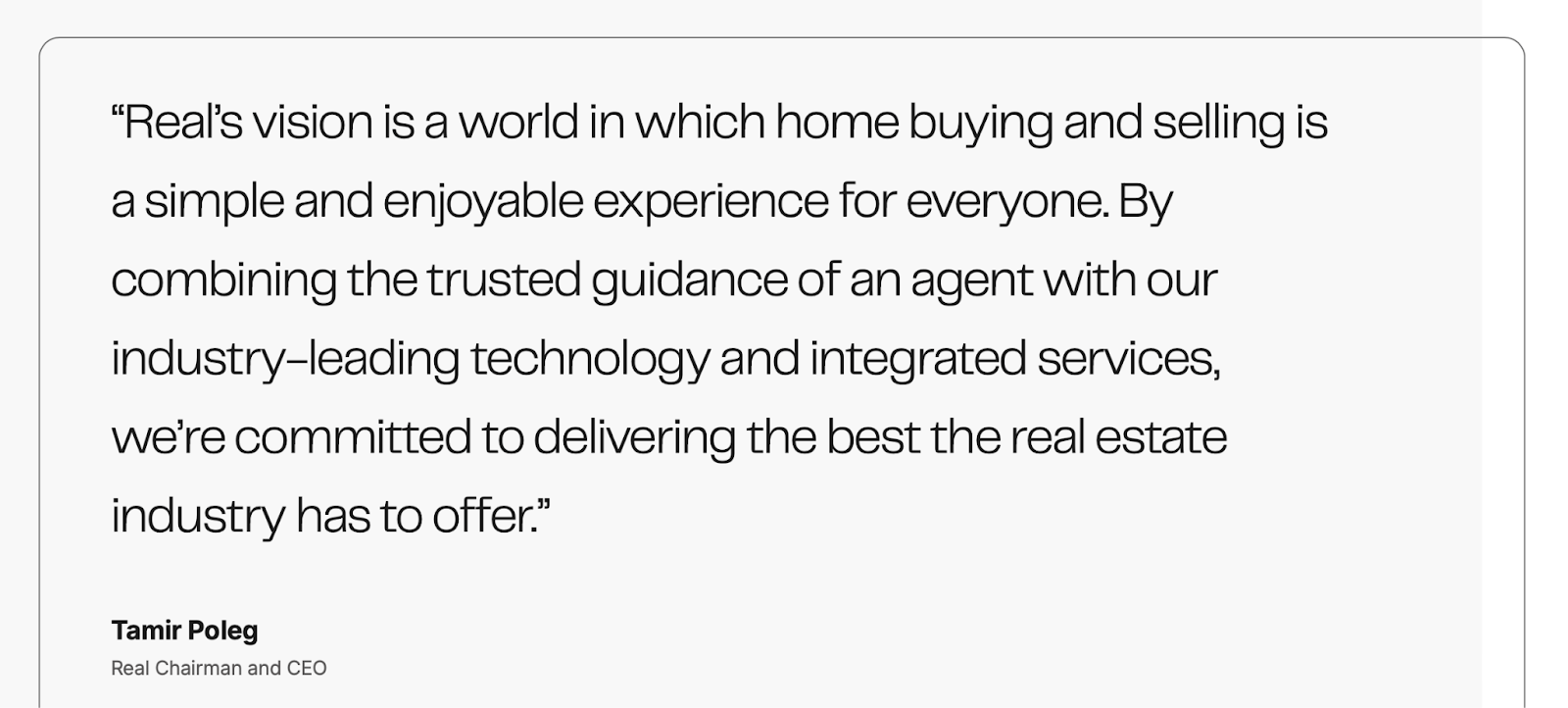
The Real Brokerage, a publicly traded brokerage operating across North America, clearly lays out its value proposition on its homepage:
"We could tell you how we're North America's fastest-growing, publicly traded brokerage on a mission to change the residential real estate industry. But that leaves out the most important part of the equation: the real people at the heart of our business, our agents and our customers." — The Real Brokerage, Company Website

The Real Brokerage describes itself as North America's fastest-growing publicly traded brokerage, a claim supported by its investor relations disclosures. What makes its brand messaging distinct is the dual-audience structure. Real speaks to agents and clients simultaneously, positioning itself as a brokerage committed to agent empowerment through technology, a supportive community, and financial incentives, while also signaling to clients that their agents have the resources to navigate complex transactions.
Why it works
Most brokerages write messaging for one audience: either agents they want to recruit or clients they want to serve. Real addresses both in the same breath. This dual-audience approach is a structural brand differentiator. It tells agents, "We invest in you," and tells clients, "Your agent is backed by a tech-driven ecosystem that makes your experience better." That alignment between agent-facing and client-facing messaging creates a brand that feels coherent from every angle.
The takeaway: Write your value proposition in one sentence
Your value proposition should answer one question: why should a client choose you over every other agent in your market? Here is how to build one:
- Write down the three things your past clients mention most often in reviews or referrals. These are your real differentiators, not the ones you wish you had.
- Combine the strongest differentiator into a single sentence that a prospect could repeat to a friend. If it takes more than 15 words, cut it down.
- Test the sentence across your website header, Instagram bio, and email signature. If it works in all three places without modification, you have a strong value proposition.
3. Carolwood Estates: Authenticity and third-party credibility
Trust is the foundation of every real estate transaction. But in 2026, self-reported claims about your own expertise are not enough. The brands that earn the most trust are the ones that let third parties do the talking.
How Carolwood Estates builds credibility
Carolwood Estates, a boutique brokerage founded in Beverly Hills and focused on high-value residential properties, takes a different approach to brand authority. Rather than relying on bold self-promotional language, Carolwood lets its press coverage speak for the firm. The brokerage has been featured in The New York Times, The Wall Street Journal, and the Financial Times, and it prominently displays these mentions across its website and marketing materials. The company's branding avoids flashiness. The clean, understated design reinforces a commitment to integrity and clarity. This straightforward approach creates an environment where clients feel assured that the brokerage will guide them through the process with a steady, honest hand.
Why it works
Carolwood Estates understands that credibility is not something you claim. It is something other people grant you. By showcasing high-profile press mentions, the brokerage creates a layer of social proof that no amount of self-written copy can replicate. Research from Visme found that buyers spend 54% of their time reviewing case studies and third-party proof before making a purchasing decision (Visme, 2024). In real estate, where the stakes are measured in hundreds of thousands or millions of dollars, that dynamic is even more pronounced.
The takeaway: Build a social proof system
Establish credibility by collecting and displaying third-party validation. Client testimonials, press features, and published case studies all serve this function. Here is a practical framework:
- Collect a minimum of five written client testimonials before launching or relaunching your website. Ask for specifics: what problem did you solve, and what was the outcome?
- Create a dedicated "Press" or "In the News" section on your website. Even local media coverage counts. If you have not been featured yet, pitch a market trends story to your local business journal.
- Display logos of publications or organizations that have featured you above the fold on your homepage. Visual press badges register faster than text-based testimonials.
4. Beacham & Company: A commitment to customer experience
How Beacham and Company delivers on experience
From the moment you land on its website, Atlanta's Beacham and Company, founded in 2002 and focused on Atlanta's high-end residential market, provides a first-person point of view on the real estate experience. The brokerage operates a full in-house marketing department, which is rare even among well-funded firms. Their in-house marketing team handles professional photography, custom brochures, digital advertising, and social media campaigns for every listing. By keeping these services internal rather than outsourcing them, Beacham maintains quality control and can tailor campaigns to reach the right audience for each property. The result is a listing presentation that feels cohesive and polished from the first photo to the final open house.
Why it works
Beacham and Company treats the listing marketing process as part of the client experience, not a separate line item. When a seller sees their home presented with professional-grade photography, a custom brochure, and a targeted digital campaign, it reinforces that they made the right choice in hiring the firm. That experience drives referrals, which are the lifeblood of any residential brokerage.
"It shows that you're going above and beyond to market their home, to make it look great, and to bring in the best offers." — Tracy Tutor, Douglas Elliman Real Estate
The takeaway: Design your client experience before your marketing
Understanding your clients' needs, preferences, and concerns allows you to build a service experience that earns loyalty. Here is how to start:
- Map every client touchpoint from first inquiry to post-closing follow-up. Identify the three moments where clients are most likely to feel uncertain or underserved.
- Create a standard operating procedure for each of those three moments. For example, send a personalized video message within two hours of a new inquiry, or deliver a printed market report at the listing presentation.
- Ask every client for feedback within 48 hours of closing. Use their responses to refine your process. A client-centered approach is not a philosophy. It is a system you build and maintain.
5. SERHANT.: A striking digital presence in 2026
In 2026, potential clients research agents online before making contact. Your website, social profiles, and search results are your first impression. A well-built website, active social media presence, and consistent content output are the non-negotiable elements of brand visibility for any agent or brokerage that wants to compete.

How SERHANT. dominates digital
New York-based brokerage SERHANT., founded in 2020 by Ryan Serhant, maintains one of the most recognized digital presences in the real estate industry as of 2026. The company's website is visually striking and intuitively designed, featuring high-quality virtual tours, immersive property videos, and dynamic search options that help buyers connect with listings in a compelling way. Beyond the website, SERHANT. maintains active profiles across Instagram, YouTube, LinkedIn, and X (formerly Twitter). Ryan Serhant uses his personal brand to amplify the firm, regularly posting market insights, personal reflections, and property highlights that resonate with both buyers and industry professionals. The company's Instagram feed showcases properties with cinematic photography, and its YouTube channel provides behind-the-scenes content that gives followers an authentic view of the brand.
Why it works
SERHANT. treats content as a business asset, not a marketing expense. Every post, video, and blog article reinforces the brand's positioning and keeps the firm visible to a broad audience. This is not accidental. It is a system built on consistent output across multiple platforms. The measurable impact of a brand-led digital strategy is well-documented. Jade Mills, the #1 global agent for Coldwell Banker in Beverly Hills, invested in a brand-first web presence and saw her site earn 300+ first-page Google rankings and 9,000 monthly search visitors. Over a three-year period, her annual sales grew from $300M to $660M (Source: Luxury Presence Case Study: Jade Mills, 2024). That is the kind of return that a strong digital presence can produce when brand and discoverability work together.
The takeaway: Build a content system, not a content calendar
Social media platforms like Instagram, YouTube, and LinkedIn give you direct access to your audience. But posting without a system leads to inconsistency, which is the fastest way to lose visibility. Here is a framework:
- Choose two platforms where your target clients spend the most time. For most agents in 2026, that means Instagram and one of YouTube, LinkedIn, or TikTok.
- Commit to a minimum publishing cadence: three posts per week on your primary platform and one per week on your secondary platform. Consistency matters more than volume.
- Invest in search engine optimization for your website so that your brand shows up when prospects search for agents in your market. Social media builds awareness. SEO captures intent.
What the best real estate brands have in common
After analyzing these five brokerages, several cross-brand patterns become clear. These are not surface-level observations. They are the structural principles that separate strong real estate brands from forgettable ones.
- Every brand targets a specific audience identity, not a general market. Village Properties targets Santa Barbara lifestyle buyers. SERHANT. targets digitally engaged, media-savvy clients. The Real Brokerage targets agents who want technology and financial incentives alongside a client-facing brand. None of these firms try to be everything to everyone.
- The brands with the clearest messaging also have the most consistent visual execution. Clarity and consistency reinforce each other. When your words and your design tell the same story, clients trust you faster.
- Social proof is not optional at the high end. Carolwood's press mentions and SERHANT.'s content volume both serve the same function: third-party validation at scale. If you are not collecting and displaying proof of your results, you are leaving trust on the table.
- Brand investment produces measurable business outcomes. The agents and brokerages that treat their brand as a revenue-generating asset, not a cost center, are the ones that grow. The data from the Jade Mills case study makes this point clearly: a brand-first digital strategy contributed to a $360M increase in annual sales over three years.
FAQs
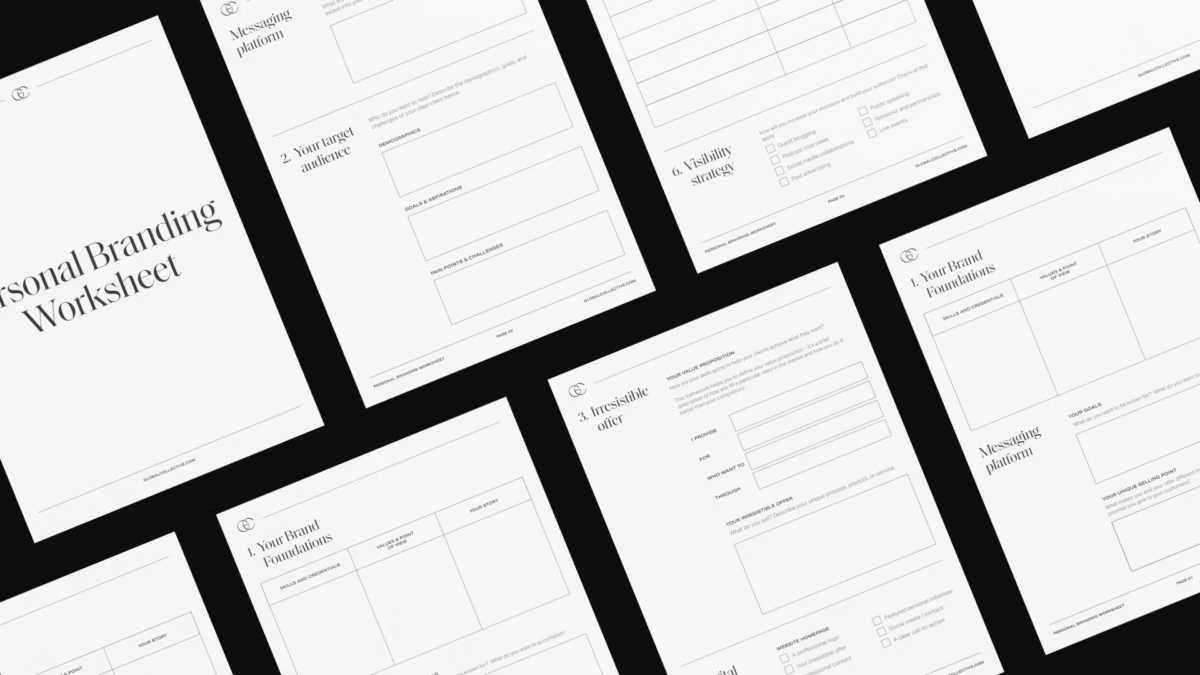
Rewrite your brand strategy
Our free resources can help you define your personal brand, level up your marketing plan, and reach your target audience.
Ready to grow?
Turn your content into your best lead source
See how Luxury Presence helps agents turn website visits into closed deals