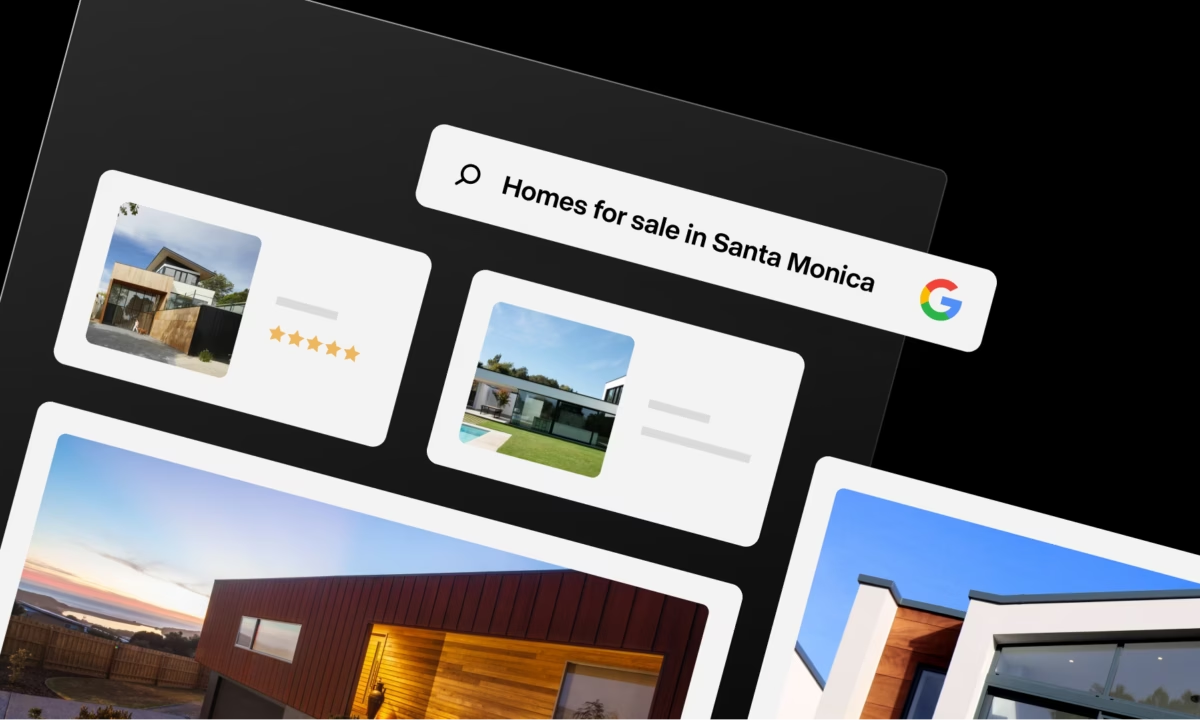

If you want to know how to get clients as a real estate agent in 2026, the answer is not another lead-generation hack or a flashier website. The answer is a client-centric approach to every part of your business. Putting clients first means making their goals, concerns, and timelines the center of every decision you make, from the first phone call to the five-year anniversary of their closing. This philosophy does more than improve client service in real estate. It builds the kind of trust that turns one transaction into a lifetime of referrals and repeat business. In this guide, you will learn what a client-centric approach looks like in practice, why it matters more now than ever, and which tools and habits will help you deliver on it every single day.
Key takeaways
- A client-centric approach means making every business decision through the lens of your client’s needs, not your commission check.
- Customers who have a positive experience are far more likely to recommend, forgive mistakes, and stay loyal, according to industry research.
- Agents who track measurable behaviors like response time, follow-up cadence, and post-close contact can identify gaps in their service before clients notice them.
- Technology like Luxury Presence’s CRM and Internet Data Exchange (IDX) search tools help you maintain a personal touch at scale without dropping the ball on follow-up.
- The agents who win in 2026 are not the ones with the biggest ad budgets. They are the ones whose past clients call them first and refer them without being asked.
Understanding the client-centric approach in 2026
A client-centric approach in real estate means placing the client’s goals, preferences, and concerns at the center of every business decision and interaction. It requires empathy, active listening, and a commitment to delivering value that goes beyond the transaction itself. For agents, this means being a trusted advisor and advocate throughout the homebuying or selling journey, not just a salesperson who disappears after closing.
In 2026, this mindset matters more than ever. Buyers and sellers have access to more information, more agent options, and more ways to share their experience publicly than at any point in the history of the industry. The bar for what counts as good service keeps rising. Agents who treat every client like a relationship worth protecting, rather than a deal worth closing, are the ones building businesses that last through any market cycle.
That philosophy is not about leaving money on the table. It is about building the kind of reputation that brings money back to your table for decades. When you consistently put the client’s outcome ahead of your own short-term gain, you earn something no marketing budget can buy: trust that travels by word of mouth.
Why a client-centric attitude drives real estate success
Understanding the concept is one thing. Seeing how it plays out in your business is another. Here is how a client-centric attitude compares to a transaction-focused approach across the behaviors that matter most.
| Behavior | Client-centric approach | Transaction-focused approach | Business impact |
| Response time | Responds to inquiries within one hour | Responds when convenient | Higher lead conversion rate |
| Property search | Previews homes before scheduling viewings | Sends automated listing alerts only | Fewer wasted showings, higher satisfaction |
| Communication | Proactive weekly updates during transaction | Communicates only when required | Stronger trust, fewer anxious client calls |
| Post-close follow-up | Maintains contact quarterly after closing | Moves on to next transaction | Higher repeat and referral rate |
| Fiduciary duty | Prioritizes client outcome over commission | Prioritizes closing speed | Stronger reputation, fewer disputes |
Let’s break down the specific reasons this approach pays off.
Building trust and loyalty
Clients buying or selling a home are making one of the largest financial and emotional decisions of their lives. They need to feel confident that their agent’s advice is driven by the client’s best interest, not the agent’s paycheck. A client-centric attitude builds that confidence through consistent action: showing up prepared, communicating proactively, and being honest even when the truth is not what the client wants to hear.
Higher client satisfaction and more referrals
When clients feel heard and valued, they talk about it. Word-of-mouth referrals remain one of the most powerful sources of new business in real estate. According to the National Association of Realtors’ 2025 Profile of Home Buyers and Sellers, 38% of sellers who used a real estate agent found that agent through a referral from a friend, neighbor, or relative, and 36% used an agent they had worked with before (NAR, 2025). Agents who deliver a strong client experience do not need to chase leads. Their past clients send new ones.
Business resilience in any market
Markets shift. Interest rates move. Inventory tightens and loosens. But the trust you build through consistent client service does not disappear when the market changes. Agents with deep client relationships maintain a steady flow of business even during downturns because their sphere of influence keeps referring, keeps calling, and keeps coming back.
Adherence to your fiduciary responsibility
Beyond business strategy, agents have a fiduciary responsibility (the legal duty to act in a client’s best interest) that requires loyalty, full disclosure, confidentiality, and due diligence throughout every transaction. This is not optional. It is the ethical and legal foundation of the profession. Agents who internalize this duty as a daily habit, rather than a compliance checkbox, naturally deliver the kind of service that earns long-term loyalty.
Client-centric audit checklist
Knowing you should be client-centric is not the same as knowing whether you actually are. Use this checklist to measure your current service against the behaviors that matter most. Be honest with yourself.
- Do you respond to all new inquiries within one hour?
- Do you document each client’s specific preferences, budget, and timeline in writing before the first showing?
- Do you have a structured follow-up system that maintains contact across at least 25 touch points per lead?
- Do you preview properties before scheduling client viewings to filter out poor matches?
- Do you send proactive updates to clients at least once per week during an active transaction?
- Do you contact past clients at least once per quarter after closing?
- Can you identify the source (referral, online lead, sphere of influence) of every client you closed in the past 12 months?
If you answered “no” to three or more of these, the tools and strategies in the next section give you a direct path to closing those gaps.
Tools and strategies for how to get clients as a real estate agent
A client-centric mindset only works if you have the systems to back it up. In 2026, the agents who deliver the best client experience are the ones who pair relationship-first habits with technology that keeps them consistent. Here is how to put that into practice.
Use technology to stay consistent, not to replace the personal touch
Technology in 2026 is not about replacing human connection. It is about making sure no client falls through the cracks while you are busy serving others. Here is where it helps most:
- Property matching: AI-powered tools can match clients with listings that closely align with their preferences, saving time and making the search process feel more personal.
- Virtual tours: Virtual tours and augmented reality applications let clients explore homes from anywhere, which is especially valuable for relocation buyers or clients with tight schedules.
- Relationship management: A customer relationship management (CRM) system built for real estate helps agents track follow-up cadence, store client preferences, and maintain contact after closing without relying on memory alone.
According to Deloitte’s 2026 State of AI in the Enterprise report, worker access to AI rose by 50% in 2025, and the number of companies with 40% or more AI projects in production is set to double within six months (Deloitte, 2026). Real estate is no exception. Agents who adopt these tools now are not just keeping up. They are freeing up hours every week to spend on the work that actually builds relationships: phone calls, face-to-face meetings, and thoughtful follow-up.
How to evaluate any client service tool
Before you add any tool to your workflow, run it through these five criteria to make sure it actually supports a client-centric approach:
| Evaluation criteria | What to look for |
| Follow-up automation | Does the tool help you maintain a structured follow-up cadence without manual reminders? |
| CRM integration | Does it connect with your relationship management system so client data stays in one place? |
| Lead response speed | Does it help you respond to new inquiries within minutes, not hours? |
| Search personalization | Does it let you tailor property results to each client's specific criteria? |
| Reporting and tracking | Does it show you which clients need attention and where each relationship stands? |
CRM: relationship management built for real estate
CRM is designed specifically for real estate agents who want to nurture leads and maintain client relationships with the kind of personal touch that drives referrals. It tracks the entire client journey from first contact to closing and beyond, stores relationship signals and client preferences, and helps agents maintain follow-up cadence through Smart Tasks and AI-drafted messages that agents review before anything goes out. With access to 15 billion data points, it surfaces the contacts most likely to need your help right now, so you spend your time on the conversations that matter most.
AI lead nurture: stay connected to every prospect
Luxury Presence’s AI lead nurture keeps agents connected to every prospect in their pipeline by automatically responding to inquiries and maintaining an average of 25 touch points per lead (Luxury Presence internal benchmark data). This means no lead goes cold because you were busy at a showing or closing. Agents review outreach before it goes out, so every message reflects their voice and their standards.
Personalized property searches
Automated listing alerts are a starting point, not a finish line. Client-centric agents take the time to understand each buyer’s specific needs, preview homes to filter out poor matches, and send only the properties that genuinely fit. This saves clients time and shows them you are paying attention to what they actually want, not just what the Multiple Listing Service (MLS) spits out.
Luxury Presence offers a custom-branded IDX home search tool with fast MLS syncing, lead capture tools, and a search interface that lets agents showcase properties under their own brand. When clients search for homes on your site instead of a third-party portal, you stay at the center of their experience.
The Luxury Presence app: give clients a front-row seat
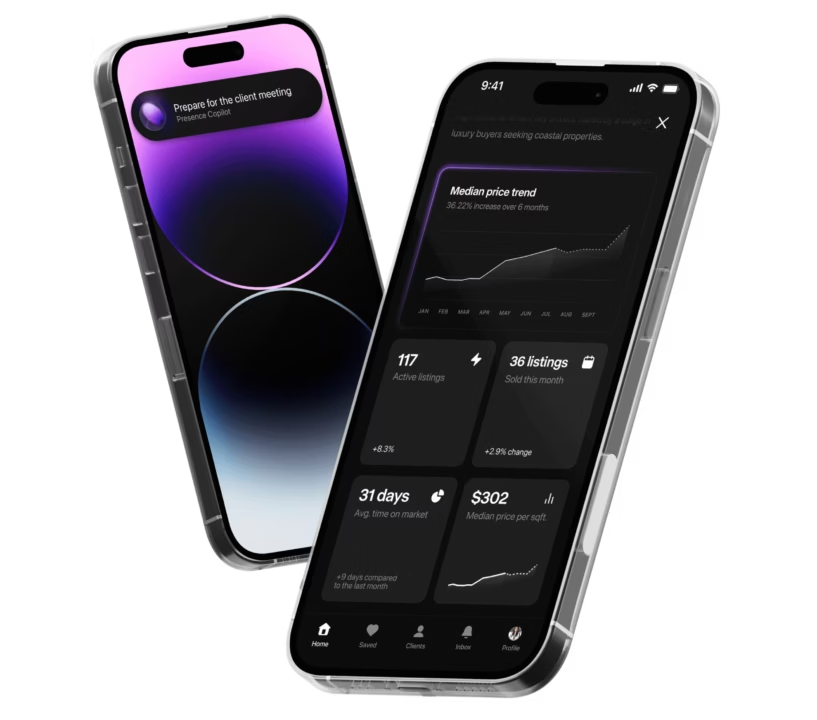
Sometimes the best way to show clients you put them first is to give them full visibility into the process. The Luxury Presence app is a mobile platform that lets agents and clients collaborate on the home search in real time. It includes smart collaboration tools, transcribed voice notes, and market data, so buyers always know where things stand. Because it connects with Luxury Presence’s broader platform, it requires an existing plan to access.
The app reduces the back-and-forth that slows down transactions, gives homebuyers greater visibility into the search process, and helps agents stay organized without adding administrative work to their day.
First client-needs assessment call script
One of the fastest ways to show a new client you are different is to ask better questions on the very first call. Here is a short script you can adapt:
- “What is driving your timeline? Is there a specific date you need to be in your new home by?”
- “Beyond the basics like bedrooms and bathrooms, what does your ideal daily life look like in this home?”
- “Are there any neighborhoods or areas you have already ruled out, and why?”
- “What was your experience like with your last agent, and what would you want to be different this time?”
- “How do you prefer to communicate: calls, texts, or email? And how often do you want updates from me?”
- “Is there anything about this process that makes you nervous or that you want me to explain upfront?”
Document the answers in your CRM immediately after the call. This becomes the foundation for every decision you make on their behalf.
Weekly client-update email template
Proactive communication is one of the simplest ways to build trust during an active transaction. Here is a template you can send every week:
Subject: Your weekly update from [Your Name]
Body:
Hi [Client First Name],
Here is a quick update on where things stand this week:
- What happened: [Summary of activity: showings scheduled, offers submitted, inspections completed, etc.]
- What is coming next: [What to expect in the next 7 days]
- What I need from you: [Any decisions, documents, or feedback needed]
If you have any questions or want to talk through anything, I am always a call or text away.
[Your Name]
Sending this every week, even when there is nothing dramatic to report, tells your client: “I am paying attention. You are not forgotten.” That consistency is what separates agents who get referrals from agents who get ghosted.
This week’s action items
Reading about a client-centric approach is not the same as living it. Pick up at least three of these five items and do them before the end of this week.
- Audit your response time. Check how long it takes you to reply to new inquiries right now. Set a target of responding to every new lead within one hour.
- Document your active clients’ needs. Open your CRM and write down the specific preferences, budget, and timeline for each of your current clients. If you cannot do this from memory, schedule a call to fill in the gaps.
- Schedule three post-close check-ins. Pick the last three clients you helped close and schedule a 30-day follow-up call with each one. Ask how they are settling in and whether they need anything.
- Ask for one referral or review. Contact your most recent satisfied client and ask them directly for a written Google review or a referral to someone they know who might need an agent.
- Evaluate your CRM. Does your current system track follow-up cadence, client preferences, and relationship signals? If it only stores contact details, it is time to look at a tool like CRM that is built for the way real estate relationships actually work.
FAQs
Ready to grow?
Turn your content into your best lead source
See how Luxury Presence helps agents turn website visits into closed deals