
Client relationship marketing is the practice of building long-term, trust-based connections with buyers and sellers through personalized communication, consistent follow-up, and data-informed outreach. In 2026, real estate client relationship management is not a nice-to-have. It is the foundation of every agent’s repeat and referral business. The agents who treat their database like a garden, watering it consistently and with care, are the ones who never worry about where the next deal is coming from. The agents who disappear after closing are the ones constantly chasing cold leads.
This article breaks down the specific strategies, tools, and habits that separate relationship-driven agents from transaction-driven ones. Whether you are building your first database or trying to re-engage hundreds of past clients, these principles will give you a clear path forward.
Find It Fast
Key takeaways
- Client relationship marketing centers on personalized, consistent communication that keeps you top-of-mind long after the closing table.
- In 2026, 78% of homebuyers work with the first agent who responds to their inquiry, making timely, client-focused outreach a direct conversion driver.
- Leads who receive six or more contact attempts convert at rates 70% higher than those who receive fewer touches.
- A Customer Relationship Management (CRM) system is the operational backbone of every relationship marketing strategy, enabling agents to track behavior, segment contacts, and send the right message at the right time.
- Post-closing engagement, including home anniversary touchpoints, market updates, and personalized check-ins, is what converts one-time clients into referral sources.
Shift from self-promotion to client-centric communication
One of the most common mistakes agents make is centering every piece of communication around themselves. Sold properties, awards, production numbers. Those things matter for credibility, but they do not answer the question your prospect is actually asking: “Can this person help me with my specific situation?”
To stand out, take a more client-centric approach. Position yourself as a resource by sharing insights that are relevant to the person receiving them. Instead of blasting a market report to your entire list, provide context. How do these trends affect a first-time buyer in your zip code? What does a rising inventory number mean for a seller who has been on the fence?
“I wanted to be a resource for someone who wanted a real estate question, not to sell their house.”
— Madison Hildebrand, Real Estate Agent
That mindset shift, from selling to serving, is what separates agents who earn referrals from agents who have to buy leads. According to NAR data cited by AgentZap.ai in 2026, 78% of homebuyers end up working with the first agent who responds to their inquiry (AgentZap.ai, 2026). Being the first to respond with relevant, personalized information is not just courteous. It is a direct path to earning the business.
The takeaway is simple: every message you send should answer a question, solve a problem, or add value to the recipient’s life. When you do that consistently, trust follows naturally.
Why personalization matters more than ever in 2026
Generic emails and broad marketing blasts may reach a wide audience, but they rarely make a lasting impression. In 2026, buyers and sellers expect communication that speaks directly to their preferences and real estate goals.
What the data says about personalized outreach
Research from HousingWire found that 73% of buyers identify personal calls as the most important agent communication strategy, and 71% rank personalized text messages with property information as equally important (HousingWire, 2026). These numbers tell you something critical: your clients want to hear from you directly, and they want the message to be about them, not about you.
How to put personalization into practice
Personalization does not have to be complicated. It starts with knowing the basics about each person in your database and acting on that knowledge.
- Segment your database by life stage: First-time buyers, move-up buyers, investors, and past sellers all have different needs. Send different messages to each group.
- Reference specific details: If a past client mentioned they were thinking about renovating their kitchen, follow up six months later with a local contractor recommendation.
- Use their preferred communication channel: Some people prefer a phone call. Others prefer a text. Know the difference and respect it.
- Mark key dates: Home purchase anniversaries, birthdays, and life milestones are all opportunities to show you remember them as a person, not just a transaction.
The agents who personalize their outreach are the ones who stay top-of-mind. The agents who send the same newsletter to 5,000 people are the ones who get ignored.
Use your CRM and data to build stronger connections
The real estate market in 2026 is data-rich, and your client outreach should reflect that. Between 65% and 75% of real estate agents now use Customer Relationship Management (CRM) tools to track and act on client data (Thunderbit, 2026). But having a CRM is not the same as using it well. The agents who build lasting relationships are the ones who use data to anticipate client needs rather than simply react to them.
What to track in your CRM
Your CRM should be more than a digital Rolodex. It should tell you the story of each relationship so you can write the next chapter.
| Data point | Why it matters | How to act on it |
| Website browsing behavior | Shows which neighborhoods and price points a lead is interested in | Send listings and market updates specific to those areas |
| Email open and click rates | Reveals which topics resonate with each contact | Send more of what they engage with, less of what they ignore |
| Last contact date | Identifies relationships that are going cold | Set reminders to follow up before the gap grows too large |
| Transaction history | Shows purchase date, property type, and price point | Time anniversary check-ins and equity update messages |
| Life events and notes | Captures personal details shared in conversation | Reference these details in future outreach to show you listen |
Proactive outreach beats reactive follow-up
Use data from client interactions, social media, and search behavior to craft messages that arrive before the client even asks. If a buyer client frequently clicks on listings in a specific neighborhood, send them a market snapshot for that area before they request one. If a past client’s home has appreciated significantly, send them an equity update with a note that says, “Thought you’d want to see this.”
Proactively anticipating needs saves your clients time and strengthens your connection. It makes people feel understood. And when people feel understood, they refer you to everyone they know.
Practice emotional intelligence
Beyond data and marketing strategies, emotional intelligence is what separates good agents from great ones. Real estate transactions involve some of the biggest financial and personal decisions a person will ever make. Buyers and sellers bring excitement, stress, uncertainty, and sometimes all three at once to every conversation.
The gap between intention and action is stark. Research cited by RISMedia in 2026 found that 79% of repeat buyers would consider working with the same agent again, yet only 13% actually did (RISMedia, 2026). Agents who close that gap do so through consistent emotional presence, not just transactional competence.
Active listening as a relationship tool
Active listening means focusing on what your client is truly expressing, not just the words they are saying. When a seller says, “I’m not sure if now is the right time,” they are not asking for a market analysis. They are asking for reassurance. When a buyer says, “We love this house but it’s a little over budget,” they are asking you to help them think through the decision, not push them toward it.
Offer solutions that address the specific concern behind the question. This empathetic approach deepens the real estate agent client relationship and turns a one-time interaction into a long-term partnership.
The bottom line: people remember how you made them feel long after they forget the details of the transaction. Lead with empathy, and the business follows.
Maintain engagement over time
Client relationships do not end at the closing table. They begin there. The most successful agents in 2026 are the ones who continue to nurture their relationships long after the transaction is complete.
The business case for post-closing engagement is concrete. HousingWire data from 2026 shows that 46% of sellers used the same agent for their next transaction. That repeat business does not happen by accident. It is the direct result of staying present and relevant after closing.
Build a post-closing follow-up system
Here is a simple framework for staying in front of past clients without being intrusive:
- 30 days after closing: Send a handwritten note thanking them and asking how they are settling in.
- 90 days after closing: Share a list of local service providers (plumber, electrician, landscaper) they might need.
- 6 months after closing: Pop by with a small gift or send a personalized check-in message.
- 12 months after closing: Send a home anniversary message with a market update showing how their home’s value has changed.
- Ongoing: Add them to a quarterly newsletter with relevant home maintenance tips, local market trends, and community events.
“They refer me, they trust me, they become like a member of the family.”
— Jade Mills, Real Estate Agent
That kind of loyalty does not come from a single transaction. It comes from years of consistent, thoughtful follow-up. Real estate client retention strategies are not about grand gestures. They are about small, consistent touches that remind people you care.
Use email drip campaigns to stay consistent
One of the most effective real estate client retention strategies is using email drip campaigns to schedule value-driven messages over time. A well-built drip sequence delivers the right content at the right interval without requiring you to remember every follow-up manually.
For example, a Luxury Presence case study documented a top Chicago real estate professional who built a three-email buyer nurture sequence. The first email achieved a 31% open rate. The second email drove a 43% click-through rate. The campaign produced zero unsubscribes, proving that relevant, well-timed content is welcomed rather than ignored (Source: Luxury Presence Case Study: Automated Lead Nurture Email Strategy, 2026).
By continuing to offer helpful information on a consistent schedule, you remain the agent people think of first when they, or someone they know, are ready to buy or sell.
Embrace technology and automation in 2026
In 2026, the question is no longer whether to adopt marketing technology. It is how to use it in a way that feels personal rather than robotic.
Speed matters more than you think
Tools that support real estate marketing automation for lead nurture
The right technology stack allows you to deliver a high-touch client experience at scale. Here are the categories that matter most:
- CRM with automated follow-up: A CRM purpose-built for real estate workflows lets you set up triggered messages based on client behavior, such as a new listing alert when someone browses a specific neighborhood on your site.
- Email drip sequences: Pre-built sequences that deliver relevant content over weeks or months, keeping you top-of-mind without requiring daily manual effort.
- Artificial Intelligence (AI) chatbots: Chatbots on your website can capture lead information and answer common questions instantly, buying you time to follow up personally.
- Video messaging: A quick, personalized video update leaves a lasting impression and shows that you are attentive and engaged.
- Virtual property tours: Interactive tours allow buyers to explore properties on their own schedule, creating a more convenient experience.
The goal of every tool is the same: free up your time so you can spend it on the activities that build relationships, like phone calls, face-to-face meetings, and thoughtful follow-ups. Technology handles the repetitive work. You handle the human connection.
Sources
- “Real Estate Lead Response Statistics: 15 Numbers Every Agent Should Know in 2026,” AgentZap.ai, 2026. https://agentzap.ai/blog/real-estate-lead-statistics
- “70 Real Estate Statistics to Watch for 2026 Market Trends,” HousingWire, 2026. https://www.housingwire.com/articles/real-estate-statistics/
- “New Report Shows Online Research Shaping How Most Agent Relationships Begin,” RISMedia, 2026. https://www.rismedia.com/2026/01/05/new-report-shows-online-research-shaping-agent-relationships-begin/
- “45 Key Real Estate Insights You Need to Know in 2026,” Thunderbit, 2026. https://thunderbit.com/blog/real-estate-agent-stats
FAQs
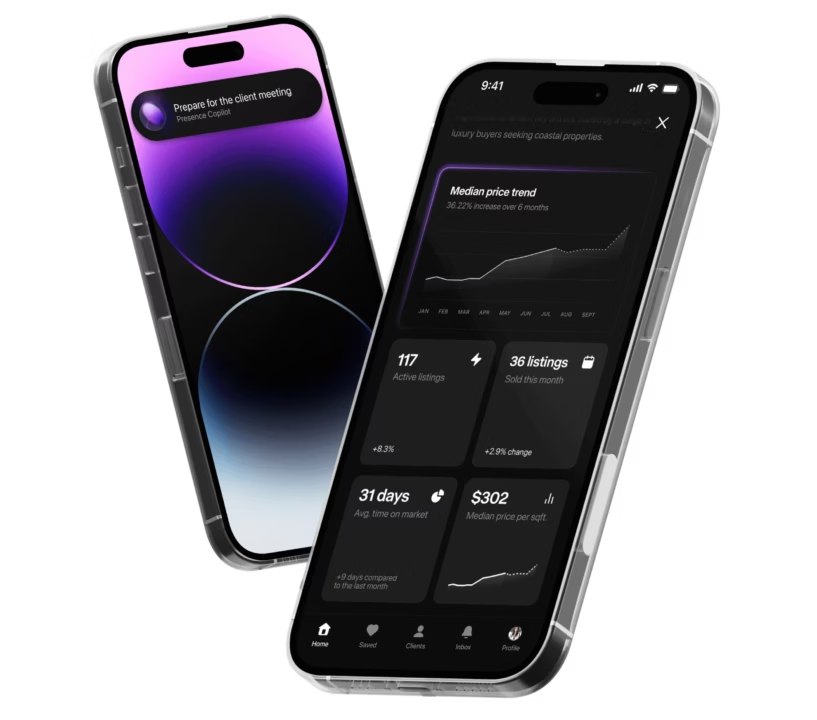
Meet your new app
Learn how Luxury Presence’s mobile solution boosts client collaboration and integrates AI to help agents stay organized.
About the author

Marketing Manager
Kate Evans is a content marketing strategist at Luxury Presence, the leading growth platform for high-performing real estate professionals. She develops data-driven editorial content and supports SEO strategy and brand voice frameworks that help agents attract qualified leads and establish market authority. Her published work covers topics including CRM strategy, social media marketing, and digital growth, supporting thousands of agents in scaling their businesses through modern marketing.