A virtual open house is one of the most practical ways for real estate agents to showcase a listing to a wider audience without adding extra showings to an already packed schedule. In 2026, this format has moved well past its pandemic-era origins and become a standard part of how buyers search for homes. Whether you go live on Zoom, stream on Instagram, or record a polished walkthrough, a virtual open house lets you connect with out-of-state buyers, busy professionals, and relocating families who might never attend an in-person showing. The key is having a repeatable workflow you can follow before, during, and after the event so every virtual showing generates real potential leads for your business.
Find It Fast
Key takeaways
- A virtual open house is an online property showing, conducted live or prerecorded, that removes geographic barriers and gives agents access to a much larger pool of prospective buyers.
- Choosing the right platform, preparing your equipment, and mapping your walkthrough route in advance are the three prep steps that separate a polished virtual showing from a forgettable one.
- During the live event, your on-camera energy, willingness to answer questions in real time, and clear calls to action determine whether viewers stay engaged or drop off.
- The real ROI comes after the event: prompt follow-up, sharing the recording across your social channels, and tracking attendee engagement turn a single showing into a long-term lead source.
- A structured before-during-after workflow makes virtual open houses repeatable, so you can run them consistently without reinventing your process each time.
What is a virtual open house?
A virtual open house is an online event where a real estate agent showcases a property to prospective buyers remotely, using live streaming or prerecorded videos. The agent guides viewers through the home room by room, highlights standout features, and provides commentary on the neighborhood, finishes, and layout. For live events, attendees can ask questions in real time through chat or audio. For prerecorded tours, the agent typically includes detailed voiceover narration and a clear call to action at the end.
Agents host virtual open houses on platforms like Zoom, Google Meet, Facebook Live, Instagram Live, and YouTube. Some agents also use 3D tour tools such as Matterport to create self-guided, interactive walkthroughs that buyers can explore on their own schedule. Both live and prerecorded formats serve the same goal: removing geographic barriers so more qualified buyers can experience the property without physically being there.
Why host a virtual open house in 2026?
Virtual open houses became standard practice during the 2020 pandemic lockdowns, but their staying power in 2026 has nothing to do with health restrictions. Buyers now expect the option to preview homes online before committing to an in-person visit, and agents who offer that option consistently report stronger engagement and a wider buyer pool. According to NAR’s 2026 Real Estate in a Digital Age report, the vast majority of home searches now begin online, making virtual showings a natural extension of how buyers already browse listings.
Here are the specific advantages that make virtual open houses worth adding to your marketing mix:
- They remove geographic barriers for out-of-state, relocating, and international buyers who cannot attend in person.
- They let you present a listing to a group of interested buyers at once, reducing the need to schedule multiple individual showings.
- They create less disruption for sellers, with no foot traffic, no staging resets, and no back-to-back appointment blocks.
- They help you filter serious buyers from casual browsers before scheduling private in-person tours.
- Many agents report higher attendance rates for virtual events than for traditional in-person open houses, particularly for listings with broad geographic appeal.
- They produce reusable video content you can share across your social media presence, email campaigns, and listing pages.
That difference is exactly why video-based showings outperform static listing photos when it comes to holding a buyer’s attention. A virtual open house gives you the chance to narrate the story of the home, point out details that photos miss, and build a personal connection with viewers, all in a format they can watch from anywhere.
How to prepare for your virtual open house
A strong virtual open house starts well before you press “Go Live.” The prep work you do in the days leading up to the event determines whether the experience feels polished and professional or scattered and forgettable. Here is a step-by-step breakdown of what to do before filming.
Choose your platform
The right platform depends on your audience size, how interactive you want the event to be, and how comfortable your viewers are with technology. Here is a comparison of the most common options agents use in 2026:
| Platform | Max participants | Free plan time limit | Best for |
| Zoom | 100 | 40 minutes | Interactive live tours with screen sharing and Q&A |
| Google Meet | 500 | 60 minutes | Large-audience tours with easy link sharing and no downloads |
| FaceTime | 32 | No limit | Small, intimate tours for a curated group of serious buyers |
| Facebook Live | Unlimited viewers | No limit | Reaching your existing social following with replay available |
| Instagram Live | Unlimited viewers | No limit | Casual, personality-driven tours that build your brand |
| YouTube Live | Unlimited viewers | No limit | Searchable, long-form tours with strong replay discoverability |
Zoom is the most widely used option for interactive virtual open houses. You can share your screen, record the session, and manage Q&A through the chat panel. The free plan supports up to 100 participants for 40 minutes.
Google Meet generates a shareable link for easy attendee access. It supports high-quality video, screen sharing, and up to 500 participants. It works across devices without requiring downloads. The free version of Google Workspace limits meetings to one hour.
FaceTime supports up to 32 participants in a group call. Unlike Zoom or Google Meet, it does not provide shareable meeting links. You must manually invite each attendee using their Apple ID or phone number, which makes it best suited for small, curated virtual tours rather than large-scale events.
Facebook Live, Instagram Live, and YouTube Live offer a more casual feel and can reach your existing social media followers without requiring registration. Your open house video will be available for replay on these feeds, giving the content a longer shelf life. YouTube is especially strong for search discoverability, since property tour videos can rank in Google search results.
Augmented reality (AR) and virtual reality (VR) tools can add another layer to the experience. AR features can overlay interactive elements like room dimensions, historical context for nearby landmarks, or furniture staging onto the live video feed. These tools are still emerging, but they are worth watching as the technology becomes more accessible.
Get the right equipment
You do not need a film crew to host a strong virtual open house, but a few pieces of equipment make a noticeable difference. Here is what to have on hand:
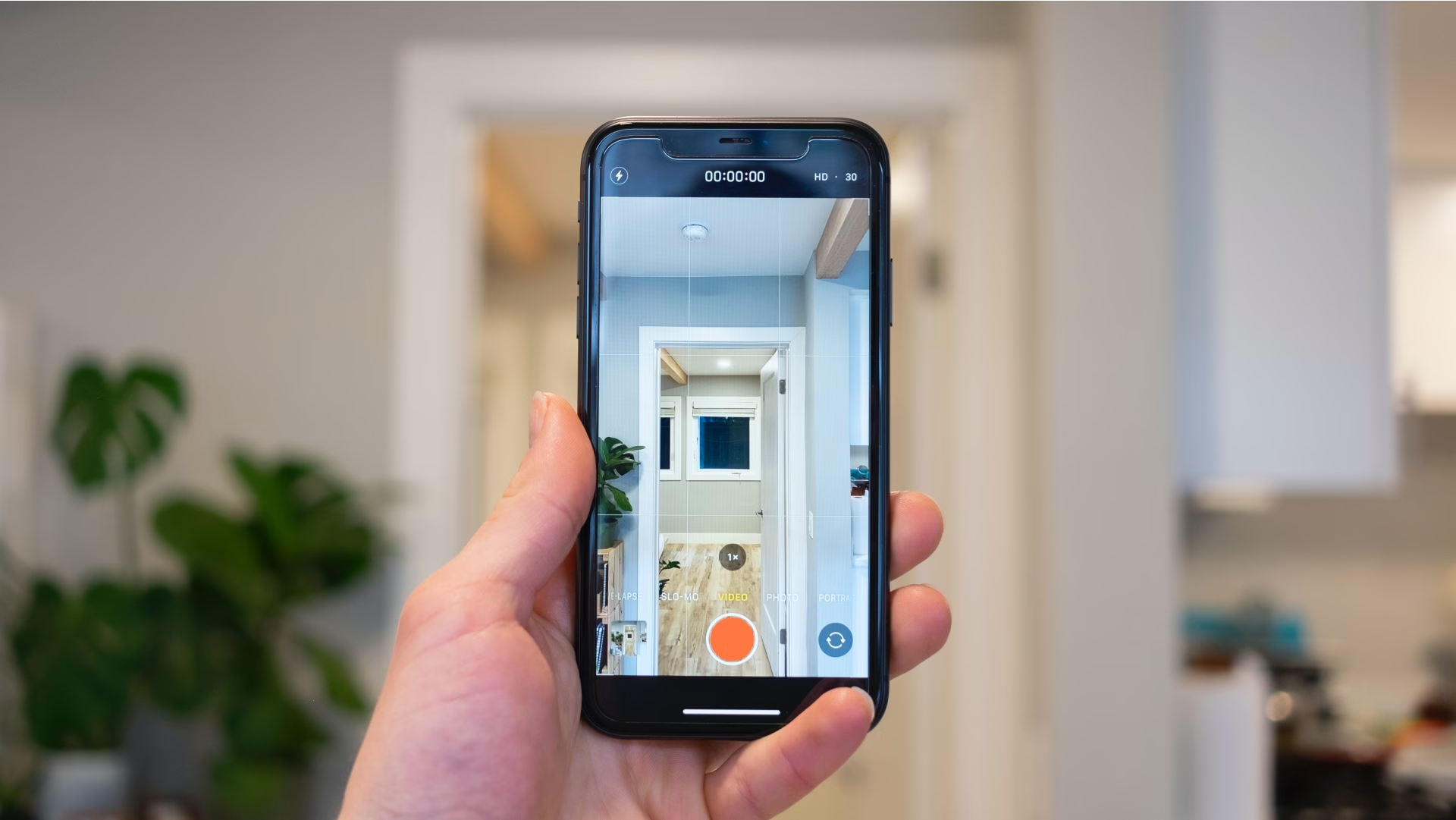
- Camera: For prerecorded tours, a DSLR (Digital Single-Lens Reflex) camera or a 360-degree camera produces clear, immersive visuals. For live tours, a recent-model smartphone with a strong rear camera works well.
- Microphone: A clip-on lavalier mic or a directional shotgun mic will give you much clearer audio than your phone’s built-in microphone, especially in large or echoey rooms.
- Stabilizer: A gimbal or handheld stabilizer keeps your footage smooth as you walk through the property. Shaky video is one of the fastest ways to lose a viewer’s attention.
- Internet connection: A stable Wi-Fi connection is non-negotiable for live streaming. If the property’s Wi-Fi is unreliable, consider using a mobile hotspot as a backup.
- Lighting: Open all blinds and turn on every light in the home. If natural light is limited, a portable LED panel can fill in dark corners.
Map your walkthrough route
Plan the exact path you will take through the home before you go live. Know which rooms you will show first, which features you will call out, and how long you will spend in each space. The ideal virtual tour runs 10 to 20 minutes, depending on the home’s size and the number of standout features worth highlighting.
Write a loose script or bullet-point outline so you do not forget key details like recent renovations, neighborhood highlights, or school district information. If you are presenting live, prepare for common buyer questions about square footage, lot size, HOA fees, and property taxes. Collect contact information from attendees through a registration form before the event so follow-up is simple.
Promote your virtual open house
A virtual open house only works if people show up. Start promoting at least five to seven days before the event using multiple channels:
- The listing itself: Add the virtual open house date, time, and registration link directly to the MLS listing and your website’s property page.
- Email: Send a dedicated email to your database and to cooperating agents in the area. Include the property address, two to three high-quality photos, and a clear registration link.
- Social media posts: Create a series of countdown posts on Instagram, Facebook, and LinkedIn. Use short video teasers of the property to build interest.
- Ad campaigns: Run targeted ads on Facebook and Instagram to reach buyers in specific demographics or geographic areas who are not already in your network.
Include the date, time, time zone, platform, and a direct link to join in every piece of promotional content. Make it as easy as possible for someone to register and add the event to their calendar.
What to do during your virtual open house
Your on-camera presence matters just as much as the property itself. Viewers are evaluating you as an agent while they evaluate the home, so treat every virtual open house as both a listing presentation and a personal branding opportunity. Stay warm, stay confident, and keep moving through the home at a steady pace. If technical difficulties come up, handle them calmly. Your composure under pressure tells viewers a lot about what it would be like to work with you.
1. Set the stage
Start by welcoming everyone and setting expectations. Introduce yourself, name the property address, and give a quick overview of what attendees will see during the tour. Let viewers know when and how to ask questions. For live events, point them to the chat panel. For prerecorded tours, tell them exactly how to follow up, whether that is emailing you, filling out a form, or calling your office.
2. Give the guided tour
Walk through the property room by room, narrating as you go. Call out the features that matter most to buyers: natural light, storage, layout flow, recent upgrades, and outdoor space. Move your camera slowly and steadily so viewers can take in each room before you transition to the next. If you are using a 3D tour tool like Matterport, guide attendees through the space with voiceover commentary while they follow along on screen.
3. Interact with attendees
For live virtual open houses, engagement is everything. Ask viewers what they think of the kitchen. Invite them to guess the square footage of the primary suite. Check the chat every few minutes and respond to questions as they come in. This back-and-forth is what separates a live virtual showing from a static video tour, and it is where you build real rapport with potential buyers.
For prerecorded tours, anticipate the questions buyers are most likely to ask and answer them during the narration. Share details about the neighborhood, nearby schools, commute times, and recent comparable sales. The more specific you are, the more useful the recording becomes as a standalone resource.
4. Address questions and wrap up
After the walkthrough, set aside three to five minutes for a dedicated Q&A session. Answer every question you can, and for anything you do not know on the spot, commit to following up within 24 hours. Then close with a clear call to action: tell viewers how to schedule a private in-person showing, how to submit an offer, or how to get on your list for similar upcoming listings. Thank everyone for their time and share your direct contact information on screen.
Trust starts during the virtual open house itself. Every detail, from how you present the home to how you handle questions, signals to buyers and future seller clients that you take marketing seriously.
How to convert leads from a virtual open house
The event itself is only half the work. What you do in the 24 to 48 hours after the virtual open house determines whether those viewers become real conversations or just another set of names in your database. Here is a follow-up workflow you can repeat after every event.
Send a thank-you message within 24 hours
Send a short, personal thank-you email to every attendee. Reference the specific property they viewed, include a link to the recording if one is available, and ask if they have any additional questions. A personal video message recorded on your phone adds warmth and helps you stand out from the dozens of automated emails buyers receive from other agents.
Share the recording everywhere
If your virtual open house was recorded, post it on your YouTube channel, share it to your Instagram and Facebook feeds, embed it on the listing page of your website, and email it to registrants who did not attend. This single recording can generate views and inquiries for weeks after the live event ends. Every share extends the life of the content and puts the listing in front of new audiences.
Make follow-up calls or emails to high-interest attendees
Review your attendee list and identify the viewers who asked detailed questions, stayed for the full tour, or clicked on links you shared in the chat. These are your warmest leads. Reach out within 48 hours with a direct phone call or a personal email offering to schedule a private showing. A thoughtful, timely follow-up is often the difference between a lead that goes cold and a lead that becomes a client.
Ask for feedback and review your analytics
Send a one-question or two-question survey to attendees asking what they liked about the event and what could be better. Most virtual platforms provide analytics like total attendance, average viewing time, and drop-off points. Use this data to refine your approach for the next virtual open house. If viewers consistently drop off at the 12-minute mark, for example, you know to tighten your tour or move your strongest rooms earlier in the walkthrough.
Keep attendees in the loop on listing updates
If the property’s price changes, if it goes under contract, or if a similar listing comes on the market, send a quick update to everyone who attended. This keeps the conversation going and positions you as the agent who stays in touch, not just the agent who hosted one event. Over time, these small touchpoints build the kind of relationship that leads to referrals and repeat business.
Making Virtual Open Houses Work for Every Listing
When you plan your platform, equipment, walkthrough, promotion, and follow-up in advance, a virtual open house becomes more than a one-time showing. It turns into a repeatable marketing system that reaches more buyers, creates less disruption for sellers, and gives you more opportunities to convert interest into real leads. The agents who see the best results are the ones who treat each event as part of a larger, consistent process.
FAQs
Run your social strategy by our experts
From developing a calendar to posting content, our team can grow your following, increase engagement, and establish you as a market and lifestyle expert.
About the author

Marketing Manager
Kate Evans is a content marketing strategist at Luxury Presence, the leading growth platform for high-performing real estate professionals. She develops data-driven editorial content and supports SEO strategy and brand voice frameworks that help agents attract qualified leads and establish market authority. Her published work covers topics including CRM strategy, social media marketing, and digital growth, supporting thousands of agents in scaling their businesses through modern marketing.