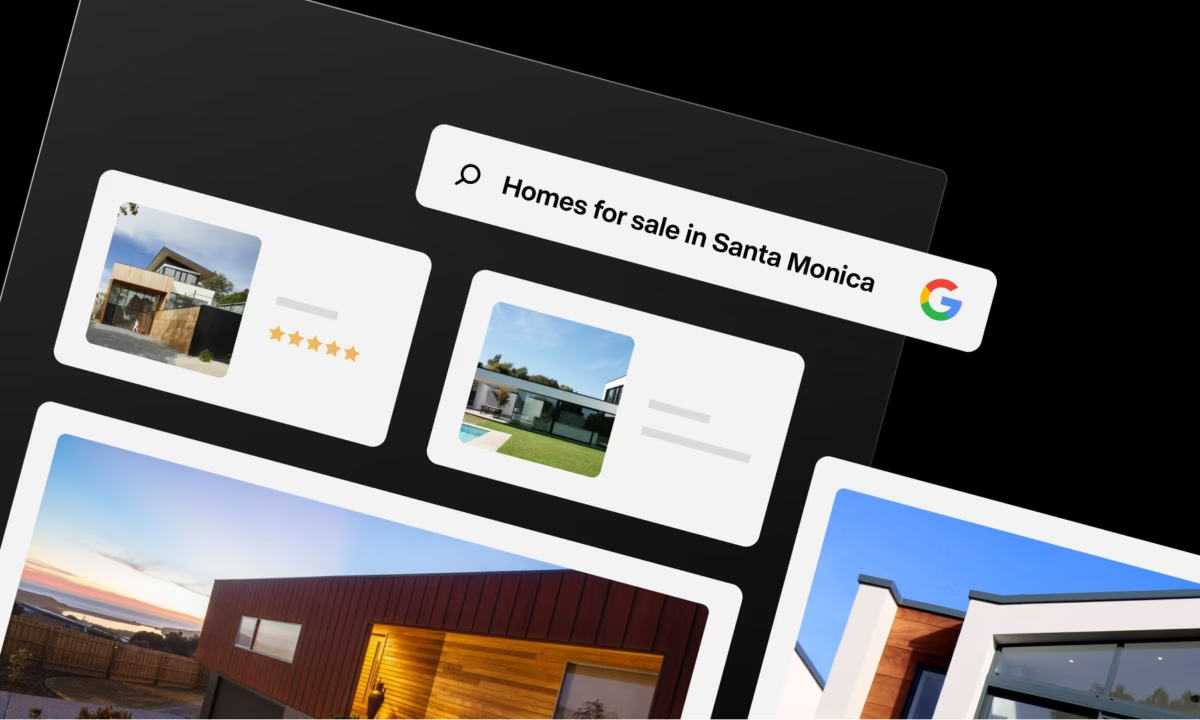
In 2026, the agents winning the most listings are not spending more hours writing ad copy. They are using AI to produce high-performing real estate ads in a fraction of the time it once took. If you have been wondering how to use AI for real estate ads without sacrificing quality or brand consistency, this guide breaks down the exact workflow: what AI can do for your paid advertising, how to prompt it for each platform, and how to keep every output on-brand and compliant before it goes live. Real estate advertising has shifted from a creative bottleneck to a speed-and-testing game. Agents who can launch more ad variations, test more angles, and promote more listings in less time are pulling ahead. AI makes that possible, but only when you know how to direct it. Below is the playbook.
Find It Fast
Key takeaways
- AI-powered ad creation lets agents produce platform-specific copy for MLS (Multiple Listing Service), Instagram, Facebook, and Google in seconds rather than hours.
- The biggest advantage is not just speed. It is the ability to run more creative variations and test more angles per listing, which directly improves ad performance.
- Every AI-generated ad must be reviewed for accuracy, Fair Housing compliance, and brand voice before publishing. Nothing should go live without agent approval.
- Matching ad format to platform matters: detailed descriptions for MLS, lifestyle-driven captions for social, keyword-focused headlines for search.
- Presence Ad Engine from Luxury Presence handles ad copy, audience targeting, and budget allocation so agents can run campaigns without managing every detail manually.
Why real estate ads demand more in 2026
Volume is the first pressure point. The 2024 National Association of Realtors Member Profile reports that the average Realtor completes 10 transactions per year. According to Luxury Presence internal data, Luxury Presence clients averaged nearly 25 transactions in 2024. That gap means high-performing agents need to produce two to three times more ad creative per year just to keep up with their own deal flow. The second pressure point is buyer expectations. High-performing agents and teams know that clients in 2026 expect more than square footage and bedroom counts. Buyers want storytelling and vivid descriptions that paint a picture of a home’s atmosphere and the lifestyle it offers. That kind of writing takes time, and time is the one resource most agents cannot manufacture.
“Paid ads have been a proven model for success in real estate since the paid ad model on the internet came to be.”
— Chris Linsell, Real Estate Coach and Contributor, an industry publication
Linsell’s point underscores why the ad creation bottleneck matters so much. Paid advertising works in real estate. The constraint is not whether to run ads but how fast you can produce enough quality creative to feed your campaigns. That is exactly where AI enters the picture.
How AI speeds up real estate ad creation
Artificial intelligence, especially large language models like GPT-5, can produce tailored property descriptions using minimal input from the agent. Feed in the property size, neighborhood, and standout features, and the model returns ad copy formatted for whichever marketing channel you need. Here is what that means in practice for your real estate AI ad workflow:
- Speed: Agents can generate complete property descriptions in seconds, freeing hours each week for client interactions and negotiations.
- Consistency: AI maintains a uniform tone and style across all marketing materials, so your brand voice does not drift from listing to listing.
- Testing at scale: Instead of writing one ad and hoping it works, you can generate five or six variations in the same sitting and A/B test headlines, hooks, and calls to action.
- Customization: Most AI tools allow adjustments to writing style, length, and keywords, supporting your brand voice and SEO goals simultaneously.
According to Luxury Presence internal data, the company manages more than 40,000 live websites for clients and generated more than 100 million website visitors in 2025. That digital reach depends on fresh, distinctive content that attracts both buyers and search engines. AI-driven ad and content tools help maintain that standard regardless of how many listings an agent handles.
The Ultimate
AI Prompt Guide
The shortcut to AI mastery starts here.
AI-generated real estate ad examples by platform
Below are examples of short, AI-crafted real estate ads for different marketing platforms. Each was generated from the same property details but adapted for the channel’s format and audience.
MLS listing description
“Step into this stunning 3-bedroom, 2.5-bath home nestled in Austin’s sought-after Zilker neighborhood. Featuring 2,600 square feet of modern living space, a chef’s kitchen with quartz countertops, and an expansive backyard perfect for outdoor entertaining. Enjoy walkable access to Barton Springs, eclectic dining, and vibrant nightlife.”
Instagram post
“Modern vibes in the heart of Austin. This Zilker stunner has an airy layout, a gourmet kitchen, and a backyard built for sunset gatherings. DM for a private tour.”
Facebook ad headline
“Modern Zilker Home with Designer Finishes. Schedule Your Private Showing Today.”
Google ad snippet
“Discover a modern Austin home in Zilker with open floor plan and gourmet kitchen. Find your dream home today.” Notice how the same property data produces four distinct outputs. The MLS version is factual and detailed. The Instagram version is short and emotional. The Facebook ad leads with a benefit-driven headline. The search ad is keyword-focused and concise. AI handles these format shifts in seconds.
How to use AI for real estate ads on each platform
Different digital channels require different ad formats. Here is a step-by-step approach to prompting AI for each, so you can apply this to your next listing on Monday morning.
- Write MLS listing descriptions. Aim for detailed, factual descriptions. Highlight property features, layout, and upgrades. Use a prompt like: “Write a detailed MLS description for a 4-bedroom home in Austin’s sought-after Zilker neighborhood with modern finishes, a chef’s kitchen, and a backyard pool.”
- Create Instagram and TikTok captions. Focus on lifestyle and emotion. Keep text concise, conversational, and visually descriptive. Use a prompt like: “Create an Instagram caption under 40 words showcasing a luxury kitchen with marble countertops and floor-to-ceiling windows.”
- Draft Facebook ad copy. Combine attention-grabbing headlines with brief, engaging copy and a clear call to action. Use a prompt like: “Write a Facebook ad for a luxury condo in downtown Austin, highlighting skyline views and building amenities.”
- Generate search ad headlines. Keep headlines and snippets short, keyword-rich, and benefit-focused. Use a prompt like: “Generate search ad headlines for a modern home in Los Angeles with eco-friendly features.”
The pattern is simple: tell the AI the platform, the property details, and the tone you want. Then review, edit, and approve before anything goes live.
AI ad tools compared for real estate in 2026
Not every AI tool is built for real estate advertising. The table below compares common approaches agents use in 2026 to generate ad copy, along with their strengths and limitations.
| Tool / Approach | Primary use case | Output type | Strengths | Limitations |
| ChatGPT / GPT-5 (direct prompting) | General ad copywriting | Text (any format) | Flexible, fast, free or low cost | Requires manual prompting per listing, no ad management |
| Canva AI / Magic Write | Social media graphics with captions | Text + image templates | Visual output, easy for social posts | Limited real estate context, no paid ad deployment |
| Jasper AI | Marketing copy at scale | Text (ads, blogs, emails) | Brand voice training, multiple templates | Not real estate-specific, no campaign management |
| Presence Ad Engine (Luxury Presence) | Real estate paid advertising | Ad copy + campaign management | Built for real estate, handles targeting and budget, agent approval before publishing | Available only to Luxury Presence clients |
| Meta Advantage+ Creative | Facebook/Instagram ad variations | Auto-generated ad variations | Native to Meta, auto-tests creative | Limited to Meta platforms, less control over copy |
The takeaway: general-purpose AI tools give you raw copy. A real estate marketing platform like Presence Ad Engine gives you copy plus campaign execution, all built around the way agents actually work.
Five rules for AI-generated real estate ads
AI can help real estate professionals work faster and produce high-quality marketing materials. But speed without guardrails creates risk. These five rules keep your AI-generated ads accurate, compliant, and on-brand.
Fact-check every output
AI is a powerful writing assistant, but it can produce incorrect details about properties, neighborhoods, or market conditions. Always review and verify any AI-generated copy before publishing it in listings, ads, or social posts. A wrong square footage number or a misnamed school district erodes trust fast.
Protect personal and client data
When using AI tools, avoid entering sensitive or personally identifiable information about clients or transactions. Stick to property details and marketing information that you would be comfortable sharing publicly. This is especially relevant when using third-party AI tools that store prompt history.
Stay compliant with fair housing laws
Marketing language must follow local, state, and federal laws, including the Fair Housing Act. AI-generated text can sometimes include wording that may unintentionally violate regulations, such as making statements about preferred buyers. Review all copy to confirm it remains compliant before approving it for publication.
Customize for your brand voice
Many AI tools allow you to adjust tone, style, and phrasing. Take advantage of these features to match your brand’s voice and maintain consistency across all marketing channels. If your brand is warm and conversational, train the AI on that. If it is polished and formal, set those parameters upfront.
Keep language inclusive and welcoming
Strive for language that feels inviting to all potential buyers. Inclusive copy can expand your reach and build a positive reputation in your market. Run a quick review of every AI draft to catch any phrasing that could unintentionally exclude or alienate a segment of your audience.
“AI should help only to amplify and enhance, and fasten the production of those elements and assets.”
— Michaela Fus, Real Estate Marketing Strategist
That framing is exactly right. AI is the amplifier, not the author. You set the direction, review the output, and approve what goes live. The speed gain is real, but the quality control stays with you.
Your brand starts here
Use this companion to Josh Flagg’s masterclass to elevate your marketing and sharpen your online presence.

How Presence Ad Engine runs your campaigns
Busy real estate professionals juggle dozens of listings, client meetings, and market research every week. Many want to run digital advertising campaigns but find the process of writing copy, setting targeting parameters, and managing budgets too time-consuming. Presence Ad Engine from Luxury Presence solves that problem by combining AI-powered copywriting with done-for-you ad management. The system generates polished ad copy tailored to specific property features and target audiences. Agents can quickly create ads for platforms such as Facebook, Instagram, and search engines without starting from scratch each time. Presence Ad Engine also handles audience targeting and budget allocation, helping ensure that marketing dollars are spent where they produce results. Agents review and approve all content before it goes live. The results speak for themselves. Frontgate Real Estate spent $1,400 on a Luxury Presence ad campaign that generated 43 leads at $32 per lead and contributed to a $6 million sale.
“There was nothing I needed to do, it just did it. I didn’t have to do anything, I just had to look [at my notifications].”
— Jeff Biebuyck, Co-Founder, Frontgate Real Estate
That kind of return, $1,400 in ad spend turning into a $6 million transaction, illustrates what happens when AI-driven ad creation is paired with smart targeting and a system that runs in the background while you focus on clients. (Source: Luxury Presence Case Study: Frontgate Real Estate, 2024) 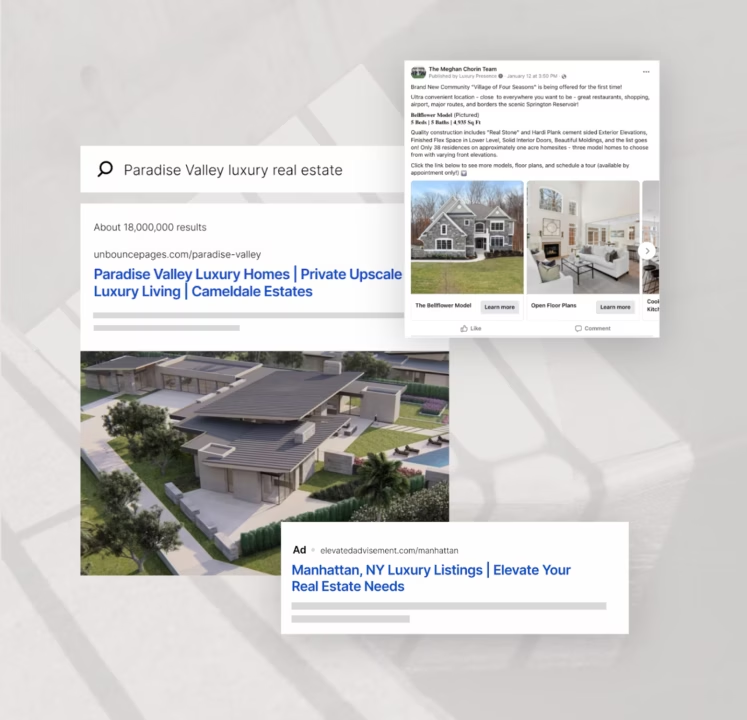
Trust our team with your ads
Our advertising experts routinely run hyper-targeted campaigns that are proven to convert in search and social, sending high-quality leads directly to the databases of top producers all over the country.
Keeping high-end marketing standards with AI in 2026
High-end buyers expect marketing that matches the properties they view. Descriptions should convey exclusivity, style, and detail. AI helps ensure that even as an agent’s workload grows, the level of polish in marketing materials stays consistent from listing to listing. According to Luxury Presence internal data, the company serves more than 80,000 real estate professionals, including many of the country’s top producers, and partners with leading brokerages such as Compass, Coldwell Banker, and Berkshire Hathaway HomeServices. That client base reflects a commitment to delivering sophisticated digital marketing that aligns with how top agents want their brands represented. The pace of digital advertising continues to accelerate. In the first half of 2025, Luxury Presence generated nearly 400,000 leads for real estate professionals through a blend of organic and paid strategies, according to Luxury Presence internal data. Maintaining visibility in this landscape requires the kind of always-on marketing system that produces professional-grade content at AI speed, with agent-approved quality control on every piece.
FAQs
About the author

Marketing Manager
Kate Evans is a content marketing strategist at Luxury Presence, the leading growth platform for high-performing real estate professionals. She develops data-driven editorial content and supports SEO strategy and brand voice frameworks that help agents attract qualified leads and establish market authority. Her published work covers topics including CRM strategy, social media marketing, and digital growth, supporting thousands of agents in scaling their businesses through modern marketing.