

The Grand Ballroom at the Four Seasons Hotel Denver was crowded for the Wednesday morning session on September 30 at the Who's Who in Luxury Real Estate Fall Conference, with roughly 150 attendees, most of them brokerage owners, principals, and managing brokers. Two screens flanked the stage. After a short introduction, Malte Kramer worked through his prepared remarks and deck for 20 minutes, and then the room took over.
Kramer built his session around a lunch conversation in Los Angeles. An agent with more than 2 billion in career sales volume told him she knows the details about every one of her most important clients, and "everyone else gets the newsletter." Kramer, the founder and CEO of Luxury Presence, took that as an accurate picture of how most agents market today.
Kevin Van Eck, principal at Maverix Advisory Group, introduced Kramer by telling the room that any conversation with him "goes in places you didn't expect," and then moderated the conversation that followed. In his 20 minutes on stage, Kramer made one core argument: a database is "a stack of unfinished conversations with people who are likely to transact in the future," and AI makes it possible to pick those conversations back up at scale.
Content volume has lost its edge
For a decade, marketing advice for agents centered on output. Kramer cited Alex Hormozi's call to do 10,000 times more and Gary Vaynerchuk's instruction to fall in love with volume. AI then put unlimited content within reach of everyone, and published content is growing exponentially across the categories he charted, from books and songs to scientific papers and self-represented lawsuits.
Kramer reported that over the last six months, AI-generated content has outpaced human-written content online for the first time. An agent publishing a newsletter or a blog post now competes with machines for attention, and every channel has grown more saturated as a result. His conclusion is that the mass marketing playbook is dying.
AI search works as a matchmaker
Google still sends about 100 times more traffic to Luxury Presence client websites than any AI search engine, and ChatGPT traffic is up 300% over the last 12 months, faster growth than any other channel. A recent survey found that 67% of consumers use AI when researching a real estate agent, up from 17% a year earlier.
Consumers now give ChatGPT the full picture of their situation, such as a busy entertainment executive moving from New York to the Hollywood Hills who asks which agent to work with. ChatGPT often answers with a single name.
Kramer compares that process to a matchmaking algorithm, which pairs people based on how closely their details line up, so the agents it can match are the ones whose messaging says exactly who they serve and what they do for them.
Specificity gives the matchmaker something to work with

Luxury Presence scored a sample of client websites on how specific the homepage copy is. Sites in the 80th percentile generated about six times more leads than sites in the 20th, which fits what a visitor experiences when a page speaks directly to their situation.
Kramer's example of an agent who helps entertainment executives relocate from New York to the Hollywood Hills sits at the far end of the range, and he acknowledged that agents worry about losing business outside a narrow niche.
When a Chicago agent asked where the middle is, he suggested studying the current client base for patterns. Early-career agents go narrower, and established agents can broaden as success accumulates. His wife, 18 months into her career, markets to first-time homebuyers in Silver Lake who care about a healthy lifestyle.
The content already exists inside the business
Agents tell Kramer they lack the time to come up with content ideas, so he points them to the stories already unfolding in their businesses.
One Luxury Presence client asks happy buyers and sellers for a 15-minute recorded Zoom interview after closing, then turns the transcript into social posts, newsletters, and website case studies. That body of work tells AI search engines what her business is about and who it serves, which supplies the specificity matching depends on.
In the Q&A, Kramer said an agent's positioning should show up consistently everywhere they publish, from the homepage headline to blog posts, case studies, reviews that name a specific type of home, and video on YouTube and Instagram.
Google Business Profile gets cited most by AI search engines and also helps Google search, so he named it the profile to prioritize.
He added that PR has gained value, with mentions in local business journals, sales rankings, and national publications all carrying weight.
A database becomes a list of reasons to call
Kramer's second opportunity sits with the people who already know an agent. A good message has a reason behind it, and job changes, school changes, and other life milestones qualify. AI can now track those events across thousands of contacts, enrich each record, and tell an agent when to reach out.
He shared the story of an agent whose Luxury Presence tool flagged one morning that a client had taken a new job, which it found on LinkedIn. She called to congratulate the client, and because the new role meant relocating, the conversation led to a listing appointment. She won the listing and sold the home.
Website behavior produces signals too, such as a visitor returning five times to the same listing or repeatedly opening listing alerts. Smart Actions, part of the AI CRM Luxury Presence launched earlier this year, delivers 10 to 20 contacts each day with a pre-written message and the reason each one was selected.
All of it depends on captured context. Kramer asked the room who uses a transcription tool for client calls and meetings, and about half raised a hand.
For messaging apps such as WhatsApp, he recommended separate business and personal lines so business conversations can sync back to a CRM.
Then the room took over
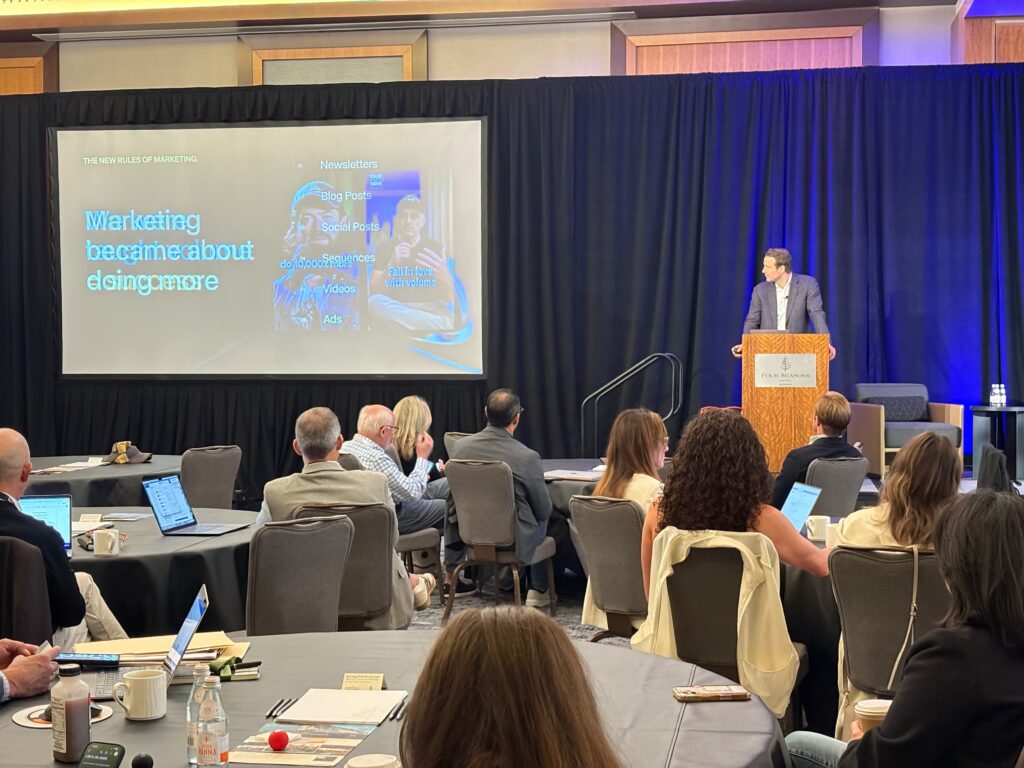
When the prepared remarks ended, Van Eck moved through the room taking questions.
One attendee asked how to add contacts to her CRM, and Kramer answered with specifics on the spot, from entering a contact directly to uploading a spreadsheet to connecting Gmail so new contacts sync automatically.
Another attendee wanted a page on her website that updates itself with events at the waterfront parks in her city, with Claude gathering the listings. Kramer said Luxury Presence has ways to push content into and out of its system, and that the answer depends on the API used to pull the events. "I don't know if it's possible, but let's talk," he told her, and pointed her to her customer success manager.
A follow-up asked whether the CRM could tell her that a contact had taken a new job and put that call on her list of daily contacts. Kramer said that is one of the things it does, tracking job changes from LinkedIn.
Another Luxury Presence client used her turn at the microphone to say that her assistant, who writes her blogs, finds the platform easy to use. "So she's happy," she said. "I'm happy."
Why the advisor gains value
Asked where AI goes next, Kramer described an opportunity for agents who are already successful to grow faster, raise the quality of their work, and run more profitable businesses. He expects relational and advisory professions to do best, because abundant information raises the need for someone to interpret it.
When he asks Claude, ChatGPT, and Gemini the same question, he often receives three different answers, and the next step is a call to someone who has spent 20 years in the field.
Van Eck added his own view from the moderator's seat, that AI raises the bar for advisors and moves an agent's value up toward strategy, local intelligence, and empathy.
Kramer agreed. Clients can check an agent's statements against ChatGPT in seconds, which raises the value of agents who know their material.
On choosing technology partners, Kramer weighed a company's pace of innovation above its current position, then looked at whether agents love using the product and how well the company protects data and privacy.
Three steps, and the lunch revisited
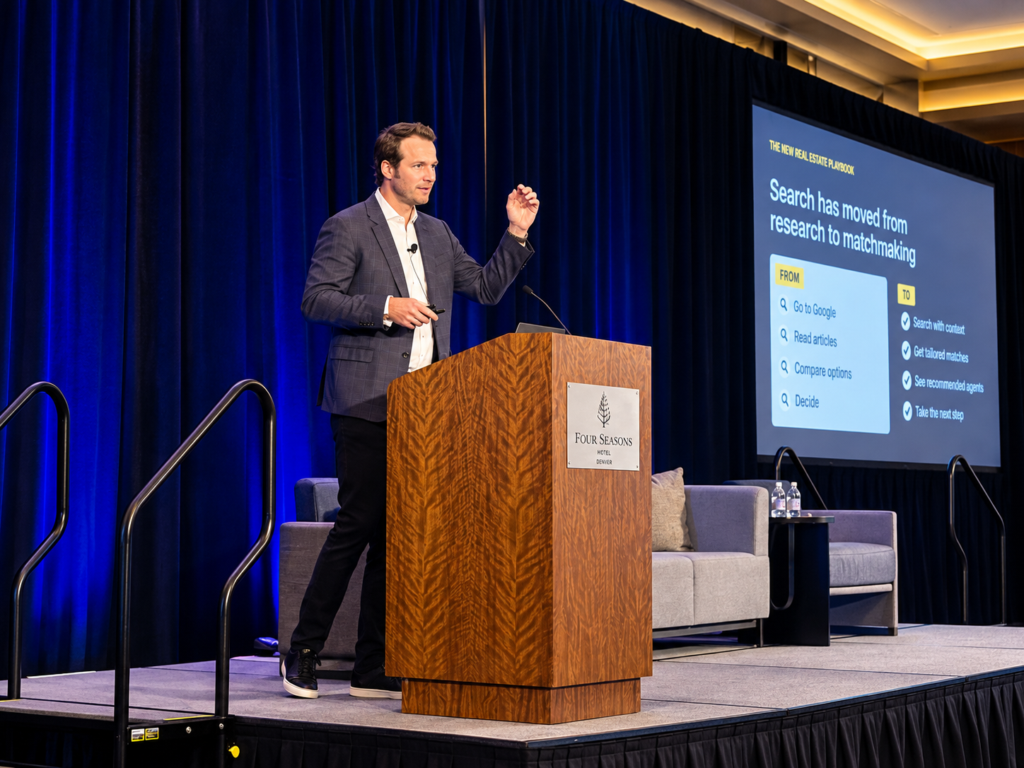
Kramer closed his prepared remarks with three steps, and Van Eck asked him to repeat them to end the conversation.
Pick a lane by deciding who the ideal client is and what you do for that person, then go narrower than feels comfortable.
Build a system for capturing the stories already taking place in the business, even if it starts as a Zoom call with a past client or vendor.
Capture the context of the business, especially call transcripts and the communication between agent and client.
The agent at that Los Angeles lunch already holds the hard-won knowledge about her top clients. Each of Kramer's steps moves that knowledge out of one person's memory and into a system that can act on it for everyone in the database.
The session description names the goal as giving thousands of contacts the same personal attention agents reserve for their top 50, and the contacts now receiving the newsletter are the ones who stand to hear from an agent on the morning something changes in their lives.
Ready to grow?
Turn your content into your best lead source
See how Luxury Presence helps agents turn website visits into closed deals