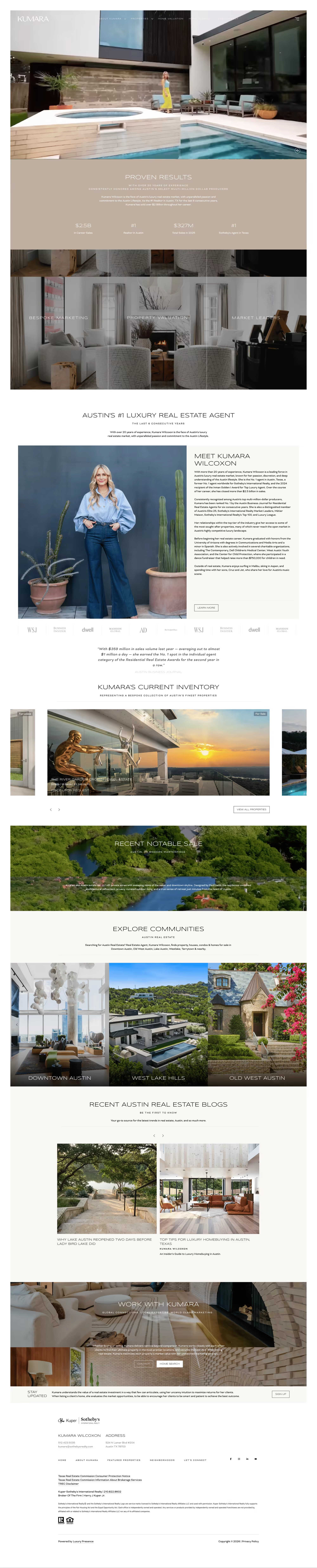
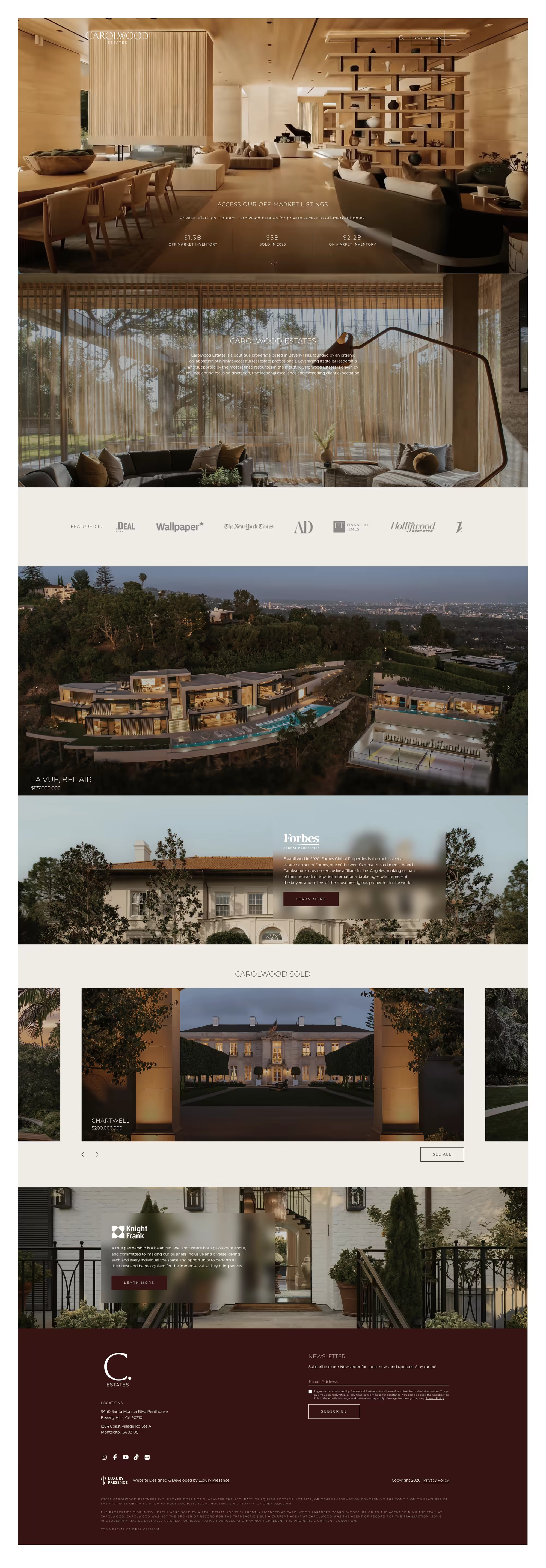
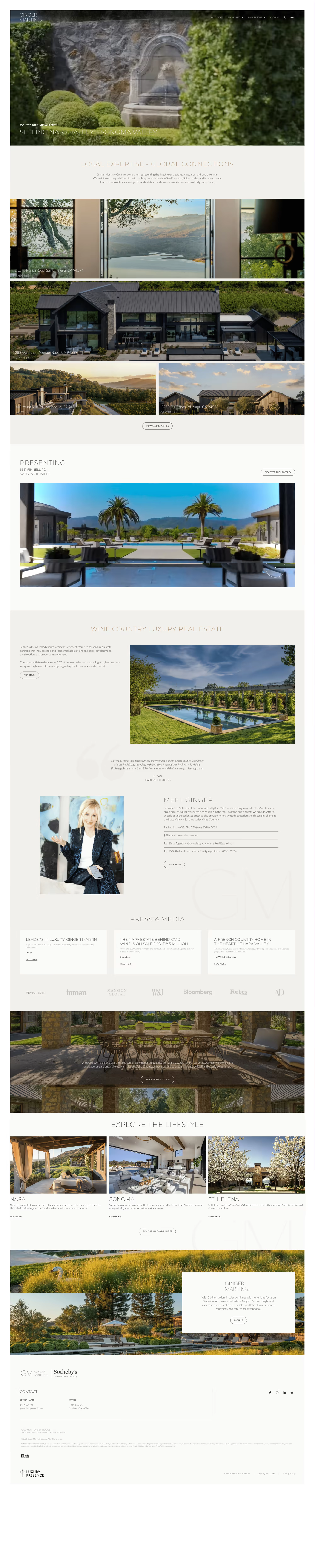
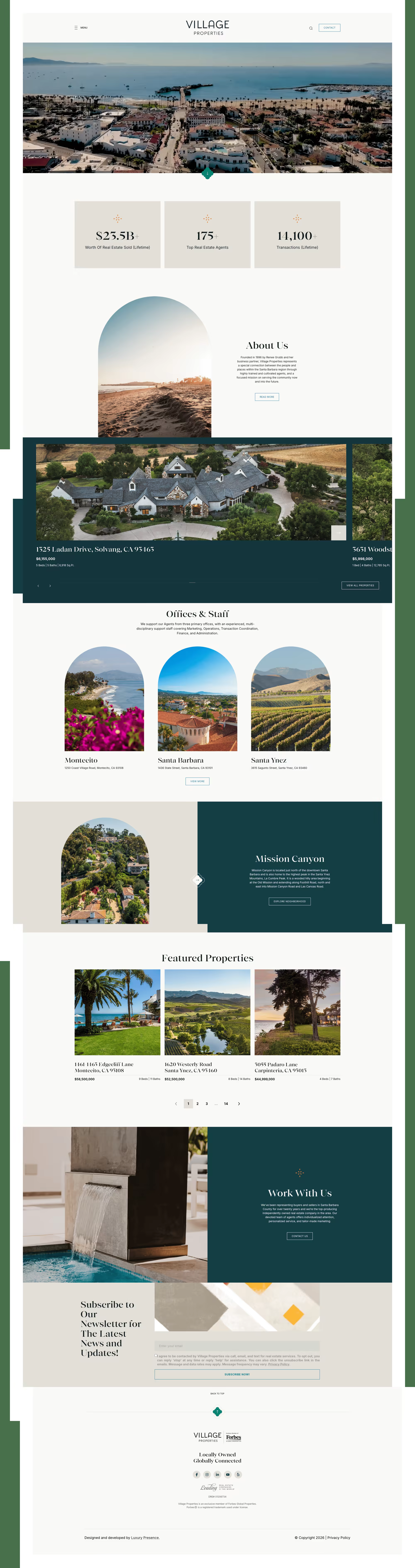
The best real estate websites in 2026 share a set of specific, observable design and functionality decisions that separate them from the thousands of forgettable agent sites cluttering search results. According to the National Association of Realtors (NAR), the majority of home buyers begin their search online before ever contacting an agent (National Association of Realtors, 2024). That means your real estate website design is not a digital business card. It is the first showing of your brand, and it either earns the next click or loses the prospect entirely. This article breaks down five high-performing real estate websites, examines the specific features that make each one work, and distills the lessons into a playbook you can apply to your own site.
Editorial note: The websites featured in this article were designed and built by Luxury Presence. They are presented as examples of effective real estate website design based on observable features and publicly available performance data.
Key takeaways
- A real estate website’s visual design must communicate market position within the first two seconds of page load, before a visitor scrolls or clicks.
- Integrated Multiple Listing Service (MLS) search placed in the primary viewport reduces friction between a visitor’s arrival and their first listing interaction.
- Video content on property pages drives deeper engagement than static photography alone, keeping buyers on-site longer and building emotional connection to listings.
- Social proof architecture, including verified sales figures, media logos, and client testimonials, reduces buyer hesitation at every stage of the site experience.
- Brand identity and site performance are not trade-offs. The MGS Group saw 371% more leads after redesigning their site to preserve their brand while improving speed and search visibility (Source: Luxury Presence Case Study: MGS Group, 2025).
- Content depth, including neighborhood guides, market reports, and buying resources, positions an agent’s website as a destination rather than a pass-through.
Why the best real estate websites dominate the market in 2026
The gap between high-performing real estate websites and average ones is measurable in lead volume, time-on-site, and search visibility. A poorly designed site that loads slowly, displays incorrectly on mobile devices, or fails to communicate credibility will lose visitors within seconds. In 2026, buyers have more options at their fingertips than at any previous point in the history of residential real estate. If your site does not earn their trust on the first page load, they will close the tab and find an agent whose site does.
Mobile traffic now accounts for the majority of real estate website visits. Google’s Core Web Vitals continue to influence how real estate sites rank in search results. Buyers in 2026 expect fast load times, clear navigation, and property search tools that work without friction on any device. A site that fails on any of these dimensions is not just underperforming. It is actively pushing potential clients toward competitors.
The solution: build a real estate website that earns attention and converts it
A well-designed real estate website communicates your market position, your track record, and your quality of service before a visitor reads a single word of copy. The visual design, the speed of the page, and the clarity of the navigation all contribute to a first impression that lasts long after the initial visit. Getting this right is not simple. It requires deliberate decisions about layout, content, functionality, and brand identity working together.
The good news: there are specific, observable patterns that the best real estate agent websites share. Below, we break down five sites that demonstrate those patterns and explain exactly what you can learn from each one.
Our top 5 real estate website picks for 2026
Before we examine each site individually, here is a comparison of the five featured websites across the design and functionality criteria that matter most for real estate website performance in 2026.
| Website | Visual brand identity | Video integration | MLS search placement | Content marketing depth | Social proof architecture |
| Hilton and Hyland | Full-screen cinematic hero with dark color palette signaling high-end positioning | Property-level video tours with production-grade cinematography | Prominent search bar in primary viewport | Blog and market insights section | Sales volume figures and industry awards displayed above the fold |
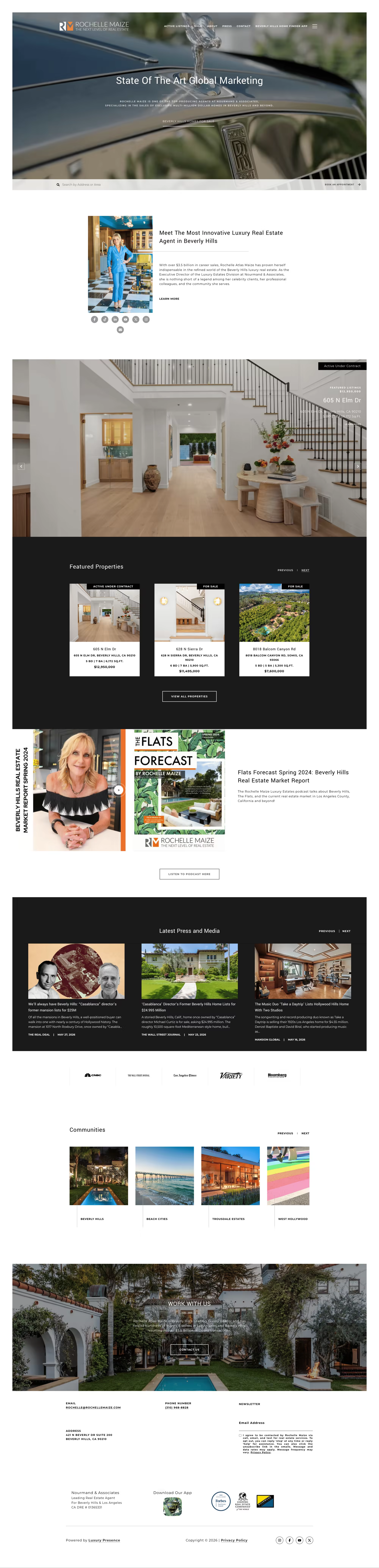
| Rochelle Maize | Clean, minimal layout with bold featured listing imagery | Video content integrated into blog and listing pages | MLS search field positioned in the top navigation area | Regularly updated blog, video library, and market updates | Media logos (Bloomberg, CNBC, Forbes) and career bio on homepage |
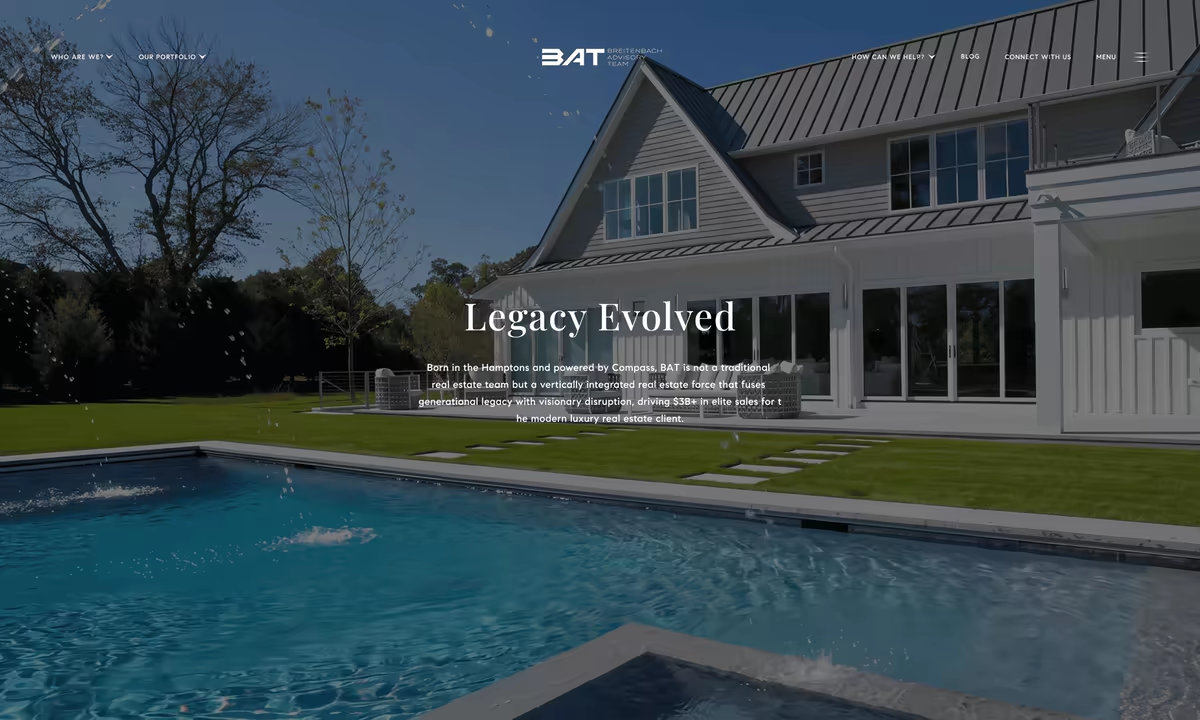
| The Breitenbach Advisory | Editorial-style design reflecting Hamptons market aesthetic | HD video on property pages and about page | Search accessible from main navigation | Community-focused content on property pages | Celebrity client stories, testimonial sliders, and media mentions |
| Carlin Wright | Warm, personality-driven design with consistent personal photography | Moderate video use across select pages | Accessible through navigation | Buying guides, community profiles, and market updates as a content hub | Past transaction page with verified sales history |
| Jonathan Radford | Award-winning visual design with full-bleed imagery on every page | Dedicated “Movies” tab with video resume and property films | Integrated into site navigation | Resource pages and property-specific content | Scrolling testimonial wall from past clients |

1. Hilton and Hyland
Hilton and Hyland is one of the most recognized brokerages in the high-end residential market. Their website is built around a single design principle: the visual brand identity must communicate market position within the first two seconds of page load. Every element on the homepage, from the dark cinematic color palette to the full-screen property imagery, reinforces that this is a firm operating at the top of the market.
Stand-out features
The homepage hero section uses full-screen, production-grade video and photography that fills the entire browser viewport. There is no clutter above the fold. The design borrows visual cues from high-end fashion and automotive brands, which signals to the visitor that this brokerage operates at the same level as the brands their audience already trusts.
Sales volume figures, including properties that have traded at nine-figure price points according to the firm’s own reporting, are displayed prominently on the homepage. These figures are not buried in an “About” page. They appear in the natural scroll path, reinforcing credibility before a visitor ever reaches the listing search.
The site performs consistently across mobile and desktop. Navigation elements resize and reposition cleanly on smaller screens, and property images maintain their aspect ratio and resolution regardless of device. In 2026, when mobile accounts for the majority of real estate search traffic, this cross-device consistency is not a bonus feature. It is a baseline requirement.
Your takeaway: Design your homepage as a brand statement, not a feature list. The first viewport should communicate who you serve and at what level, using imagery, color, and layout rather than blocks of text.

2. Rochelle Maize
Rochelle Maize’s website is built around functionality and content marketing depth. While many agent sites treat the homepage as a static brochure, Rochelle’s site is designed to get visitors into the Multiple Listing Service (MLS) search as quickly as possible. The navigation places the search field in the primary viewport, reducing the number of clicks required for a visitor to reach active listings in Bel Air, Holmby Hills, Hollywood Hills, Brentwood, and select beach communities.
Stand-out features
The MLS search integration is the defining feature. Visitors can begin browsing listings within seconds of arriving on the site, without navigating through multiple pages or dropdown menus. This reduces bounce rates and increases the likelihood that a casual visitor becomes an engaged lead.
Rochelle’s site is regularly updated with new content, including blog posts, video walkthroughs, and market updates. This content serves two purposes: it gives returning visitors a reason to come back, and it creates new indexed pages that improve the site’s visibility in search results. In 2026, a real estate website without a consistent content marketing strategy is leaving search traffic on the table.
Media credibility is displayed through a row of recognizable logos, including Bloomberg, CNBC, and Forbes, positioned on the homepage. These logos function as visual shorthand for authority. A visitor does not need to read the full press coverage to register that Rochelle has been featured by credible outlets.
A homepage bio section opens with a concise narrative about Rochelle’s career, her sales record as reported on her website, and the specific communities she serves. This bio does not read like a resume. It reads like a positioning statement that tells the visitor exactly who this agent is and why she is the right fit for their search.
Your takeaway: Put your MLS search where visitors can find it without scrolling. Pair that search functionality with a steady stream of new content that gives search engines fresh pages to index and gives visitors a reason to return.

3. The Breitenbach Advisory
The Breitenbach Advisory’s website is a case study in social proof architecture. Hailing from one of the most established real estate families in the Hamptons, The Breitenbach Advisory uses their site to systematically layer credibility signals throughout the visitor’s scroll path. Every section of the homepage is designed to answer one question: why should you trust this team with a significant real estate transaction?
Stand-out features
The homepage features stories involving high-profile clients, positioned not as name-dropping but as case studies that demonstrate the firm’s ability to handle complex, high-value transactions. These stories appear in the natural scroll path, so a visitor encounters them before reaching the listing search or contact form.
The “About” page breaks from the standard agent bio format. Instead of a wall of text, The Breitenbach Advisory tells their story through a mix of video, photography, and short narrative blocks. This approach keeps visitors engaged longer and communicates the firm’s history and market knowledge in a format that is far more memorable than a traditional bio page.
Property pages on The Breitenbach Advisory’s site go beyond standard listing details. Each property page includes high-resolution photography, HD video walkthroughs, and dedicated sections that describe the surrounding community. This community-focused content helps buyers understand not just the property but the lifestyle they would be buying into, which is a critical factor in high-end real estate decisions.
Testimonial sliders, media mentions, and verified sales figures (as reported on the firm’s website) are distributed across multiple pages rather than confined to a single testimonials page. This means a visitor encounters social proof no matter which page they land on, whether it is the homepage, a property page, or the about section.
Your takeaway: Do not confine your social proof to a single page. Distribute testimonials, media logos, and sales figures across every major section of your site so that credibility signals appear in every visitor’s scroll path.

4. Carlin Wright
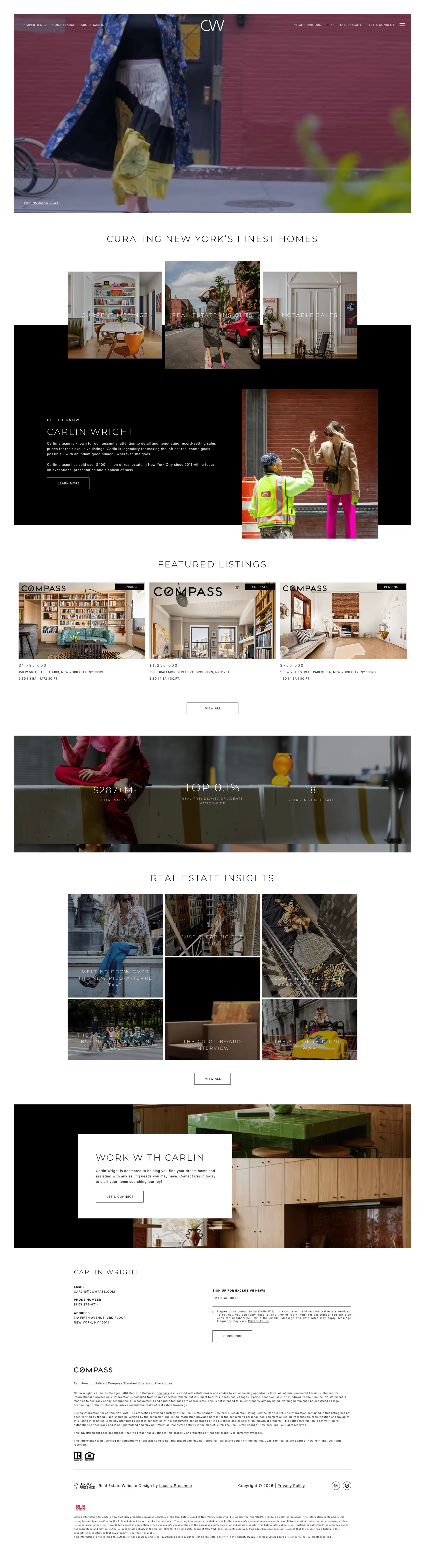
Carlin Wright’s website stands out for its depth of content. Operating in the New York City (NYC) market, Carlin has built her site as a resource hub that serves buyers at every stage of the search process. The site is not just a place to browse listings. It is a destination for anyone researching the NYC real estate market, which gives it staying power in search results and repeat visitor traffic.
Stand-out features
The content library is the defining asset. Carlin’s site includes buying guides, neighborhood guides, market updates, and resource pages that address the specific questions NYC buyers ask during their search. This content depth serves a dual purpose: it positions Carlin as a knowledgeable local authority, and it creates dozens of indexed pages that rank for long-tail search queries related to NYC real estate.
The design uses personal photography consistently across every page. Nearly every section features either a photo of Carlin or imagery from the communities she serves. This creates a sense of personal connection that most agent websites lack. A visitor feels like they are getting to know a real person, not browsing a corporate template.
A dedicated past transactions page displays Carlin’s sales history, as reported on her website, with property-level detail including images and sale prices. This page functions as a portfolio that lets prospective clients evaluate her track record with specific, verifiable data rather than vague claims about market experience.
Your takeaway: Build your website as a content hub, not just a listing portal. Neighborhood guides, buying resources, and market reports create indexed pages that attract search traffic and position you as the local authority in your market.

5. Jonathan Radford
Jonathan Radford’s website won a Webby Award from Awwwards (Awwwards, 2020), and the design quality is immediately apparent. This site is built around a video-first presentation strategy that treats every property as a story worth telling through motion, not just still images. For agents considering how to differentiate their real estate branding in 2026, Jonathan’s approach to real estate video production is worth studying closely.
Stand-out features
The site includes a dedicated “Movies” tab in the main navigation. This tab houses a library of property films and a video resume that introduces Jonathan’s background, approach, and personality in a format that is far more engaging than a written bio. In 2026, video content on real estate websites is no longer a differentiator reserved for top producers. It is an expectation among buyers who have grown accustomed to video-first platforms across every category of online search.
Every page uses full-bleed imagery and video that fills the browser window. The visual design is consistent across the homepage, property pages, and resource sections, which creates a cohesive brand experience regardless of where a visitor enters the site.
The testimonial page features a scrolling wall of client reviews. Rather than selecting three or four highlight quotes, Jonathan displays dozens of testimonials in a continuous scroll format. This volume of social proof is difficult to dismiss. A visitor who reads even a fraction of these reviews walks away with a clear picture of who Jonathan is and how his clients experience working with him.
The footer section of the homepage includes a clear statement that all resources and property search tools are accessible across devices. This is a small but deliberate design choice that reassures mobile visitors they will not encounter a degraded experience on their phone or tablet.
Your takeaway: If you are investing in video, give it a dedicated home on your site. A “Movies” or “Videos” tab in your main navigation signals to visitors that video is a core part of your marketing, not an afterthought buried on a listing page.
What the best real estate websites have in common
After examining these five sites, a clear set of patterns emerges. These are not subjective design preferences. They are specific, repeatable decisions that directly affect how a real estate website performs in search results, how long visitors stay, and whether those visitors convert into leads.
- First-impression design signals market position within seconds. Every one of these sites uses the first viewport to communicate who they serve and at what level. None of them waste above-the-fold space on generic welcome messages or cluttered navigation menus.
- Integrated MLS search reduces friction between arrival and listing discovery. The sites that place search tools in the primary viewport make it easy for visitors to start browsing without navigating through multiple pages. This is especially important for mobile visitors who will not tolerate extra clicks.
- Video on property pages drives deeper engagement than static images alone. Jonathan Radford and The Breitenbach Advisory both demonstrate that video walkthroughs keep visitors on property pages longer and create an emotional connection to listings that photography cannot replicate on its own.
- Social proof distributed across multiple pages reduces buyer hesitation at every touchpoint. The Breitenbach Advisory’s approach of placing testimonials, media logos, and sales figures on every major page ensures that credibility signals appear regardless of where a visitor enters the site.
- Brand identity and site performance are not trade-offs. The MGS Group, a Luxury Presence client, preserved their distinctive brand identity while redesigning their site for better speed and search visibility. The result was 371% more leads and a 3.5x increase in property views. Design and performance work together when the site is built on the right foundation.
- Content depth turns a website from a listing portal into a destination. Carlin Wright’s library of buying guides, neighborhood profiles, and market updates creates dozens of indexed pages that attract search traffic and give visitors a reason to return. A real estate website with no content strategy is invisible to search engines beyond its homepage and listing pages.
Maggie Gold Seelig of The MGS Group described the decision to redesign her site this way:
That framing captures the central lesson of this entire list. The best real estate websites in 2026 are not just visually impressive. They are built on platforms that deliver measurable results in search visibility, lead generation, and buyer engagement, without forcing the agent to sacrifice the brand identity that makes them recognizable in their market.
FAQs
Expert website design services
Every day, Luxury Presence creates and manages real estate websites for some of the biggest agents, teams, and brokerages in the country. Learn how we can transform your online presence.
About the author
Kate Evans is a content marketing strategist at Luxury Presence, the leading growth platform for high-performing real estate professionals. She develops data-driven editorial content and supports SEO strategy and brand voice frameworks that help agents attract qualified leads and establish market authority. Her published work covers topics including CRM strategy, social media marketing, and digital growth, supporting thousands of agents in scaling their businesses through modern marketing.