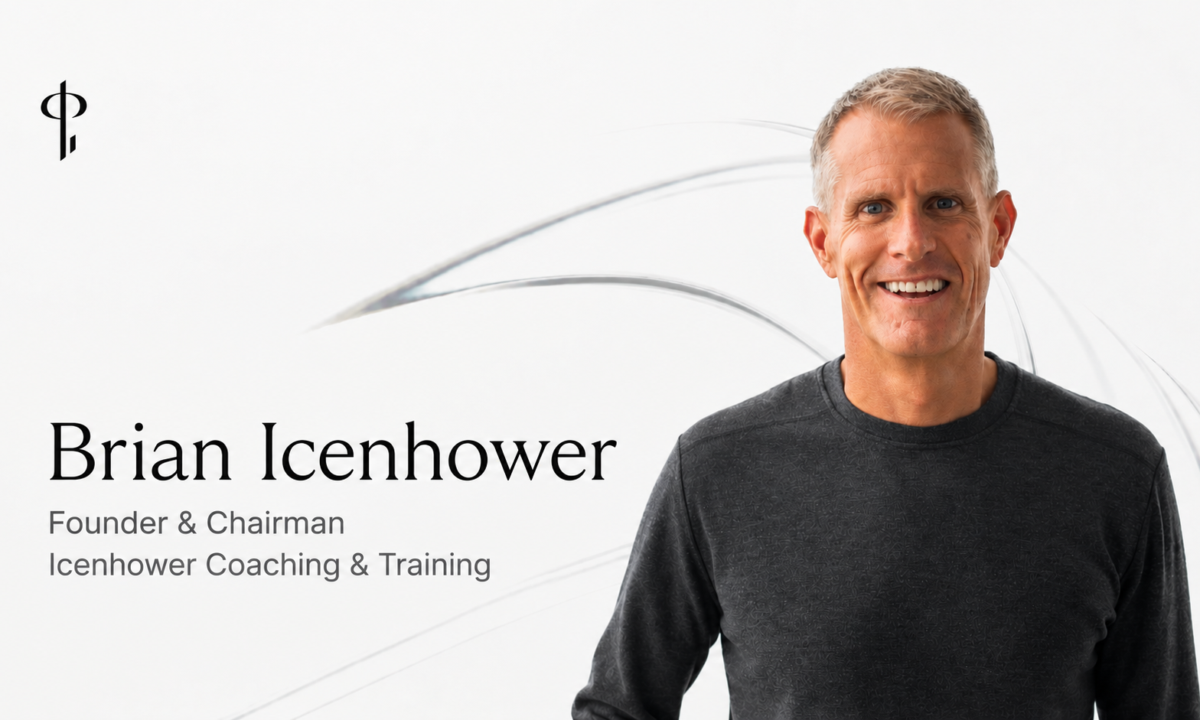
Brian Buffini took the stage at UNITE 2026 in Charleston and did what he does better than almost anyone in real estate: he picked a fight with the conventional wisdom, armed with data most people would rather ignore.
His message was blunt. The industry is giving agents bad advice at the exact moment they need better guidance. Agents are spending their days in the wrong places, chasing the wrong audiences, and the major brands telling them to do it should know better.
“While we have the worst real estate market since 1995, the crap that’s being communicated from every major brand is shocking,” Buffini said. “What people are focused on is shocking. While people are suffering, while agents need help the most.”
He was right about most of it.
Find It Fast
The 3% problem
Buffini shared results from his latest agent time-use survey, a study he commissions every five years in conjunction with NAR that covers tens of thousands of agents. The breakdown: 31% of an agent’s day goes to errands, 19% to admin, 18% to email, 29% to internet and social media.
And then there’s the number that should stop everyone cold: 3% of the average agent’s day is spent actually talking to clients.
“That stat has been identical for 15 years,” Buffini told the room.
That number is a fun one to sit with, because buried inside a depressing stat is an enormous opportunity. If 97% of an agent’s day disappears into work that never involves a single client conversation, the path forward is clear: technology that absorbs the admin, the email, the repetitive marketing work so agents can reclaim those hours. Efficiency is the starting point. But efficiency for its own sake is worthless if it doesn’t translate into more potential time with clients.
That’s where the right CRM changes the equation entirely. The reason most agents struggle to move the needle on that 3% is that even when they carve out time to pick up the phone, they don’t know who to call or what to say. So the outreach feels random, forced, and it goes nowhere.
A CRM built for this problem surfaces specific, relevant life events happening inside an agent’s existing network. A past client whose kids just left for college and may be ready to downsize. A contact who just changed jobs and is now in a position to buy. These are real conversations worth having, and they exist in every agent’s database. Without the right system, they stay invisible. With one, an agent walks into every call with a reason to reach out that the client actually cares about.
The social media overcorrection
Buffini played a clip of Gary Vaynerchuk telling agents that “more than 50% of your time” should go to making content, then shared a story that should make every industry leader uncomfortable. One of his coaching clients, an 18-year veteran who earned $652,000 in commissions last year, “feels like a loser because her social media isn’t this, and her social media isn’t that,” Buffini said. “The winners are treated like losers, and the losers are online, and it’s become a caricature.”
Buffini’s conclusion was that agents are spending too much time on social media, period. That telling them to devote half their day to content creation is irresponsible advice when they’re averaging five transactions a year.
But here’s where I’d push back: social media itself deserves more credit than it got from that stage. The real failure is that nobody is teaching agents how to use it well. The industry has offered two modes: ignore it entirely, or go all-in like a full-time creator. There’s a wide, productive middle ground that almost no one talks about.
The mindset shift agents need is simple: ABC. Always Be Capturing. The problem with Vaynerchuk’s advice is the word “creating.” When agents hear that, they picture ring lights and scripts and four-hour production sessions. But the best content already exists in their day. A walkthrough of a home that just hit the market. A quick reaction after a closing. A genuine moment with a client.
Those moments are already happening. Agents just need to remind themselves to capture them. Aaron Grushow wrote about this recently, and he’s right: the agents who humanize their brand and show up at their audience’s level, rather than performing for an algorithm, are the ones building real connection.
I always tell people: throw the channels in the trash can first. Instagram, Facebook, email, text. They’re all just a means of delivering a message. The only difference between them is the expectation someone has when they enter that channel. Before you pick a channel, start with the thinking you want to influence. What thought do you want to stimulate in someone’s mind? Work backwards from there.
Buffini’s $652,000 producer is succeeding at the actual business and feeling bad about it because the industry has confused activity with strategy. The fix is to raise the bar on what good social media looks like and stop pretending that volume is the same thing as value.
We’re fishing with the wrong bait
Buffini’s demographic data landed hard. The median age of a repeat home buyer right now is 62. The number one reason people move is to be closer to friends and family. 79% of home buyers are repeat buyers. 30% are paying all cash.
“These people think TikTok is a disease you get walking in the woods,” Buffini said. “We’re fishing with the wrong bait.”
The line got a big laugh. But I actually disagree with Buffini here.
The argument assumes that because the median repeat buyer is 62, agents should abandon the channels where younger audiences live. That misreads what social media is for. This has nothing to do with reaching younger audiences. It has everything to do with diversifying your channel mix so you can attract clients based on the ICP you’ve identified. And the assumption that people over 62 are somehow disengaged from social media doesn’t hold up. The data tells a very different story.
Channels are a means of delivering messages. That’s it. The smart play is to research where your specific audience spends their time and meet them there. Buffini is right about one thing in this section: credibility beats virality every time. But you can manipulate data to support any narrative you want, and I think citing the median buyer age as a reason to dismiss TikTok or short-form video oversimplifies a much more nuanced conversation.
The more interesting question is how your ICP researches and finds things today. ChatGPT and other AI tools are becoming a growing source for all kinds of research – including real estate. Answer Engine Optimization and Generative Engine Optimization (AEO & GEO) share many of the same principles as traditional SEO.
And with the right strategy, social media can be a massive driver of brand visibility in those AI-driven results. A recent study shows how you can teach LLMs about your brand without a single viral post. You don’t need millions of views. You need the right presence in the right places.
The Uber driver trap
Buffini saved some of his sharpest criticism for the economics of purchased leads. He walked through the math: average commission of roughly $10,700, minus a 40% Zillow split, minus a 40% team leader split. The agent walks away with about $3,800 after three to five months of work.
“We’ve turned agents into Uber drivers,” he said.
Then he cited Zillow’s own numbers: 90 million leads generated from 3 million online leads, sold to multiple agents, resulting in roughly 400,000 transactions. And 49% of those online leads are never even contacted.
His alternative? Referrals. Relationships. The long game. “High-powered tech with high exertion of building relationships,” as he put it.
This is where the industry’s real conversation should be happening. Buffini is right that referrals produce better economics and stronger client relationships. And the two can coexist, because the best technology makes relationship-building easier and more consistent.
A platform that handles the website, the CRM, the automated follow-up, and the social presence in one place gives agents the infrastructure to run a referral-first business without doing it all manually.
And the way I think about it: every dollar an agent invests in the right technology is a dollar invested in more time with their clients. That’s the model we’ve built at Luxury Presence. When tech creates a new dependency instead of reducing an old one, agents end up in the same trap with a different name.
The goal is technology that gives agents their time back so they can put it where it actually matters.
When Buffini’s best coaching clients average $354,000 a year and take eight weeks off, it’s proof that the relationship-first model works. The question for the rest of the industry is whether agents have the right systems and habits in place to run that model sustainably, or are still doing it all manually and burning out.
What this means for your business
Buffini closed with a simple challenge. What if the average agent went from 3% of their day talking to clients to 9%? Just tripling a painfully low number.
“That’s all we’re asking for,” he said. “If I get 10% of the average agent’s day, five days a week, 44 weeks a year, over time it will make them a million dollars. Which is what this business deserves, because of what it demands.”
He’s right about the math. And he’s right about what the business demands. The agents who take his advice seriously will need to make hard choices about what they stop doing to free up that time. The ones who pair relationship discipline with technology that handles the rest are the ones who will close the gap.
Marketing can get you found. Social media can get you seen. But what Buffini reminded a room full of industry leaders in Charleston is something worth repeating: this is still a relationship business, and the agents who treat it that way are the ones getting paid like it.
About the author

Director, Growth Marketing
Eric Dates is a global marketing leader focused on brand strategy, consumer behavior, and business growth. With experience in early-stage startups, he specializes in simplifying complex ideas and uncovering the deeper motivations behind how individuals and audiences make decisions. His work centers on building strong brands and scalable growth strategies.