
Most real estate agents build their brand backward. They start with a logo, pick colors, write a bio, and post on social media before answering the one question that should come first: who is this brand actually for?
Read More
Most real estate agents build their brand backward. They start with a logo, pick colors, write a bio, and post on social media before answering the one question that should come first: who is this brand actually for?
Read More
Facebook, owned by Meta, gives real estate agents access to over 3.1 billion active users (Backlinko, 2024) and targeting tools precise enough to reach buyers by income, location, and interest.
Read More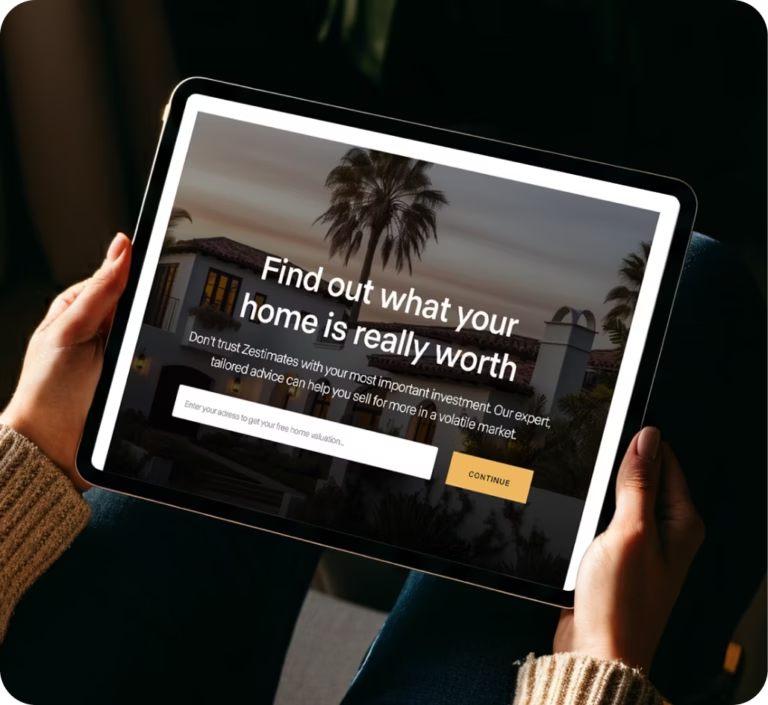
A lead capture form is a short web form on your real estate website that collects visitor contact information, typically a name and email address, in exchange for access to listings, home valuations, or market reports. In 2026, this small piece of your site carries outsized weight.
Read More
Why updating photos is an important part of your marketing strategy and brand. Homes photographed by a professional sell 32% faster and for up to $11,200 more than those with amateur images, according to Redfin data (Roomagen, 2026).
Read More
In 2026, nearly all homebuyers start their property search online, which means the quality of your listing visuals matters more than ever (National Association of Realtors, 2024).
Read More
Client relationship marketing is the practice of building long-term, trust-based connections with buyers and sellers through personalized communication, consistent follow-up, and data-informed outreach. In 2026, real estate client relationship management is not a nice-to-have.
Read More
Your real estate agent bio is not a résumé. It is the first conversation you have with a potential client before you ever speak.
Read More
A real estate virtual tour is an interactive, 3D walkthrough that lets potential buyers explore a property from any device, at any time, without scheduling an in-person showing. In 2026, nearly 60% of home shoppers rely on virtual tools during their property search (Homes.
Read More
Real estate agents who blog consistently generate more organic traffic, more leads, and more trust with prospective clients than those who don't. A blog gives your website a reason to show up when someone searches "best neighborhoods in {your city}" or "how much house can I afford.
Read More