
A real estate landing page is a single-purpose page on your website designed to capture one specific action from a visitor, whether that is collecting contact information, gathering open house RSVPs, or promoting a home valuation offer. In 2026, agents who direct ad traffic and social media clicks to a focused landing page rather than a general homepage consistently capture more leads and convert a higher percentage of visitors into real clients. Luxury Presence builds real estate websites and marketing systems for agents across the country, including 30% of the WSJ RealTrends Top 100, and the principles in this guide reflect what actually drives lead capture on those sites. Below, you will find a step-by-step breakdown of what real estate landing pages are, why they matter, what makes them convert, and how to drive the right traffic to them.
Key takeaways
- A real estate landing page has one job: drive a single action such as capturing an email address, booking a showing, or collecting an open house RSVP.
- There are two types of landing pages agents should know: click-through pages (for transactions) and lead generation pages (for capturing contact information).
- Landing pages outperform general homepages for lead capture because they remove competing navigation links and focus the visitor on one call to action (CTA).
- A 2024 Luxury Presence campaign demonstrates what a focused landing page paired with targeted ads can produce: 180 leads, 40 appointment requests, and a 12.62X return on ad spend from just $4K in spending.
- The four elements of a high-converting real estate landing page are audience targeting, concise copy, a clear CTA, and emotionally relevant imagery.
- Traffic sources that feed landing pages include email marketing, social media ads, paid search, and on-site promotions.
What is a real estate landing page?
A real estate landing page is a customized page on your agent website built for a single purpose. Unlike your homepage, which serves multiple goals and invites visitors to browse, a landing page removes every distraction and focuses the visitor on one action. That action might be filling out a form, booking a showing, or downloading a buyer guide.
Visitors arrive at a landing page by clicking a specific link. That link can live inside a social media post, a Google or Facebook ad, an email campaign, or a QR code on a printed flyer. The page they land on is stripped of your site’s standard navigation menu and sidebar. It contains only the information and the form needed to complete the intended action.
That distinction between a landing page and a full website is where most agents lose leads. When you send ad traffic to your homepage, visitors can click on your bio, browse listings, read blog posts, or simply leave without ever giving you their contact information. A landing page closes those exits and funnels attention toward a single conversion point.
How a landing page differs from a website
| Feature | Full website | Landing page |
| Purpose | Brand your business, display listings, educate visitors | Drive one specific action (RSVP, form fill, download) |
| Navigation | Multiple tabs, links, and menus | No navigation menu or competing links |
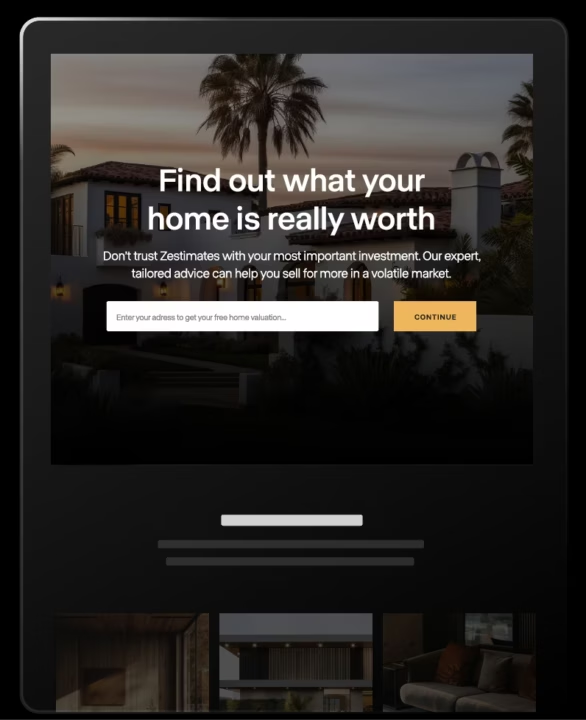
| Call to action | Informational, encourages browsing | Single, clear CTA such as "Get Your Home Valuation" |
| Traffic source | Organic search, direct visits, referrals | Paid ads, email links, social media campaigns |
| Visitor behavior | Click around and explore | Complete the action or leave |
Your website is the hub. Your landing pages are the spokes, each one designed to capture a specific type of lead and route that person back into your follow-up system. Agents who use both together, rather than relying on a homepage alone, capture far more contact information from the same volume of traffic.
What are the two types of real estate landing pages?
Every realtor landing page falls into one of two categories. Knowing which type to use depends on what you want the visitor to do after they arrive.
Click-through landing pages
A click-through landing page warms up the visitor and then sends them to a transaction page. The CTA is a single button that moves them to a checkout flow or a booking confirmation. For real estate agents, this type is most common when selling digital products such as a homebuyer guide, a market report, or a paid workshop registration.
Lead generation landing pages
A lead generation landing page uses a form to capture the visitor’s contact information. The form typically asks for a name, email address, and phone number. In exchange, the visitor receives something of value: access to a listing, a home valuation estimate, an open house RSVP confirmation, or a downloadable resource.
Lead generation pages are the workhorse for most agents in 2026. They allow you to build a list of potential buyers and sellers, then continue the conversation through email, text, or a personal phone call. Every contact captured through a lead gen page is someone who raised their hand and expressed interest in a specific offer you made.
Why real estate landing pages matter in 2026
Real estate landing pages serve four measurable functions in your marketing system. Each one addresses a gap that a general homepage cannot fill.
They drive conversions
A conversion is any action you want the visitor to take. That could be signing up for your newsletter, RSVPing to an open house, or requesting a showing. A landing page is built around a single conversion goal, which means every element on the page, from the headline to the button color, supports that one outcome. When you remove competing links and navigation menus, the visitor’s only path forward is to complete the action or close the tab.
They capture anonymous traffic
Without a landing page, most of your website visitors remain anonymous. They browse your listings, read a blog post, and leave. You have no way to follow up because you never captured their contact information. A landing page solves this by requiring a form submission before the visitor can access the offer. Every form fill gives you a name, an email, and often a phone number, turning anonymous traffic into a contactable lead.
They produce measurable ROI
Landing pages give you a direct line from ad spend to lead capture to closed deal. You can track exactly how much you spent, how many leads came in, and what those leads were worth. A 2024 Luxury Presence campaign illustrates this clearly: agent Taylor Lucyk spent $4K on targeted ads driving traffic to a focused landing page and generated 180 leads, 40 appointment requests, and ultimately secured a $1.5M listing, producing a 12.62X return on ad spend (Source: Luxury Presence Case Study: Taylor Lucyk, 2024). That kind of attribution is nearly impossible when you send traffic to a general homepage with no form and no tracking.
They set you apart from other agents
Many agents in 2026 still direct all of their ad traffic to a homepage or, worse, to a third-party listing portal. A professionally designed real estate website with dedicated landing pages signals to prospects that you run a serious, organized business. It also gives you a system for capturing and nurturing leads that most of your competitors simply do not have.
What makes a real estate landing page effective?
Having a landing page is not enough. The page itself must be designed to convert. The best real estate agent websites share four elements in their highest-performing landing pages.
A defined target audience
Landing pages can be customized for specific audiences. For example, create one page for first-time homebuyers and another for single professionals seeking townhomes. When the headline, imagery, and offer match the visitor’s situation, the page converts at a higher rate. If you serve multiple buyer or seller profiles, build a separate landing page for each one and direct the right traffic to the right page.
Concise, benefit-driven copy
A landing page is not the place for long paragraphs or detailed market analysis. Keep the copy short and focused on what the visitor gets. Lead with the benefit (“See every new listing in [neighborhood] before it hits the market”), follow with a brief explanation of what they need to do (fill out the form), and stop. Wordiness and multiple images dilute the message and lower conversion rates.
A single, clear call to action
Every high-converting real estate landing page has one CTA. Not two. Not three. One. That CTA should be specific: “Get Your Free Home Valuation,” “Reserve Your Spot at the Open House,” or “Download the Buyer Guide.” Vague CTAs like “Learn More” or “Click Here” underperform because they do not tell the visitor what they will receive.
Emotionally relevant imagery
The hero image on your landing page should match the emotional context of your offer. If the page targets young couples buying their first home, show a couple in a bright, welcoming space. If the page promotes a luxury open house, show the property’s most striking feature. Research from the Nielsen Norman Group confirms that images depicting real scenarios relevant to the visitor’s goal hold attention longer than generic stock photography (Nielsen Norman Group, 2010).
Landing page tools agents use in 2026
Real estate agents build dedicated landing pages using platforms such as Unbounce, Leadpages, or the built-in landing page tools within the Luxury Presence website platform. Each allows you to create a focused page without navigation menus, test different headlines and CTAs, and connect directly to a lead capture form. The right tool depends on your budget, your technical comfort level, and whether you want your landing pages to live on your main domain or on a separate URL.
How to drive traffic to your real estate landing page
A landing page with no traffic produces no leads. Here are four channels that consistently send the right visitors to real estate landing pages in 2026.
Email marketing
If you already have an email list, include links to your landing pages in newsletters or weekly emails announcing open houses and new listings. Email marketing is one of the highest-converting traffic sources for landing pages because the recipients already know who you are and have opted in to hear from you.
Social media
Post links to your landing pages in organic social media content or run a targeted social media marketing campaign. Paid social ads allow you to target prospects by location, income, homeownership status, and interests, then send them directly to a landing page matched to their profile. This is one of the most cost-effective ways to fill a landing page with qualified traffic.
Paid search
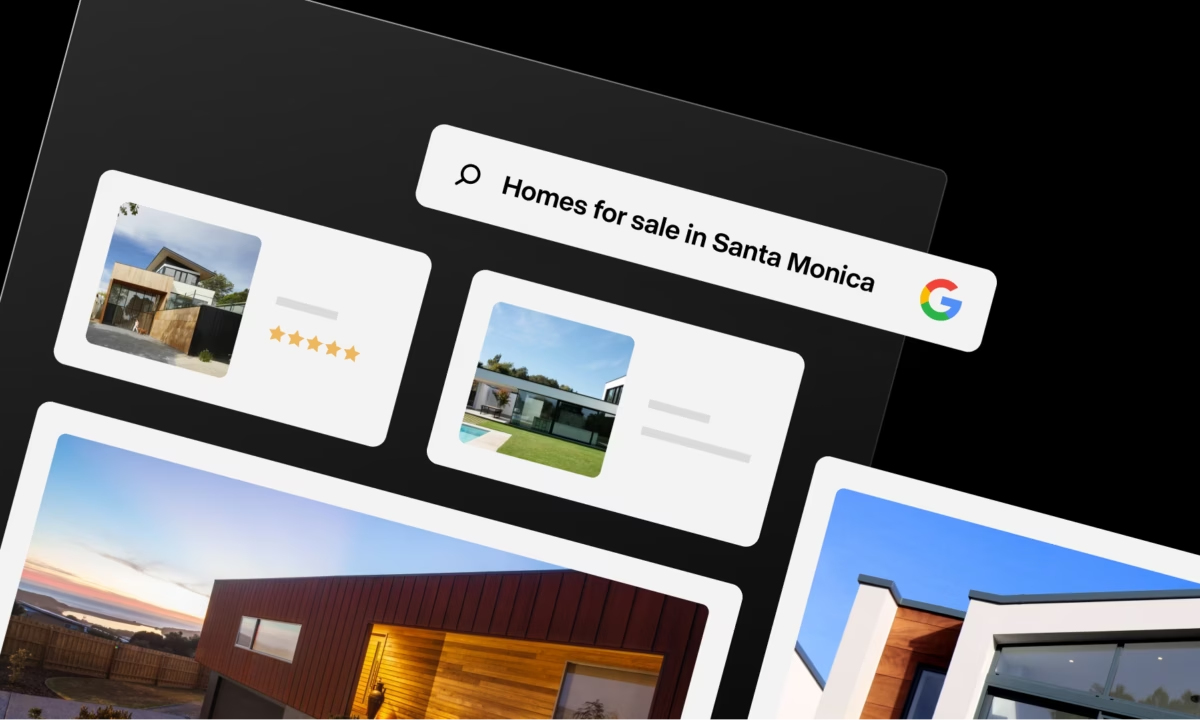
Paid search, also known as pay-per-click (PPC) or search engine marketing (SEM), places your ad at the top of Google when someone searches for terms like “homes for sale in [city]” or “open houses near me.” You pay a fee each time a user clicks your ad. The cost per click varies by market, but the traffic is high-intent because the searcher is actively looking for what you offer.
On-site promotions
The goal is to have visitors go directly to your landing pages from an ad or email. But you should also promote your landing pages throughout your main website. Add buttons for newsletter sign-ups, home valuation requests, or open house RSVPs on your homepage, listing search pages, and blog posts. These on-site CTAs catch visitors who arrived organically and route them into a focused conversion path.
How to choose the right professional for landing page design
When evaluating real estate website companies, three criteria separate the ones worth hiring from the ones that are not.
Look for industry specialization
The highest-performing agent sites were built by companies that have designed hundreds of real estate websites and understand what converts in this industry. A general web design firm may build a beautiful page, but it will not know the nuances of real estate marketing strategy, IDX integration, or lead capture workflows specific to agents and brokers.
Ask for references and examples
Request a portfolio of completed landing pages and ask to speak with current clients. Look for examples that match your market and price point. A company that can show you real estate landing page examples with documented conversion results is far more credible than one that only shows design mockups.
Evaluate on value, not price alone
The best landing page design for real estate agents is rarely the cheapest option. When comparing proposals, consider what you are paying for: years of real estate experience, built-in A/B testing tools, CRM integrations, and ongoing support. A higher upfront cost often pays for itself many times over when the landing page consistently captures leads that turn into closings. Luxury Presence holds a 4.8/5 platform rating based on 2,500+ reviews from agents and brokers across the country, which is one signal worth weighing when you compare providers.
Bringing Your Real Estate Landing Pages Together
Real estate landing pages work best when they stay focused on one audience, one offer, and one clear action. When you pair concise copy, strong imagery, and the right traffic source, you give visitors a simple path to convert instead of a chance to drift away. Whether you are promoting an open house, a home valuation, or a buyer resource, the goal is the same: turn interest into a measurable lead.
FAQs
Landing pages generate leads
Our e-book guides you through seven types of landing pages that are engineered to bring in high-quality prospects.
Ready to grow?
Turn your content into your best lead source
See how Luxury Presence helps agents turn website visits into closed deals