
An IDX website cost in 2026 typically ranges from $250 to $1,500 or more per month, depending on whether you choose a templated platform or a fully custom build. The total price is shaped by six main cost categories: website design and development, internet data exchange (IDX) integration, hosting, ongoing maintenance, search engine optimization (SEO), and content management. Understanding what you are actually paying for in each category is the difference between a smart investment and wasted budget. Luxury Presence builds and manages IDX-enabled websites for agents and brokerages representing 30% of the WSJ RealTrends Top 100, giving us a direct view into what these sites actually cost and what drives results.
Key takeaways
- In 2026, a fully operational IDX website costs between $250 and $1,500+ per month when you combine hosting, IDX fees, design, and maintenance.
- The biggest cost variable is custom design versus a platform-based template. Custom builds can exceed $1,000 per month in ongoing costs alone, while platform solutions deliver strong results at a fraction of that figure.
- IDX integration fees, including setup and monthly service charges, typically add $50 to $200 per month on top of your base website cost.
- SEO is not optional. Without it, even the best-designed IDX site will struggle to attract organic traffic and convert visitors into leads.
- Evaluating long-term return on investment, not just the upfront price tag, is the right framework for choosing an IDX website solution.
- Platforms that bundle IDX, hosting, and a content management system (CMS) in one package often deliver better value than assembling separate vendors.
What is an IDX website?
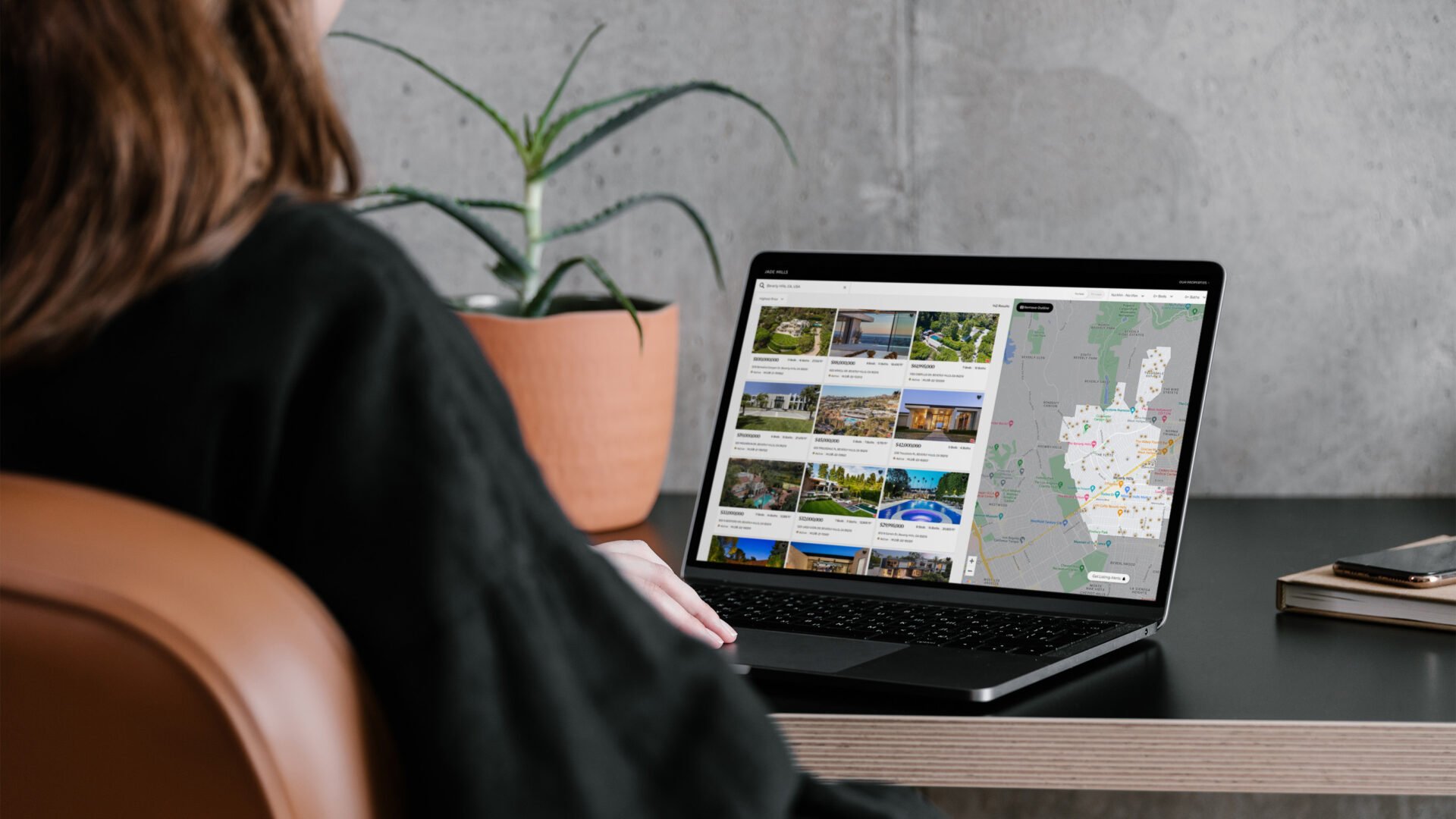
An IDX-enabled website is a real estate website that displays multiple listing service (MLS) listings through IDX technology. IDX stands for internet data exchange, and it is the framework that allows MLS data to be pulled into your website and displayed to visitors in near-real time.
For buyers, this means they can search active listings directly on your site instead of bouncing to a third-party portal. For you, it means every property search happens on a domain you own, where you control the branding, the lead capture forms, and the follow-up experience.
IDX websites for realtors serve three functions at once. They keep visitors on your site longer by giving them a reason to search. They generate leads by requiring registration for saved searches and listing alerts. And they create pages of indexable content that search engines can crawl, which improves your site’s organic visibility over time.
IDX website cost breakdown in 2026
As of 2026, the cost of an IDX website varies depending on six main categories. The table below gives you a quick reference before we walk through each one in detail.
| Cost category | Low estimate | Mid estimate | High estimate | Billing frequency |
| Domain name | $10 | $25 | $50 | Annual |
| Web hosting | $5/mo | $30/mo | $100/mo | Monthly |
| Website design and development | $50/mo (template) | $300/mo (platform) | $1,000+/mo (custom) | Monthly |
| IDX integration (setup) | $200 | $500 | $2,000+ | One-time |
| IDX service fees | $50/mo | $100/mo | $200/mo | Monthly |
| Maintenance and updates | $0 (DIY) | $500/mo | $1,500/mo | Monthly |
| SEO services | $500/mo | $2,000/mo | $5,000/mo | Monthly |
Now let’s break down what you are actually paying for in each category.
Website design and development
- Custom vs. templated design: This is the single largest cost variable. A custom-designed real estate website, built from scratch by a developer or agency, typically costs more than $1,000 per month when you factor in creation, hosting, and ongoing maintenance. Templated solutions come in at a fraction of that figure. Templates limit your design flexibility, but in 2026, the best platform-based templates are far more polished than they were even a few years ago.
- Functionality and features: The more complex your site, the higher the development cost. Advanced search filters, interactive map overlays, property comparison tools, and neighborhood landing pages all add development time. If you need these features, the question is whether to build them yourself or choose a platform that includes them out of the box.
IDX integration
- Setup fees: Some IDX providers charge a one-time setup fee to connect MLS data to your website. This fee can range from a few hundred dollars to more than $2,000, depending on the provider and the number of MLS feeds you need.
- Monthly IDX service fees: On top of setup, you will pay a recurring monthly fee for IDX service. In 2026, these fees typically fall between $50 and $200 per month. The price depends on the provider, the number of MLS boards connected, and the feature set included.
- Additional integrations: Connecting your IDX system to other tools raises the overall IDX website cost. This includes customer relationship management (CRM) software like Luxury Presence’s CRM, email marketing platforms, and lead capture systems. Each integration may carry its own setup or monthly fee.
Website hosting and maintenance
- Domain name: You will need to purchase a domain name. In 2026, expect to pay between $10 and $50 per year for a standard .com domain.
- Web hosting: Hosting costs depend on the type of server you choose. Shared hosting is the most affordable option at roughly $5 to $20 per month. A virtual private server (VPS) or dedicated hosting delivers better performance and typically costs $20 to $100 per month. Many real estate website platforms include hosting in their monthly fee, which simplifies this line item.
- Ongoing maintenance: Keeping your website secure and up to date requires regular attention. Maintenance tasks include software updates, security patches, backups, and performance monitoring. If you handle this yourself, the cost is your time. If you outsource it, expect to pay between $200 and $1,500 per month depending on the scope of work.
SEO and content management
- SEO services: Driving organic traffic to your IDX real estate website requires search engine optimization. SEO services range from basic on-page optimization to full-scale strategies that include content creation, backlinking, and local SEO. Each layer of service adds to the overall monthly cost. In 2026, SEO retainers for real estate agents generally fall between $500 and $5,000 per month. Per-project pricing ranges from $1,000 to $30,000 depending on scope, and hourly consulting rates run $100 to $300.
- Content management system (CMS): If you plan to manage your website’s content yourself, you need a CMS that is easy to navigate. Some platforms include a CMS in their package. Others charge extra. The CMS should allow you to update listings, publish blog posts, and edit pages without needing a developer on call.

Total estimated IDX website cost
When you add up the individual cost categories, here is what a real estate agent can expect to pay for an IDX website in 2026.
| Scenario | Estimated monthly cost | Estimated annual cost | What's included |
| Budget (DIY + template) | $110 – $270 | $1,320 – $3,240 | Template site, shared hosting, basic IDX, self-managed maintenance, no SEO |
| Mid-range (platform) | $500 – $1,000 | $6,000 – $12,000 | Platform-designed site with IDX, managed hosting, CMS, light SEO |
| High-end (custom + full service) | $1,500 – $5,000+ | $18,000 – $60,000+ | Custom design, multiple MLS feeds, dedicated hosting, full SEO, outsourced maintenance |
The budget scenario gets you online, but it leaves you responsible for maintenance, SEO, and design updates. The mid-range scenario is where most producing agents land because it balances cost with capability. The high-end scenario is common for teams and brokerages that need deep customization and multiple MLS integrations.
The number that matters most is not the monthly line item. It is the cost per lead your site generates. A $500-per-month site that produces 20 leads a month costs $25 per lead. A $200-per-month site that produces zero leads costs infinitely more.
Custom build vs. platform: where the real cost decision lives
The biggest fork in the road for any agent evaluating IDX website pricing is whether to hire a developer for a custom build or subscribe to a platform that bundles design, IDX, hosting, and CMS together.
Custom builds give you complete control over design and functionality. But they also carry hidden costs that are easy to underestimate: developer retainers, plugin updates, server management, and the risk of a build that stalls or fails entirely. Agents who go the custom route often spend months and thousands of dollars before they have a working site.
Platform-based solutions reduce that risk by packaging the core components into a single monthly fee. The trade-off is less design flexibility, but the best real estate website platforms in 2026 offer enough customization to reflect your brand while handling the technical infrastructure behind the scenes.
Here is a quick comparison of the two approaches:
- Custom build: Higher upfront and ongoing cost, full design control, requires dedicated developer or agency, longer time to launch, you own the code.
- Platform: Lower monthly cost, faster launch, IDX and hosting included, limited design flexibility, vendor manages updates and security.
For solo agents and small teams, a platform almost always delivers better value per dollar. For large brokerages with unique workflow requirements, a custom build may be justified, but only if the budget and timeline are realistic.
How to evaluate IDX website providers in 2026
Choosing the right IDX website provider is not just a cost decision. It is a business decision that affects your lead flow, your brand perception, and how much time you spend managing technology instead of selling real estate. Here is a framework for evaluating your options.
Match the platform to your business stage
Are you a new agent who needs a functional site with MLS integration for real estate website searches? Or are you running a team that needs advanced lead routing, multiple MLS feeds, and CRM integration? Your current business stage determines which features are worth paying for and which ones are unnecessary overhead.
Compare what is included in the monthly fee
Some providers quote a low monthly price but charge separately for IDX integration, hosting, SSL certificates, and CMS access. Others bundle everything into one fee. When comparing IDX website pricing, always calculate the total monthly cost across all line items, not just the headline number.
Check MLS compatibility
Not every IDX provider connects to every MLS. Before you commit, confirm that the provider supports your local MLS board. If your MLS does not work with a particular IDX provider, you may need to explore alternative providers or third-party listing services that offer compatible feeds. In some cases, agents manually add listings to their website or use national listing portals as a workaround.
Evaluate SEO capability
An IDX website that no one can find on Google is an expensive digital business card. Ask potential providers how their platform handles SEO. Specifically, look for clean URL structures, fast page load times, mobile responsiveness, and the ability to create landing pages for neighborhoods and property types. A platform with strong SEO architecture will reduce the amount you need to spend on outside SEO services.
Assess long-term return on investment
Think beyond the first invoice. A well-designed IDX site that drives organic traffic and captures leads will pay for itself over time. A cheap site that sits idle will not. The Better Homes and Gardens Real Estate Lifestyles Realty case study illustrates this clearly: after 13 years with a previous website that generated zero organic leads, the brokerage switched to a Luxury Presence site and captured 10 organic leads in the first week, with a 57% engagement rate within four months (Source: Luxury Presence Case Study: Better Homes and Gardens Real Estate Lifestyles Realty, 2026).
Choosing the Right IDX Website for Your Budget
The right IDX website comes down to balancing cost, flexibility, and long-term return. A templated or platform-based solution will usually give most agents the best mix of affordability and functionality, while custom builds make more sense when you need advanced features and have the budget to support them. Before you choose, compare the full monthly cost, confirm MLS compatibility, and make sure the platform can support the SEO and content needs that will help the site generate leads.
FAQs
Expert website design services
Every day, Luxury Presence creates and manages real estate websites for some of the biggest agents, teams, and brokerages in the country. Learn how we can transform your online presence.
Ready to grow?
Turn your content into your best lead source
See how Luxury Presence helps agents turn website visits into closed deals