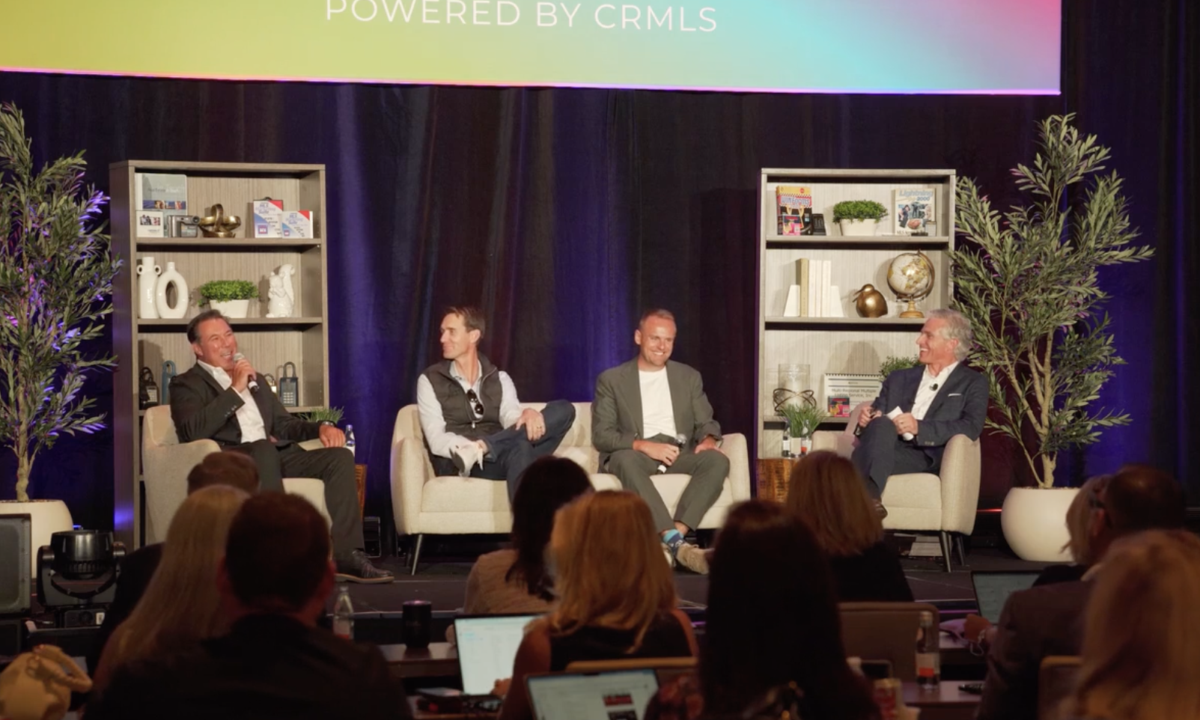
I listened to Jeff Lobb's session from Inman this week, and I think the core read is right. Search increasingly works like a conversation, with people asking follow-up questions and expecting a direct answer back.
Most of the industry hasn't caught up to that yet. I agree with the alarm he's raising.
A few of the specifics are worth sitting with a little longer, though. Some of them don't line up with what I'm actually seeing in client data day to day.
The click is disappearing
Lobb's stat is a 20 to 40% drop-off in traditional SEO effectiveness as AI answers replace links. That tracks with what we're seeing across our own client base.
We published our own version of this argument a few days before Inman: 68% of searches now end without a click.
If a strategy still assumes a searcher lands on a results page and picks a link, it's built for a moment that's happening less and less. I'd build for the conversation instead.
I don't think reviews are losing value. I think they're doing a different job now
The talk frames reviews as sliding into a "sea of sameness." Everyone's at 4.5 stars. AI is generating a chunk of them. The signal is getting noisy. All of that is true, as far as I can tell.
Here's where I'd stop and add a caveat: AI reads the actual words behind the star rating.
It's pulling specific language out of specific reviews to answer specific questions. That's the story Lobb told about the brokerage that got flagged as "stalker-like" based on a four-year-old Yelp post. The words in an old review can still get pulled into an answer today.
To me, that's an argument for treating review generation as an ongoing discipline you keep working at, the same way you'd keep up a blog or a social feed. Ask after every closing. Respond to every single one, including the one-star reviews. Make sure the specifics an AI model would actually want to cite are in there somewhere.
Review generation is still one of the highest-leverage things an agent can do. We've seen an agent turn Google reviews into $50M a year in sales. I'd push back on any takeaway that says reviews matter less now.
The label is a footnote. Search volume is what actually moves the needle
Lobb uses AEO, Answer Engine Optimization. Internally, we build for GEO, Generative Engine Optimization. I go back and forth on whether the two are different enough to deserve separate names at all. They're describing two sides of the same mechanism: a generative model synthesizing an agent's whole footprint, site, reviews, social, listicles, schema, into one recommendation.
What matters more than the label is why on-page work alone doesn't get you cited. I think of on-page SEO as the car. Keywords, structure, schema, all of that gets the car built and ready to run.
LLM search still pulls heavily from the same web data Google has already indexed. A name that gets searched more and ranks better organically is simply more likely to get pulled into an AI answer. That search volume is the gas in the tank. A well-built car without gas still doesn't go anywhere.
The tools are fine for a gut check. I wouldn't build a strategy on them
Searchingly AI and answerthepublic.com are reasonable starting points if you're an independent agent with no budget and want a rough read on where you stand.
I wouldn't build a real strategy on either one if it's your own business on the line. Our process runs on SEMrush, Google Search Console, and GA4 data, pulled by an actual SEO strategist, layered with a full technical site crawl. It's the same groundwork we walk through in our real estate SEO guide.
Whether a site is even visible to an AI crawler is something you can verify directly. I'd rather check that than guess at it.
The same goes for the gas-in-the-tank number: your own brand search volume. Run your own name through SEMrush or Ahrefs and see how many people search it each month. If you don't have a paid tool, Google Trends does the same thing for free. That number is a much better read on your AI visibility than a free zero-to-100 score, because it's the actual input the model is working from.
A free visibility score is a useful gut check, a starting point for figuring out where you stand.
The one part I'd tell every agent to actually do
Lobb's closing point is the one I'd want every agent to actually try: log out, go incognito, and ask the question a real buyer would ask about your market.
I think most agents probably won't like what they see when they try it, and that's kind of the point.
The gap between ranking in Google and getting recommended in a conversation is where the next few years of this business get decided. From what I'm seeing in the data, it's a wider gap than most rooms at Inman probably realized.
The search box is being replaced by a conversation, and most of the industry isn't in the room for it yet. What earns a seat at that table is data-verified technical visibility and reviews that read like a real person wrote them.
Ready to grow?
Turn your content into your best lead source
See how Luxury Presence helps agents turn website visits into closed deals