

Growing your audience as a real estate agent in 2026 means showing up consistently where buyers and sellers are already looking, and that starts with a clear strategy across social media, email, your website, and your local community. Building a client base has never been a straight line, but agents who commit to a repeatable system for visibility and trust-building are the ones who stay top of mind when it matters most. Whether you are just getting started, working through a plateau, or ready to reach a wider market, the strategies in this guide will help you build an online presence that attracts the right people and keeps them engaged.
Key takeaways
- Define your ideal client profile first so every piece of content, every post, and every email speaks directly to the people most likely to work with you.
- Choose a niche and build your brand around it. Agents who specialize attract more qualified leads than generalists competing for the same broad audience.
- Post on social media with a calendar and a system. Consistency matters more than perfection, and short-form video is driving the highest engagement rates in 2026.
- Build an email list you own. Social platforms change their algorithms, but your email subscribers are a direct line to your audience that no algorithm can take away.
- Show up locally through events, referral partnerships, and media features to build relationships that feed your digital audience and your pipeline.
Why you need to grow your audience in 2026
If you have ever felt like you are doing all the right things but still not getting enough inquiries, you are not alone. The real estate industry is more competitive than ever, and the agents who win are the ones who build an audience before they need one. A larger, more engaged following means more visibility, more referrals, and more people thinking of you the moment they are ready to buy or sell.
Here is the reality: internet leads convert at an average rate of just 2 to 3% from inquiry to closed transaction (AgentZap, 2026). That means the size and quality of your audience directly affects how many closings end up on your calendar. The more people who know, like, and trust you, the more opportunities you create for yourself, even when the market shifts.
As your digital presence grows, so does your ability to generate inquiries, referrals, and repeat business. Real estate agents with strong online audiences also have a clear edge when marketing listings because they can put properties in front of engaged followers through social media, email, and their own websites. Growing your audience is not a vanity metric. It is the foundation of a business that keeps producing results year after year.
Define your audience
Before you post a single piece of content, you need to know exactly who you are talking to. When real estate agents talk about their "audience," they mean the people most likely to hire them, refer them, or engage with their brand. When you categorize potential clients based on demographics, interests, buying behavior, and location, your marketing gets sharper and more effective.
Think of it this way. A first-time homebuyer in Austin needs completely different content than a downsizing empty nester in Scottsdale. When you tailor your messaging and content to speak to a specific segment, your words land with more weight. Your outreach feels less like a broadcast and more like a conversation. That is what turns a casual follower into a future client.
Start by answering three questions: Who is my ideal client? Where do they spend time online? What problems can I help them solve? Once you have those answers, every piece of content you create has a purpose and a direction. You can build targeted and personalized marketing strategies that speak directly to the people you most want to serve.
Hone your niche
Focusing on a niche market is one of the most effective ways to expand your client base with intention. Whether it is waterfront properties, military relocations, or eco-friendly homes, specifying your area of focus helps you attract ideal clients in a more targeted way.
A clear niche simplifies your marketing decisions. It makes it easier to choose the right platforms, the right content topics, and the right promotional opportunities. When you speak directly to a specific group's needs and interests, your message carries more weight and your audience growth becomes more strategic.
Consider how this works in practice. An agent who specializes in historic homes in Charleston can create neighborhood guides, restoration tips, and before-and-after property tours that attract a very specific buyer. That agent does not need to compete with every generalist in the market. Instead, they become the go-to resource for a well-defined audience, and that reputation compounds over time through referrals and search visibility.
Craft your personal brand around your niche. Update your social media bios, your website copy, and your email signature to reflect your specialty. When someone lands on your profile, they should immediately understand what you do and who you do it for.
Develop a social media strategy that works in 2026
In 2026, social media remains one of the best, most cost-effective tools for real estate agents to increase their reach. Whether you are refreshing an existing presence or starting from scratch, the key is to build a social media strategy around consistency, not perfection. You do not need to be on every platform. You need to show up reliably on the right ones.
Choose the right platforms
Not every social media platform deserves your time. Match your platform to your audience and your strengths.
| Platform | Best for | Content types that perform well |
| Visual storytelling, property showcases, personal brand building | Reels, carousel posts, Stories with polls and Q&As | |
| Professional networking, market commentary, B2B referrals | Text posts with market data, articles, video updates | |
| YouTube | Long-form property tours, neighborhood guides, educational content | Walkthrough videos, market update series, client testimonials |
| TikTok | Reaching younger buyers, building personality-driven brand awareness | Short-form video tips, day-in-the-life content, trending audio |
| Community groups, local engagement, event promotion | Live videos, group posts, listing shares with neighborhood context |
Pick one or two platforms where your ideal clients spend time and commit to those before spreading yourself thin.
Create a posting calendar
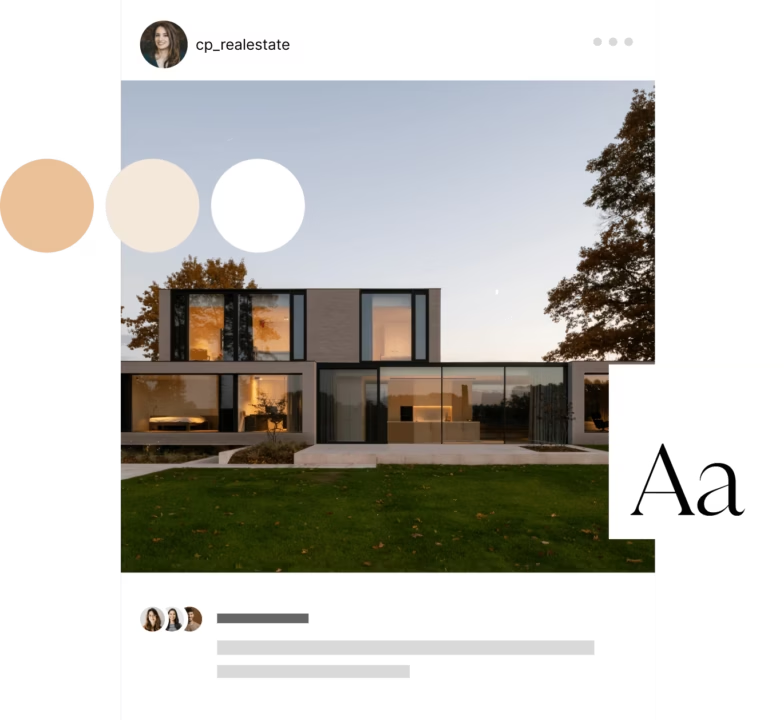
A social media calendar keeps you accountable and removes the daily guesswork of "what should I post today?" Whether you post three times a week or daily, showing up on a regular schedule with content that speaks to your audience is what builds trust over time.
Try batching your content. Set aside two to three hours once a week to plan, film, and write your posts for the next seven days. This single habit saves hours of scattered effort and keeps your feed consistent even during your busiest weeks.
"80% of my business is coming through social media. We have case studies where we've sold property through Instagram, where we had offers in hand before on MLS."
— Jose Prats, Real Estate Agent
That kind of result does not come from posting once in a while. It comes from treating social media as a system, not an afterthought. When you batch, schedule, and show up consistently, your audience grows because people learn they can count on you for useful, relevant content.
Consider paid ads
If your budget allows, targeted ads on Facebook and Instagram can put your brand in front of people who are not yet following you but match your ideal client profile. Even a modest monthly ad spend of $200 to $500 can meaningfully increase your visibility in a specific zip code or demographic.
Start with one campaign focused on a single goal, such as driving traffic to a listing page or growing your email list. Test your creative, review the results after two weeks, and adjust from there.
Build a reliable email audience
Social media is powerful, but it comes with a risk you cannot ignore: algorithm changes, platform outages, or account suspensions can cut off your reach overnight. That is why every real estate agent needs an email list. Unlike your social media following, your email list is an asset you own, and it gives you a direct line to your audience that no algorithm can take away.
Email frequency that works
While daily posts might work on Instagram, your email subscribers will respond better to less frequent, more targeted communication. Most agents find a sweet spot at one to two emails per month. That cadence is frequent enough to stay top of mind without overwhelming inboxes.
The key is to make every email worth opening. If your subscribers know they will get something useful from you, whether it is a market update, a local event roundup, or a quick tip, they will keep reading and eventually reach out when they are ready to make a move.
Content ideas for real estate newsletters
Not sure what to send? Here are content types that consistently perform well for real estate agents:
- Monthly market snapshots: Share local stats on median prices, days on market, and inventory levels.
- New listing announcements: Give your email subscribers a first look before the property hits the MLS.
- Neighborhood spotlights: Highlight a local restaurant, park, or upcoming event to show your community knowledge.
- Quick polls or surveys: Ask your audience what they want to learn about. This boosts engagement and gives you content ideas.
- Client success stories: Share a brief story about a recent closing (with permission) to build social proof.
Email newsletters remain one of the most reliable real estate marketing tools because they keep you connected to your sphere without depending on any third-party platform.
Refresh your web presence
Your website is often the first impression a potential client has of your business, and in 2026, that impression needs to be strong. A basic, do-it-yourself site may work when you are just getting started, but it will not support the kind of credibility and search visibility you need as your business grows.
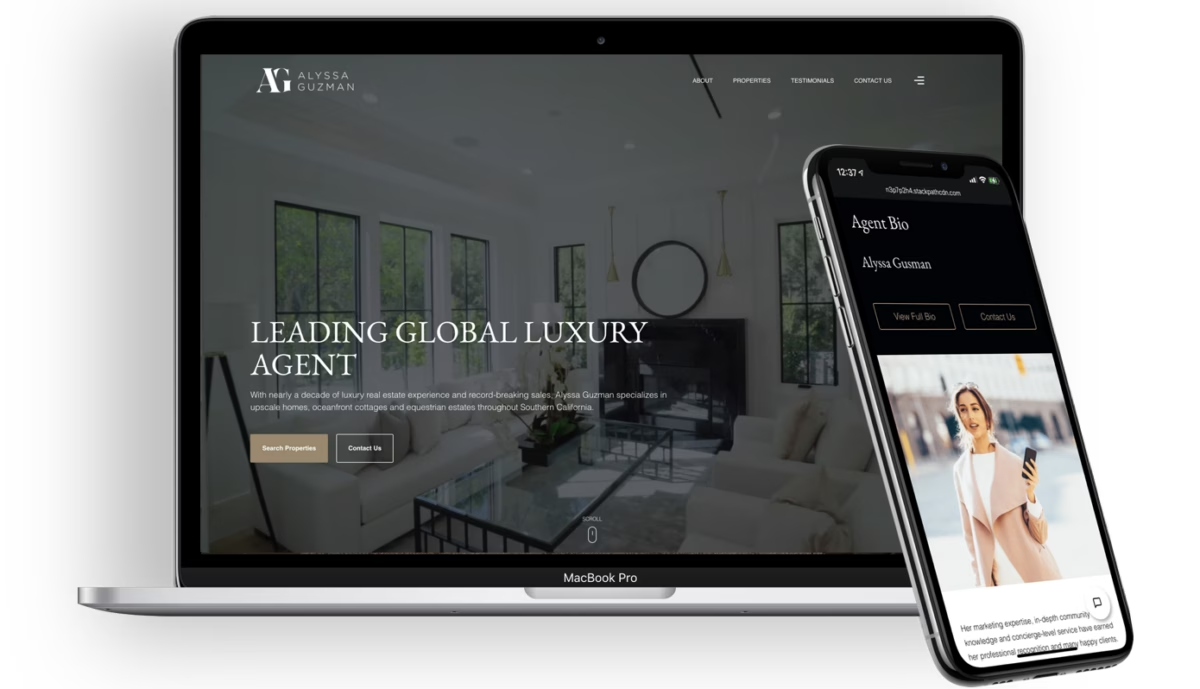
Invest in a high-quality website that reflects your brand, loads quickly on mobile, and makes it easy for visitors to search listings, learn about your market, and contact you. Your site should include integrated listing feeds, clear calls to action, and a layout that communicates professionalism from the first scroll.
"Having a great website and having great SEO is what has taken me to the next level as far as clients, as far as listings."
— Jade Mills, Real Estate Agent
That kind of result is what happens when your website works for you around the clock, attracting visitors through search, converting them into leads, and reinforcing your brand with every page they visit. A strong web presence does not just look good. It brings in business while you are focused on serving your current clients.
Do not overlook search visibility. Publishing blog content about your local market, optimizing your pages for the neighborhoods you serve, and keeping your Google Business Profile updated are all ways to make sure the right people find you when they search online.
Engage locally
Your online audience matters, but so does the one right in your backyard. Local events, community organizations, and professional groups offer some of the best opportunities to meet prospects face to face and build the kind of trust that turns into referrals.
Show up at community events
Attending community events that align with your interests or passions increases your visibility and helps you build genuine connections. Charity runs, school fundraisers, farmers markets, and local business mixers are all places where your next client might be standing right next to you. Always have your phone ready to exchange contact information and keep the conversation going.
Build a referral network
When you meet professionals who are great at what they do, whether that is a mortgage lender, a home inspector, or a real estate attorney, consider adding them to your referral network. Create a simple process for referring clients to these trusted contacts. Then look for opportunities to collaborate, whether through social media shoutouts, email introductions, or co-hosted events. Mutual promotion helps both parties build local visibility and reach new audiences.
Research shows that about 20% of a real estate agent's business typically comes from repeat clients and referrals from past clients. Nurturing those relationships through consistent follow-up, whether by email, social media, or a handwritten note, is one of the highest-return activities you can do.
Get featured in local media
Share your market knowledge and professional perspective with your community through podcasts, local magazines, or neighborhood blogs. These features introduce you to people who may not have found you otherwise. Always include links to your website and social media profiles so new connections can stay engaged with your content long after the feature runs.

FAQs
The AI Discoverability Playbook
The ultimate 5-step plan to be ranked among the top agents on ChatGPT.

Ready to grow?
Turn your content into your best lead source
See how Luxury Presence helps agents turn website visits into closed deals