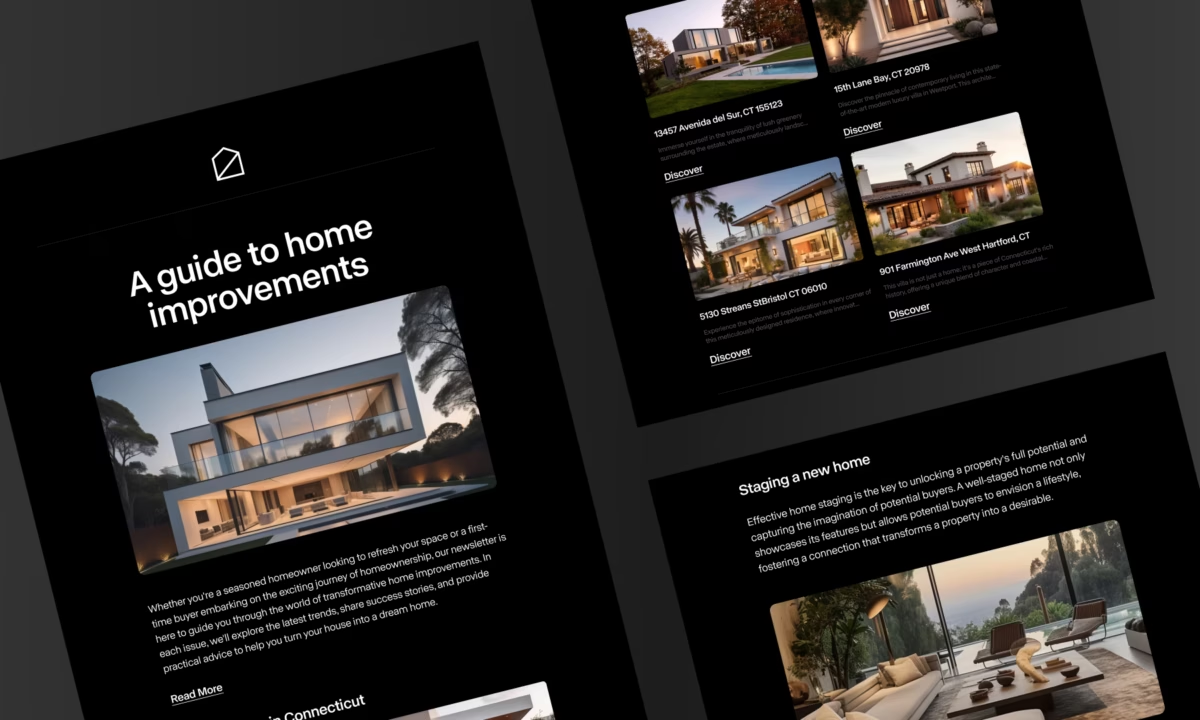
Real estate agents spend a significant portion of their work week on lead generation. In 2026, your website is one of the highest-returning tools you have for capturing and converting those leads, and the platform you choose to build it on determines how well it performs. General-purpose real estate websites are a common starting point for agents who want a polished site on a limited budget, but these platforms were not designed for real estate. They lack native IDX (Internet Data Exchange) search, built-in lead capture, and the real estate-specific SEO tools that drive organic traffic to agent sites. This article evaluates whether a general-purpose website builder is the right fit for your business in 2026, how it compares to other website builders, and when it makes sense to invest in a purpose-built real estate website platform instead.
Disclosure: This article is published by Luxury Presence, a professional real estate website and marketing platform. We have a commercial interest in the comparison presented here. Our goal is to give you an accurate, useful evaluation of your options.
Find It Fast
Key takeaways
- Squarespace offers attractive templates and low monthly pricing, but it was not built for real estate agents and requires manual configuration for IDX, CRM (Customer Relationship Management), and lead capture.
- IDX integration is one of the primary drivers of lead capture for real estate websites, and Squarespace does not include it natively. Adding it through a third-party plugin introduces cost, complexity, and design limitations.
- For newer agents who need a placeholder site on a tight budget, Squarespace can serve as a short-term solution while you plan for a more capable platform.
- Agents who want to generate consistent organic leads, display MLS (Multiple Listing Service) listings with a strong search experience, and build a brand that stands apart from thousands of template-sharing competitors will get better results from a purpose-built real estate website platform.
- The real cost of a website is not just the monthly fee. It includes the hours you spend configuring plugins, the leads you miss from limited search tools, and the brand equity you lose from a generic template.
What is this platform?
This platform is a DIY website builder and content management system that allows users to create a clean, visually appealing site without coding or programming knowledge. It is one of the most accessible website builders on the market, and its sharp template designs make it a popular choice among small business owners across many industries.
This platform offers hosting, a library of templates, basic SEO settings, and e-commerce functionality within its platform.
However, a general-purpose builder was not designed for real estate agents, which means it does not include native IDX integration, a built-in CRM, or the kind of property search tools that buyers expect when they visit an agent’s website in 2026.
How general website builders compare in 2026
Before evaluating a general-purpose website builder specifically for real estate, it helps to understand how it stacks up against two other common options agents consider.
A long-established open-source website platform, founded in 2003, has been a major presence in the website building world for over two decades. It powers a wide range of sites, from single-operator businesses to large enterprises. At first glance, it appears similar to other general-purpose website builders, but the tools attract very different types of users. This option requires coding knowledge, and the learning curve is steep. The platform is intended for technically comfortable users, so customer support is limited compared to more guided builders.
Another DIY website builder is known for its drag-and-drop editor and flexible template customization. It shares top billing with other general-purpose builders in the DIY website builder category. One platform focuses on style and design, while another leans toward function over form. Some builders offer structured parameters in which users can comfortably design, while others are more open-ended, which can feel chaotic and may overwhelm non-designers.
For real estate agents, the most important distinction is this: none of these three general-purpose platforms include native IDX search, real estate-specific lead capture, or MLS-connected property pages out of the box. Any real estate functionality must be added through third-party plugins, which introduces additional cost, configuration time, and potential design limitations.
How does a general website builder for real estate work?
This platform uses a tiered pricing structure. As of 2026, plans start at $16 per month for a basic personal site, though real estate agents typically need the Business plan or higher to access the features required for lead capture and third-party integrations. The higher-tier plans cost considerably more per month.
Because a general-purpose website builder is not a real estate-specific site builder, you are responsible for finding, installing, and configuring every real estate tool yourself. Setting up a general-purpose website builder for real estate use requires manual configuration of several components. You are responsible for each of the following:
- Website title and description tags
- Meta title tags for each page
- Integrating Google Analytics and Google Search Console
- SEO configuration for local and property-related search terms
- IDX integration through a third-party provider
IDX integration is especially important for real estate websites. IDX allows agents to display MLS property listings directly on their own site, giving visitors a reason to search, save properties, and register their contact information. Without IDX, your website cannot function as a property search destination, and you lose one of the most effective mechanisms for capturing buyer leads. Adding IDX to a general-purpose website builder requires a third-party plugin, which adds both monthly cost and configuration complexity.
Real estate website building options in 2026
Between DIY builders and professional real estate website platforms, agents have a wide range of options for building a digital presence. The right choice depends on your business stage, your budget, and the role you want your website to play in your lead generation system.
If organic traffic and lead capture are your priorities, you need a platform with strong IDX search, property landing pages, and built-in SEO tools. If you are just getting started and need a basic web presence quickly, a general-purpose builder may work as a temporary solution. Here is how the main options compare.
Using a DIY real estate website
Not all DIY website builders deliver the same results. While general-purpose website builders offer basic website building capabilities, their individual feature sets, design flexibility, and plugin ecosystems differ significantly.
If you choose to create your own site with a DIY builder, research each platform’s real estate-specific capabilities before committing. In general, DIY websites can be a reasonable option if you have a smaller marketing budget and need to establish a web presence quickly. A DIY website can serve as a placeholder while you plan for a more capable, purpose-built platform.
However, DIY website builders come with real limitations for real estate agents. The template-based nature of these platforms makes it difficult to create a site that stands apart from thousands of other agents using the same designs. You will also face limited apps and plugins, which means you cannot fully configure the site around your specific business needs, market area, or branding goals.
Using a general website builder for real estate websites
If you are a newer agent and have the time to build your own site, a general-purpose website builder might be a reasonable starting point. But for agents who want to generate consistent organic leads, display MLS listings with a strong search experience, or build a brand that stands apart from competitors, these platforms will feel limited in both function and design flexibility.
A general-purpose real estate template library may be attractive but narrow. You will likely share a template with thousands of other agents. If you want a site that reflects your specific market, brand, and value proposition, a purpose-built real estate marketing platform will deliver better results.
You should also read the fine print carefully. Some website builders require an opt-out confirmation if you prefer to keep them from using your content to promote the platform.
Benefits of using a general website builder for real estate
- Visually appealing templates with a clean, modern aesthetic
- Low starting price point compared to purpose-built real estate platforms
- No coding knowledge required for basic site setup
- Built-in hosting and SSL certificate
Drawbacks of using a general website builder for real estate
- No built-in CRM for managing leads and client relationships
- You are responsible for all design, plugin installation, and configuration work
- Lead capture, analytics, and SEO tools are not included by default
- Limited number of templates and plugins compared to WordPress or real estate-specific platforms
- Most features agents actually need require the highest-priced plan tier
- IDX integration requires a third-party plugin, which adds cost and may not match the site’s design
- No native property landing pages or listing-specific websites
Lynch’s point highlights one of the most common frustrations agents encounter with general-purpose website builders. Property search is not a nice-to-have feature. It is the mechanism that keeps buyers on your site long enough to register, save listings, and become leads. When that search experience is clunky or unreliable because it was bolted on through a third-party plugin, the entire lead capture system breaks down.
Real estate website comparison table
| Feature | General Website Builder | Alternative DIY Builder | Open-Source CMS | Purpose-Built Real Estate Platform |
| Starting price (as of 2026) | $16/month | $17/month | Free (hosting separate) | Varies by provider |
| Native IDX support | No (third-party plugin required) | No (third-party plugin required) | No (third-party plugin required) | Yes (built into the platform) |
| Built-in SEO tools for real estate | Basic SEO settings only | Basic SEO settings only | Requires plugins | Yes (real estate-specific SEO) |
| Design customization | Template-based with limited flexibility | Flexible drag-and-drop editor | Highly flexible (requires coding) | Fully custom designs |
| CRM included | No | No | No | Yes (many providers include CRM) |
| Property landing pages | No | No | Requires custom development | Yes (one-click property websites) |
| Coding knowledge required | No | No | Yes | No |
| Best for | Newer agents on a tight budget | Agents who want design flexibility on a budget | Tech-savvy agents or teams with a developer | Agents and teams focused on lead generation and brand building |
Working with a professional real estate website platform
A purpose-built real estate website platform is a different category entirely from a DIY builder. Instead of starting with a blank template and adding real estate functionality piece by piece, you start with a platform that was designed from the ground up for how agents and brokerages actually operate.
Custom design that reflects your brand
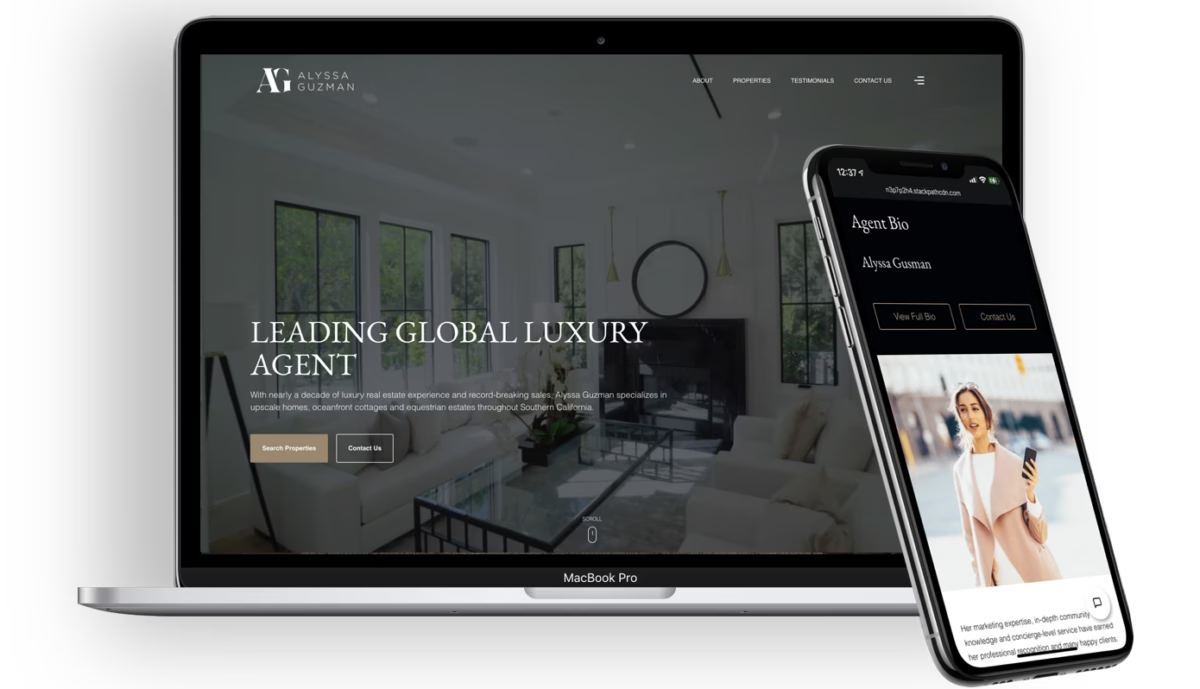
With a professional real estate platform, your site is designed specifically for your brand, your market, and your audience. You are not selecting from a shared library of templates. You are working with designers who understand how luxury buyers and sellers evaluate an agent’s credibility based on their digital presence. The result is a site that looks and feels like your business, not like a template that thousands of other agents are also using.
Luxury Presence, for example, builds custom real estate websites that are designed around each agent’s specific brand identity and market positioning.
Built-in marketing and SEO tools
A real estate-specific platform builds marketing tools directly into the core of the site. Instead of manually configuring Google Analytics, installing SEO plugins, and troubleshooting third-party integrations, you get a site where local SEO, content publishing, and search engine visibility are part of the architecture from day one.
Luxury Presence has delivered over 140,000 SEO improvements across client websites and drives more than 60 million annual visitors to agent and brokerage sites across its network. These are not theoretical capabilities. They are measurable outcomes that come from building SEO into the platform rather than bolting it on after the fact.
Lead capture and property search that actually work
The most significant gap between a DIY builder and a purpose-built real estate platform is lead capture. On a general-purpose website builder, you are assembling a lead capture system from separate, disconnected tools. On a real estate platform, IDX search, property landing pages, and lead registration are woven into the site’s structure.
Consider the experience of Better Homes and Gardens Real Estate Lifestyles Realty. The brokerage spent 13 years on a prior website platform that generated zero organic leads. After switching to Luxury Presence, they recorded 10 organic leads in their first week and saw 57% site engagement within four months (Source: Luxury Presence Case Study: Better Homes and Gardens Real Estate Lifestyles Realty, 2024).
Luxury Presence also offers one-click property websites that give agents a dedicated landing page for each listing. These pages rank well on Google for property-specific searches and integrate directly with your CRM through Zapier, so every lead flows into your follow-up system automatically.
Choosing the Right Real Estate Website Platform
A general-purpose website builder can be a workable starting point for newer agents who need a simple site on a limited budget, but it is not built to support the search, lead capture, and SEO demands of a real estate business. If your goal is to generate consistent organic leads, showcase MLS listings effectively, and build a brand that stands out, a purpose-built real estate platform will usually deliver stronger results. The best choice depends on whether you need a short-term placeholder or a website that can actively support long-term growth.
FAQs
Expert website design services
Every day, Luxury Presence creates and manages real estate websites for some of the biggest agents, teams, and brokerages in the country. Learn how we can transform your online presence.
About the author

Marketing Manager
Kate Evans is a content marketing strategist at Luxury Presence, the leading growth platform for high-performing real estate professionals. She develops data-driven editorial content and supports SEO strategy and brand voice frameworks that help agents attract qualified leads and establish market authority. Her published work covers topics including CRM strategy, social media marketing, and digital growth, supporting thousands of agents in scaling their businesses through modern marketing.