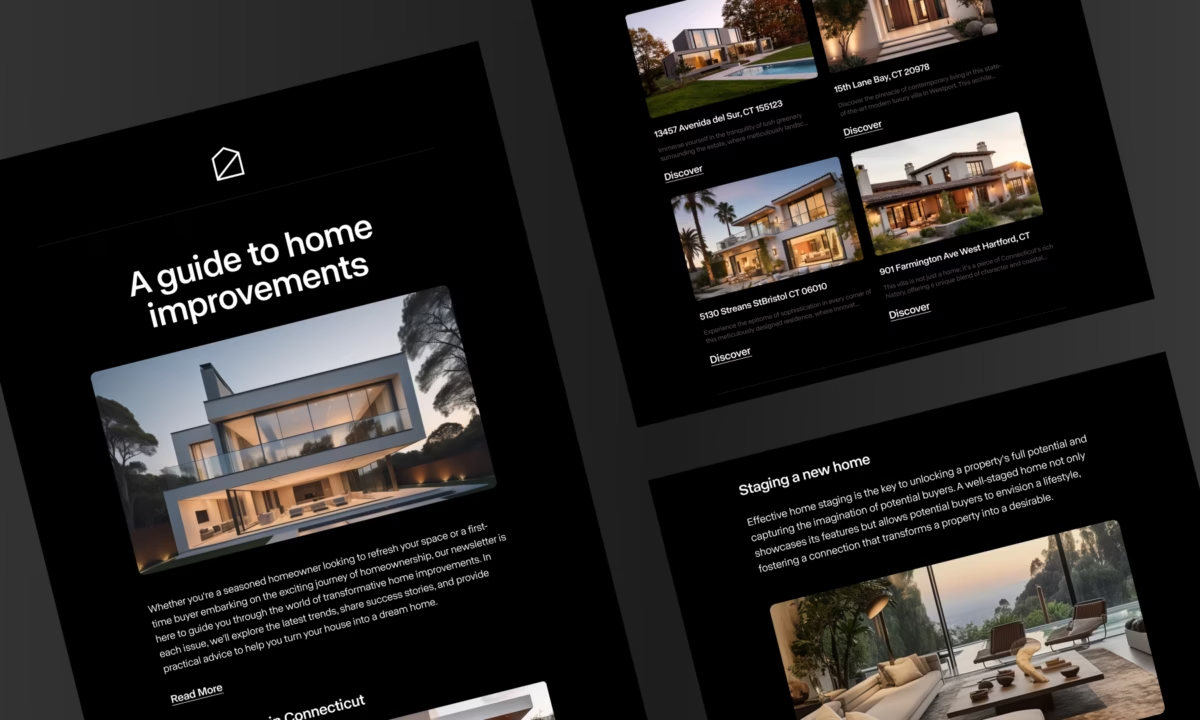
A neighborhood guide is one of the most effective website assets a real estate agent can build in 2026. It positions you as the local authority in a specific area, gives buyers and sellers a reason to stay on your site, and creates a clear path from organic search traffic to captured leads. Unlike a generic blog post, a well-built neighborhood guide works around the clock, attracting people who are actively researching where to live, invest, or sell.
This article walks you through a step-by-step process for creating a neighborhood guide that earns trust, ranks in search results, and turns website visitors into real conversations. You will learn what to include, how to structure it, how to stay compliant with fair housing laws, and how to distribute it across your marketing channels for the greatest return.
Find It Fast
Key takeaways
- A neighborhood guide positions you as a hyperlocal authority and serves as an always-on lead generation asset on your website, keeping traffic on your domain instead of sending it to third-party portals.
- The three core steps are: research the neighborhood thoroughly, structure the guide into clear sections, and make it visually engaging with maps, photography, and consistent branding.
- Fair Housing Act compliance requires describing neighborhood features rather than the people who live there, and using objective data instead of subjective characterizations.
- AI tools like GPT-5 can speed up first drafts and repurpose content, but every piece should be reviewed and personalized with your local knowledge before publishing.
- SEO with hyperlocal keywords such as “{neighborhood} homes for sale” and “{neighborhood} schools” is what turns a static guide into a traffic-generating asset in 2026.
- Hosting the guide on your own website, rather than a third-party listing portal, keeps every lead exclusive to you.
Why neighborhood guides matter in 2026
Buyers in 2026 do not start their home search by calling an agent. They start by searching online for the neighborhoods they are considering. A neighborhood guide meets them at that exact moment, answering questions about schools, walkability, dining, commute times, and housing costs before they ever pick up the phone. For sellers, a detailed guide signals that you understand the community well enough to market their property to the right audience.
Beyond serving individual clients, neighborhood guides build something harder to measure but just as valuable: local credibility. When someone searches “living in [your neighborhood]” and your guide is the page that answers their question, you become the default authority for that area. That credibility compounds over time as the page earns backlinks, social shares, and repeat visits.
These guides also function as lead generation assets. A visitor who downloads your guide or fills out a contact form on your neighborhood page is telling you exactly where they want to buy or sell. That intent signal is far more valuable than a cold lead from a paid ad.
The numbers back this up. When Greenwichstreets.com, a Luxury Presence client, deployed neighborhood-focused editorial content on their site, they saw a 33% increase in search visibility, a 52% increase in clicks, 25% more visits per quarter, and 41% more users per quarter within three months (Source: Luxury Presence Case Study: Greenwichstreets.com).
3 steps to create a neighborhood guide
Step 1: Research the neighborhood
The quality of your guide depends entirely on the quality of your research. Surface-level descriptions will not differentiate you from the dozens of other agents writing about the same area. Go deeper than what someone can find on a quick web search, and add the kind of local knowledge that only comes from working in the community.
Here are the categories your research should cover:
- Demographics: Median age, median household income, population trends, and general lifestyle patterns
- Amenities: Schools (with links to GreatSchools.org, a nonprofit that provides school ratings based on test scores and equity metrics), parks, restaurants, grocery stores, and shopping centers
- Transportation: Public transit options, average commute times, walkability scores, and bike infrastructure
- Real estate market trends: Median home prices, average days on market, recent sales activity, and current inventory levels
- Community character: Farmers markets, annual events, neighborhood associations, and local traditions that give the area its identity
Pull data from your MLS, county assessor records, and census data. Then layer in your own observations and client feedback. That combination of hard data and lived experience is what makes a guide worth reading.
Step 2: Structure your guide for clarity
A wall of text will not hold anyone’s attention. Organize your guide into distinct sections so readers can scan for what matters most to them. Here is a structure that works well:
- Overview: A two-to-three sentence snapshot of the neighborhood, its location, and its general character
- Lifestyle: What makes this area different from surrounding neighborhoods, including dining, nightlife, outdoor activities, and cultural events
- Real estate trends: Current market data for buyers and sellers, including median sale price, price-per-square-foot trends, and inventory levels
- Local amenities: Schools, parks, healthcare facilities, and businesses, organized by category
- Transportation and commute: How residents get around, with specific commute times to nearby employment centers
- Testimonials: Quotes from residents or past clients who live in the area
Each section should be able to stand on its own. A buyer interested in schools should be able to jump straight to that section and get a complete answer without reading the entire guide.
Step 3: Make it visually engaging
A neighborhood guide with no images, maps, or visual hierarchy will underperform regardless of how good the writing is. Visual elements break up text, add credibility, and help readers picture themselves in the area.
Graphic design tools
- Canva (freemium): As of 2026, Canva offers real estate-specific templates for infographics, social graphics, and multi-page guide layouts with drag-and-drop editing
- Adobe Express (freemium): Good for creating branded graphics and short videos with pre-designed templates
- Figma (freemium): A more advanced option for custom design projects where you want full control over branded, professional layouts
Stock image resources
- Unsplash (free): High-quality stock images, many of which are free for commercial use
- Shutterstock (paid): A subscription-based library with millions of photos, videos, and illustrations
- Pexels (free): A large library of professional images with no licensing fees
Mapping and geo-visualization
- Google My Maps (free): Create custom maps highlighting landmarks, schools, and neighborhood amenities, then embed them directly in your guide
- Mapbox (freemium): A more advanced option for custom, interactive maps with neighborhood-specific styling
- Snazzy Maps (free): Customize Google Maps with color schemes that match your brand
| Tool category | Tool name | Pricing | Best for |
| Graphic design | Canva | Freemium | Quick infographics and guide layouts |
| Graphic design | Adobe Express | Freemium | Branded graphics and short videos |
| Graphic design | Figma | Freemium | Custom branded layouts |
| Stock images | Unsplash | Free | High-quality photos, no cost |
| Stock images | Shutterstock | Paid subscription | Largest library with videos |
| Stock images | Pexels | Free | Professional images, no licensing fees |
| Mapping | Google My Maps | Free | Embeddable custom maps |
| Mapping | Mapbox | Freemium | Interactive, neighborhood-specific maps |
| Mapping | Snazzy Maps | Free | Brand-colored Google Maps styling |
Collaborate with a designer
If you want a polished, professionally designed guide, platforms like 99Designs or Upwork can connect you with graphic designers who have real estate marketing experience.
Keep your branding consistent
Use your brand’s colors, fonts, and logo throughout the guide. A cohesive design makes your guide instantly recognizable and reinforces your professional identity every time someone encounters it.

Staying compliant with fair housing laws
Every neighborhood guide you publish must comply with the Fair Housing Act, which prohibits housing discrimination based on race, color, national origin, religion, sex, familial status, and disability. This is not optional, and the consequences of a violation can be severe. The good news is that compliance is straightforward if you follow a few clear principles.
Describe features, not people
When writing about a neighborhood, focus on what the area offers rather than who lives there. Describe amenities, infrastructure, and community resources. Avoid language that implies a neighborhood is suited for a particular demographic group.
- Instead of: “This area is perfect for young families”
- Write: “This area features highly rated elementary schools, multiple playgrounds, and recreational facilities”
Use inclusive phrasing that reflects the diversity of the community. Mention cultural events and community gatherings without implying they are exclusive to any particular group.
Use objective data, not subjective opinions
Base your descriptions on verifiable facts rather than assumptions about who would enjoy living somewhere.
- Instead of: “This neighborhood is quiet and perfect for seniors”
- Write: “This neighborhood’s amenities include accessible walking trails, a well-equipped community center, and convenient public transportation”
Be careful with school descriptions
Schools are one of the most searched topics in any neighborhood guide, but avoid making subjective quality judgments. Instead:
- Reference objective metrics like state test scores or official ratings
- Provide links to third-party resources like GreatSchools.org so clients can evaluate schools on their own
- List the schools that serve the area without ranking them against each other
Avoid steering
Steering means guiding clients toward or away from specific neighborhoods based on personal characteristics such as race, religion, or familial status. Your guide should present information neutrally and let clients draw their own conclusions. Never write copy that suggests a neighborhood is “best for” a particular type of person.
Review your content regularly
Fair housing guidance evolves. Review your neighborhood guides at least once a year to confirm they reflect current laws and regulations. If you are unsure about specific language, consult with a real estate attorney or compliance professional before publishing.
How to use AI to speed up the process
AI writing tools like GPT-5 from OpenAI can cut the time it takes to produce a first draft from hours to minutes. The key is using AI as a starting point, not a finished product. Every draft should be reviewed, fact-checked, and layered with your own local knowledge before it goes live.
Here are four ways to put AI to work on your neighborhood guide:
- Generate a first draft: Use a prompt like “Write a neighborhood guide for {neighborhood} in {city}. Include sections on lifestyle, amenities, schools, and real estate trends. Use a conversational, informative tone.”
- Refine specific sections: If you are stuck on one part, ask for help with a targeted prompt: “Describe the local restaurant scene in {neighborhood}. Include 3 popular spots and what they are known for.”
- Create SEO-friendly content: After your guide is written, use AI to draft meta descriptions: “Write a 155-character meta description for a neighborhood guide about {neighborhood} targeting homebuyers and sellers.”
- Repurpose content across channels: AI can turn sections of your guide into social media posts, email copy, and blog excerpts. Try: “Turn this neighborhood overview into a LinkedIn post targeting real estate investors interested in {neighborhood}.”
The critical rule: always review and approve AI-generated content before publishing. AI does not know your market the way you do. It may get facts wrong, miss local nuances, or produce generic copy that sounds like every other agent’s website. Your job is to add the specificity and personality that only a local practitioner can provide.
SEO for neighborhood guides in 2026
A neighborhood guide that no one can find in search results is a missed opportunity. In 2026, with AI-generated search overviews pulling answers directly from web pages, the structure and specificity of your content matters more than ever. Pages that answer hyperlocal questions clearly and concisely are the ones that get cited in AI search results and earn clicks from organic listings.
Here is how to make your guide visible:
- Target hyperlocal keywords: Build your page around phrases like “{neighborhood} real estate,” “{neighborhood} homes for sale,” “{neighborhood} schools,” and “what is it like to live in {neighborhood}.” These are the queries buyers actually type.
- Write keyword-rich headings: Use your target neighborhood name in at least two H2 headings and several H3 subheadings. Search engines weigh heading text heavily when determining what a page is about.
- Add internal and external links: Link to your active listings in that neighborhood, related blog posts on your site, and authoritative external sources like school rating sites and local government pages.
- Write a compelling meta description: Your meta description should include the neighborhood name and a clear value proposition. Example: “Everything you need to know about living in {neighborhood}: schools, market trends, dining, and commute times. Your complete 2026 guide.”
- Structure for AI search features: In 2026, Google’s AI Overviews and other AI search tools pull structured answers from well-organized pages. Use clear subheadings, short paragraphs, and bulleted lists so your content is easy for both humans and machines to parse.
That insight captures exactly why hosting your neighborhood guide on your own domain matters for SEO. Every visitor who lands on your guide is on your website, not a third-party portal. That means every page view builds your domain authority, and every lead form submission goes directly to you.
Sample keyword map for a neighborhood guide
| Keyword type | Example keyword | Where to use it |
| Primary | {neighborhood} homes for sale | H1, meta title, first paragraph |
| Secondary | {neighborhood} real estate market | H2 heading, real estate trends section |
| Long-tail | Best schools in {neighborhood} | Schools subsection heading |
| Long-tail | What is it like to live in {neighborhood} | Lifestyle section, FAQ |
| Local modifier | {neighborhood} restaurants and dining | Amenities section |
| Buyer intent | Moving to {neighborhood} in 2026 | Overview section, meta description |
Turning your guide into a lead magnet
A lead magnet is a piece of content you offer in exchange for a prospect’s contact information, typically an email address. Neighborhood guides are among the strongest lead magnets in real estate because they attract people with clear geographic intent. Someone who downloads a guide to living in a specific neighborhood is telling you exactly where they want to buy or sell.
Research published prior to 2026 found that 73% of successful content marketers use detailed content assets as part of their strategy, a pattern that has only strengthened as buyers increasingly research neighborhoods online before contacting an agent (Visme, 2023).
Here is how to distribute your guide across channels:
On your website
Feature the guide on a dedicated landing page with a clear call to action such as “Download our complete guide to living in {neighborhood}.” Gate the downloadable PDF version behind a simple form that captures name and email. Keep the web version of the guide ungated so it can rank in search results and attract organic traffic.
In email marketing
Use the guide to nurture your email list with relevant, location-specific content:
- Send it as a follow-up to leads who have expressed interest in that area
- Include it in your newsletter as a featured resource to keep current prospects and past clients engaged
- Use it as the first touchpoint in a drip sequence for new leads from that neighborhood
On social media
Break the guide into smaller pieces for social media posts. Share a “top 5 restaurants” list from your dining section, post a market snapshot graphic, or create a short video walkthrough of the neighborhood. Each post should link back to the full guide on your website.
Through paid advertising
Run targeted pay-per-click campaigns or Facebook ads to drive traffic to your landing page. Use ad copy that highlights the guide’s specific value: “Moving to {neighborhood}? Download our free 2026 guide with school ratings, market data, and local dining picks.”
Neighborhood guides + Luxury Presence
Luxury Presence is a real estate marketing and technology company that helps agents build high-performance websites, create neighborhood-specific content, and run marketing programs that generate qualified leads. With features like customizable landing pages, built-in neighborhood guide templates, and professionally designed websites, Luxury Presence gives you the infrastructure to turn your local knowledge into a digital asset that works for you around the clock.
Luxury Presence’s SEO & GEO, Social Media Management, and Paid Ad Management work together as the company’s marketing system, handling content creation, search and social distribution, and paid advertising at a pace that would be impossible to maintain manually. Nothing publishes without your review and approval, so your voice and local expertise stay at the center of everything. The result is a consistent brand presence that generates qualified leads while saving you 10 or more hours per week on marketing tasks.
If you are ready to turn your neighborhood expertise into a website that attracts and converts local buyers and sellers, Luxury Presence can help you get there.
Building a Neighborhood Guide That Converts
A strong neighborhood guide does more than describe an area. When you combine local research, clear structure, fair housing compliance, strong visuals, and hyperlocal SEO, you create a resource that builds trust and attracts qualified leads over time. Keep it updated regularly, publish it on your own site, and use it as a foundation for your broader marketing efforts.
FAQs
About the author

Marketing Manager
Kate Evans is a content marketing strategist at Luxury Presence, the leading growth platform for high-performing real estate professionals. She develops data-driven editorial content and supports SEO strategy and brand voice frameworks that help agents attract qualified leads and establish market authority. Her published work covers topics including CRM strategy, social media marketing, and digital growth, supporting thousands of agents in scaling their businesses through modern marketing.