
Real estate agents are in the business of generating leads and closing deals, and finding and landing clients is an essential part of the job. Lead generation is a high stakes business and can comprise a significant portion of your work week as an agent, so it’s essential to find a seamless process for automating and streamlining the system.
As a real estate agent, you know a website isn’t just necessary – it is a key factor in determining your success. But how do you know which website option is best for your brand?
You have probably heard of Squarespace, the DIY website popular with small business owners, but is Squarespace for real estate a viable alternative to working with a professional developer?
In this article, we will examine the benefits and drawbacks of creating your own drag-and-drop website, whether or not Squarespace really works for realtors, and which website elements are essential for your real estate website.
Find It Fast
What is Squarespace?
Squarespace is a DIY website builder and content management system that allows users to create a clean, simple site without technical skills or any knowledge of coding or programming.
This is one of the easiest DIY platforms available and the sharp designs and abundance of templates make this a builder of choice for small business owners. Squarespace offers a one-stop shop of sorts, with basic SEO options, hosting, low cost plans, and the ability to integrate IDX and CRM software.
A word about Wix and WordPress
WordPress has been a major presence in the website building world for almost two decades and boasts clients as varied as single entrepreneur businesses and companies with hundreds of employees.
At first glance, WordPress appears similar to Squarespace in terms of website building, but the two differ significantly and attract two very different types of users.
While Squarespace finds success with simple templates, clean designs, and a hands-off approach to technical skills, WordPress asks more of its users. WordPress requires coding knowledge and the learning curve is steep. The platform is intended for fairly tech savvy users, so customer support is limited.
As for Wix, it shares top billing with Squarespace for DIY website building platforms. Together the two make up 55% of sites created with a website builder. The contrast between the two has been likened to that of Apple and Microsoft – Squarespace focuses on style and design, while Wix embraces function over form.
Squarespace offers parameters in which users can comfortably design and Wix is unstructured, which can feel chaotic at times and may be overwhelming for non-designers.
How does Squarespace for real estate work?
Squarespace features a tiered payment plan, so at first glance the cost projection is attractive. Plans start at as little as $12 per month for a basic site, although this is meant for personal use and real estate users typically recommend the Advanced Commerce tier plan, which is considerably more per month.
It should be noted that Squarespace is not a real estate-specific site builder, so you will need to search the platform for beneficial tools and features, and install them yourself.
While the process is not difficult, it can be time consuming to tackle both the design work and the details of your marketing strategy. Examples include:
- Website title description tags
- Meta title tags
- Integrating Google Analytics and Google Search Console
- SEO optimization
- IDX integration
Note: IDX software is important for real estate websites, as it enables agents to integrate MLS listings onto their platform and has proven successful in lead generation.
Real estate website building options
Between DIY options, Squarespace, and professional website development agencies, real estate agents have an incredible array of options to choose from when designing a digital platform. But which is right for you? That depends on your individual situation – your business goals, experience, and the areas of growth on which you would like to focus.
If lead generation and organic traffic are your priorities, you will need a builder with strong capabilities in these areas, while IDX needs and property landing pages may call for a more nuanced approach to website development. Let’s take a look at both DIY and professional development and the benefits and drawbacks of each.
Using a DIY real estate website
As we pointed out earlier in this article, not all DIY websites are created equal. While Squarespace and Wix are similar in terms of basic website building abilities, the individual offerings vary from platform to platform.
If you choose to create your own site with a DIY builder, you will want to research thoroughly to ensure the best fit. In general, DIY websites can be a solid option if you have a smaller marketing budget and need to establish a platform quickly. A DIY website as a placeholder can serve you well while you plan for a customized website.
However, working with DIY website builders does include significant limitations. The template, copy-and-paste nature of these platforms lacks the ability to create truly unique, award-winning sites, so if you want your luxury website and posh property landing pages to stand out, DIY websites are unlikely to satisfy.
You will also face limited apps and plugins, which means you will not be able to fully tailor the site to your business needs and goals.
Using Squarespace for real estate websites
If you are a newer agent and have the time to create your own site, Squarespace might be a good fit, but for more established luxury agents, and those who wish to make a splash with their luxury website and property landing pages, Squarespace will likely feel limited in terms of function and style.
While the templates offer a sleek and minimalist patina, the selection is limited, meaning you will likely share a template with thousands of other agents. If you prefer a completely unique, customized site, you would do better with a professional real estate marketing platform.
You will also need to read the fine print carefully, as Squarespace requires an opt-out confirmation if you prefer to keep them from using your content to promote the platform.
The benefits of using Squarespace for real estate website design include:
- Stylish templates
- Inexpensive plans
- User-friendly interface
There are drawbacks to this platforms, as well, such as the following:
- CRM is not included
- The user is responsible for all design and plugin work
- Lead generation, analytics, and SEO tools are not automatically included
- Limited number of templates and plugins
- Everything but the most basic designs require the maximum price point
- Some tools, like IDX integration, may require a professional touch
Working with a professional website development company
Working with a professional development company seriously levels up your website design and real estate marketing game. As opposed to the copy-and-paste experience of a DIY website, a professionally built platform offers more than a simple web presence.
Working with a developer presents an opportunity to establish yourself as a leader in the luxury real estate world. Your site is customized for you from the inception, and is designed to build marketing tools right into the core of the site.
And as a luxury real estate agent, your website and marketing will benefit from the glossy, sophisticated designs for which top developers like Luxury Presence are known.
Luxury Presence websites are lauded for their sleek, sophisticated look, as well as high-converting IDX search functions, tailored SEO tools, organic search rankings, and tremendous increases in traffic.
As a professional developer, Luxury Presence is able to incorporate your specific real estate goals into the structure of your site, and this level of specificity is one of the most compelling reasons to invest in a professionally designed website.
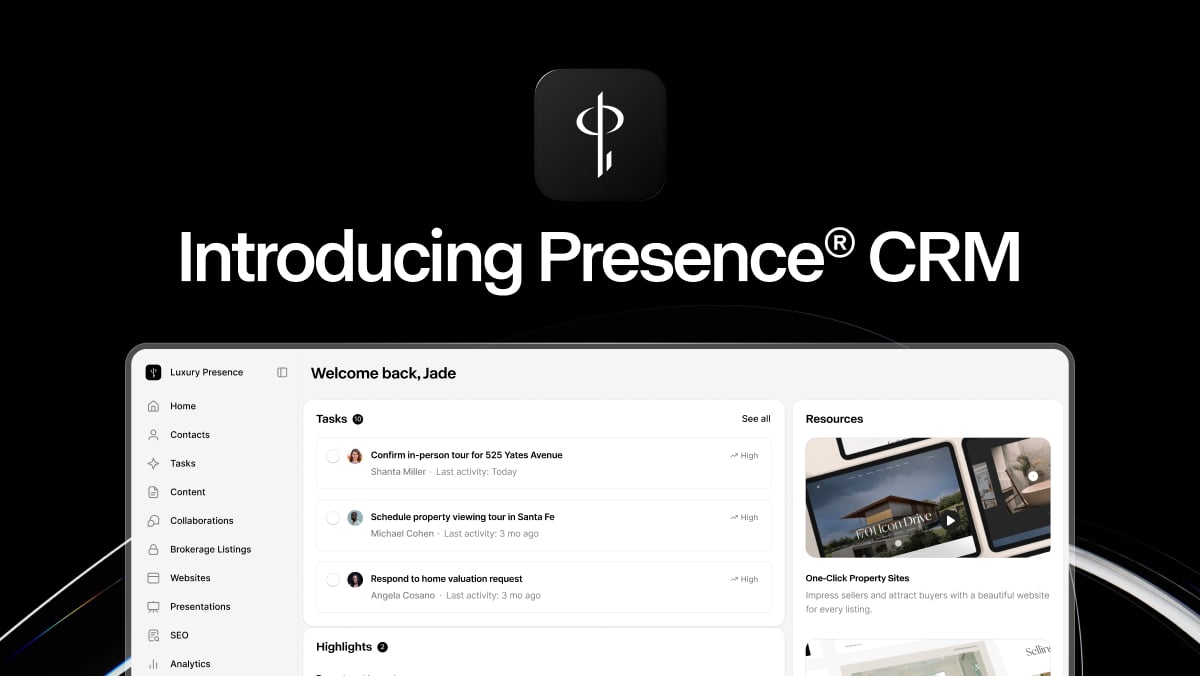
At Luxury Presence, we have learned that property landing pages are an incredible tool to generate leads and convert visitors into clients. Our real estate clients enjoy an edge over the competition with our one-click property websites. Elegant and effective, these sites showcase your listings and yield a high ranking on Google.
These pages also easily and seamlessly integrate your CRM with our Zapier connection. You can also expand your professional network with our cutting-edge referrals app, which connects our agents to industry leaders and gives you the chance to gain quality referrals.
You’ll be able to boost website conversions with our new home valuation tool, and create stunning presentations for buyers, sellers, and market analytics.
Getting started with Luxury Presence
Getting started is easy – connect with our real estate specialist team to view a live demo and learn how Luxury Presence can help you grow your business. Our luxe designs are consistently recognized by both clients and industry leaders and have earned us a place as a top-producing development and marketing firm. Take your real estate goals to the next level with our specialized, real estate-specific services.