As of 2026, managing brokers (the licensed professionals overseeing a real estate brokerage’s operations) and team leaders face a more competitive recruiting and retention environment than at any point in the past decade. The brokerages winning the talent war are not simply offering higher commission splits. They are building systems, coaching rhythms, and operational support structures that make agents want to stay. Real estate broker management best practices come down to three things: giving agents a reason to believe in the brokerage, giving them the tools to perform at a high level, and removing the friction that slows them down. This guide breaks down exactly how to do all three, with specific frameworks you can put into action this quarter.
“The brokerage that you join should accelerate your career and the person that you want to be. It should not be a landlord.”
— Lauren Henss, VP of Marketing, FirstTeam Real Estate
Find It Fast
Key takeaways
- Agent satisfaction is driven by three measurable factors: recognition, autonomy, and growth opportunities. Address all three with repeatable systems, not one-off gestures.
- A collaborative brokerage culture reduces isolation and increases retention. Structured communication platforms, mentorship programs, and team-building rhythms are the mechanics that make culture real.
- Technology should remove friction from agents’ daily workflows, not add complexity. Structured onboarding and training are what separate adoption from abandonment.
- Transparency about brokerage goals, challenges, and expectations builds trust faster than any incentive program.
- A quick-reference management checklist (included below) gives brokers and team leaders a concrete action plan they can start executing immediately.
Recognizing what drives agent satisfaction in 2026
Real estate is a field where job satisfaction ties directly to three forces: a sense of achievement, a feeling of autonomy, and clear growth opportunities. Brokers who build systems around all three retain more agents and attract stronger recruits. Here is how each driver works and what you can do about it.
Achievement and recognition
Agents are wired to pursue milestones, whether that means closing a record-setting listing, converting a lead from a cold call, or growing their sphere by 20% in a single quarter. Recognition for those wins fuels the next round of effort. The key is making recognition a system, not a random event. Acknowledge closings in team meetings. Send a personal message within 24 hours of a milestone. Track recognition cadence the same way you track pipeline. When agents see that their brokerage notices their work, they invest more deeply in the brokerage’s success.
Autonomy
Many agents chose real estate because of the flexibility it offers. A brokerage culture that respects that autonomy, while still providing structure, produces higher satisfaction scores across the board. Provide support and clear expectations without micromanaging. Let agents own their schedules, their marketing voice, and their client relationships. Your job is to set the guardrails and supply the resources. Their job is to run their business inside those guardrails.
Growth and development opportunities
Agents who feel stuck leave. Agents who see a path forward stay. Offering professional development, mentorship programs, and access to market data helps agents advance their careers inside your brokerage rather than looking elsewhere. Build a quarterly training calendar. Bring in outside speakers. Create a clear progression path from new agent to team lead to managing broker. When agents can see the next rung on the ladder, they climb it with you.

Fostering a collaborative culture
Agents often feel isolated because of the independent nature of real estate work. That isolation erodes morale and accelerates turnover. A collaborative culture is the antidote, and it does not happen by accident. It happens through deliberate, repeatable actions. Research published by MIT Sloan Management Review found that 67% of analytics leaders identified organizational culture as the single biggest barrier to building a high-performance organization, a finding that applies directly to how brokerages structure team communication and shared goals (MIT Sloan Management Review).
Implement communication and collaboration platforms
As of 2026, platforms like team messaging tools and Microsoft Teams have become standard infrastructure for distributed real estate teams. Create dedicated channels where agents share wins, ask questions about tricky transactions, and discuss market shifts in real time. Regular virtual meetings or short weekly webinars where agents can learn, ask questions, and provide feedback promote a sense of belonging. Keep these meetings tight: 30 minutes, a clear agenda, and one takeaway per session.
Offer virtual mentorship and training
For new agents especially, mentorship is invaluable. In larger brokerages or in markets where face-to-face meetings are difficult, technology makes it possible to connect mentors and mentees without geographic constraints. Pair every new agent with a mentor within their first week. Set a standing monthly check-in. Provide a shared document where both parties track goals, questions, and progress. The structure is what makes mentorship stick.
Organize regular team-building activities
Host networking events, workshops, or casual meetups to create opportunities for agents to connect outside of transactions. These events build the trust that makes agents comfortable collaborating on deals, sharing advice, or covering for each other when needed. You do not need to plan every activity yourself. Look for industry events your team can attend together. Monthly coffee meetups or after-hours gatherings contribute to a stronger, more unified culture without requiring a large budget.
Invest in soft skill training
Success in real estate depends on soft skills like communication, empathy, and adaptability just as much as it depends on contract negotiation and market analysis. Consider offering workshops on these people-centered skills that improve both client interactions and internal team dynamics. Role-playing scenarios, conflict resolution training, and public speaking practice build the confidence agents need to handle high-pressure situations with composure. These sessions also give agents a shared vocabulary for working through disagreements on co-listed deals or team projects.
Build transparency and trust
Transparency is not a soft skill. It is an operational requirement. Openly share brokerage goals, expectations, and even challenges with your team. Make sure agents feel comfortable coming to you with questions or concerns by providing clear, honest answers. When agents feel they understand the bigger picture, including where the brokerage is headed and what role they play in that direction, they are more likely to stay engaged and aligned with the organization’s objectives. Hold a quarterly “state of the brokerage” meeting where you share production numbers, recruiting goals, and market outlook. No spin. Just facts.

Technology tools that support agent performance in 2026
In 2026, the brokerages with the lowest agent turnover are not simply the ones with the highest splits. They are the ones that remove friction from agents’ daily workflows through the right technology, paired with structured onboarding and training.
“Top agents don’t necessarily need more tools. They need fewer obstacles between effort and income.”
— Ryan Coyne, CEO, Luxury Presence
The table below maps the most common agent pain points to the technology categories that address them.
| Agent pain point | Technology category | What it solves |
| Leads going cold because of slow follow-up | Lead Nurture Marketing | Maintains contact with high-funnel leads through agent-approved, automated touchpoints |
| Hours spent on social media content creation | Social Media Marketing | Produces professional-grade social content at speed, with agent review before publishing |
| Weak online presence or outdated website | Agent websites with property search (Internet Data Exchange) integration | Gives each agent a branded subdomain with property search and lead capture |
| Inconsistent paid advertising results | Paid Advertising | Runs targeted ad campaigns managed by a dedicated team with agent approval on creative |
| No time for blog writing or SEO | Content Marketing and SEO Marketing | Keeps the agent’s website fresh with search-friendly content, nothing publishes without approval |
Automated lead follow-up and client communication
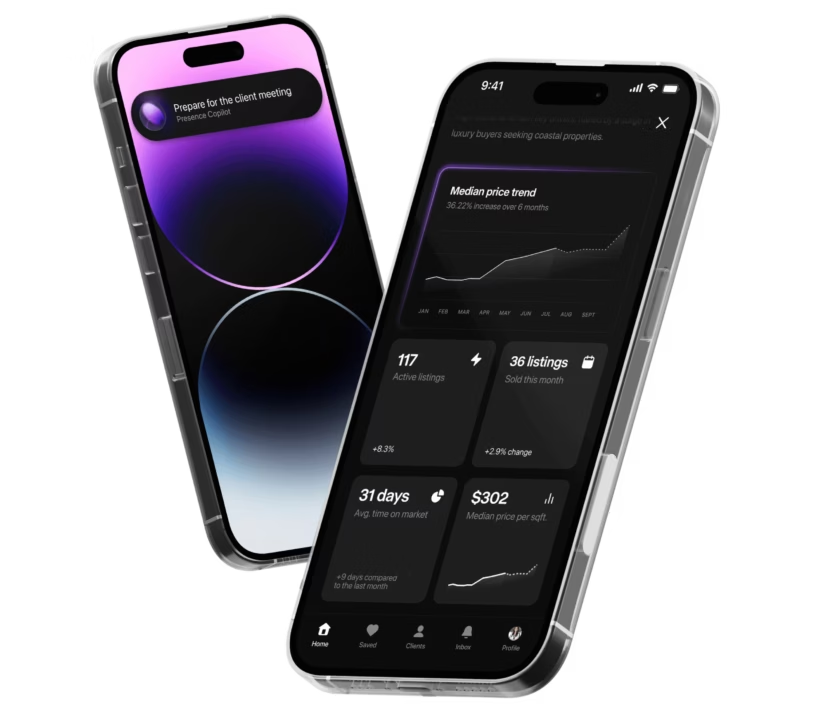
Managing multiple client interactions can overwhelm even the most organized agent. Lead Nurture Marketing from Luxury Presence allows agents to maintain contact with high-funnel leads without feeling stretched thin. Leads receive timely, relevant responses, and agents stay free to focus on active buyers and sellers. Nothing sends without the agent’s review and approval. Luxury Presence’s CRM supports this workflow by tracking the entire client journey from first contact to closing. It is purpose-built for real estate, integrates with the agent’s marketing efforts, and maintains a personal touch at scale through automated relationship nurturing and personalized communication. Agents review and approve all outgoing messages. On the client communication side, the Luxury Presence Branded Mobile App helps agents work faster with features like AI-transcribed voice notes, smart client collaboration tools, and real-time market data, all from their phone.
Meet your new app
Learn how Luxury Presence’s mobile solution boosts client collaboration and integrates AI to help agents stay organized.
Data-driven market tools
Predictive analytics uses data and machine learning to forecast market trends, buyer behavior, and property values. By analyzing historical data and patterns, these tools help agents identify emerging markets and target high-potential leads with greater precision. When you give agents access to better data, they make better decisions for their clients. That translates directly into higher close rates and stronger client relationships, both of which reduce agent churn.
Agent websites and IDX integration
The Luxury Presence platform features fully customizable websites with IDX integration for property searches and tools that drive user engagement. Agent subdomains allow brokerages to showcase individual agents while maintaining a cohesive brand across the organization. For brokerages focused on recruiting, a strong digital presence is a recruiting tool in itself. When prospective agents see that your brokerage provides a polished, branded web presence for every member of the team, it signals that you invest in your people.
Done-for-you marketing and paid advertising
Luxury Presence offers digital advertising services and a full suite of marketing tools built for real estate professionals. Luxury Presence’s Social Media Management works as an always-on marketing system that maintains the agent’s brand presence and generates qualified leads in the background, saving agents 10 or more hours per week on marketing tasks. Every piece of content goes through agent approval before it goes live. When FirstTeam Real Estate replaced its entire tech stack and onboarded 2,200 agents onto the Luxury Presence platform, it achieved 100% agent adoption in less than two weeks, supported by seven structured live webinars. In the first month alone, the brokerage saw an 81.8% increase in leads and a 149% increase in site visits (Source: Luxury Presence Case Study: FirstTeam Real Estate). The lesson for brokers and team leaders: technology adoption is not about buying software. It is about structured rollout, hands-on training, and ongoing support. Without those three elements, even the best platform sits unused.
Broker management best practices: a quick-reference checklist
Here are seven actions you can put into motion this week. Print this list, pin it to your wall, and check each item off as you build it into your quarterly rhythm.
- Define and communicate brokerage goals and expectations in writing at least once per quarter.
- Recognize agent milestones publicly within 24 hours of the achievement.
- Schedule at least one structured mentorship or training touchpoint per month for every agent.
- Audit your tech stack annually and provide structured onboarding for every new tool you introduce.
- Hold a standing team meeting, virtual or in-person, at least twice per month with a clear agenda.
- Implement automated lead follow-up so agents are not manually chasing every high-funnel contact.
- Use agent subdomain websites to support individual branding within a unified brokerage identity.
As a broker or team leader, you have the ability to build an environment where agents perform at their highest level, stay longer, and refer other strong agents to your organization. The mechanics are not complicated. The discipline to execute them consistently is what separates the brokerages that grow from the ones that churn. Luxury Presence gives brokerages the technology foundation to support agents at every stage of their business, from lead generation and branded websites to done-for-you marketing and a mobile platform built for how agents actually work. Equip your team with the right tools, and they will do the rest.
Luxury Presence can elevate your marketing strategy
Learn how we can help take your real estate business to the next level. Schedule a time to speak with one of our branding experts today.

FAQs
About the author

Marketing Manager
Kate Evans is a content marketing strategist at Luxury Presence, the leading growth platform for high-performing real estate professionals. She develops data-driven editorial content and supports SEO strategy and brand voice frameworks that help agents attract qualified leads and establish market authority. Her published work covers topics including CRM strategy, social media marketing, and digital growth, supporting thousands of agents in scaling their businesses through modern marketing.