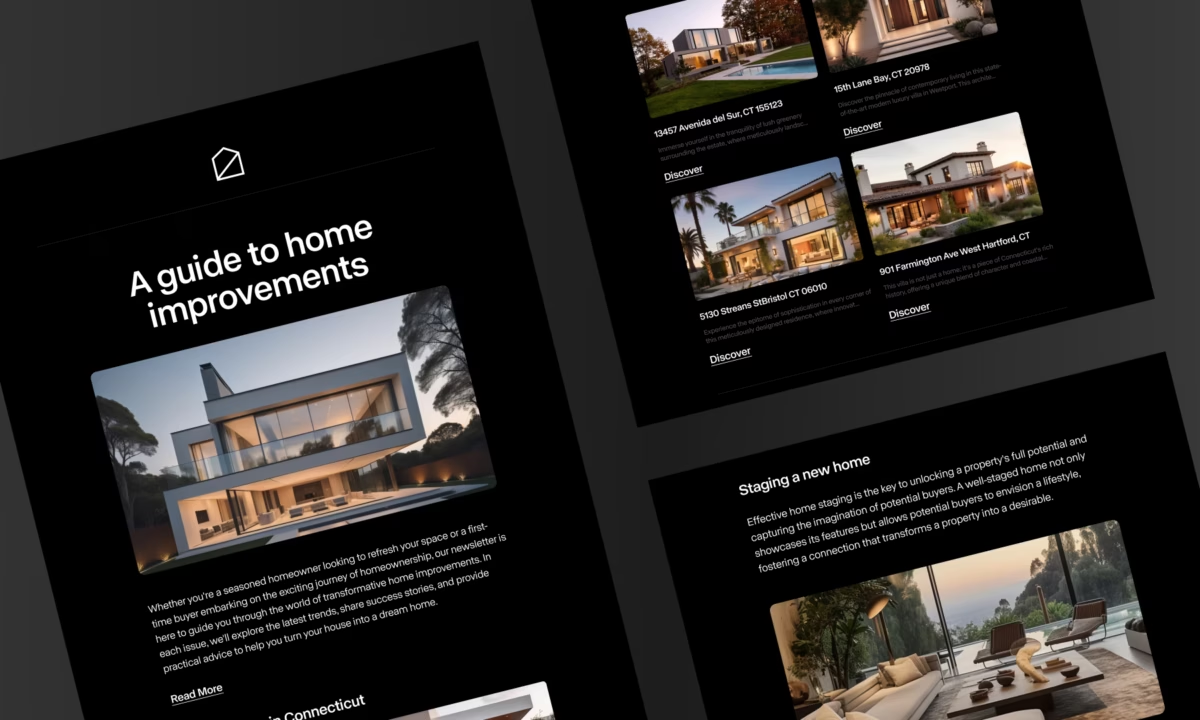
Email marketing is one of the highest-ROI channels available to real estate agents in 2026. The right message, sent at the right stage of the client journey, is what separates agents who convert leads from those who lose them to a competitor. This guide covers real estate email templates for every phase of the client journey, from first contact to referral request, with copy-paste scripts you can adapt for your own campaigns. An email marketing journey is a sequenced series of emails aligned to stages of the client lifecycle, designed to move a contact from stranger to advocate through consistent, well-timed communication.
Find It Fast
Key takeaways
- A structured, five-stage email sequence outperforms random one-off messages because it matches the contact’s mindset at each point in the buying or selling process.
- A three-email drip sequence built for real estate leads boosted buyer engagement by 43%, with the first email achieving a 31% open rate and zero unsubscribes (Source: Luxury Presence Case Study: Automated Lead Nurture Email Strategy, 2024).
- Every template in this guide includes a subject line, body copy, and a clear call to action so you can send it the same day you read it.
- Timing matters as much as content: send your introduction email within 24 hours, nurture emails every two to four weeks, and referral requests 30 to 60 days after closing.
- Tracking open rates, click-through rates, and reply rates at each stage tells you exactly where your pipeline is leaking so you can fix it fast.
- Luxury Presence’s CRM can automate the send schedule for each stage while keeping you in full control of every message before it goes out.
Why the email marketing journey matters in 2026
A strong email marketing campaign goes beyond sending occasional messages. It is a deliberate, stage-by-stage plan that aligns with what the recipient needs right now. From initial interest to post-sale follow-up, sending the right real estate email at the right moment builds trust, delivers value, and increases the likelihood of turning leads into clients.
In 2026’s rate environment, buyers are taking longer to commit. That makes consistent nurture emails more valuable than ever. A three-email drip campaign built by Luxury Presence for a Chicago-based agent produced a 31% open rate on the first message and a 43% click-through rate on the second, with zero unsubscribes across the entire sequence (Source: Luxury Presence Case Study: Automated Lead Nurture Email Strategy, 2024). Those numbers did not happen by accident. They came from sending the right content at the right stage.
That quote captures the mistake most agents make. They send one welcome email, maybe a second follow-up, and then go silent. The five-stage framework below gives you a repeatable system that keeps you in front of your contacts from day one through closing and beyond. Each stage includes a copy-paste template, a recommended send window, and the metric you should track to know whether it is working.
Real estate email templates: the five-stage overview
Before you start writing, map the entire journey. The table below shows each stage, the goal of the email, the type of message to send, the recommended timing, and the metric that tells you whether the email did its job.
| Stage | Goal | Email type | Best timing | Key metric to track |
| 1. First impression | Build trust and set expectations | Introduction email | Within 24 hours of first contact | Open rate |
| 2. Nurture | Stay top of mind and deliver value | Market update or tip email | Every 2 to 4 weeks | Click-through rate |
| 3. Conversion | Move leads to take the next step | Listing recommendation or next-step email | When lead signals intent (saves, clicks, replies) | Reply rate or appointment booked |
| 4. Post-sale | Maintain the relationship after closing | Follow-up and check-in email | 7 to 14 days after closing | Reply rate |
| 5. Advocacy | Generate referrals and reviews | Referral request email | 30 to 60 days after closing | Referral count |
A note on sign-offs: every template below uses a standard closing of “Best regards, {your name}, {your title}.” Swap in your own sign-off once and keep it consistent across all messages. The templates below shorten the closing to save space.
Stage 1: Making a strong first impression
The first message in your email marketing journey should introduce you and set expectations for what comes next. This is often the first impression a potential client has of you, so it needs to land within 24 hours of first contact. According to lead response research, the odds of qualifying a lead drop dramatically after the first hour. A fast, warm introduction email gets you in the door before a competitor does.
Introduction email template
This email offers to help, creates a sense of personal attention, and invites the client to take a single next step. Keep the subject line under 50 characters so it renders fully on mobile.
Subject: Your real estate goals + my game plan
Hi {first name},
Thank you for getting in touch. My name is {your name}, and I help buyers and sellers in {area} make confident moves in a shifting market.
Whether you are just starting to explore your options or you have a specific timeline in mind, I would love to hear what matters most to you right now. Reply to this email or call me at {###-###-####} and we can set up a quick conversation.
Talk soon,
{your name}, {your title}
Stage 2: Keeping the conversation going with real estate email templates
Once you have made initial contact, keep the relationship warm with nurture emails. Send these on a consistent schedule. Each message should deliver one clear piece of value: a local market update, a homebuying tip, or a relevant piece of neighborhood news. The goal is to keep your name in front of the lead without overwhelming their inbox.
In spring and fall, when buyer activity typically peaks, market update emails are especially effective at re-engaging leads who went quiet over slower months. Aim for a 20% or higher open rate on nurture emails. If you are below that, test shorter subject lines and send on Tuesday or Wednesday mornings when inbox competition tends to be lower.
Lead nurturing email template
This email provides a specific data point while reinforcing your role as a local market authority. Replace the bracketed stat with a real number from your MLS or a recent NAR report before sending.
Subject: Quick market update for {area}
Hi {first name},
I wanted to share a quick update on the real estate market in {area}. Median days on market dropped to {X} days this quarter, which means well-priced homes are moving faster than they were six months ago.
Whether you are planning to buy now or later this year, understanding these shifts gives you a real advantage. If you want a deeper look at what this means for your price range, just reply and I will put together a short breakdown for you.
Best,
{your name}, {your title}
Nurture leads effortlessly with email templates
Our free e-book offers customizable resources and tips to keep your database engaged, move leads through the funnel, and close deals effectively.
Stage 3: Turning interest into action
At this stage, the goal is to convert your nurtured leads into active clients. Your emails should address any remaining questions or hesitations while encouraging a clear next step. Whether they are ready to schedule a consultation or view a property, the email should give them one specific action to take. Track reply rates and appointments booked to measure whether your conversion emails are doing their job.
Matt’s advice works because it gives the lead something they cannot find on their own. The buyer conversion template below follows the same principle: hand-picked listings that match their criteria, delivered with a single call to action.
Conversion email template for buyers
By offering hand-selected recommendations, this email drives action while reinforcing the value you bring. Send it when a lead signals intent through saved searches, repeated site visits, or a reply to a nurture email.
Subject: 3 listings that match what you described
Hi {first name},
I found a few properties that line up with what you told me you are looking for. Take a look:
1. {link}
2. {link}
3. {link}Let me know if you want to schedule a tour or need more details on any of these. I am happy to walk you through the numbers on each one.
Best,
{your name}, {your title}
Conversion email template for sellers
This email outlines the next steps clearly so the homeowner knows exactly what happens after your listing appointment. Send it within 24 hours of your meeting while the conversation is still fresh.
Subject: Next steps for selling your home
Hi {first name},
It was great meeting with you to discuss selling your home. Here is what happens next:
1. Review the market analysis: I will send over a comparative market analysis so we can finalize the right listing price for your property.
2. Prepare your home: I will share a short checklist of staging tips and any updates that will help your home show at its best.
3. Set the schedule: We will pick the listing date and map out a marketing plan to get your home in front of motivated buyers.Reply with any questions about what we discussed. I am here to walk you through every step.
Best,
{your name}, {your title}
Stage 4: Maintaining the relationship after closing
The sale is done, but the relationship is not. A post-transaction email shows your client that you care about their experience beyond the commission check. It also sets the stage for future referrals. Send this email 7 to 14 days after closing, when the client has had time to settle in but you are still top of mind.
Track reply rates on post-sale emails. A reply rate above 15% means your clients feel genuinely connected to you, which is the foundation for the referral request that comes in Stage 5. If replies are low, try adding a specific offer like a list of vetted local contractors or a neighborhood restaurant guide.
Post-sale follow-up email template for sellers
This email thanks the homeowner and positions you as a resource for their next chapter, whether that is buying a new home or recommending you to a friend.
Subject: How is everything going since closing?
Hi {first name},
Congratulations again on the sale. I wanted to check in and see if there is anything I can help with as you settle into your next move.
If you need recommendations for local contractors, movers, or anything else, just let me know. I keep a running list of people my clients trust.
Thank you for letting me be part of this process. I look forward to staying in touch.
Best,
{your name}, {your title}
Post-sale follow-up email template for buyers
This email offers continued value and reminds your client that you are available for anything they need in their new home.
Subject: Congratulations on your new home, {first name}
Hi {first name},
I hope you are settling in and enjoying the new place. If there is anything you need, whether it is a recommendation for a landscaper, a plumber, or the best coffee shop in the neighborhood, I am just an email away.
Thank you for trusting me to guide you through the homebuying process. It was a real pleasure working with you, and I am here whenever you need anything down the road.
Best,
{your name}, {your title}
Stage 5: Turning clients into advocates
At the final stage of the email marketing journey, it is time to ask for referrals. By now, your client has experienced the value you deliver. A simple, direct email can turn that goodwill into new business. Send this 30 to 60 days after closing, when the client has had enough time to appreciate their new home but the positive experience is still vivid.
Track the number of referrals generated from each send. Even a 5% referral rate on your past-client database can produce a meaningful number of new leads over the course of a year. If you are not asking, you are leaving deals on the table.
Referral request email template
A short, genuine referral request keeps your business growing through word-of-mouth. Do not overthink it. The simpler the ask, the more likely they are to act on it.
Subject: A quick favor
Hi {first name},
I wanted to take a moment to thank you again for trusting me with your real estate journey. If you had a great experience, I would truly appreciate it if you could pass my name along to any friends, family, or colleagues who might be thinking about buying or selling.
A quick introduction by email or text is all it takes. As always, I am here if you need anything at all.
Best,
{your name}, {your title}
Putting Your Real Estate Email Journey to Work
The most effective real estate email marketing is not about sending more messages; it is about sending the right message at the right stage. When you map your emails to first contact, nurture, conversion, post-sale, and referral, you create a system that builds trust, keeps leads moving, and turns past clients into advocates. Use the templates in this guide as a starting point, then track your results and refine the timing and content that work best for your audience.
FAQs
Nurture leads effortlessly with email templates
Our free e-book offers customizable resources and tips to keep your database engaged, move leads through the funnel, and close deals effectively.
About the author

Marketing Manager
Kate Evans is a content marketing strategist at Luxury Presence, the leading growth platform for high-performing real estate professionals. She develops data-driven editorial content and supports SEO strategy and brand voice frameworks that help agents attract qualified leads and establish market authority. Her published work covers topics including CRM strategy, social media marketing, and digital growth, supporting thousands of agents in scaling their businesses through modern marketing.