Not all open houses are created equal, and in 2026, the gap between a forgettable walkthrough and a high-converting event is wider than ever. An open house is a scheduled period when a listed property is open for buyers to tour without a private appointment, typically hosted by the listing agent. But here is the truth most agents miss: the open house itself is not the strategy. The strategy is everything that happens before, during, and after the doors open. If you want real open house ideas that attract qualified buyers, generate warm leads, and position you as the go-to agent in your market, you need a repeatable system, not just a sign in the yard. This guide breaks down how to host an open house that converts, from planning and promotion to staging, follow-up, and the tools that make it all work.
Find It Fast
Key takeaways
- In the high-end market, the open house experience itself is part of the sales strategy, and every detail from timing to follow-up affects whether visitors become buyers.
- Staging, lighting, and professional preparation directly influence how quickly buyers can picture themselves living in the home.
- RSVP-only formats and personalized invitations signal exclusivity to high-net-worth buyers and reduce unqualified foot traffic.
- Digital sign-in tools paired with a follow-up message within 24 hours are the two actions most likely to convert open house visitors into active leads.
- A single-property website gives you a dedicated digital hub to drive traffic before the event and capture leads long after it ends.
Planning your real estate open house in 2026
A high-performing open house does not happen by accident. It is the result of deliberate planning across five areas: timing, preparation, promotion, community outreach, and vendor coordination. Here is the step-by-step open house set up process that top-producing agents follow.
- Choose the right time and date. Weekends remain the highest-traffic window for most markets. For high-end homes, consider a weekday twilight event between 5:00 and 7:30 p.m. to create a more intimate atmosphere. The goal is to pick a window when your target buyer pool is most available and least distracted.
- Prepare the home. Ensure the property is professionally staged, spotlessly clean, and lit to show every room at its best. Staging helps buyers visualize the property as their future home, which directly influences how quickly they move from interest to offer. Remove personal items, open blinds, and set the temperature to a comfortable level before the first guest arrives.
- Promote across digital channels. Post the event on social media, run targeted ads on Facebook and Instagram, and send email campaigns to your database. List the event on the MLS and other major listing platforms at least seven days before the date. The more channels you cover, the higher your attendance quality.
- Notify the neighbors. Door-knock or send a postcard to homes within a two-block radius. Neighbors often know someone who wants to move into their area, and they are naturally curious about local pricing. This is one of the simplest open house marketing ideas that consistently produces referral leads.
- Coordinate with local vendors. Partner with caterers, florists, or musicians to create an atmosphere that matches the property’s price point. For high-end listings, a curated vendor experience signals to buyers that you take every detail seriously.
Open house ideas for the luxury market
In the high-end segment, buyers expect more than a property tour. They expect an experience. The following real estate open house ideas go beyond the basics and give you specific ways to create events that attract motivated, qualified buyers.
Themed experiences
Match the theme to the home’s strongest feature or the lifestyle it supports. Here are three formats that work well for high-end listings.
- Art exhibition. Feature local artists or curated collections throughout the home’s main living spaces. Visitors experience the rooms as gallery-quality environments, which helps them picture the space as their own.
- Wine and cheese tasting. Partner with a local sommelier to curate a tasting paired with gourmet cheeses. This creates a social atmosphere and gives guests a reason to linger, which means more time for conversation.
- Sunset cocktail hour. For homes with strong views, host the event during golden hour. Serve signature cocktails named after the property or neighborhood. The setting does most of the selling for you.
Private invitations
For high-value listings, exclusivity is part of the appeal. Move away from mass promotion and create a curated guest list.
- RSVP-only format. Cap attendance at a number that allows each guest to move through the home without feeling rushed. Pre-qualify registrants by asking about their buying timeline and price range during the RSVP process.
- Printed invitations with a personal touch. Send physical invitations on high-quality card stock with a handwritten note from the listing agent. This signals that the event, and the property, is worth their time.
Live music or entertainment
Music sets the emotional tone of the event. The right choice makes the home feel alive without overwhelming the space.
- Live jazz or a solo violinist. Position the musician in a central area where the sound carries naturally. This works especially well in homes with open floor plans or outdoor entertaining spaces.
- Short film screening. If the home has a media room or private theater, screen a short film that aligns with the property’s character. This gives guests a reason to experience a room they might otherwise walk past.
Thoughtful giveaways
What guests take home shapes how they remember the event. Choose items that connect back to the property or its location.
- Experience-based gifts. A voucher for a spa day at a nearby resort or a dinner for two at a well-known local restaurant creates a positive association with the property and your brand.
- Location-specific items. Custom monogrammed leather goods, artisanal products from local makers, or a curated gift box featuring neighborhood favorites all reinforce a sense of place.
Interactive home tours with technology
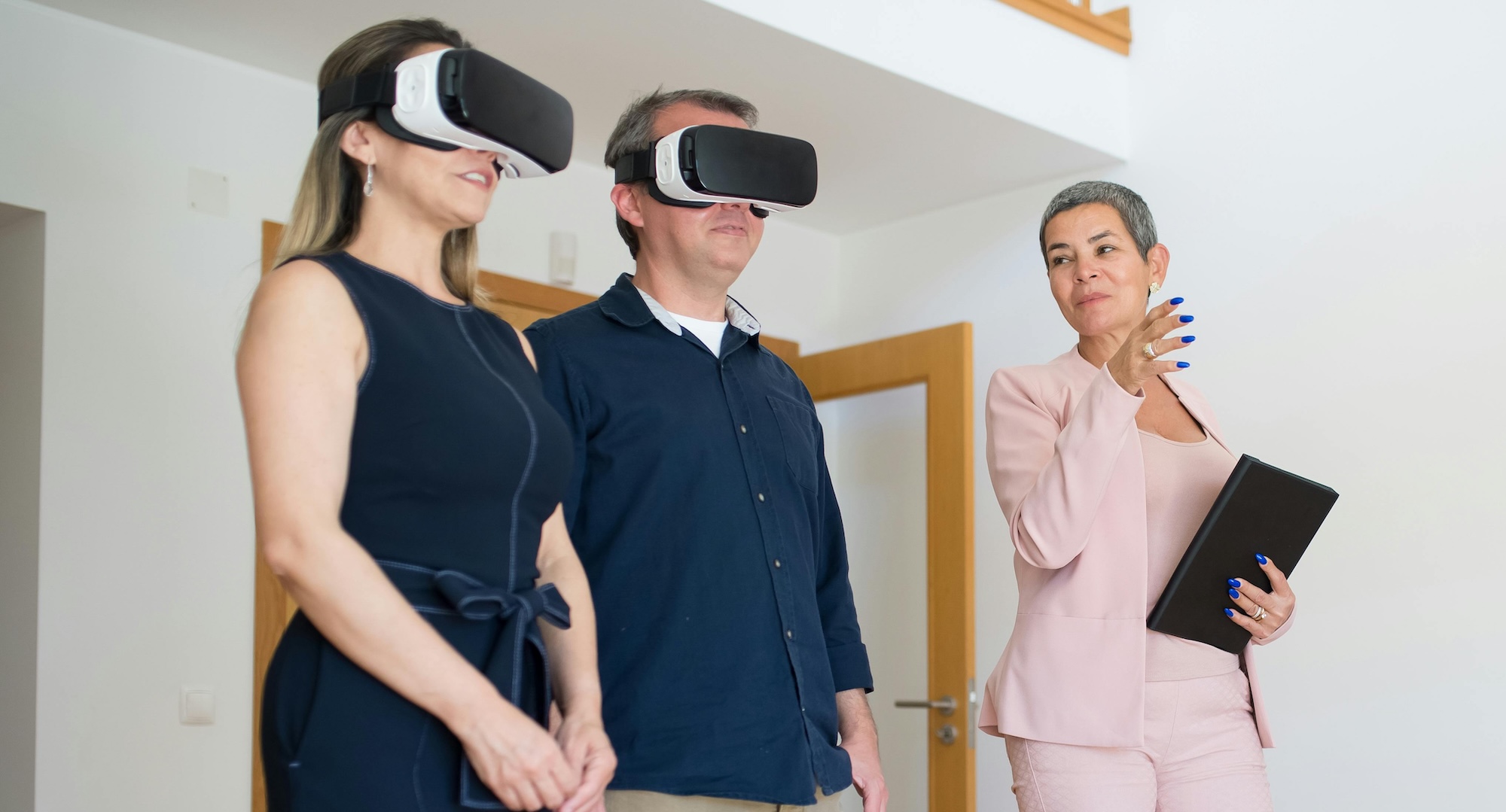
Technology can show buyers what a property could become, not just what it is right now. In 2026, these tools are more accessible and more expected than ever.
- Virtual reality tours. Use VR headsets to let buyers explore renovation possibilities or see the home with different furnishings. This is especially useful for large homes with unique architectural features where buyers need help imagining the finished space.
- Augmented reality staging. If the home is not fully furnished, AR lets attendees use their smartphones to see potential furniture layouts, color schemes, and design options in real time.
- Interactive touchscreen displays. Place tablets in key rooms with detailed property information, floor plans, and high-resolution photos. Guests can browse at their own pace instead of waiting for a verbal walkthrough.
Best practices for real estate open houses
Great open house ideas only work if the execution is tight. These are the operational details that separate agents who collect leads from agents who collect compliments.
Sign-in and lead capture
- Use a digital sign-in system. Replace paper sheets with a tablet-based sign-in app connected to your lead management system. This captures accurate contact information and eliminates illegible handwriting.
- Ask qualifying questions at sign-in. Add one or two fields beyond name and email, such as “Are you currently working with an agent?” and “What is your buying timeline?” This helps you prioritize follow-up.
Marketing materials on site
- Provide printed brochures and floor plans. Guests should be able to take something home that reminds them of the property. Include high-quality photos, square footage, and a QR code linking to the full listing page.
- Offer neighborhood guides. A one-page guide covering schools, restaurants, parks, and commute times positions you as the local market authority and gives buyers context beyond the four walls.
Guest experience and engagement
- Prepare talking points for every room. Know the home’s story: when it was built, what was renovated, what makes each space special. Be ready to answer the most common buyer questions without hesitation.
- Highlight unique features deliberately. If the home has smart-home technology, custom finishes, or a private outdoor space, do not leave it to chance that guests will notice. Point it out, demonstrate it, and explain the value.
- Control the flow of traffic. For high-value properties, require pre-registration and have an additional team member present to greet guests, manage the sign-in, and keep the experience feeling personal rather than crowded.
| Open house element | Standard approach | High-converting approach |
| Sign-in | Paper sheet at the door | Tablet-based app synced to CRM with qualifying questions |
| Marketing materials | Basic flyer with listing details | Branded brochure, floor plan, neighborhood guide, and QR code to single-property website |
| Guest experience | Self-guided tour | Guided walkthrough with prepared talking points for each room |
| Follow-up | Generic email days later | Personalized message within 24 hours referencing specific conversation details |
| Promotion | MLS listing and yard sign | Social ads, email campaign, neighbor outreach, and single-property website |
Common open house mistakes and how to avoid them
Even experienced agents make avoidable errors that cost them leads. Here are the most common mistakes, framed as the questions agents should be asking themselves before every event.
What happens if you do not promote your open house widely enough?
Low attendance is the most direct consequence. Without promotion across social media, email, and listing platforms, even a well-staged property will see minimal foot traffic from qualified buyers. Start promoting at least seven days before the event and use a minimum of three channels: email, social media ads, and MLS syndication.
How do you prevent overcrowding at a high-end open house?
Use an RSVP-only format to control attendance. Stagger arrival windows in 30-minute increments and cap total guests at a number that allows each visitor to move through the home comfortably. For properties above $2 million, 15 to 20 guests per hour is a reasonable ceiling.
Should you use a hard-sell approach during an open house?
No. High-net-worth buyers respond to consultative conversation, not pressure. Prepare talking points about the property’s unique features and ask questions that help you understand what the buyer is looking for. The goal is to build a relationship, not close a deal on the spot.
What is the cost of not following up after an open house?
Most leads go cold within 48 hours. Agents who fail to send a personalized follow-up within 24 hours lose the chance to move interested visitors into the next stage of the buying conversation. A short, specific message referencing something you discussed at the event is far more effective than a generic template.
What should you do if weather threatens your open house?
Build a contingency plan before the event date. Have a virtual tour option ready, communicate any changes to registered guests at least 24 hours in advance, and reschedule rather than cancel if conditions are severe. Buyers remember agents who handle logistics well.
Open house planning and execution tools for 2026
The right tools turn a good open house into a repeatable system. Here are the categories that matter most, along with specific recommendations for each.
- CRM software. Track every attendee, log conversation notes, and automate follow-up sequences. Luxury Presence’s CRM, built specifically for real estate agents, lets you manage the entire client journey from first contact at the open house through closing, with personalized touchpoints that maintain a human feel at scale.
- Open house sign-in apps. Spacio (a digital open house sign-in and lead capture app that syncs with most CRMs) and Curb Hero (a free open house registration app with customizable sign-in forms and analytics) both replace paper sheets and feed contact data directly into your follow-up workflow.
- Social media and paid advertising tools. Facebook Ads Manager and Instagram’s promotion features let you target buyers by location, income, and interests. Run ads starting seven days before the event and retarget visitors to your listing page afterward.
Free social media templates
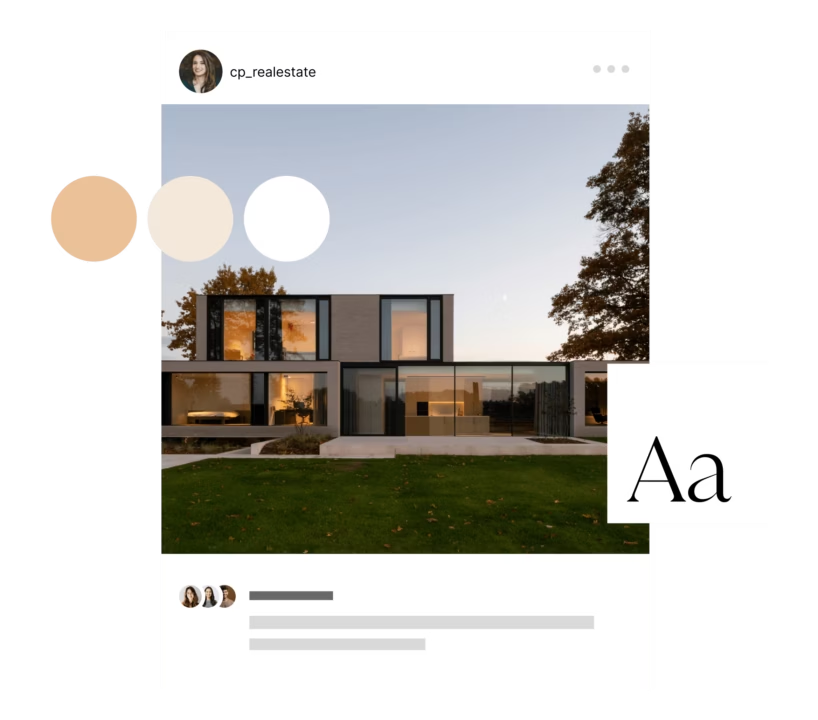
Ready to execute on these strategies but need a little design help? Our expert social media team put together three sets of engaging, on-brand post templates you can customize and deploy today.
Communicating with leads before, during, and after the open house
Your communication plan is the connective tissue between a well-run event and actual closed deals. Here is how to handle each phase.
Before the event
Send personalized invitations to your database at least 10 days out. Follow up with a reminder email 48 hours before the event. Share event details on social media and listing platforms to widen your reach beyond your existing contacts. For high-end listings, consider a phone call to your top prospects with a personal invitation.
During the event
Engage every visitor in a real conversation. Ask what brought them to the open house, what they are looking for in their next home, and whether they are working with an agent. Encourage every guest to sign in. These conversations give you the context you need to write a follow-up message that actually resonates.
After the event
Follow up within 24 hours with a thank-you email that references something specific from your conversation. Include additional property details, a link to the listing page, and an invitation for a private showing. The agents who convert the most leads from open houses are the ones who make each follow-up feel like a continuation of a conversation, not a mass blast.
Turning Open House Ideas Into Real Results
The best open house ideas do more than bring people through the door — they create a polished experience, capture the right leads, and give you a clear follow-up path. When you combine thoughtful planning, strong promotion, smart technology, and timely communication, each event becomes a repeatable system for generating qualified interest. Focus on the details before, during, and after the open house, and you will turn more visitors into serious prospects.
FAQs
Elevate your presence
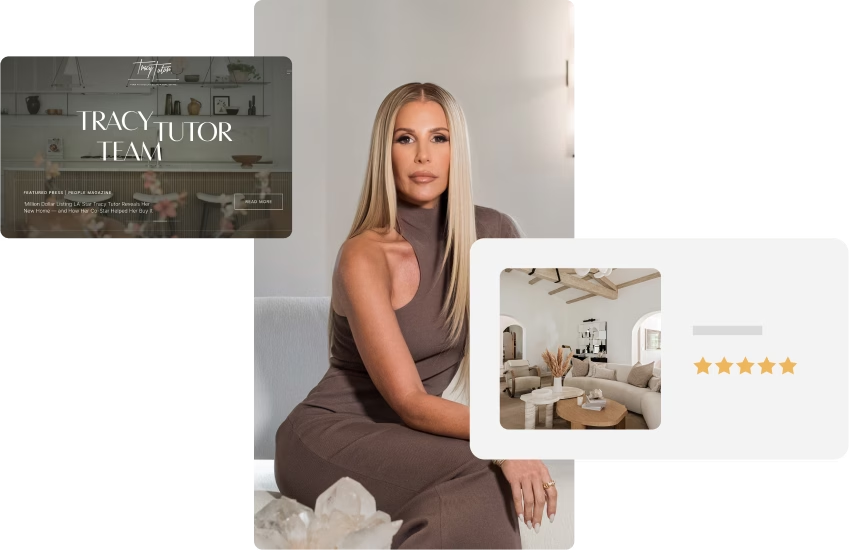
If you’re ready to join Tracy Tutor and the thousands of other top-producing agents who work with Luxury Presence, schedule a strategy session with our expert team today.
About the author

Content at Luxury Presence
Kate Evans is a content marketing strategist at Luxury Presence, the leading growth platform for high-performing real estate professionals. She develops data-driven editorial content and supports SEO strategy and brand voice frameworks that help agents attract qualified leads and establish market authority. Her published work covers topics including CRM strategy, social media marketing, and digital growth, supporting thousands of agents in scaling their businesses through modern marketing.