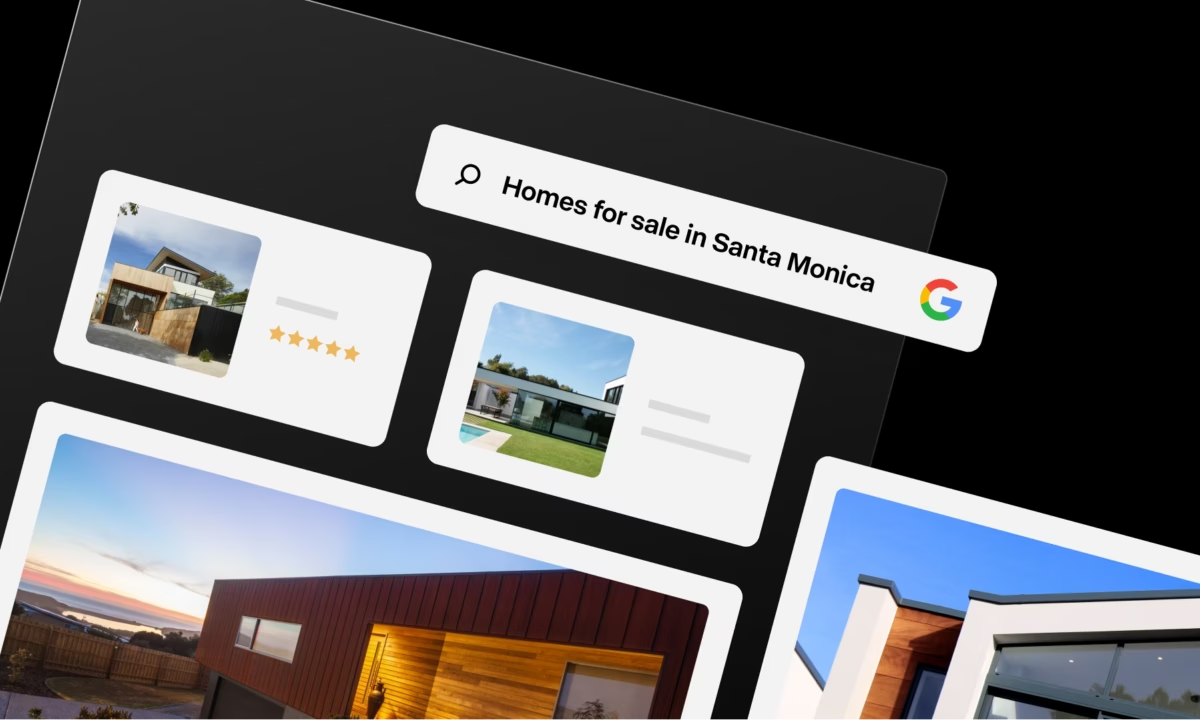

Single-property websites give real estate agents full control over how a listing is presented, marketed, and discovered online. Unlike portal listings on large real estate portals, a single-property website is a dedicated, standalone website built to market one specific real estate listing, complete with agent branding, lead capture, and distraction-free design.
In 2026, 43% of buyers begin their home search online (CallRail, 2026), and a growing share of those buyers expect an immersive digital experience for every property they consider. Tracy Tutor, a top-producing agent with Douglas Elliman in Los Angeles, sat down with Isabella Savini of Luxury Presence, a real estate technology company specializing in agent websites and marketing platforms, to break down exactly why single-property websites belong in every listing agent's playbook and how they drive measurable results in branding, lead capture, and seller presentations.
Key takeaways
- A single-property website is a standalone site built to market one listing with full agent branding, lead capture forms, and no competing listings or ads.
- Dedicated listing websites can drive 55% more traffic to a property compared to portal-only marketing.
- Every visitor who submits their information on a single-property website becomes an exclusive lead for the listing agent, not the portal.
- Password-protected access makes single-property websites especially valuable for off-market and luxury listings where seller privacy matters.
- Los Angeles agent Cindy Ambuehl attributed 38 closed deals worth $250 million to her use of custom property websites, along with a 30% increase in listing engagement.
- Creating a single-property website on a platform like Luxury Presence takes minutes, not days, removing the biggest barrier most agents cite for not using them.
Why single-property websites outperform portal listings in 2026
Large real estate marketplaces give buyers a starting point. But they also surround every listing with competing agents, banner ads, and links to other properties. The moment a buyer clicks away, the listing agent loses the connection. A single-property website removes those distractions entirely. The agent controls the narrative, the visuals, and the next step the buyer takes.
Tracy Tutor put it bluntly in her conversation with Savini: comparing a portal listing to a dedicated property website is like "trying to paint a sunset with black and white paint." On a portal, agents share space with every other listing in the ZIP code. On a single-property website, the listing stands alone, presented with the agent's branding, the property's full story, and a direct path to inquire.
Single-property website vs. portal listing: a side-by-side comparison
| Feature | Single-Property Website | Portal Listing |
| Agent branding | Fully agent-branded with logo, colors, and contact info | Shared layout with competing agent ads |
| Lead capture | Exclusive to the listing agent | Platform-owned; leads may be sold to other agents |
| Privacy controls | Password-protected access available | No access restrictions |
| Analytics | Agent-controlled (traffic, time on page, form submissions) | Limited or platform-controlled |
| SEO control | Full control over URL, meta data, and page content | No control; portal owns the page |
| Buyer experience | Focused, distraction-free presentation of one property | Surrounded by competing listings and ads |
"With a single property website, you get so much more control. You can tell a home's story and paint the exact picture that helps potential buyers envision themselves living there."
— Isabella Savini, Luxury Presence
That level of control matters because the buyer's first impression of a listing increasingly happens on a screen, not at the curb. When the digital experience is distraction-free and fully branded, the agent sets the tone for every interaction that follows.
How single-property websites capture exclusive leads
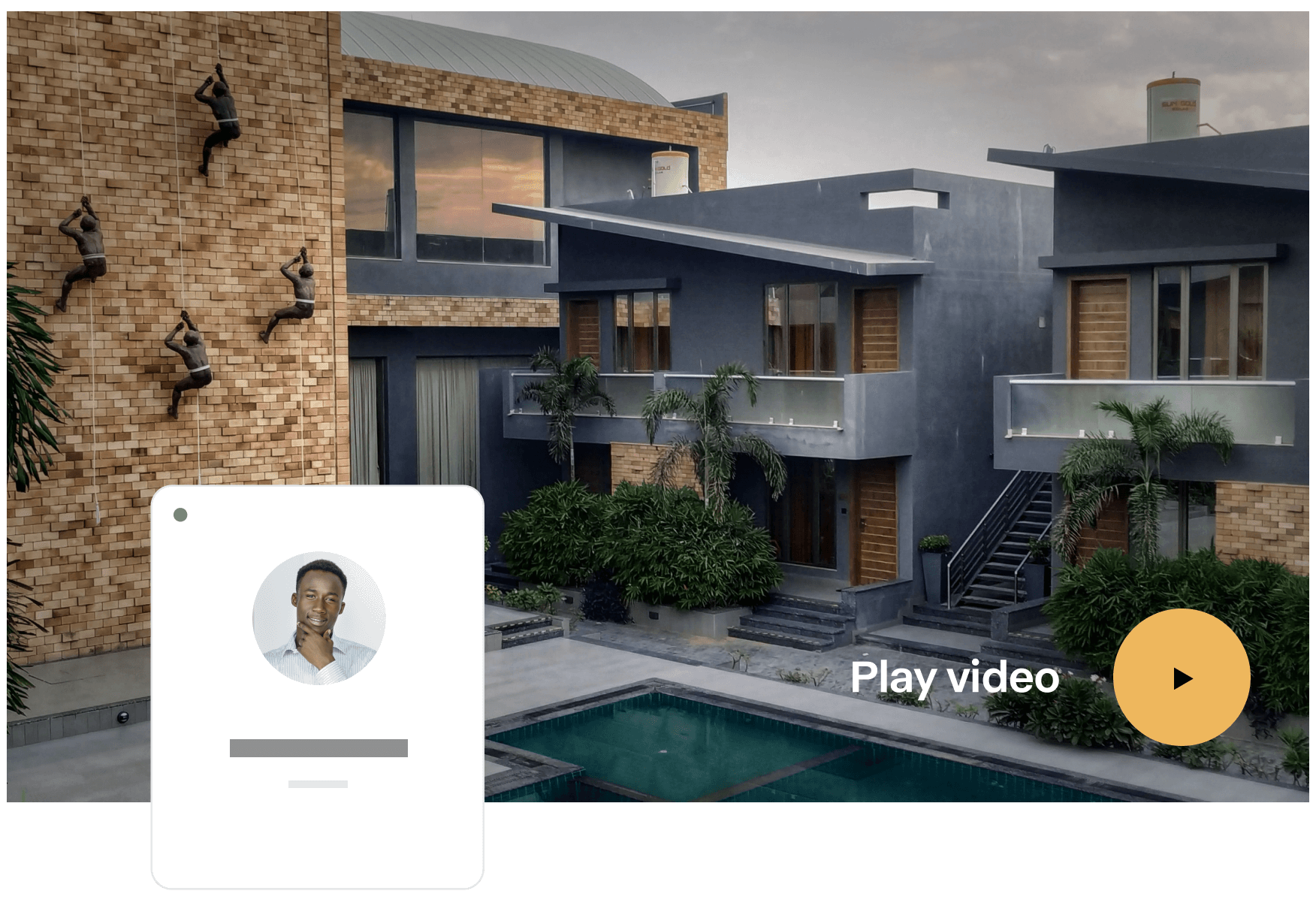
One of the most overlooked advantages of a single-property website is what happens after a buyer visits. On a portal, the buyer's contact information often goes to the platform first, and the listing agent may never see it. On a dedicated property website, every form submission, phone call, and email inquiry goes directly to the listing agent. No middleman. No lead-sharing.
This is what makes single-property websites a genuine lead capture tool, not just a marketing asset. Tutor described it as "a place to point all your other property marketing." Social media posts, paid digital ads, email campaigns, print materials, and even yard signs can all direct traffic to a single URL where the agent owns the conversion.
Here is how the lead funnel works in practice:
- The agent creates a dedicated website for the listing and receives a unique URL (e.g., 123MainStreet.com).
- That URL is distributed across every marketing channel: Instagram, Facebook ads, email blasts, open house flyers, and direct mail.
- Buyers arrive at a focused, branded page with high-resolution photos, video walkthroughs, floor plans, and neighborhood details.
- A lead capture form collects the buyer's name, email, phone number, and preferences.
- The agent receives the lead directly, with no platform taking a cut or routing the inquiry elsewhere.
Even when the specific listing is not the right fit for a buyer, the agent now has that buyer's information and preferences in their pipeline. That data feeds future outreach and helps the agent match buyers with upcoming listings. Over time, a single-property website for one listing can generate leads that close on entirely different properties.
Impressing sellers and showcasing your marketing commitment
Winning a listing appointment often comes down to one question: what will you do differently to market my home? A single-property website answers that question before the seller even asks it. When an agent walks into a listing presentation and shows a live example of a dedicated property website, the seller sees a level of investment and professionalism that a standard MLS upload cannot communicate.
According to HousingWire, citing data from the National Association of Realtors, 66% of homebuyers identify photos as the most valuable feature on any listing website (HousingWire, 2026). A single-property website is built to showcase those photos at full resolution, without compression artifacts or thumbnail limitations. It also gives agents room to include video tours, drone footage, interactive floor plans, and neighborhood context that portal listings simply do not support.
The results can be measured. Los Angeles agent Cindy Ambuehl used custom property websites for her listings and attributed 38 closed deals worth $250 million to the approach, along with a 30% increase in listing engagement and a 25% lift in seller satisfaction (Source: Luxury Presence Case Study: Cindy Ambuehl, 2026). She also reported cutting the time she spent creating listings in half, which freed her to focus on client relationships and deal negotiation.
"No matter the price point, sellers have strong opinions about how you present their homes, and in my experience a really beautiful website wows them."
— Tracy Tutor, Douglas Elliman, Los Angeles
That reaction from sellers is not limited to the luxury market. Agents working at every price point report that showing a dedicated website during a listing presentation separates them from competitors who rely on portal syndication alone. The website becomes a tangible demonstration of the agent's marketing commitment, one the seller can see, share, and reference throughout the listing period.
Privacy controls for luxury and off-market listings
For high-value properties and off-market listings, privacy is not a preference. It is a requirement. Many sellers at the upper end of the market do not want their home's interior photos, floor plans, or asking price visible to the general public. A single-property website with password-protected access solves this problem directly.
The agent controls who sees the listing. Qualified buyers receive a password. Everyone else sees nothing. This approach allows the agent to market the property to a curated audience without exposing sensitive details on a public portal. It also gives the seller confidence that their privacy is being respected throughout the sales process.
Password protection is especially useful for:
- Celebrity or public-figure sellers who want to avoid media attention
- Divorce or estate sales where discretion is required
- Pre-market or "coming soon" listings that the seller wants to test with a select group of buyers before going public
- Properties with security concerns where interior layouts should not be widely distributed
A portal listing offers none of these controls. Once a property is syndicated, the agent has no ability to restrict access or remove it from third-party sites. A single-property website keeps that control entirely in the agent's hands.
How to create a single-property website for your next listing
The most common reason agents skip single-property websites is the assumption that building one takes too much time or requires technical skills they do not have. In 2026, that assumption is outdated. Platforms like Luxury Presence have reduced the process to a series of straightforward steps that take minutes, not days.
Here is a six-step workflow for launching a single-property website:
- Choose a dedicated domain or subdomain. Use the property address as the URL (e.g., 123MainStreet.com) so buyers can find and remember it easily. Many platforms handle domain registration and DNS configuration automatically.
- Select a template designed for single-listing presentation. Look for layouts that prioritize full-bleed photography, clean typography, and mobile responsiveness. The template should put the property's visuals front and center.
- Upload high-resolution photography and video. Include professional photos, drone footage, video walkthroughs, and interactive floor plans. These are the assets buyers value most.
- Configure a lead capture form tied to your CRM. Every inquiry should route directly to your database. If you use Luxury Presence's CRM, the integration keeps lead data organized and ready for follow-up.
- Connect analytics tracking. Add Google Analytics or the platform's built-in tracking so you can measure traffic, time on page, and form submissions. This data helps you report back to the seller on marketing performance.
- Set access controls. Decide whether the site will be public or password-protected. For off-market listings, enable password access before sharing the URL with qualified buyers.
The Cindy Ambuehl case study referenced earlier showed a 50% reduction in the time she spent creating listings after adopting this workflow. That time savings compounds across a full book of business. An agent with 20 listings per year who saves even 30 minutes per listing reclaims 10 hours annually, time that goes directly back into client service and prospecting.
FAQs
Expert website design services
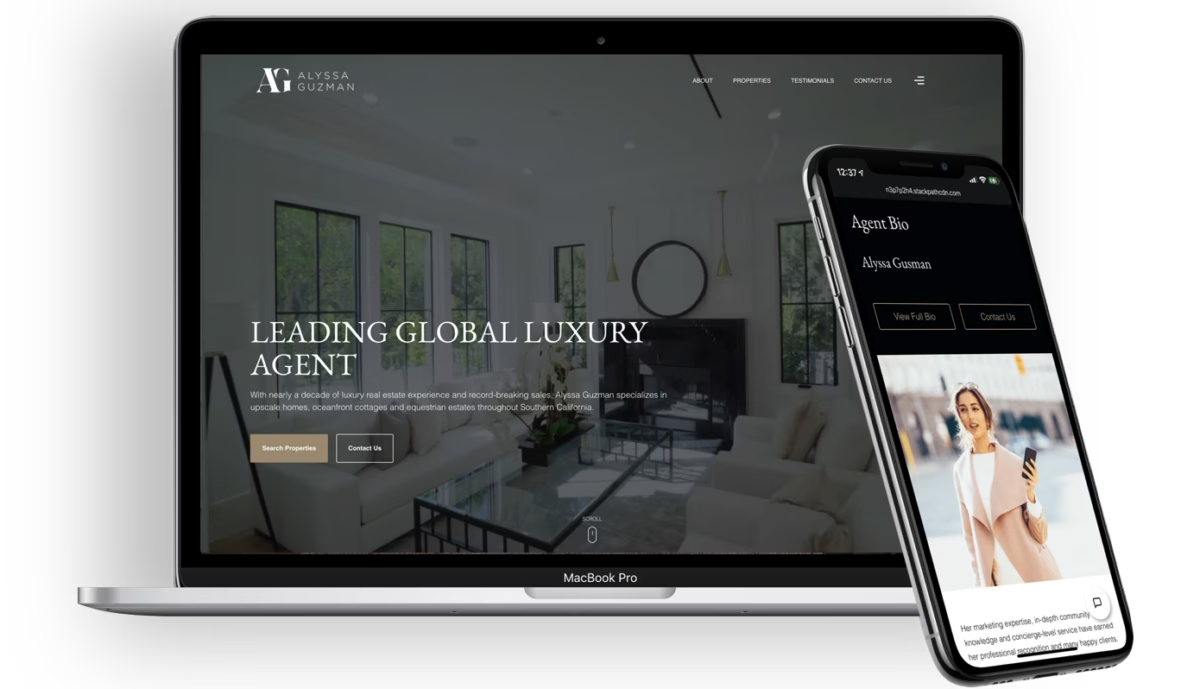
Every day, Luxury Presence creates and manages real estate websites for some of the biggest agents, teams, and brokerages in the country. Learn how we can transform your online presence.
Ready to grow?
Turn your content into your best lead source
See how Luxury Presence helps agents turn website visits into closed deals