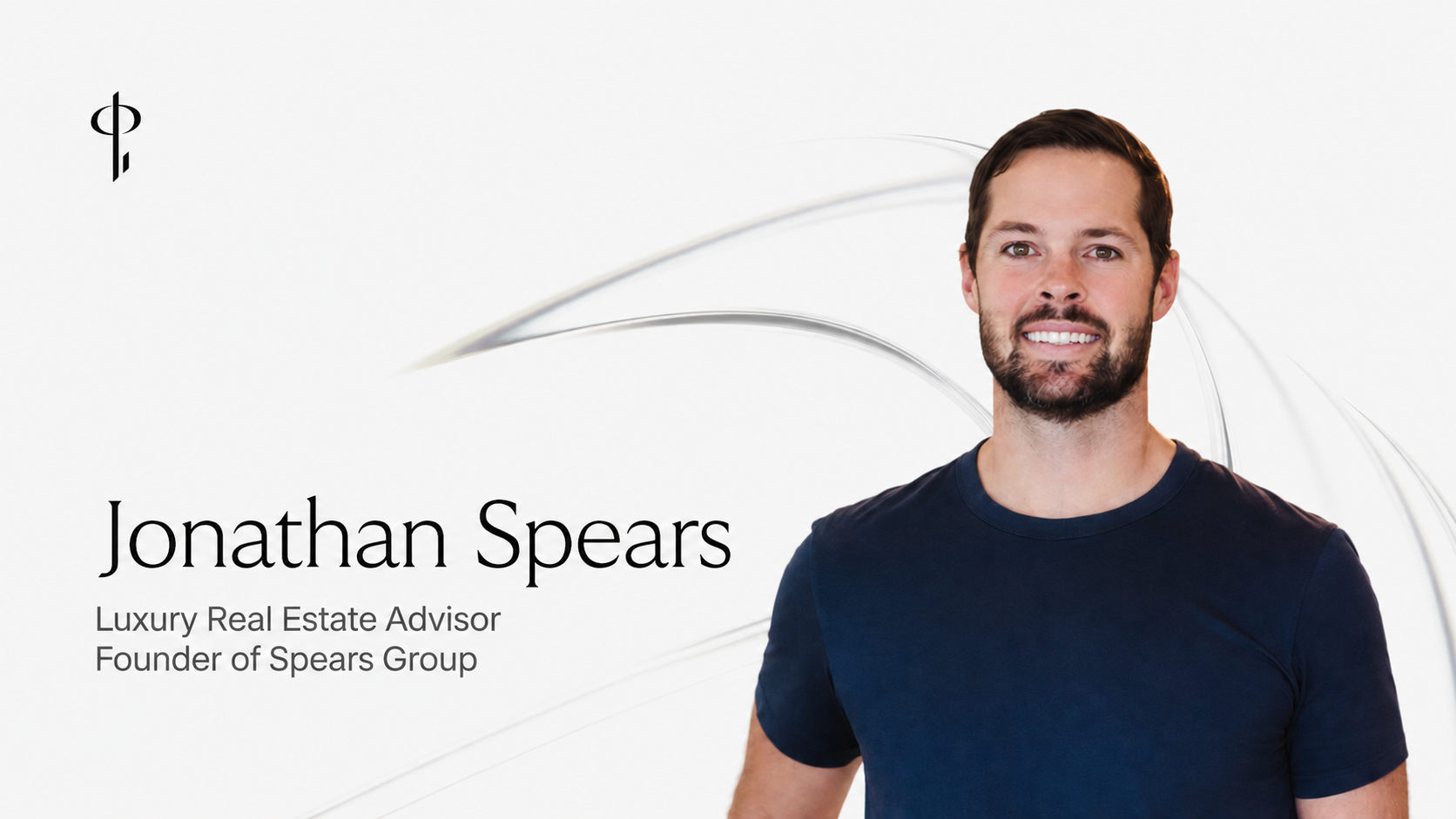
Jonathan Spears, Founder of Spears Group and Co-Founder of MyOps
I spent years thinking I was running a business. I had production numbers that looked great on paper. I had a team. I had brand recognition. And from the outside, everything seemed to be working.
Here’s the image I keep coming back to. Picture a swan gliding across a lake. On the surface, it’s graceful. Composed. But underneath the water, that swan is paddling furiously just to stay in motion. That was me. I looked composed on top, but below the waterline, I had no real idea what the condition of the water was. I was just moving, constantly, and hoping the surface stayed smooth.
The turning point came when I stopped treating Spears Group like a production machine and started treating it like a real company.
I got the systems out of my head, built processes that didn’t depend on me being in the room for every decision, and created a structure that could operate whether I touched it on any given day or not.
And I think that shift is where most agents in this industry never arrive, because they’re so focused on the next deal that they never stop to build what supports them.
You can’t build a house by starting with the roof
When you’re production-driven, all you care about is the next closing. You want the walls up. You want the trusses in. You want the tile picked out. It feels productive because things are moving. But when something challenges that house, when the market shifts or a key person leaves or your pipeline dries up for a quarter, the whole thing crumbles. Because there was never a foundation.
I always encourage agents to look at this through the lens of offense and defense. Most agents I meet are playing offense every single day. They’re prospecting, they’re chasing leads, they’re grinding. And that’s important. But they never play defense.
They never build the boundaries, the accountability structures, the repeatable processes that protect what they’ve already earned. And here’s the thing about defense: defense is what makes money.
The agents and team leaders I talk to always ask the same thing. “How do you manage 30 people?” And my answer surprises them. I don’t manage 30 people. Our systems manage the culture, the accountability, the way we show up. I make sure the systems stay sharp. The systems do the rest.
The ego trap that keeps you small
I hear it all the time from other team leaders. “I couldn’t put one of my agents in that position.” Or, “If I don’t call my client personally, they won’t want to work with us.” And I understand that instinct because I lived inside it for years. The belief is that you are the value, and if you’re not on every call, every showing, every negotiation, the whole thing falls apart.
That belief feels noble. It even feels like good client service. But it is the single biggest thing keeping most agents from building something real.
Here’s what I’ve learned: a client wants to feel heard, attended to, and cared for at the level they expect. Whether that’s me on the phone or my executive assistant Hannah or another agent on our team stepping in, the experience has to match the Spears Group standard. The client is buying into the brand, the process, the level of care. And that brand has to be bigger than any one person, including me.
I still step in where I add the most value. I know my strengths as a negotiator and I know the moments where my involvement genuinely matters. But if I got caught in the weeds of thinking I had to be the best at everything, I’d never grow. I’d just be a very busy, very tired solo agent with an expensive support staff.
Walking onto an NFL team
I tell people that joining Spears Group should feel like walking onto an NFL team. Most agents in this industry are playing high school football. They’re talented, they work hard, but the infrastructure around them is amateur. On an NFL team, there’s a standard of accountability, a system, and if you don’t play that system, you won’t survive.
But if you play it, it will change your life.
And I think the beauty of that structure is something most people don’t expect until they experience it. It’s the same feeling you get when you go from being a solo agent to hiring your first assistant.
Suddenly you can offload the tasks you shouldn’t have been doing, and you get this incredible gift of time back to work on the parts of the business where you actually create value.
That’s what systems do at scale. They give every person on the team space to operate where they’re strongest, instead of drowning in everything else.
The day you stop, does anything remain?
Something Maria Coukoulis, my COO and Co-Founder, said recently stopped me cold. She pointed out that agents who never build an operation that runs independently of them will work for decades, thousands of transactions, a name people recognize, and walk away with nothing when they’re done. Because they were the business. There was no machine to hand off. No operation to sell. No asset with value beyond their personal effort.
That’s the line between a business and a hobby. A hobby pays you while you’re doing it. A business builds equity that outlives your daily involvement.
For me, the most valuable thing that organization gave me wasn’t a financial result. It was time. I spent years having Maria, my assistants, and my team leads chase me around trying to get information out of my head. Everyone was dependent on me for answers I should have documented somewhere accessible long ago. And I think most top producers live in that mode without ever realizing it’s the thing holding them back.
Now I get to choose where I show up in the business, whether that’s production, strategy, branding, or something entirely new. I’m no longer that swan paddling furiously below the surface. I can step back, look at the whole lake, and decide where to swim next.
I always tell agents: look across the aisle. Get inspired by how businesses operate in other industries. Technology, hospitality, professional sports. Man, there’s so much entrepreneurial knowledge out there beyond real estate, and taking something you see in another industry and adapting it to ours is where real innovation happens. That’s been one of the most consistent drivers of our growth, and I think the agents who do that will be the ones who build something that lasts.
About the author

Real Estate Advisor; Founder of Spears Group
Jonathan Spears is the founder of Spears Group, a luxury real estate team serving Florida's Scenic Highway 30A and surrounding coastal communities. Known for his market expertise, strategic approach, and commitment to client service, Jonathan has built a reputation for representing distinctive properties and delivering exceptional results for buyers and sellers alike. Through Spears Group, he combines deep local knowledge with innovative marketing and personalized guidance to help clients navigate one of the country's most sought-after luxury real estate markets.