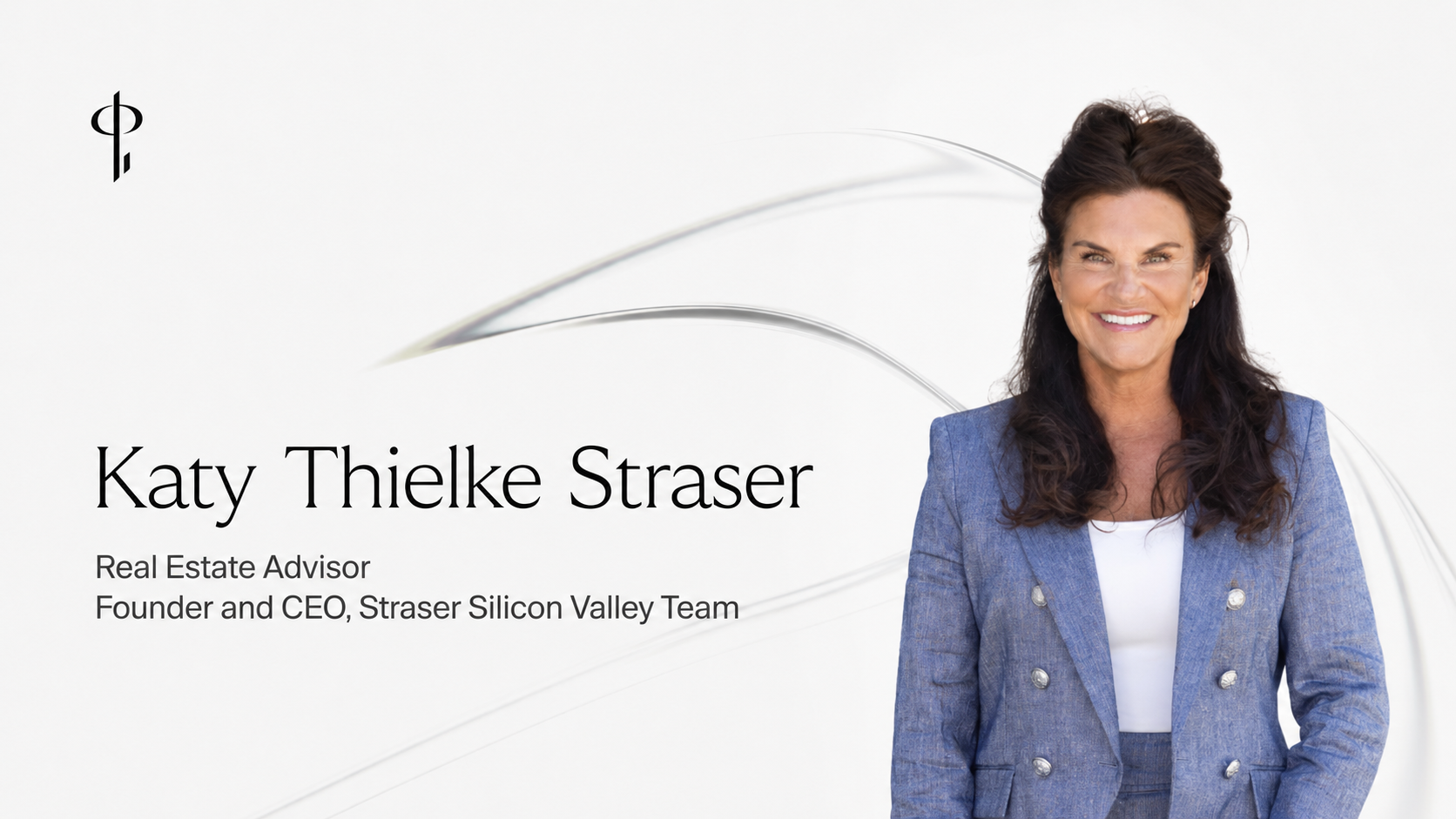
By Katy Thielke Straser, Founder and CEO, Straser Silicon Valley Team
Every conversation I hear about the future of real estate circles back to the same thing: how do we make the experience better for the buyer? How do we improve communication with the seller? How do we deliver more value to the consumer? These are reasonable questions. They’re also the wrong starting point.
The consumer experience improves when the agent experience does. Fix that first, and everything downstream gets better on its own.
I started my team eight years ago, partly because I was producing at a level where I needed support, and partly because I had watched what this business does to people who try to do it alone.
Real estate can be a lonely business, frankly. Long days with no one to debrief with, no one to cover for you when you want to spend time with family, no collective knowledge to draw from.
At some point, every serious agent I know has asked themselves who they’re building with. The ones who answered that question early tend to be the ones still thriving.
A lonely agent cannot deliver a great experience
When an agent is stretched, stressed, and isolated, they show up differently with clients. They miss calls. They move too fast through emotional moments because they have no bandwidth for them. They make decisions from scarcity rather than confidence.
I know this isn’t about intention. Every agent I’ve ever met wants to do right by their clients. But wanting to and having the infrastructure to actually do it are different things. The agent who is trying to manage eight transactions solo, handle their own marketing, field every call themselves, and still be mentally present at a listing appointment at 7 PM on a Thursday is surviving. The clients in those transactions deserve more than that agent can give right now.
Look at how you show up at the end of a heavy week. If your energy and attentiveness have dropped, that’s your client experience dropping with it.
Happy people make happy people
I say this to my team all the time, and I mean it. When an agent feels empowered, supported, and confident in what they’re doing, that energy goes directly into every interaction they have. Clients feel it. The difference between an agent who’s running on empty and one who has a team behind them shows up in every conversation, every walkthrough, every negotiation.
The industry has spent years trying to engineer better consumer outcomes through technology, training programs, and process improvements. Those things matter.
But you can’t build a great client experience on top of a miserable agent experience and expect it to hold.
Teams are the structure that makes this possible
The shift I see coming, one that I think is already underway, is a move away from the solo agent model toward team-based real estate. Individual agents operating entirely on their own are going to find themselves at a growing disadvantage. The expectations around service, availability, and expertise could outpace what one person can consistently deliver.
Teams solve the loneliness problem and create mentorship. They allow for specialization and give agents someone to call when a deal gets complicated at 11 PM.
Building my team was about creating an environment where the people working with me could actually thrive. When agents thrive, that shows up directly in how clients are treated. The two are not separate.
If you’re a solo agent reading this, think seriously about who you’re building with, even informally. A referral partner, a trusted colleague, someone you can think out loud with. The goal is to stop being the only person responsible for everything.
The market will reward the agents who get this right
We’re heading into a period where the conditions are going to be genuinely good for high-performing agents. The IPO environment in markets like Silicon Valley is going to bring more buyers in, the broader economy is improving, and as activity picks up, the gap between agents who are well-positioned and those who aren’t is going to widen.
The agents who haven’t been producing will gradually exit, and their business will migrate toward the ones who are serious. More listings per committed agent. More referrals flowing to the names people actually trust.
The agents with teams and systems behind them will absorb that growth without breaking. The ones without that infrastructure will have a harder time absorbing the growth.
Build the right environment and the consumer experience follows
Every single day, I’m trying to create win-win situations. For my clients, for my agents, for everyone involved in a transaction. That philosophy doesn’t start with how do I make the client happy. It starts with how do I build something where everyone involved is set up to do their best work.
When you get that right, the consumer experience takes care of itself. Clients feel the difference. They leave reviews. They send referrals. They call you when their friends are moving, and they call you when they’re ready to move again themselves.
The industry will keep talking about the consumer problem. The agents who solve the agent problem first will be the ones winning that conversation.
About the author

Katy Thielke Straser leads the Straser Silicon Valley Team, bringing more than 25 years of experience and over $500 million in sales to clients across the Menlo Park area, including Atherton, Palo Alto, Woodside, Los Altos, Los Altos Hills, and surrounding Silicon Valley communities. She has closed $11 billion in total sales volume across 183 five-star reviews, with an average transaction price of $3.05 million, and is recognized among the top 1.5% of agents nationally by The Wall Street Journal. Katy is known for strong negotiation skills, deep local market knowledge, and a concierge-style approach to client service. She has been honored by Inman in both 2019 and 2024. In 2024, she also brought Compass' Forster Jones International & Associates into Northern California, launching the firm's Silicon Valley arm as Straser Silicon Valley.