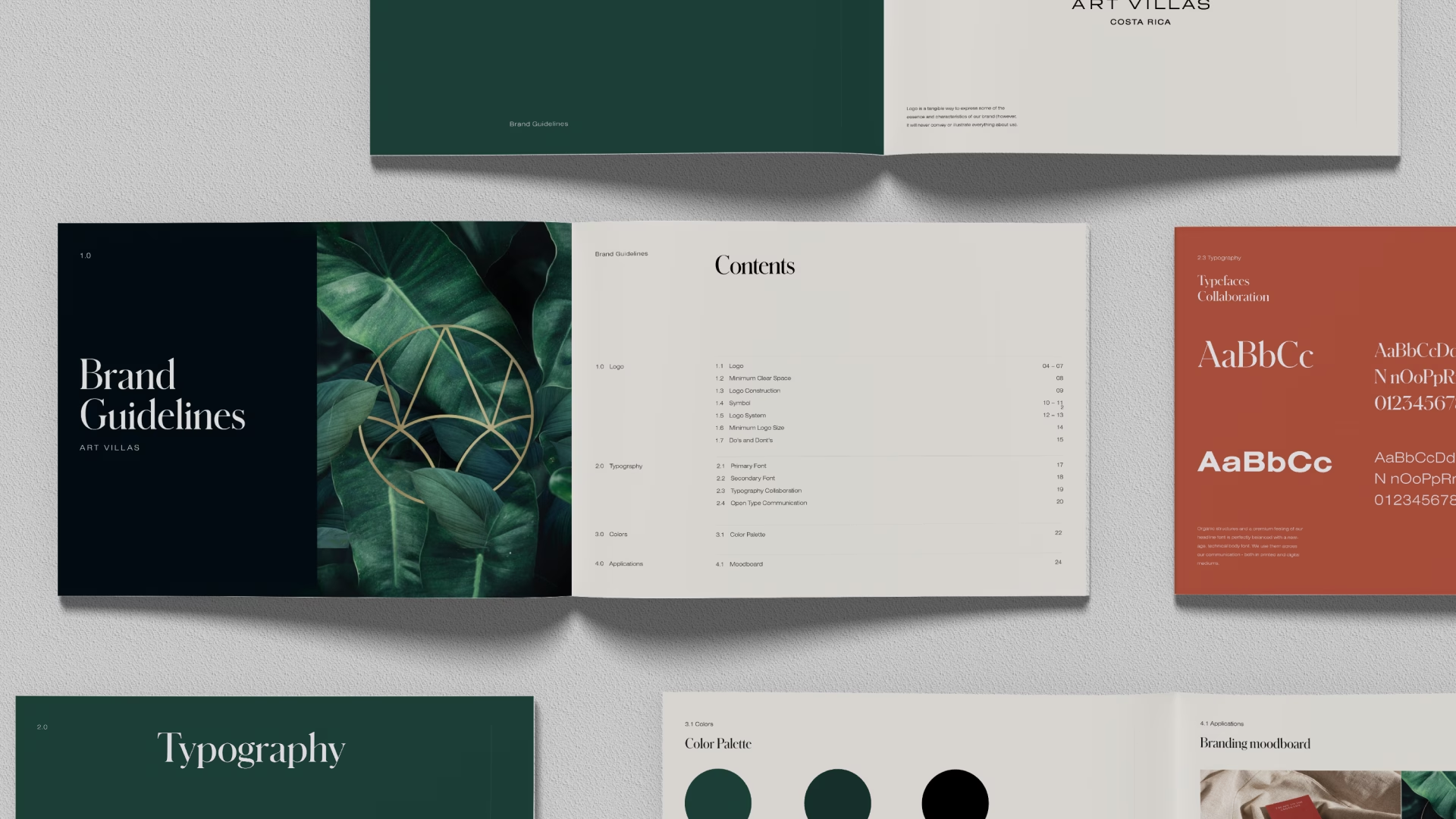
A brand book is a single document that defines how your real estate brand looks, sounds, and shows up across every client touchpoint. In 2026, agents are competing for attention across websites, social media, listing platforms, and AI-powered search results. Without a brand book, your marketing can start to feel scattered, and that inconsistency quietly erodes the trust you are working so hard to build. The good news: creating a brand book is simpler than most agents think, and the payoff is real. This guide walks you through exactly what a real estate brand book should include, why it matters for your business, and how to build one step by step.
Find It Fast
Key takeaways
- A brand book is a reference document that keeps your logo, colors, fonts, voice, and messaging consistent across every marketing channel.
- Consistent branding builds trust with clients and helps you stand out in a crowded market, especially as buyers and sellers research agents online before making contact.
- Your brand book should cover five areas: brand identity, visual identity, imagery and graphics, tone of voice and messaging, and brand application guidelines.
- In 2026, brand books also need to account for AI-assisted content creation and short-form video, since these channels require clear voice and visual guidelines to stay on-brand.
- You do not need to build your brand book all at once. Start with the basics and refine over time as your business grows.
What is a brand book?
A brand book, sometimes called a brand guide or style guide, is a document that outlines the elements of your brand’s identity. It provides rules, suggestions, and examples for how to communicate and represent your brand consistently across all platforms and media. Think of it as a rulebook that anyone on your team (or any vendor you hire) can open to understand exactly how your brand should look and sound.
For real estate agents, a brand book typically covers your logo, color palette, fonts, photography style, brand voice, messaging guidelines, and instructions for applying those standards to your website, social media profiles, listing presentations, and printed materials.
If you have ever handed off a social media post to an assistant and gotten something back that did not feel like “you,” a brand book solves that problem. It removes guesswork and gives everyone a shared reference point.
Why a real estate agent needs a brand book in 2026
You might be wondering whether a brand book is really worth the effort. After all, you already know your own brand, right? But the value of a brand book goes far beyond personal memory. Here are the specific ways it helps your business.
Consistency builds trust
When your business cards, website, social media profiles, and listing presentations all share the same look and feel, clients notice. That consistency signals professionalism and reliability, two qualities that matter deeply when someone is making the biggest financial decision of their life. In 2026, buyers and sellers are researching agents across multiple channels before they ever pick up the phone. If your Instagram looks different from your website, which looks different from your listing flyer, it creates a disconnect that can cost you the relationship before it starts.
Differentiation in a crowded market
Clearly defined brand elements highlight what makes you different. Your marketing strategy becomes sharper when every piece of content reinforces the same story, values, and visual identity. Instead of blending in with hundreds of other agents in your market, your brand book gives you a framework for standing out in a way that feels authentic rather than forced.
Efficiency for you and your team
A brand book saves time. When you or a team member needs to create a new flyer, draft a social post, or update your website, the brand book provides clear guidelines. No more starting from scratch or debating which shade of blue to use. For agents who work with assistants, transaction coordinators, or marketing vendors, a brand book serves as a shared reference that keeps everyone aligned without constant back-and-forth.
Flexibility without losing your identity
Markets shift. You may expand into new neighborhoods, add a team, or adjust your niche. A brand book gives you a framework for adapting to new trends or markets without losing the identity you have already built. It is the difference between evolving with intention and drifting without direction.
| Benefit | Without a brand book | With a brand book |
| Visual consistency | Colors, fonts, and logo usage vary across channels | Every touchpoint matches, reinforcing recognition |
| Team alignment | Assistants and vendors guess at your preferences | Clear guidelines reduce revisions and miscommunication |
| Client trust | Inconsistent presentation can feel unprofessional | Polished, uniform branding signals reliability |
| Marketing speed | Each new asset requires design decisions from scratch | Pre-set standards speed up content creation |
| Market expansion | New markets or niches dilute your brand | Framework adapts while keeping your identity intact |
What to include in your real estate brand book
A strong real estate brand book covers five sections. Each one addresses a different dimension of your brand. If you have not defined these components yet, our branding worksheet can help you work through them.
- Brand identity
- Visual identity
- Imagery and graphics
- Tone of voice and messaging
- Brand application guidelines

1. Brand identity
This section captures who you are, what you stand for, and who you serve. It is the foundation that every other section builds on.
Mission statement
Your mission expresses your business’s purpose. It explains what you do and sometimes includes how and why you do it. A strong mission statement is direct and concise, often starting with “to.”
Examples of company mission statements:
- Landmark Sotheby’s International Realty (regional brokerage specializing in coastal North Carolina): Our mission is to deliver the highest quality of service and results that exceed the expectations of an elite clientele, every transaction, every day.
- Compass (national real estate brokerage): Our mission is to help everyone find their place in the world.
- RE/MAX (global real estate franchise): To be the worldwide real estate leader, achieving our goals by helping others achieve theirs. Everybody wins.
Vision
Your vision details your goals, what you want to achieve in the future, and the impact you want to have on the market. While a mission statement describes what you do now, a vision statement describes where you are headed.
Examples of company vision statements:
- Landmark Sotheby’s International Realty: Our vision is to be the undisputed leader of the luxury and waterfront real estate market on the coast of North Carolina, our name always synonymous with the finest properties the region has to offer.
- RE/MAX: RE/MAX will always be the right place for real estate entrepreneurs who want a combination of independence, support, and competitive advantages, and the right choice for customers who understand the benefits of having someone like that working on their behalf.
Unique value proposition (UVP)
Your UVP is what makes you and your brand different from your competitors. It is the reason a client should choose you over the agent down the street. A strong UVP is specific, not generic. “I provide great service” is not a UVP. “I help first-time buyers in Austin navigate bidding wars with a data-driven offer strategy” is.
To define yours, ask: What do I do better or differently than other agents in my market? What do my past clients say they valued most about working with me? For a deeper walkthrough, check out our guide to creating a real estate value proposition.
Brand story
Your brand story is a narrative that explains the origin, purpose, and journey of your business. It goes beyond facts and figures, touching on the emotional and inspirational reasons you do what you do. A good brand story helps humanize your brand, making it more relatable and memorable to clients. For example, maybe you got into real estate after a frustrating home-buying experience of your own, and that frustration drives how you serve your clients now. That is a brand story worth telling.
Brand personality
If your brand were a person, what traits would it have? Your brand personality might be down-to-earth, friendly, and playful. Or maybe your brand is polished, knowledgeable, and aspirational. Defining your brand personality in your brand book allows you to express yourself consistently across every channel and connect with the right audience. Write down three to five adjectives that describe your brand’s personality and include examples of how those traits show up in your communication.
Brand promise
A brand promise expresses what your clients, prospects, and community can expect from you with every interaction. It is your commitment to consistently deliver on a specific standard. For a real estate agent, this might be something like: “Every client receives a weekly market update and a same-day response to every question.” The more specific your promise, the more meaningful it becomes.
Products and services
Include specifics about the products and services you offer. Do you specialize in buyer representation, seller representation, or both? Do you offer relocation services, investment property consulting, or market analysis reports? Defining these makes it easier to communicate them to your target audience and provides a touchstone for decisions about the future of your business. Your products and services may shift over time, so revisit this section at least once a year.
Target audience
To connect with your ideal clients, you have to know who they are. Go beyond basic demographics. Explore their pains, fears, dreams, and desires using the PFDD framework. When you know your audience deeply, you can reach them with the right message at the right time, whether that is through your social media marketing or your listing presentations.
2. Visual identity
Logo
The visual identity section of your brand book generally starts with your logo. Include the logo itself along with guidelines for when, how, and where to use it. Cover dimensions for print and web, logo colors, and clear dos and don’ts. You might include downloadable logo assets in your brand book or in a supplemental press kit.
Some brands also have a secondary logo. For example, if your primary logo is a full wordmark of your brand name, you may have a shorter version that is just a symbol or a letter. This is useful for social media profile images or situations that require a square format. Include guidelines for when each version should be used. If you need to create or refresh your logo, check out our favorite real estate logos for inspiration.
Color palette
Your color palette section should include your primary and secondary colors with their exact specifications. Include the HEX code (a six-digit code used for web colors), RGB values (red, green, blue values for screen display), CMYK values (cyan, magenta, yellow, black values for print), and Pantone Matching System number (a standardized color reference for printing). This level of detail makes sure your brand colors look the same whether they appear on a website, a yard sign, or a brochure. Include approved color combinations so designers know which pairings work and which to avoid.
Fonts
Once you have chosen the font or fonts that fit your brand, detail how and where to use them. Specify which font is for headlines and which is for body copy. Note whether bold, light, or italic versions are acceptable. If you use a web font that differs from your print font, document both and explain when each applies.
3. Imagery and graphics
Photographic style
Define the visual and stylistic guidelines for photographs used in your brand communications. Your photographic style should reflect your brand’s personality and values. A brand focused on high-end properties might use high-contrast, polished images, while a lifestyle-oriented brand might lean toward natural, candid shots.
Specify whether natural or artificial lighting is preferred and what kind of mood the lighting should create (bright and airy, soft and moody, or somewhere in between). Define what should appear in the photos: the types of people, expressions, activities, property angles, and settings that represent your brand. Include instructions on color grading and filters to keep all photos visually consistent.
Illustration style
If your brand uses illustrations, define the visual and stylistic guidelines for them. Specify whether the style is playful, serious, minimalist, or detailed. Include the specific colors that should appear in illustrations, making sure they align with your overall brand color scheme. Note where and how illustrations should be used, such as in social media graphics, website icons, or presentation decks.
Graphic elements
Address any additional visual elements that complement your brand’s identity, such as patterns, shapes, borders, and textures. Define the styles, thickness, and colors for these elements. For example, if your brand uses a thin gold line as a divider in printed materials, document the exact line weight, color, and spacing rules.
4. Tone of voice and messaging
Brand voice
Your brand voice is the personality and character of your brand as expressed through written and spoken communication. Is your brand formal, friendly, authoritative, or warm? Document this clearly and include examples of on-brand and off-brand language. Maintaining a consistent voice across all channels, from your website copy to your Instagram captions to your email newsletters, builds recognition and trust over time.
Make sure your brand voice aligns with your target audience’s preferences. A brand serving young first-time buyers in a hip urban market will sound different from one serving retirees looking for waterfront property.
Taglines and slogans
Taglines are short, memorable phrases that capture your brand’s essence or value proposition. Your brand book should explain the role of your tagline in reinforcing your identity and include guidelines for creating new taglines if needed. Focus on brevity, clarity, and emotional resonance.
Writing style and guidelines
Set guidelines for the tone (conversational, formal, inspirational) and mood (cheerful, calm, confident) that should come through in all written communications. Include specific words and phrases that reflect your brand’s personality, as well as words and phrases to avoid.
Encourage the use of inclusive and respectful language that avoids stereotypes and is mindful of diverse audiences. Set standards for proofreading and editing to maintain high-quality, error-free content. A short checklist for writers and editors can be a helpful addition here.
5. Brand application guidelines
This section bridges the gap between your brand standards and the real world. It shows how to apply your brand consistently across the channels and touchpoints that matter most for real estate agents in 2026.
Website
Document how your brand should appear on your real estate website. Cover header and footer layout, button styles, image placement, and how your color palette and fonts translate to the web. If your website uses a specific template or platform, note any design constraints and how to work within them while staying on-brand.
Social media profiles
Specify how your brand shows up on each social platform. Cover profile image dimensions, cover photo guidelines, bio language, and the visual style for feed posts and stories. In 2026, short-form video is a major part of most agents’ social presence, so include guidelines for branded video intros, text overlays, and thumbnail styles.
Listing presentations and print materials
Define how your brand appears in listing presentations, brochures, postcards, and other printed materials. Include template layouts, approved fonts for print, and rules for logo placement and sizing. If you use a specific paper stock or finish, document that here as well.
Email signatures and correspondence
Set a standard email signature format that includes your logo, brand colors, contact information, and any required legal disclaimers. Provide a template so every team member uses the same format.
Briefing vendors and contractors
When you hire a photographer, videographer, graphic designer, or marketing assistant, your brand book becomes the briefing document. Include a one-page summary sheet that you can share with any outside partner so they understand your brand standards without reading the entire book.
Rewrite your brand strategy
Our free resources can help you define your personal brand, level up your marketing plan, and reach your target audience.
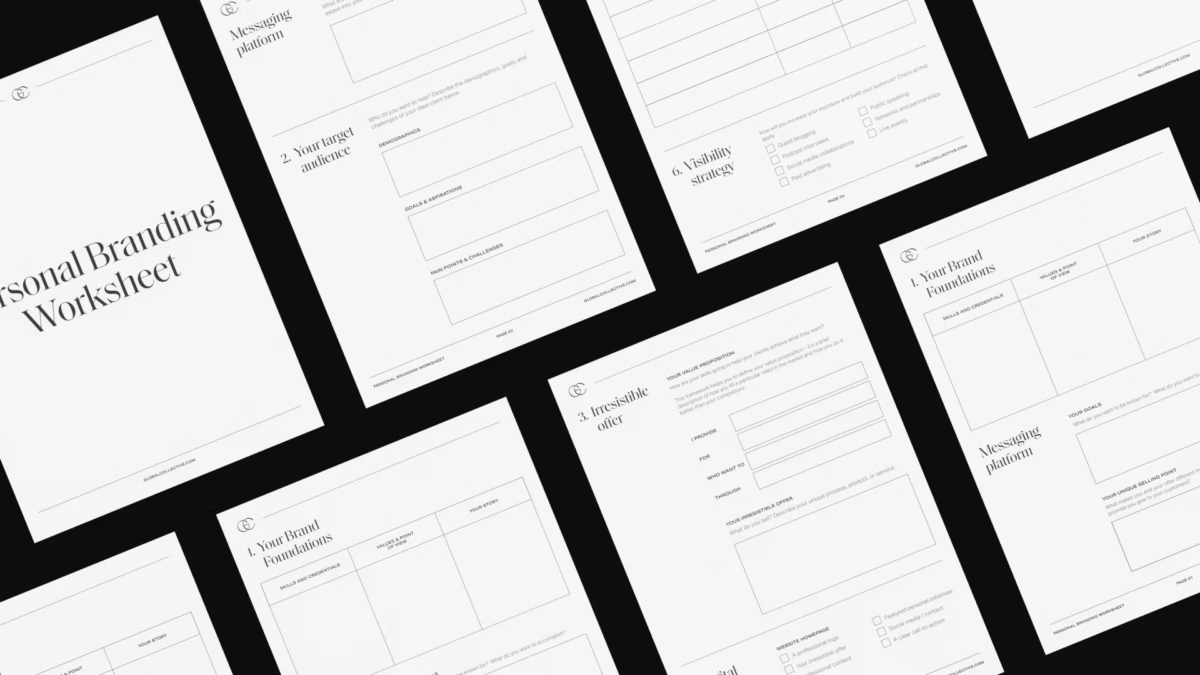
Brand book tips from real estate branding professionals
Building a brand book can feel like a big project, but it does not have to be overwhelming. Here are three tips to keep in mind as you get started.
Think beyond logos, colors, and fonts
A great brand book includes more than the dos and don’ts of your logo. It should also capture your brand’s personality, values, messaging, and tone of voice. When these elements are documented alongside your visual standards, the brand book becomes a clear roadmap for every decision about your brand’s identity and marketing.
Include real-world examples
Use real-world scenarios to show how your brand is applied in different contexts. Show a sample social media post, a listing flyer, and an email template side by side. This makes it much easier for anyone using the brand book to see what “on-brand” actually looks like in practice, rather than trying to interpret abstract guidelines.
Know your verbal identity
Set standards for how your brand is communicated verbally, not just visually. This includes the key messages and positioning you want to communicate to your target audience. When your verbal identity is as well-defined as your visual identity, every piece of content you produce reinforces the same story.
What’s new for brand books in 2026
The way agents market themselves has changed significantly in the past few years, and brand books need to keep up. Here are three developments that should shape how you think about your brand book in 2026.
AI-assisted content creation requires clear voice guidelines
More agents are using AI tools to draft blog posts, social media captions, listing descriptions, and email campaigns. These tools can produce content quickly, but they need clear direction to produce content that sounds like you. Your brand book’s tone of voice section is now more important than ever. When you feed your brand voice guidelines into an AI writing tool, the output is far more likely to match your brand’s personality. Without those guidelines, AI-generated content tends to sound generic.
Short-form video needs visual and audio standards
Instagram Reels, TikTok, and YouTube Shorts are a growing part of how agents connect with their audience. Your brand book should include guidelines for branded video intros, text overlay fonts and colors, thumbnail styles, and even the tone of your on-camera presence. Video is a visual and verbal medium, so both your visual identity and your brand voice sections should address it.
Consistent branding improves visibility in AI-powered search
In 2026, AI-powered search tools are pulling information from multiple sources to answer user queries. When your brand messaging is consistent across your website, social profiles, and directory listings, these tools are more likely to surface accurate, on-brand information about you. A brand book helps you maintain that consistency at scale, especially as you produce more content across more channels.
Build a Brand Book That Grows With You
A real estate brand book gives you a clear framework for staying consistent across every touchpoint, from your website and social media to listings, print materials, and client communications. By defining your identity, visuals, voice, and application guidelines in one place, you make it easier for your brand to feel polished, recognizable, and trustworthy as your business evolves. The best brand books are not static documents; they are practical tools you can refine as your market, services, and goals change.
FAQs
Rewrite your brand strategy
Our free resources can help you define your personal brand, level up your marketing plan, and reach your target audience.
About the author

Marketing Manager
Kate Evans is a content marketing strategist at Luxury Presence, the leading growth platform for high-performing real estate professionals. She develops data-driven editorial content and supports SEO strategy and brand voice frameworks that help agents attract qualified leads and establish market authority. Her published work covers topics including CRM strategy, social media marketing, and digital growth, supporting thousands of agents in scaling their businesses through modern marketing.