
Most real estate agents feel pulled in a dozen directions when it comes to social media. You know you should be posting, but where? And what actually moves the business forward? In 2026, LinkedIn for real estate agents is one of the most underused and highest-return channels available. Unlike noisier platforms built around entertainment, LinkedIn is designed for the kind of professional credibility and relationship building that turns connections into clients. If you have been putting LinkedIn on the back burner, this guide will show you five specific ways to make it work for your real estate business, from profile setup to attracting leads you actually want to work with.
Key takeaways
- Your LinkedIn profile should function as a personal landing page, not a digital resume, with a headline that communicates your value and a summary rich in real estate keywords.
- Posting native content on LinkedIn as a thought leader (not a marketer) keeps your name top of mind when someone in your network needs an agent or a referral.
- LinkedIn's newsletter feature lets you build a subscriber base directly on the platform, giving you a recurring touchpoint with buyers, sellers, investors, and referral partners.
- Spending just 15 minutes a day on strategic engagement, such as commenting, sharing, and sending connection requests, can meaningfully grow your visibility and sphere.
- LinkedIn Ads and LinkedIn Sales Navigator give agents who are ready to invest further the ability to target high-intent audiences by location, income, industry, and job title.
Why LinkedIn matters for real estate agents in 2026
LinkedIn should be a core part of your broader social media presence. While platforms like Instagram and Facebook are built around lifestyle imagery and listing photos, LinkedIn is where you build professional credibility and long-term relationships with the people who send referrals, invest in property, and make decisions about who to hire for a transaction. As of 2026, LinkedIn has surpassed one billion members worldwide (LinkedIn Newsroom, 2026). That audience skews toward decision-makers: business owners, executives, attorneys, financial advisors, and relocating professionals. For agents, this means the people you most want to connect with are already spending time on the platform.
"Social media is a lot of things, but most importantly it's a verification tool."
— Josh Flagg, Luxury Real Estate Agent
That idea is exactly why LinkedIn works so well for real estate. When a potential client hears your name, they look you up. A strong LinkedIn presence gives them the professional proof they need to feel confident reaching out. Unlike more entertainment-driven platforms, LinkedIn favors thought leadership, educational content, and business-minded conversations. That makes it well suited for agents looking to grow brand authority and deal flow at the same time.
How LinkedIn compares to other social platforms for real estate
| Platform | Primary audience | Best content type | Best use case for agents |
| Professionals, executives, investors, referral partners | Text posts, articles, newsletters, document carousels | Building credibility, generating referrals, connecting with high-intent buyers and sellers | |
| General consumers, younger demographics | Photos, Reels, Stories | Showcasing listings, lifestyle branding, community engagement | |
| Broad age range, community groups | Video, group discussions, event promotion | Local community presence, open house promotion, sphere nurturing |
1. Optimize your profile as a personal sales page
Your LinkedIn profile is not a resume. Think of it as a landing page for your real estate business. Every element, from your photo to your summary, should answer one question for the visitor: "Is this the right agent for me?"
Your headline and headshot
Start with a high-resolution headshot that looks approachable and professional. Avoid group photos, cropped vacation shots, or anything that does not clearly show your face. Your headline is the single most visible line on your profile. It appears in search results, connection requests, and every comment you leave. Instead of writing "Realtor at XYZ Realty," use the space to communicate your value proposition. For example: "Helping Buyers and Sellers in the Beverly Hills Luxury Market" or "Austin Relocation Specialist for Tech Professionals."
Your summary and keywords
Craft a summary that reads like a short pitch, not a biography. Open with who you serve and what you do best. Then add a sentence or two about your track record. Include keywords like "real estate agent," "luxury homes," and "property marketing" naturally in your summary to improve search visibility both on LinkedIn and in search engines. Use the experience section to highlight client wins and market knowledge, including specific numbers like average days on market or list-to-sale ratios (the percentage of the asking price a home actually sells for). Consider creating a mini-content series such as "Market Mondays" or "Seller Tips of the Week" that visually reinforce consistency and expertise. Branded templates for visuals, built using Canva, a free graphic design platform, help build recognition over time.
Social proof and recommendations
Social proof builds trust faster than any headline or summary. Ask for endorsements and recommendations that speak directly to your client service and results. A recommendation from a past buyer describing how you guided them through a competitive offer carries far more weight than a generic "great to work with" endorsement. Quick win: After your next closing, send your client a LinkedIn recommendation request with a brief note reminding them of the specific outcome you helped them reach. Most people are happy to write one when you make it easy.
Free social media templates
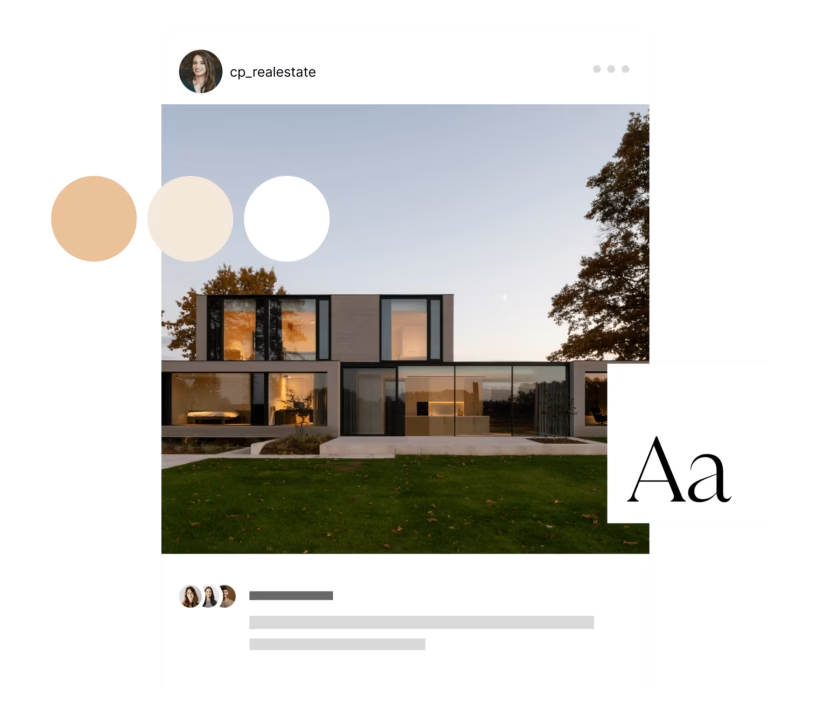
Ready to execute on these strategies but need a little design help? Our expert social media team put together three sets of engaging, on-brand post templates you can customize and deploy today.
2. Post as a thought leader, not a marketer
Too many agents use LinkedIn to repost listing links or share content that sends people away from the platform. That approach misses the point of how LinkedIn works in 2026.
"People invest their time into LinkedIn because it's a proven approach to help their audience perform their jobs better, answer questions, and help address pain points."
— Kenady Swan, Marketing Strategist
That insight applies directly to real estate. When you share a post about what buyers should know before making an offer in your market, or break down a pricing trend you are seeing in your zip code, you are doing exactly what Kenady describes. You are helping your audience make better decisions. That is what builds trust and keeps your name top of mind when a referral need comes up.
What to post and how often
Aim for two to three posts per week. Here are content types that perform well for real estate professionals on LinkedIn:
- Market trend updates with your own commentary (not just a link to someone else's report)
- Lessons from a recent transaction, written as a short story
- A behind-the-scenes look at staging, pricing strategy, or negotiation
- A "myth vs. reality" post about buying or selling in your area
- A personal reflection on what you have learned as an agent this year
Consistency matters more than perfection. Posting two solid pieces of content each week will do more for your visibility than one polished post per month.
Long-form articles on LinkedIn
Beyond regular posts, publish long-form articles directly on LinkedIn's publishing platform. This is a strong place for evergreen content: a guide to buying in your neighborhood, a breakdown of pricing strategies, or a behind-the-scenes look at staging a high-end property. These articles live on your profile permanently and continue to surface in search results long after you publish them.
3. Launch a LinkedIn newsletter to build momentum
The LinkedIn newsletter feature is one of the platform's most underused tools in real estate. When someone subscribes to your newsletter, they receive a notification every time you publish a new issue. That means you are building a subscriber list directly on LinkedIn, with no email opt-in form required. Use your newsletter to cover strategies for buyers and sellers, monthly market recaps, or client success stories. The goal is to deliver recurring value that keeps readers engaged and referring.
How to set up your newsletter
Creating a newsletter on LinkedIn takes just a few minutes. Head to your LinkedIn homepage, click "Write an article," and select "Create a newsletter" under the "Manage" button.
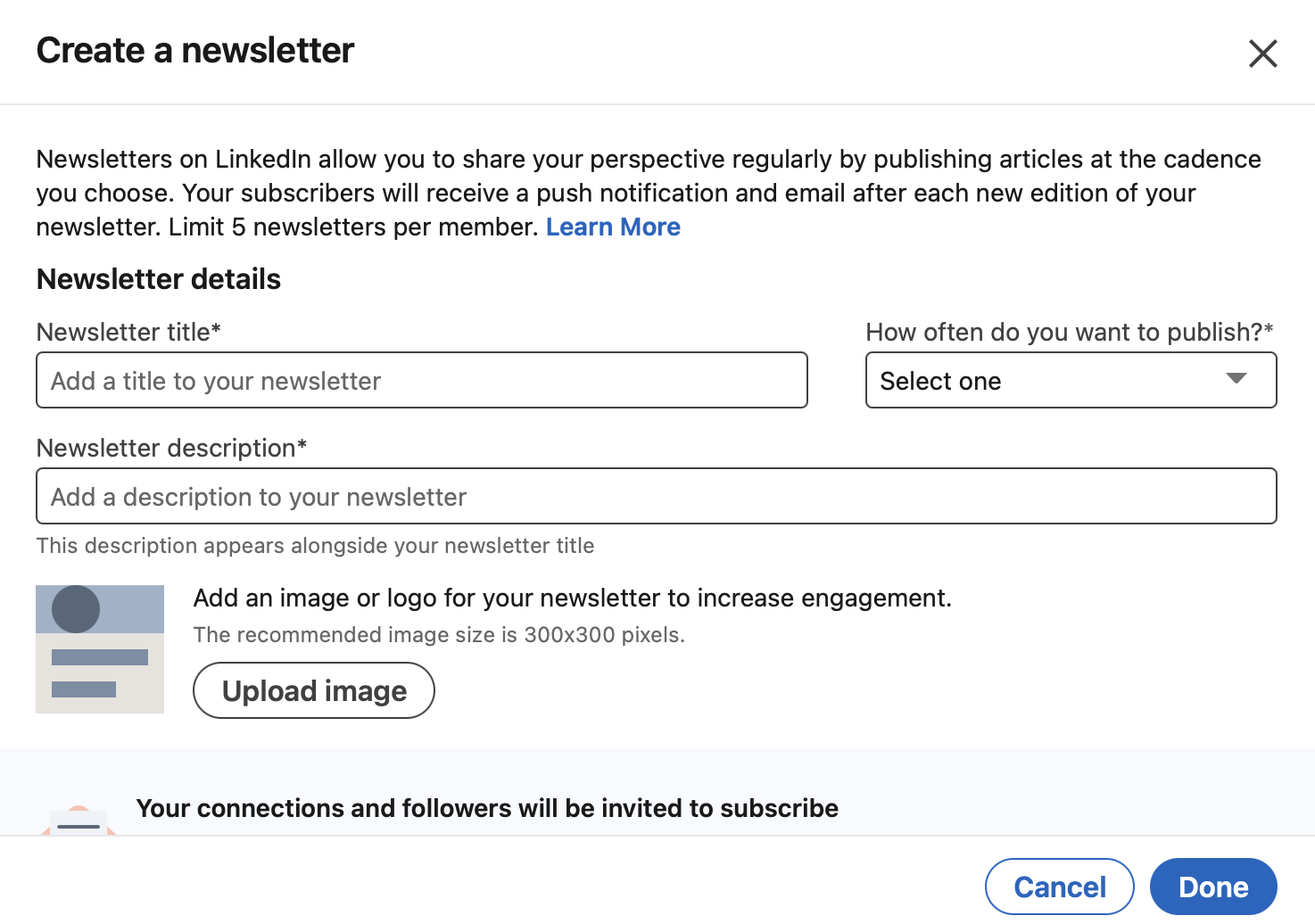
Choose a publishing cadence you can maintain. Weekly or monthly works best for staying top of mind with clients and prospects. The most important thing is that you publish on a predictable schedule so subscribers know when to expect your next issue.
Design and branding
Design a clean, square logo for your newsletter and a horizontal banner for each issue (1920 x 1080 pixels). Keep the most important text and imagery centered so it stays legible across different placements on LinkedIn. These design choices reinforce your brand and help your newsletter stand out in the feed.
Content and publishing strategy
LinkedIn audiences respond best to concise takeaways that spark curiosity and invite further action, like watching a video or reading a full guide on your website. Keep each issue focused on one or two ideas rather than trying to cover everything at once. Link to external content sparingly, and only when it adds to the story rather than competes for attention. Use your newsletter to supplement content you are already publishing across other platforms. This creates a cohesive presence across channels without requiring you to create something brand new every time. Include subtle, relevant calls to action in each issue. Write headlines that make people want to open, and use keywords in your titles and body copy to improve discoverability. If it is your first issue, make it a moment: announce it, share it in a post, and invite your network to subscribe.
4. Engage strategically to expand your reach in 2026
Posting content is only half the equation. LinkedIn is a two-way platform, and the agents who get the most from it are the ones who show up in other people's feeds through comments, shares, and direct messages. Set aside 15 minutes a day to engage with posts from industry leaders, local businesses, and past clients. Leave comments that add something to the conversation rather than just saying "great post." When you comment thoughtfully on someone else's content, their audience sees your name, your headline, and your photo. That is free visibility with a warm introduction built in. Here is a simple daily engagement workflow you can follow:
- Open LinkedIn and scroll your feed for five minutes. Leave two to three meaningful comments on posts from people in your sphere or industry.
- Spend three minutes checking notifications and responding to anyone who commented on your own content.
- Use the remaining time to send one or two connection requests to people you met recently at a networking event, open house, or community gathering.
Join relevant real estate groups on LinkedIn and contribute to discussions when you have something useful to add. Group activity puts your profile in front of people outside your existing network, which is how you grow your sphere over time. When sending connection requests, always include a short note. A message like "Great meeting you at the Chamber event last week. Would love to stay connected here" is far more likely to be accepted than a blank request. That small personal touch can turn a casual introduction into a future referral. Quick win: After your next open house or networking event, spend 10 minutes sending LinkedIn connection requests to every person you spoke with. Reference your conversation in the note. This one habit can meaningfully grow your professional network over the course of a year.
5. Use advanced tools to generate more leads
For agents ready to invest further, LinkedIn offers tools for lead capture and conversion that go well beyond organic posting.
LinkedIn Ads for real estate
LinkedIn Ads allow you to target audiences by location, income level, industry, or job title. This is especially useful for agents working with relocating executives, investors, or professionals in specific industries like tech or finance. Use LinkedIn Ads to promote gated content (resources that require an email address to access), such as buyer guides, neighborhood reports, or luxury home market overviews. This approach lets you build an email list of people who have already shown interest in your market, which you can then nurture through follow-up campaigns.
LinkedIn Sales Navigator
LinkedIn Sales Navigator, the platform's paid prospecting tool, gives you deeper search filters and lead recommendations. You can filter by geography, company size, seniority level, and more to find exactly the kind of client you want to work with. In 2026, Sales Navigator also includes alerts when your saved leads change jobs or get promoted, both of which are common triggers for a real estate transaction.
Track what is working
Do not skip analytics. LinkedIn provides data on post impressions, profile views, and search appearances. Review these numbers monthly and look for patterns. Which topics get the most engagement? Which posts drive profile visits? Use what you learn to refine your content and outreach so you are spending time on what actually moves the business forward.
Your LinkedIn action plan + Luxury Presence
You do not need to do everything at once. Start with the steps that feel most manageable and build from there. Here is a quick checklist to keep you on track:
- Profile: Rewrite your headline as a value statement, update your summary with real estate keywords, and request at least three client recommendations.
- Content: Commit to posting two to three times per week with native, conversation-starting content that shares your market knowledge.
- Newsletter: Set up a LinkedIn newsletter with a clear name, branded visuals, and a monthly publishing schedule.
- Engagement: Block 15 minutes each day for commenting, connecting, and responding on the platform.
- Advanced tools: When you are ready, test LinkedIn Ads with a small budget or explore LinkedIn Sales Navigator to find high-intent prospects in your market.
If keeping up with content creation and social media feels like more than you can handle alongside showings, negotiations, and closings, you are not alone. That is exactly the challenge Luxury Presence was built to solve. From polished websites to social media marketing, Luxury Presence helps agents maintain a strong digital presence and generate inbound leads without spending hours each week on marketing tasks. With Luxury Presence's Social Media Management, you get professional-grade content delivered at speed, and nothing publishes without your approval.
Luxury Presence can elevate your marketing strategy
Learn how we can help take your real estate business to the next level. Schedule a time to speak with one of our branding experts today.

FAQ: LinkedIn for real estate agents
Stay ahead of LinkedIn’s new algorithm
Access real estate-specific insights and data to make career-building connections and add more leads to your pipeline.
Ready to grow?
Turn your content into your best lead source
See how Luxury Presence helps agents turn website visits into closed deals