
Think about the real estate brands that stick in your memory. You probably recall more than a name. You recall the signage, the website, the way every touchpoint felt like it belonged to the same story. That recall is not an accident. It is the result of a deliberate visual brand identity, the collection of visual elements, including logo, color palette, typography, and imagery style, that represent and differentiate a real estate business. In 2026, agents are competing across more digital channels than ever before, making consistent real estate branding one of the most direct ways to earn recognition, build trust, and attract the right clients before you ever say a word.
Key takeaways
- A visual brand identity goes far beyond a logo. It includes your color palette, typography, photography style, and how those elements appear across every client touchpoint.
- Consistent brand presentation across platforms can increase revenue by up to 23%, according to brand consistency research, making cohesion a business decision, not just a design preference.
- In 2026, more than 76% of home searchers start on a smartphone, so your visual brand must translate clearly to mobile screens.
- Documenting your brand in a style guide or brand book protects consistency as your team and marketing footprint grow.
- Real agents who invested in a cohesive brand refresh have seen measurable gains, including 371% more leads and 3.5x more property views within nine months.
Rewrite your brand strategy
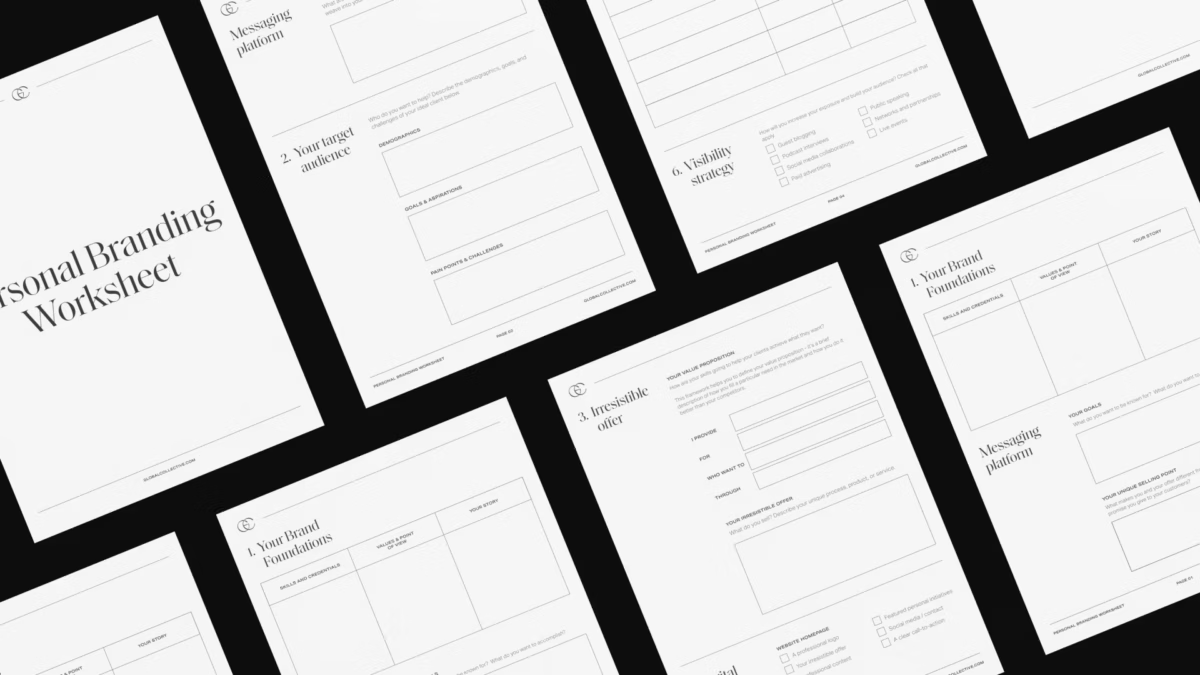
Our free resources can help you define your personal brand, level up your marketing plan, and reach your target audience.
Why visual brand identity matters in 2026
Your brand identity encompasses every visual representation of your business, from your logo and color palette to your photography style and marketing materials. When applied consistently, a cohesive visual brand identity builds recognition, communicates your value, and creates a lasting impression with potential clients. Research from Lucidpress found that consistent brand presentation across all platforms can increase revenue by up to 23% (Lucidpress, 2021), a finding that has only grown more relevant as agents compete across more digital touchpoints in 2026.
Because buyers and sellers in 2026 encounter marketing from dozens of agents across social feeds, search results, email, and print, a distinctive visual brand identity helps you:
- Build instant recognition in a crowded market where attention spans are measured in seconds
- Communicate professionalism and attention to detail before a single conversation takes place
- Establish trust through consistency, because clients who have a positive brand experience are much more likely to recommend and trust a company
- Telegraph your personality and approach to business so the right clients self-select
- Signal quality and stand out as the go-to choice in your market
Agents who invest in cohesive branding see the difference in their pipelines. When your visual identity is aligned across every channel, prospects begin to associate your look with credibility long before they pick up the phone.
That exponential value is not abstract. It shows up in referral rates, listing appointments, and the speed at which new leads convert. The sections below walk you through exactly how to build a visual brand identity that creates that kind of momentum.
Key elements of a real estate brand identity
To build a cohesive visual brand identity that resonates with your audience and distinguishes you in your market, focus on these four components. Each one works together with the others to form your visual signature.
Logo design
Your logo is the anchor of your visual brand identity. A strong real estate logo should be:
- Simple enough to be recognized at a glance on a yard sign, a mobile screen, or a business card
- Appropriate for your target market, whether that is waterfront estates, urban condos, or suburban family homes
- Scalable for different applications without losing clarity at small sizes
- Distinctive from the logos of other agents in your farm area
- A reflection of your personal brand values and positioning
If you work with a designer, share three to five competitor logos so the designer knows what to avoid. If you create it yourself, test it at multiple sizes before committing. Many successful agents incorporate their name, initials, or a property icon that becomes synonymous with their business over time.
Color palette
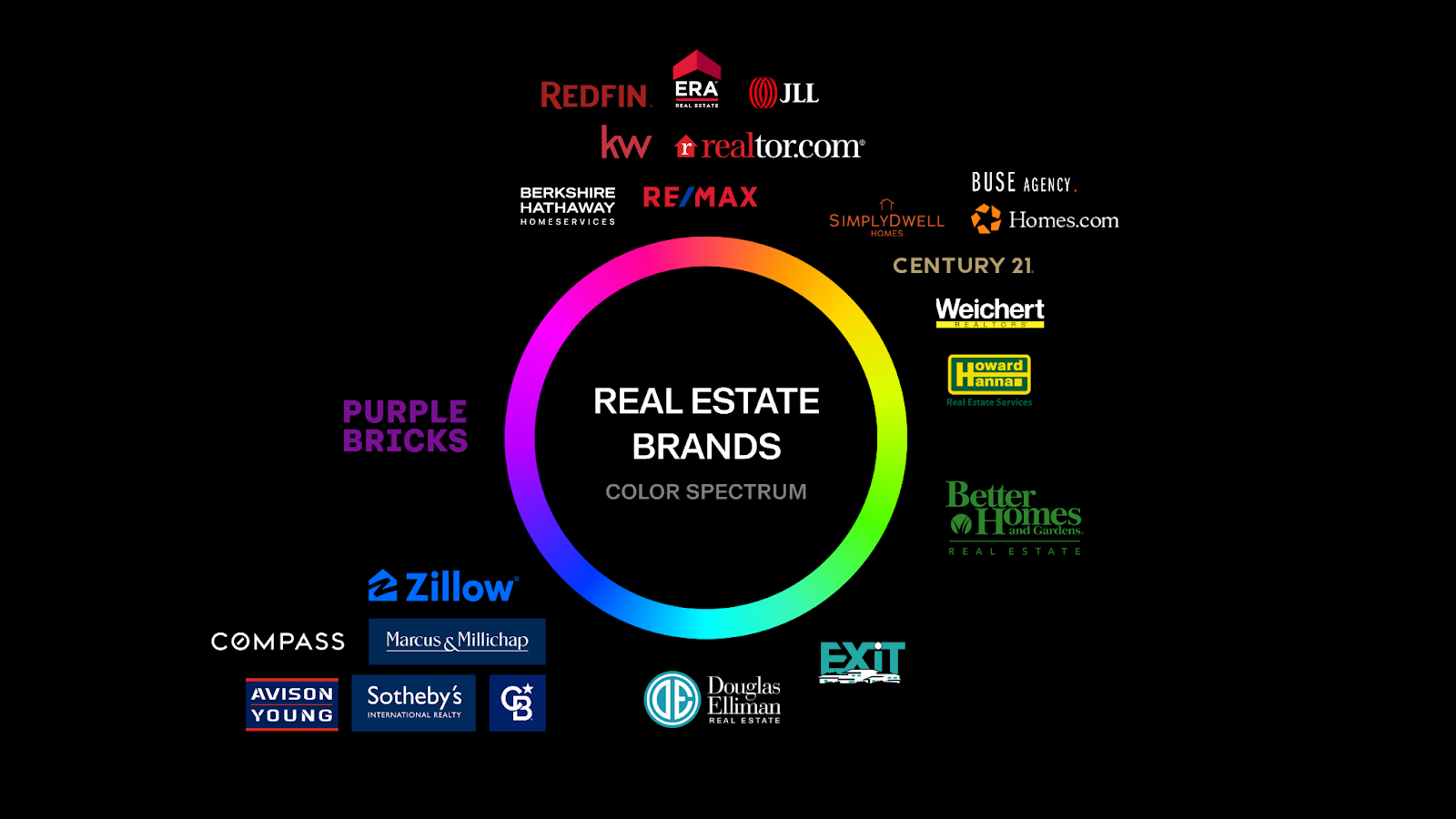
Your color selection sends psychological signals to potential clients before they read a single word. Research in color psychology has shown that specific hues trigger distinct associations: blue tones convey competence and trust, red tones convey excitement, and darker palettes signal sophistication (Labrecque and Milne, Journal of the Academy of Marketing Science, 2012). When developing your palette, choose two to three primary colors and two to three complementary colors that:
- Align with your target demographic: buyers in the luxury segment respond to muted, high-contrast palettes (navy, charcoal, gold), while first-time buyer audiences often respond to approachable, warm tones (terracotta, sage, warm white)
- Work together on the page without competing for attention
- Map directly to a brand attribute: if your positioning is “trusted neighborhood expert,” earth tones and deep blues outperform trendy neons
- Differentiate you from the top three to five agents in your local market
- Reproduce accurately across both digital screens and printed materials like mailers and brochures
For example, navy and gold communicate trust and aspiration, while vibrant orange and teal position you as modern and energetic. Whatever palette you choose, apply it consistently across every piece of marketing you produce.
Typography
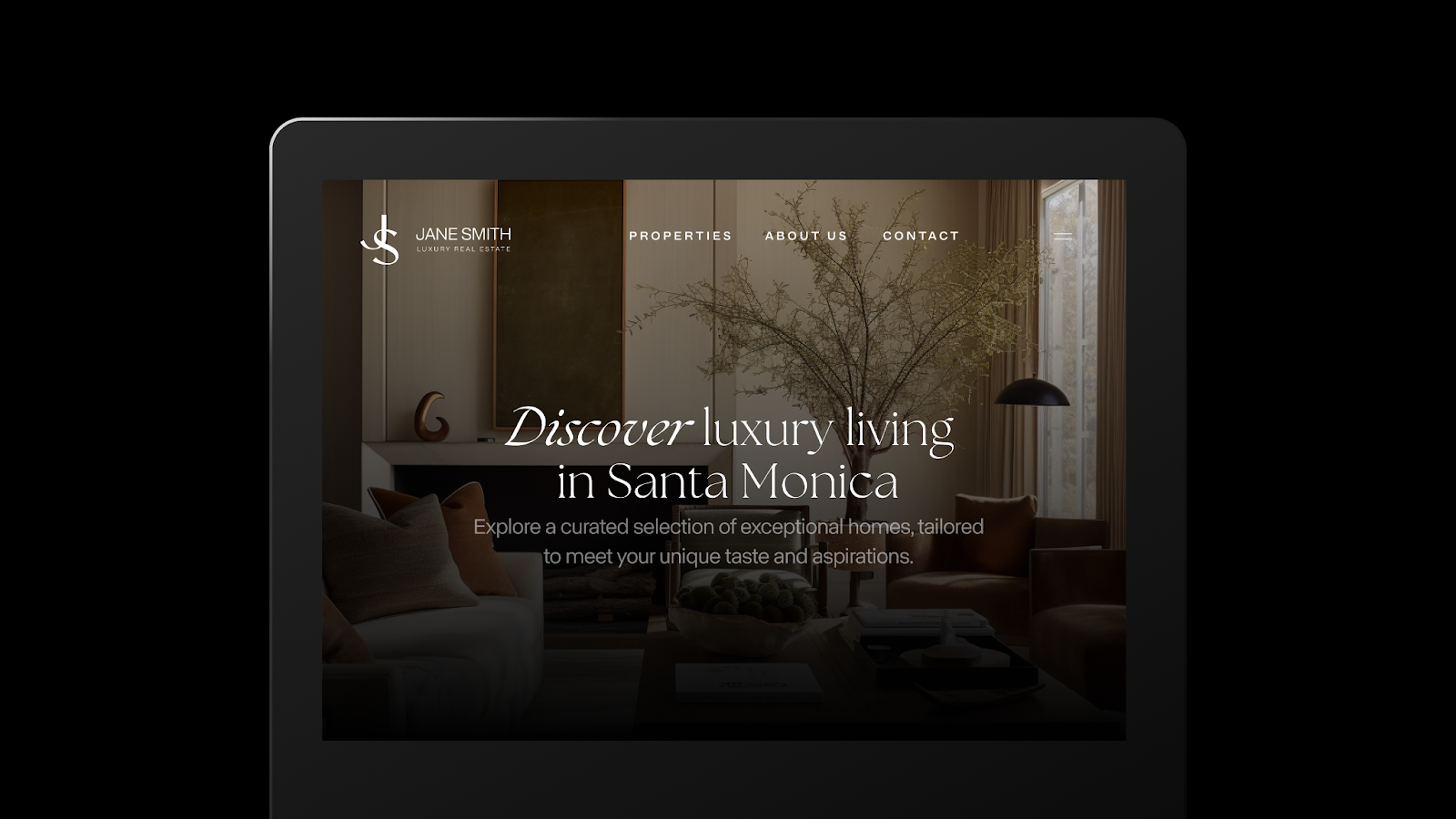
The fonts you select shape how your communication is perceived. Research on typeface personality has found that serif fonts (with small lines at the end of characters, such as Times New Roman) are perceived as more traditional and trustworthy, while sans-serif fonts like Helvetica are perceived as modern and clean (Mackiewicz and Moeller, British Journal of Psychology, 2004). Your visual brand identity should include:
- A primary headline font that grabs attention and reflects your brand personality
- A secondary body font that prioritizes readability across screens and print
- Clear guidelines for font sizes and weights so every team member applies them the same way
Limit your selection to two to three font families. The rule of thumb: pick one font for headings and another for body text, then document the pairing in your brand guide so it stays consistent across every asset.
Photography style
In real estate, imagery carries enormous weight. Consider whether bright and airy, dramatic and moody, or classically balanced photography best represents your brand and your market.
Whatever direction you choose, maintain consistency to reinforce your visual brand identity. Develop guidelines for:
- Property photography (lighting, angles, editing style)
- Personal branding photos (formal vs. casual, settings, wardrobe)
- Team photos and headshots
- Social media imagery and story templates
The table below summarizes how each visual element contributes to your overall brand identity and where it has the most impact.
| Visual element | Primary function | Highest-impact touchpoints |
| Logo | Instant recognition and recall | Yard signs, business cards, website header, email signature |
| Color palette | Emotional association and differentiation | Website, social media templates, print mailers, listing presentations |
| Typography | Perceived personality and readability | Website body copy, brochures, digital ads, email newsletters |
| Photography style | Quality signal and brand atmosphere | Listing photos, social media, personal branding, virtual tours |
Real-world results: when brand identity meets digital execution
A cohesive visual brand identity is not just a design exercise. It drives measurable business outcomes. Consider the results of Maggie Gold Seelig, broker and founder of The MGS Group, who partnered with Luxury Presence for a full brand and website overhaul.
Within nine months of launching her refreshed brand, Seelig’s team saw 371% more leads, a 55% engagement rate, and 3.5x more property views. Over six months, their online visibility grew by 9,285% (Source: Luxury Presence Case Study: MGS Group, 2024).
Those numbers did not come from a single tactic. They came from aligning every visual touchpoint, the website, the listing pages, the social content, under one cohesive brand identity. When prospects encountered The MGS Group on any channel, the experience felt familiar and polished. That consistency shortened the trust-building cycle and moved leads to action faster.
Implementing your visual brand identity in 2026
Once you have established your visual brand elements, it is time to apply them across every touchpoint where potential clients will encounter your brand. Start with the highest-impact platforms and work outward.
Digital presence
Your website and social media profiles are often the first impression potential clients have of your business. Make sure your visual brand identity is consistently applied to:
- Website design and layout, including IDX property search pages
- Email newsletters and signatures
- Social media profile images, covers, and post templates
- Digital advertising materials across search and social platforms
- Video intros and outros
Pay close attention to how your visual brand identity translates to mobile devices. According to the National Association of Realtors (NAR) Realtor Technology Survey, more than 76% of home searchers begin their journey on a smartphone (NAR, 2024), a behavior that has only intensified heading into 2026. If your logo is unreadable at mobile scale or your colors shift between desktop and phone, you are losing trust before a prospect even scrolls.
That first impression on your website often determines whether a seller invites you to a listing appointment. In 2026, agents increasingly use done-for-you Social Media Management to maintain visual brand consistency across platforms without managing every post manually. Social Media Management from Luxury Presence, for example, produces brand-aligned content at scale, with nothing publishing without agent approval. This kind of system keeps your brand visible and consistent even during your busiest weeks.
Print materials
Despite the growth of digital channels, physical materials remain high-impact touchpoints in real estate marketing. Apply your visual brand identity to:
- Business cards and stationery
- Property brochures and flyers
- Yard signs and directional signage
- Direct mail campaigns
- Thank you cards and closing gifts
The goal is simple: when a homeowner receives your mailer, drives past your yard sign, and later visits your website, the experience should feel like one continuous brand. That repetition builds familiarity, and familiarity builds trust.
Property marketing
Each listing is an opportunity to showcase your visual brand identity while highlighting the home’s best features. Create branded templates for:
- Property feature sheets
- Listing presentations
- Virtual tours and video walkthroughs
- Social media property announcements
- Open house materials
These templates should carry your brand elements while allowing flexibility to complement each property’s character. A well-branded listing presentation tells a seller you will market their home with the same care you put into your own business.
Maintaining and evolving your visual brand identity
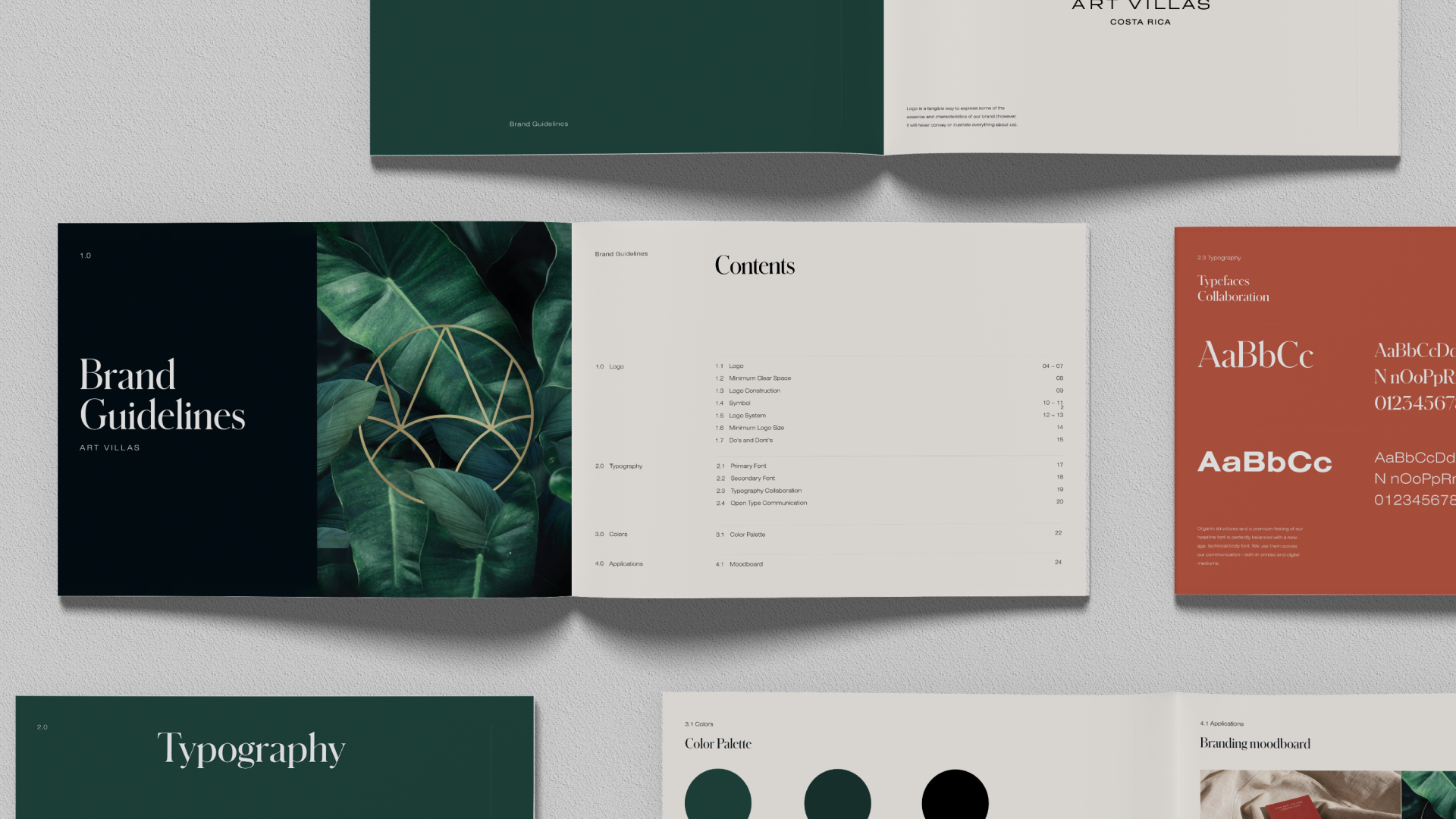
A strong visual brand identity requires ongoing attention. A brand book (sometimes called a style guide) is a document that records every visual element of your brand, including logo usage rules, color codes, font pairings, and photography direction, so that anyone producing materials on your behalf applies them correctly. Here is how to protect and grow your brand over time:
- Create a brand book documenting all visual elements and how they should be used across digital and print.
- Audit your materials quarterly to catch inconsistencies before they multiply.
- Train every team member and vendor on proper brand usage, and share your brand book as part of onboarding.
- Update photography at least once a year to keep content fresh and reflective of your current market.
- Consider a subtle brand refresh every three to five years to stay current without losing the equity you have built.
Evolution should be gradual. Dramatic changes can confuse clients and erase the recognition you have worked to earn. If you do conduct a full rebrand, consider documenting the journey and using press releases to announce it widely. A rebrand done well becomes a marketing event in itself.
Luxury Presence can elevate your marketing strategy
Learn how we can help take your real estate business to the next level. Schedule a time to speak with one of our branding experts today.
FAQs
Rewrite your brand strategy
Our free resources can help you define your personal brand, level up your marketing plan, and reach your target audience.
About the author

Content at Luxury Presence
Kate Evans is a content marketing strategist at Luxury Presence, the leading growth platform for high-performing real estate professionals. She develops data-driven editorial content and supports SEO strategy and brand voice frameworks that help agents attract qualified leads and establish market authority. Her published work covers topics including CRM strategy, social media marketing, and digital growth, supporting thousands of agents in scaling their businesses through modern marketing.