Your website can look finished and still be hard to find when prospects search. The National Association of REALTORS® (NAR) reports that 52% of buyers found the home they purchased online. Search visibility belongs inside your client acquisition system.
A useful SEO audit connects technical health, local visibility, content quality, and lead measurement. Done well, it shows where your site is earning visibility, where search engines are hitting friction, and where stronger pages could attract buyers and sellers in the markets you serve.
That is where a systematic real estate SEO strategy earns its keep. The goal is simple. Make it easy for search engines to access your strongest pages, match those pages to local intent, and measure whether organic visibility produces qualified conversations.
Key takeaways
- Technical SEO protects search eligibility. Google's technical requirements start with Googlebot access, a successful page response, and indexable content. Slow loading can hurt the experience, but speed alone doesn't determine whether a page can be indexed.
- Local SEO connects visibility to geography. A complete Google Business Profile supports local discovery, while local ranking factors include relevance, distance, and prominence.
- Structured data supports understanding. Google-supported structured data can make eligible pages available for richer search appearances. Correct markup doesn't guarantee a rich result or more clicks.
- Organic performance needs business context. Configure lead actions as key events, use the Traffic acquisition report in Google Analytics 4 to compare traffic sources, and connect leads to closed transactions in your lead records.
- Mobile deserves its own audit. Google uses the mobile version of your content for indexing and ranking. Core Web Vitals are useful experience signals, not a pass or fail ranking gate.
SEO fundamentals shape what search engines can access
Real estate SEO has a few recurring pressures. Competition is hyperlocal, listing pages are image-heavy, and MLS or IDX feeds can create large sets of similar URLs. A national brand might target a broad product query. You may be competing for searches such as "3 bedroom homes near {school name} in {city}." That specificity can work in your favor when the page answers the search well.
Local intent makes SEO valuable for real estate agents
The opportunity is local. Searches such as "real estate agent near me" can signal geographic intent, even when the searcher is still researching. Google evaluates local relevance factors, including relevance, distance, and prominence. Your job is to give searchers a useful answer tied to the place, property type, or question they care about.
Five concepts frame the audit
- Crawlability. Can Google's bots access and read your priority pages?
- Indexation. Are your important pages appearing in Google's index?
- Domain authority. Treat this as a third-party comparison metric rather than a Google trust score. Third-party SEO tools don't have access to Google's internal ranking data.
- Search intent. Does the page match what the searcher is trying to accomplish?
- Core Web Vitals. Does the page load, respond, and remain visually stable at a good user-experience level?
Prioritize blockers first. Crawl and indexing issues can keep important pages out of Search. Page speed still matters for visitors, but page experience guidance makes clear that relevance can outweigh weaker experience signals.
A clean audit starts with reliable measurement
You need a clean view of what is happening before you change anything. Google's free tools cover the core checks for indexing, search performance, analytics, structured data, and page performance.
Free Google tools cover the core audit
- Search Console. Review indexing, URL Inspection, Core Web Vitals, and search performance.
- Google Analytics 4. Review traffic sources, user behavior, key events, and lead actions.
- Business Profile Performance. Review views, searches, calls, website clicks, and directions.
- Google PageSpeed tool. Compare mobile and desktop performance data and diagnostics.
- Rich Results Test. Test markup for Google-supported rich-result features.
Clean tracking gives the audit a baseline
- Add your property in Search Console. Google says data starts collecting after the property is added and should begin appearing within a few days.
- Install Google Analytics 4 through Google Tag Manager or a direct implementation.
- Submit your XML sitemap in Search Console.
- Create or improve your profile with this Google Business Profile guide.
For deeper crawling, Screaming Frog pricing is $279 per user per year for 1 to 4 licenses as of September 2026. The crawler can surface broken links, redirect chains, duplicate pages, and other technical patterns. For orphan pages, compare crawl data with your sitemap and analytics records because an internal-link crawl can't find a page that has no internal links.
Technical SEO gives every other SEO effort a foundation
Technical SEO determines whether search engines can reach and process your content. Fix technical access blockers first, then move to performance, structure, and content improvements.
Crawlability and indexation come first, points 1 to 4
- Review robots.txt. Look for directives that block priority pages by mistake.
- Submit your XML sitemap. Include priority URLs and submit the sitemap through Search Console.
- Fix unexpected 4xx and 5xx errors. Repair broken internal links and investigate server failures. Google's crawling guidance supports 404 or 410 responses for permanently removed pages that have no suitable replacement.
- Resolve redirect chains. Point visitors and crawlers toward the final destination with as few hops as practical. Google notes that long redirect chains can affect crawl efficiency and redirects add latency.
Core Web Vitals expose experience issues, points 5 to 8
- Improve Largest Contentful Paint. Aim for LCP within 2.5 seconds. Optimize critical images and loading behavior. Lazy-load offscreen assets, while keeping immediately visible hero or LCP content available early.
- Improve Interaction to Next Paint. Aim for INP below 200 milliseconds. Measure interaction delays and reduce blocking work where it contributes to the problem.
- Reduce Cumulative Layout Shift. Aim for CLS below 0.1. Reserve space for images and other elements so the layout stays stable while the page loads.
- Test mobile separately. Compare field data and diagnostics across devices. Large listing photos, heavy scripts, and third-party code are common areas to investigate. This mobile optimization guide covers the real estate use case in more detail.
Security and structure reduce technical friction, points 9 to 10
- Review HTTPS and certificates. Serve pages over HTTPS and fix certificate or mixed-content problems. Treat HTTPS as security and page experience hygiene, rather than a standalone ranking shortcut.
- Manage duplicate content. Use canonical URL guidance for duplicate or near-duplicate listing URLs. Handle expired listings based on usefulness and available replacements. A useful page can stay live with accurate status, a genuinely relevant replacement can receive a redirect, and a permanently removed page can return 404 or 410. For IDX-heavy sites, this IDX SEO strategy goes deeper on listing-page structure.
On-page SEO connects each page to a clear search intent
On-page SEO links what you publish to what buyers and sellers search for. Avoiding common SEO mistakes gives every page a cleaner chance to compete.
Page elements clarify relevance, points 11 to 15
- Write useful title tags. Include the primary topic and location where they fit naturally. Keep titles descriptive and concise. Google has no fixed title limit and can truncate title links to fit the device.
- Write useful meta descriptions. Summarize what the searcher will get from the page. Google has no fixed description limit and may use on-page text instead.
- Use descriptive headings. Build a clear hierarchy that helps readers scan the page. Google's SEO guide says heading count and semantic order aren't ranking requirements.
- Add useful image alt text. Describe informative listing images for accessibility and image search. Skip keyword stuffing.
- Build descriptive internal links. Connect related pages with crawlable text links so visitors and search engines can follow the relationship between topics.
Content relevance connects pages to intent, points 16 to 18
- Match the search intent. Use educational pages for instructional searches and comparison formats when the results page shows that searchers want options.
- Cover related terms naturally. Build a complete answer around the topic instead of repeating every keyword variation. Google's starter guide explains that search systems can understand related meanings.
- Write snippet-ready answers. Answer specific questions in clear language where the reader needs the answer. Featured snippets are selected by Google, so placement and markup don't guarantee selection.
Luxury Presence Real Estate Websites are designed around an agent's brand, connected to MLS search, and built to support search visibility and lead capture. The website foundation matters because technical SEO, content, local visibility, and conversion paths work better when they share the same structure.
Local SEO focuses your visibility on the markets you serve
Local SEO helps you compete where your business actually happens. Treat it as a core part of the audit. Searches such as "real estate agent {city}" can trigger local results, while search result formats can change by query, device, and context.
Google Business Profile supports local visibility, points 19 to 21
- Complete applicable profile fields. Choose an accurate primary category, add current hours, define service areas, upload useful photos, and write a clear business description.
- Publish timely updates. Share listings, market information, and community activity when they are useful to your audience. Google's post guidance recommends relevant updates, offers, and events rather than a fixed posting cadence.
- Generate and respond to reviews. Ask for genuine reviews without incentives and respond thoughtfully. Google review guidance explains the policy, while local ranking guidance notes that more reviews and positive ratings can support prominence. This Business Profile growth guide adds real estate-specific tactics.
Consistent business details support local discovery, points 22 to 24
- Audit core business details. Keep your name, address, phone number, and other contact details accurate across directories. Fix outdated or conflicting details rather than treating punctuation differences as a problem.
- Maintain profiles on major platforms. Keep active profiles accurate on relevant platforms such as Zillow, Realtor.com, Facebook, LinkedIn, and Yelp.
- Earn local backlinks. Community organizations, local publications, and complementary businesses can create relevant link opportunities. When compensation pays for a link, qualify sponsored links with rel="sponsored" or nofollow.
Accurate profile data helps customers reach you. Google's business information guidance focuses on representing the business consistently and keeping details current.
Content captures the local questions clients actually ask
Long-tail searches give you room to be specific. Someone searching "parks and recreation by neighborhood in {city}" may be comparing areas. A useful page should answer that question with objective information and clear sourcing.
Local content answers market questions, points 25 to 27
- Build neighborhood guides. Create useful pages for the areas you serve with current market data, amenities, and objectively sourced school information. HUD says school information can be shared when it is provided in an equal and consistent manner. This neighborhood guide framework can help shape the page.
- Publish market reports. Monthly or quarterly updates can show local expertise when the data is current and the analysis is useful.
- Answer common questions. Build pages around real client questions such as "How much do I need for a down payment in {city}?"
Hyperlocal content can be a focused opportunity when actual search results show room for a better answer. Neighborhood pages, local market pages, and commute-related content can work well when they serve a distinct intent. A topic clustering strategy can connect those pages into a clearer authority structure.
Useful content stays current and connected
- Review facts and statistics on a regular schedule and update them when the underlying information changes. Helpful content guidance favors accuracy for readers over artificial freshness.
- Link neighborhood and market pages to relevant listings and supporting resources.
- Plan seasonal content around your market's demand patterns and your own crawl and indexing history.
Relevant links strengthen authority over time
Links remain a signal in Google's core ranking systems. Prioritize relevant links that make sense for the market and topic instead of chasing raw directory volume.
Link outreach should prioritize relevance, points 28 to 29
- Audit your backlink profile. Review suspicious links and identify earned-link opportunities. Google says most sites don't need to use the disavow tool. Disavowal is intended for substantial artificial or spammy link patterns where a manual action exists or is likely, after removal efforts have been made.
- Pursue relevant local coverage. Chambers of commerce, community organizations, local publications, and business partnerships can create useful exposure. Paid placements should use sponsored link attributes.
For real estate, prioritize relevance over raw link count. A local publication can reinforce geographic context, while a respected industry source can reinforce topical authority. The right mix depends on the page and the audience it serves.
Qualified business outcomes show SEO value
SEO without measurement turns into guesswork. Build a baseline, track what changes, and connect search performance to lead quality. This website analytics guide covers the measurement layer in more detail.
A monthly baseline makes movement visible, point 30
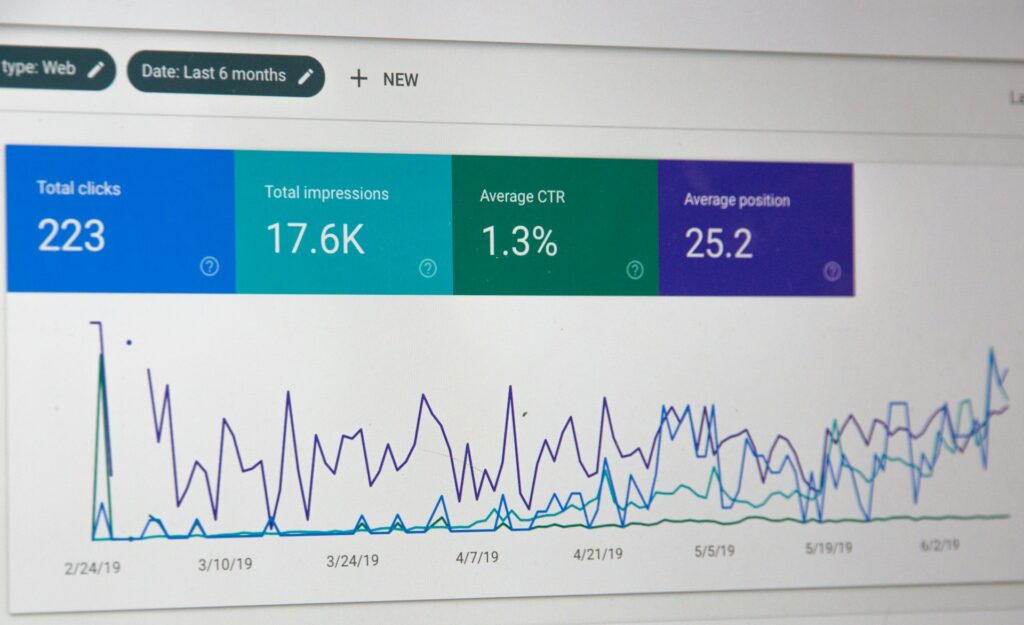
- Establish a baseline and review monthly. Track organic traffic, target-query movement, key-event conversion, and local visibility with Search Console reports, Business Profile Performance, analytics, and lead records.
Business metrics connect SEO to outcomes
- Organic traffic by landing page. Which pages attract qualified visitors?
- Target-query movement. Which topics are gaining or losing visibility?
- Conversion rate by source. Which traffic sources create the strongest lead actions?
- Local visibility. Where does the business appear for relevant local searches?
Search visibility now extends beyond traditional results
Search behavior is changing. NAR reports that consumers are using AI for homebuying research. For Google AI Overviews and AI Mode, Google's AI guidance says the same core SEO practices apply. A page must be indexed and eligible to appear with a snippet, and inclusion is never guaranteed.
Conversational search starts with direct answers
- Write direct answers to specific questions in crawlable text.
- Keep structured data aligned with visible page content. Google says there is no special AI markup.
- Treat frequently asked questions (FAQ) markup as a structured-data format, not a current Google rich-result tactic. Google stopped showing FAQ rich results on May 7, 2026.
- Create content around natural language questions such as "What should I know before buying a house in {neighborhood}?"
An AI visibility audit can help you see whether your brand is discoverable beyond traditional blue links. For a broader view of the shift, Luxury Presence also tracks Google AI search changes and what they mean for real estate marketers.
Luxury Presence connects SEO to real estate growth
An audit tells you what to fix. Execution determines whether those fixes turn into a stronger search presence.
Luxury Presence connects the website, search program, local presence, content, and lead system inside one real estate platform. Real Estate Websites are custom-designed around your brand and connected to MLS search. SEO & GEO begins on Brand with weekly SEO & GEO optimizations, hyperlocal blog posts, and Google Business Profile optimization. Scale keeps those search features, and All In adds the Premium SEO & GEO program.
That connected model is built specifically for real estate growth. Presence® AI is the intelligence layer powering the Presence Platform. It is trained on a decade of real estate intelligence. A dedicated team of content and marketing specialists sets the quality bar, and agents stay in control of what goes live. Luxury Presence reports that 30% of WSJ Top 100 agents run their business on the Presence Platform.
Two G2 reviewers described the value of that integration in their own businesses. In a January 2026 review, marketing director Ashton S. said Luxury Presence brought SEO, website updates, and lead generation into one system, reducing the time her team spent managing technology while improving visibility and meaningful inquiries. In an October 2025 review, broker Taylor B. said SEO onboarding helped him better understand the technology behind his website presence. These are individual customer experiences, not guaranteed outcomes. More examples appear in Luxury Presence reviews.
If your audit uncovers technical, local, or content work that you want handled by one real estate-focused team, see the platform and how the pieces work together.
Frequently asked questions
Ready to grow?
Turn your content into your best lead source
See how Luxury Presence helps agents turn website visits into closed deals