A quick note before we get into this: I’m sharing general best practices here based on what I see in my role at Luxury Presence, not offering legal advice. Every agent’s situation is different, and a trusted local attorney is always your best resource for specific questions. With that said, this is a topic I wish more people were talking about.
One of the things that keeps me up at night in my role is how easily an advertising misstep can disrupt an agent’s business. The agent doesn’t have to be malicious. They don’t have to be trying to mislead anyone. A few words in a listing description or a social post that cross a line most people wouldn’t see coming, and suddenly you’re dealing with a complaint that consumes months of your time and real money.
Advertising compliance feels like one of those topics that’s too obvious to spend time on. Be truthful. Don’t make stuff up. Simple, right? But the rules are more specific than most agents realize, and the ways you can trip are more subtle than outright dishonesty. If you’re an agent who publishes any kind of content (social media posts, listing descriptions, paid ads, email campaigns), this applies to you.
Fair housing and your ad copy: what to ask your broker
Fair housing rules around advertising language are more specific than most agents expect, and they vary by state and municipality. The short version: your brokerage’s compliance team or a trusted attorney can walk you through the details for your market and any questions you may have about fair housing compliance. It’s worth that conversation if you haven’t had it recently.
Agents need to be aware that advertising language can get scrutinized not just for what it says, but for what it implies. Copy that focuses on the features of a property (the kitchen, the lot size, the natural light, the proximity to parks) tends to be on safer ground than copy that drifts toward describing the type of people who live in an area or the lifestyle a neighborhood attracts. These distinctions are worth scrutinizing with a trusted professional.
The line between the two isn’t always obvious, which is exactly why it’s worth discussing with someone who knows the rules in your specific market.
Truth in advertising means more than not lying
Most agents understand they can’t make false claims in their advertising. You can’t say a property has a renovated kitchen if the kitchen hasn’t been touched since 1987. But truth in advertising goes beyond avoiding outright falsehoods. It also means not creating false impressions. If your ad implies something that isn’t accurate, even without stating it directly, you’re in risky territory.
This extends to how you represent your own business, too. Associating yourself with a brand or organization you’re not actually affiliated with is a common mistake that may create real legal exposure.
Using logos, names, or affiliations you don’t have permission to claim can result in trademark and advertising complaints. If your credentials and results are strong (and for most luxury agents, they are), let them speak on their own terms.
The agents with Luxury Presence are some of the most successful in the country. Their results genuinely speak for themselves. They don’t need to stretch the truth or embellish their track record because the work is already there.
That’s the best kind of advertising: a real track record presented honestly. When your marketing reflects what you’ve actually done, nobody can challenge it.
Influencer rules apply to real estate, too
If you’re working with an influencer to promote your brand, or featuring a past client’s testimonial in your marketing, there are requirements worth knowing about. The FTC has been increasingly active in this space, and real estate is not exempt.
There are rules around sponsored posts, incentivized testimonials, and social media marketing s. The specifics matter, and they’re worth getting right. Your brokerage’s compliance team or an attorney can tell you exactly what applies to your situation and advertising ideas.
The good news is that once you understand the requirements, following them is usually straightforward.
Multiple markets mean multiple rule sets
If you work across state lines or in multiple MLS territories, the complexity multiplies. There are over 500 MLSes in the country, and each one has its own rules and regulations around how properties can be marketed, what data can be displayed, and how listings are presented. An advertising practice that’s perfectly acceptable in one market might violate the rules in another.
For agents who operate in multiple territories (and many of our clients at Luxury Presence do), staying current on each market’s advertising and MLS rules is part of the job.
This is another area where your brokerage’s compliance team can be a tremendous resource, and where a relationship with a small business attorney who understands multi-jurisdictional real estate practice can pay for itself many times over.
The real estate licensing exams cover these fundamentals, but the rules don’t stop evolving after you pass. Regulations change. MLS boards update their policies. State legislatures pass new advertising requirements. The agents who stay current on these changes, whether through a mentor, an attorney, automated AI research, or their brokerage’s compliance resources, are the ones who avoid the kind of surprise that derails a quarter or worse.
Your reputation is the asset worth protecting
Advertising compliance isn’t the most exciting part of being an agent. It doesn’t close deals or generate leads. But it protects everything that does.
The reputation you’ve built, the relationships you’ve earned, the brand you’re growing: all of it depends on your advertising being truthful, fair, and compliant with the rules of every market you serve. Treat it as a foundation and you’ll never have to worry about it becoming a problem.
About the author

Head of Legal
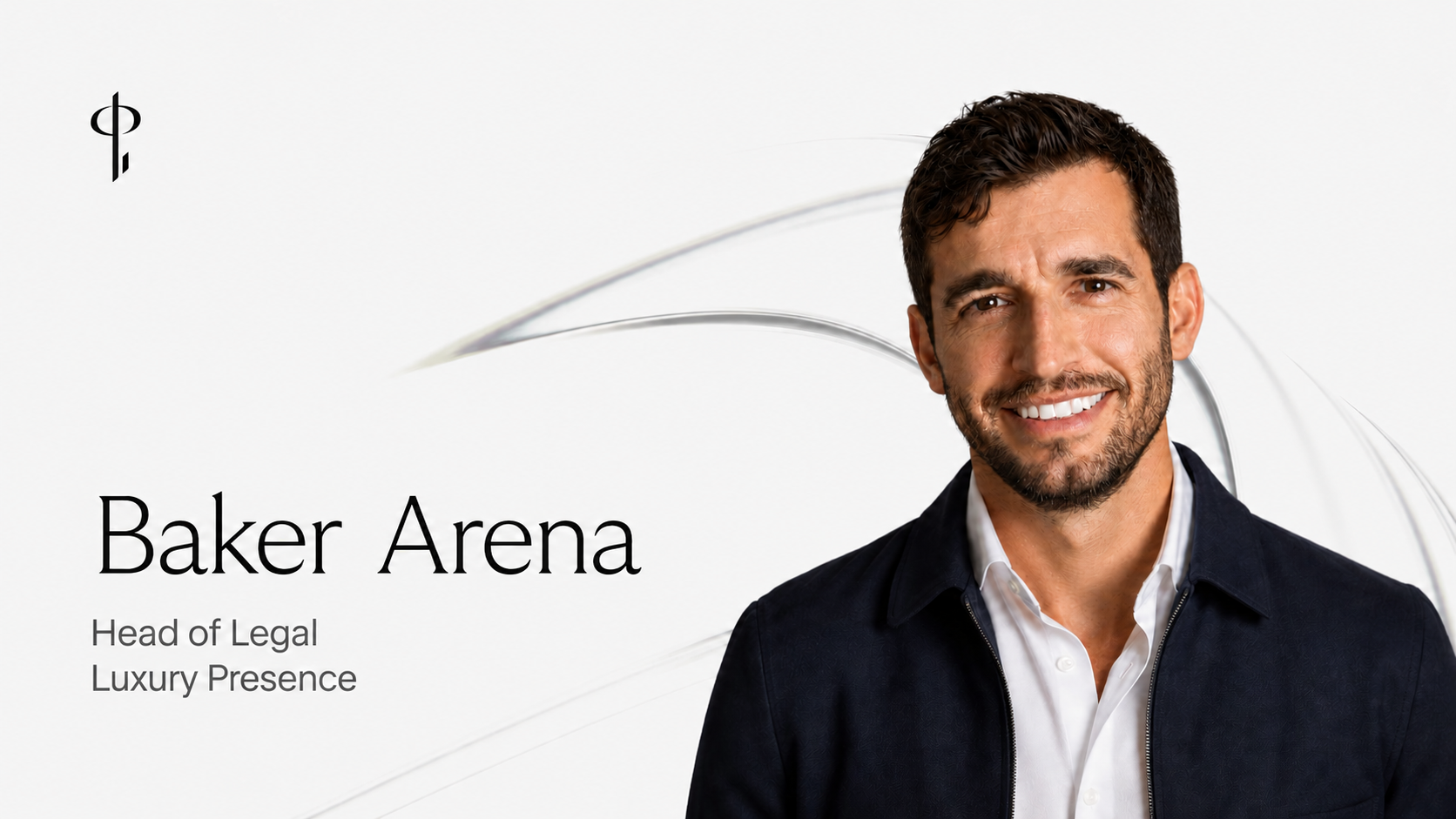
Baker Arena is an attorney and Head of Legal at Luxury Presence, where he oversees legal strategy and supports the company’s continued growth as a leading provider of digital marketing and technology solutions for real estate professionals. With expertise spanning technology transactions and data privacy compliance, advertising and marketing law, and legal risk management, Baker plays a key role in helping the company navigate the evolving technology and real estate landscape. Known for his thoughtful leadership and collaborative approach, he partners closely with teams across the organization to support innovation, operational excellence, and long-term business growth.