

AI lead nurturing is the use of artificial intelligence to respond to, qualify, and follow up with real estate leads automatically, from the first inquiry until the lead is ready for a live conversation. It goes further than the drip campaigns agents have run for years: instead of sending pre-written messages on a fixed schedule, an AI system reads conversation history, website activity, and engagement signals to decide who to contact, when, and what to say. Adoption is moving fast: according to Deloitte's State of AI in the Enterprise research, worker access to AI rose by 50% in 2025 across industries, and real estate follow-up is one of the clearest places it pays off. This guide explains how AI lead nurturing works, what has to be true before it produces results, where its limits sit, and how Luxury Presence builds it into our platform.
Key takeaways
- AI lead nurturing differs from a drip campaign in one fundamental way: a drip sends a fixed sequence on a schedule, while AI decides who to contact and what to say based on each lead's behavior and conversation history.
- Three layers make up the system: an instant first response, conversational qualification, and long-horizon follow-up that continues for months after most agents would have stopped.
- The test for any AI follow-up tool is whether it reduces the number of decisions you make in a day. Useful systems hand you finished work to approve, and noisy ones hand you more sorting.
- The system is only as good as its data: AI nurture needs connected signal sources and real conversation history before it can make smart decisions on your behalf.
- Some conversations should never be automated: pricing, difficult news, and negotiation stay with the agent, with a review step on everything else.
What is AI lead nurturing?
Lead nurturing is the process of maintaining contact with prospects over time until they are ready to buy or sell. In real estate, that work has traditionally been manual: phone calls, reminder notes, and drip emails the agent sets up and maintains. AI lead nurturing hands that work to a system that responds, qualifies, and follows up on its own, at a pace and consistency no single agent can match.
The distinction from older automation matters. A real estate drip campaign is a pre-written sequence sent on a timer, and it treats every lead in the segment the same. An AI nurture system is conversational and adaptive. It reads what the lead did on your website, what they said in the last message, and how engaged they have been, then adjusts the next touch accordingly. A lead who viewed the same listing three times today gets a different message, at a different moment, than one who went quiet in March. That behavioral awareness, applied to every contact at once, is the entire advantage.
How AI lead nurturing works
The systems in this category are built from three layers. Understanding them separately makes any tool, ours included, easier to evaluate.
Layer 1: the instant first response
The moment a lead interacts with your site, whether through a contact form, home search sign-up, or real estate landing page, the clock starts. ChiliPiper's speed-to-lead research shows the probability of qualifying a prospect drops sharply after the first five minutes. An AI nurture system answers within minutes, at any hour, and the reply references what the lead actually did: the neighborhood they searched, the valuation form they filled out, the listing they kept returning to. The response arrives before most agents would have seen the notification, and it closes the window where leads move on to whoever answers first.
Layer 2: conversational qualification
From the first exchange, the system gathers what a skilled inside sales agent would ask on a live call: budget range, preferred locations, property type, timeline, pre-approval status, and whether the lead is already working with someone. The difference is where and when the questions happen, inside the same conversation thread, minutes after the inquiry, with the tone adjusting to the lead's replies. By the time an agent enters the conversation, the basics are answered and logged, so the first live call or lead nurturing email starts from substance rather than from scratch.
Layer 3: follow-up that runs for months
Most leads are not ready on day one. Some are six months from a move, and some are browsing a year ahead, the same long-horizon contacts covered in our real estate database engagement strategies guide. This is where AI nurturing separates hardest from manual work: most agents stop following up after three to five attempts, while an AI system keeps a relevant cadence running for months, concentrated early when engagement is highest and spaced out over time. Each message references the lead's earlier answers and activity, and the system alerts the agent the moment a lead signals real intent: asking about a showing, mentioning a moved-up timeline, returning to a specific listing.
Gian Mancuso, Director of Product (CRM) at Luxury Presence, describes the role this layer plays in an agent's workflow over the next few years:
The handoff
The layer that decides whether any of this converts is the last one: how the system hands a warm lead to the agent. A good handoff delivers the full conversation history, the lead's profile and behavior, and a summary of where the discussion left off, in one notification, with the appointment ideally already booked. From there, your own real estate lead follow-up plan takes over with the context already in hand.
What separates useful AI follow-up from noise
The category is crowded, and a lot of what gets sold as AI follow-up produces activity rather than outcomes. Zac Hays, Chief Product Officer at Luxury Presence, applies one measure when evaluating any AI follow-up application:
An AI agent can generate an enormous volume of actions in a short time, and much of that volume can turn out to be noise someone has to sort. The useful version looks different. In Hays's words: "the system tells you who to call today and has already written what you would have said. You read it, you change a line, you send it." His working test for the whole category: "whether the output is consistently closer to finished than what the person would have produced on their own in the same amount of time."
That test is a practical evaluation tool for any platform you consider, ours included. After a week of use, count what the system handed you: finished drafts you approved in seconds, or raw activity you had to triage. The first is an asset working for you. The second is a new job.
What has to be true before AI nurturing works
The failure stories in this category trace back to two causes, and both are avoidable.
The first is starving the system of data. AI nurture decides what to say based on what it knows, and it can only know what it can see. Hays is direct about the prerequisite: "It's really hard to give AI enough context to make smart decisions on your behalf. You really have to feed in as much data and past interactions as you possibly can." In practice that means connecting your website activity, email, and lead management system before judging the output. He also points to where the richest material already sits: "Most agents are sitting on years of conversation data stuck in inboxes, text messages," and sorting through that unstructured history "is exactly the thing software should be doing." Our guide to maximizing your real estate database covers which contact fields to bring current so the system has that material to work with.
The second is over-automating. A system allowed to send anything, to anyone, without review will eventually send something wrong, at scale. The fix is structural rather than behavioral: clear boundaries between automated and human touchpoints, transparent rules for what triggers outreach, and a review step on messages that carry your name. The next section covers where those boundaries belong.
The honest limits of automated outreach
Automation at this scale cuts both ways, and it is worth being direct about the risk. Hays names it plainly: AI outreach "lets you scale a bad message, and it can put words in your mouth that you would never use. The reputational cost lands on the agent, not on the company that built the tool." That asymmetry, he argues, is exactly "why review and editing belong in the product from the start, and why an obvious off switch matters more than most feature work."
Working agents who run these tools land in the same place. Jose Prats, a Los Angeles-based agent with Christie's International Real Estate whose team rolled out an AI tool for inbound website leads and uses AI across its content work, describes the editing discipline he applies to anything AI writes for his business:
The boundary that emerges from both perspectives is simple to state. Automation covers the responses, reminders, qualification, and long-cadence follow-up that would otherwise slip. Pricing conversations, difficult news, and negotiations stay with the agent, because those conversations are the reason clients hired you. The strongest setups draw that line explicitly and keep a review step on everything automated.
How Luxury Presence builds AI lead nurturing
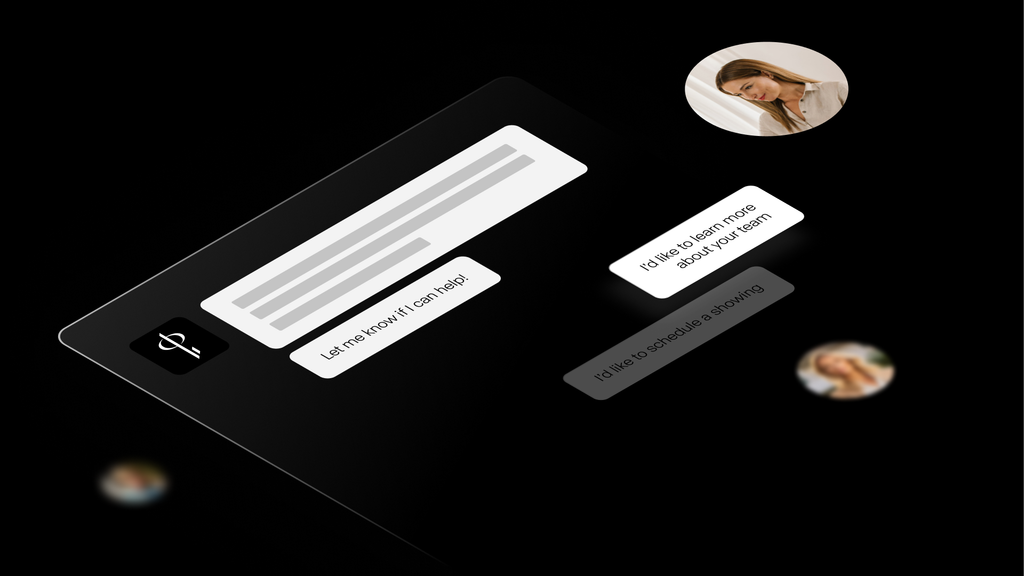
AI Lead Nurture, our automated qualification and follow-up system, implements all three layers. It responds to new website leads within three minutes with a message built from the lead's own activity, runs the qualification conversation, and follows up as many as 25 times over up to 12 months, with milestone alerts when a lead warms up. Handoffs arrive with the full conversation summary and a link to the lead's record, and the system can book the appointment directly with the prospect. Nothing publishes or sends without agent approval, which keeps the automated volume inside your brand voice and your boundaries.
Here is how that compares with running follow-up by hand:
| Process step | Manual lead management | AI Lead Nurture |
| First response time | 30 minutes to several hours, depending on agent availability | Within 3 minutes of lead activity |
| Lead qualification | Agent-led phone call or email exchange over days | Automated qualifying questions in the same conversation thread |
| Follow-up attempts | 3 to 5 attempts before most agents stop | Up to 25 touchpoints over 12 months |
| Long-term nurturing | Relies on agent memory, CRM reminders, or scheduled drips | Conversation-aware messages that reference prior activity |
| Appointment scheduling | Agent coordinates via phone, email, or text | System books directly with the prospect and confirms with the agent |
| Handoff to agent | Agent reviews scattered notes across tools | Full conversation summary and lead profile in one notification |
The clearest proof comes from Frontgate Real Estate's experience with Luxury Presence. Over a three-month campaign, the system sent 726 automated messages to 96 high-quality prospects, generating a 14% response rate, and one of those nurtured leads became a $6 million sale. Frontgate co-founder Jeff Biebuyck credits the response layer specifically:
For agents running paid advertising through our Paid Ads Management campaigns, AI Lead Nurture sits directly downstream, so no prospect waits untouched while an agent finishes a showing. It also pairs with our SEO & GEO services for ongoing visibility and our AI CRM, which receives every qualified lead with full context so the relationship picks up exactly where the last touchpoint left off. Agents using the system report saving 10 or more hours per week on follow-up tasks, according to Luxury Presence platform data.
Choosing an AI nurturing tool
If you are evaluating options beyond our platform, the market splits into CRMs with AI nurture built in and dedicated conversation tools that layer onto the system you already run. Judge any of them on the same fundamentals this article laid out: response speed, behavior-triggered messaging, data connections deep enough to give the AI real context, a review step before sends, and a clean handoff. Our guide to the best real estate lead nurturing software compares the leading platforms on exactly those criteria.
Sources
- Deloitte, "The State of AI in the Enterprise," 2026: https://www.deloitte.com/us/en/what-we-do/capabilities/applied-artificial-intelligence/content/state-of-ai-in-the-enterprise.html
- ChiliPiper, "Speed to Lead," 2024: https://www.chilipiper.com/article/speed-to-lead
- Luxury Presence Case Study: Frontgate Real Estate, 2025: https://www.luxurypresence.com/case/how-frontgate-real-estate-secured-6m-sale-lead-gen-ads-ai-lead-nurture-stellar-service/
FAQs
Ready to grow?
Turn your content into your best lead source
See how Luxury Presence helps agents turn website visits into closed deals