Closing a deal marks the end of a transaction, but it should never mark the end of your relationship with a client. A client satisfaction survey is one of the simplest, most effective post-close tools a real estate agent or REALTOR® can use in 2026 to collect honest feedback, strengthen relationships, and turn past clients into a steady source of referrals. In this guide, we will walk through why surveys matter, when to send them, which platforms to use, what questions to ask, and how to put the feedback to work for your business.
Find It Fast
Key takeaways
- Send your post-close survey seven to 14 days after closing, when the experience is still fresh but your client has had time to reflect.
- Keep surveys short (nine questions or fewer) and mix rating scales with open-ended questions to capture both measurable data and real stories.
- Use a platform that fits your workflow: Google Forms for simplicity, SurveyMonkey or Typeform for branding and analytics, or your CRM for automated delivery.
- Always follow up personally on negative or neutral feedback. A thoughtful response can turn a disappointed client into a referral source.
- With permission, repurpose positive survey responses as testimonials on your website, social channels, and listing presentations.
- Track satisfaction scores over time to spot patterns, measure the impact of service changes, and hold your team accountable.
How client satisfaction surveys benefit real estate professionals in 2026
A post-close survey gives you a direct line to your clients’ honest opinions about your service. According to NAR’s 2026 Profile of Home Buyers and Sellers, 73% of buyers said they would use their agent again or recommend them to others, yet repeat and referral business remains one of the most underleveraged growth channels in real estate (NAR, 2026). A short, well-timed survey is one of the most reliable ways to close that gap between client intent and actual follow-through.
Gain specific, usable insights
Surveys reveal what you are doing well and where your service falls short. Rather than guessing whether your communication cadence worked or your negotiation approach landed, you get direct answers. For example, if three out of your last ten clients mention that they wished for more frequent updates during escrow, that is a clear signal to adjust your process, not a vague feeling.
Build stronger relationships and earn more referrals
Asking for feedback sends a clear message: your client’s experience matters to you beyond the commission check. That gesture of care keeps the relationship alive after closing and makes it far more likely that a past client will think of you the next time a friend or family member needs an agent.
A survey is one of the simplest ways to demonstrate that investment. It takes your client two minutes to complete and gives you a natural reason to stay in touch, ask for a review, or request a referral down the road.
Strengthen your reputation with real social proof
Positive survey responses, collected with permission, become some of the most credible marketing material you can have. According to BrightLocal’s 2026 Local Consumer Review Survey, 87% of consumers read online reviews for local businesses, and personal testimonials from real clients carry more weight than any ad copy you could write (BrightLocal, 2026). Use standout comments as testimonials on your website, in your listing presentations, and across your social media channels.
Boost team performance with consistent benchmarks
If you lead a team or brokerage, a recurring survey process gives you measurable data to work with. You can track satisfaction scores by agent, identify coaching opportunities, and spot service gaps before they become patterns. Across the brokerages and teams Luxury Presence works with, including 30% of the WSJ RealTrends Top 100, consistent feedback collection is one of the practices that separates high-performing operations from the rest.
When and how to send out surveys in 2026
Timing and delivery method have a direct effect on how many responses you get and how honest those responses are. A thoughtful approach here makes the difference between a 10% response rate and a 40% one.
Timing matters more than you think
In 2026, most agents find the seven-to-14-day post-close window to be the most reliable for capturing honest, detailed responses. At that point, the experience is still fresh, but your client has had enough distance to reflect rather than react. According to Qualtrics, surveys sent within two weeks of a service experience consistently produce higher completion rates and more detailed open-ended answers than those sent later (Qualtrics, 2026).
If your typical transaction runs longer than average, consider adding a brief mid-process check-in survey as well. A three-question pulse check at the midpoint of escrow shows responsiveness and gives you a chance to course-correct before closing.
How to deliver the survey
- In-person mention: Bring up the survey during your final walkthrough or closing meeting. Let your client know it is coming and that their honest feedback matters to you. Then follow up digitally.
- Email: Send a warm, brief message with a direct link to the survey. Keep the email to three or four sentences and make the subject line clear: “Quick question about your experience with [Your Name].”
- Text message: Many agents find that clients who prefer mobile communication respond more readily to a text message than an email link. A short SMS with the survey URL and a personal note can be the fastest path to a completed response.
- CRM automation: Set up a CRM workflow that automatically sends the survey link seven days after the closing date is logged. This removes the task from your to-do list and makes sure no client falls through the cracks.
Whichever method you choose, make it clear that the survey is short (under three minutes) and that you genuinely want to hear what went well and what could be better.
What to do with survey results
Collecting responses is only half the equation. The real value of a post-close survey comes from what you do with the feedback after it arrives.
Look for patterns, not just individual comments
One client mentioning slow communication is a data point. Five clients mentioning it is a pattern. Review your responses in batches, ideally monthly or quarterly, and look for recurring themes. Common categories to watch include communication frequency, responsiveness during escrow, clarity of paperwork, and negotiation satisfaction.
Follow up personally on every piece of critical feedback
If a client shares a concern or a negative experience, do not let it sit in a spreadsheet. Reach out personally to thank them for their honesty and, if appropriate, explain what you plan to change. This kind of accountability can turn a lukewarm review into a referral-worthy impression. Clients remember how you handled the hard conversations just as much as they remember the smooth ones.
Turn positive feedback into visible social proof
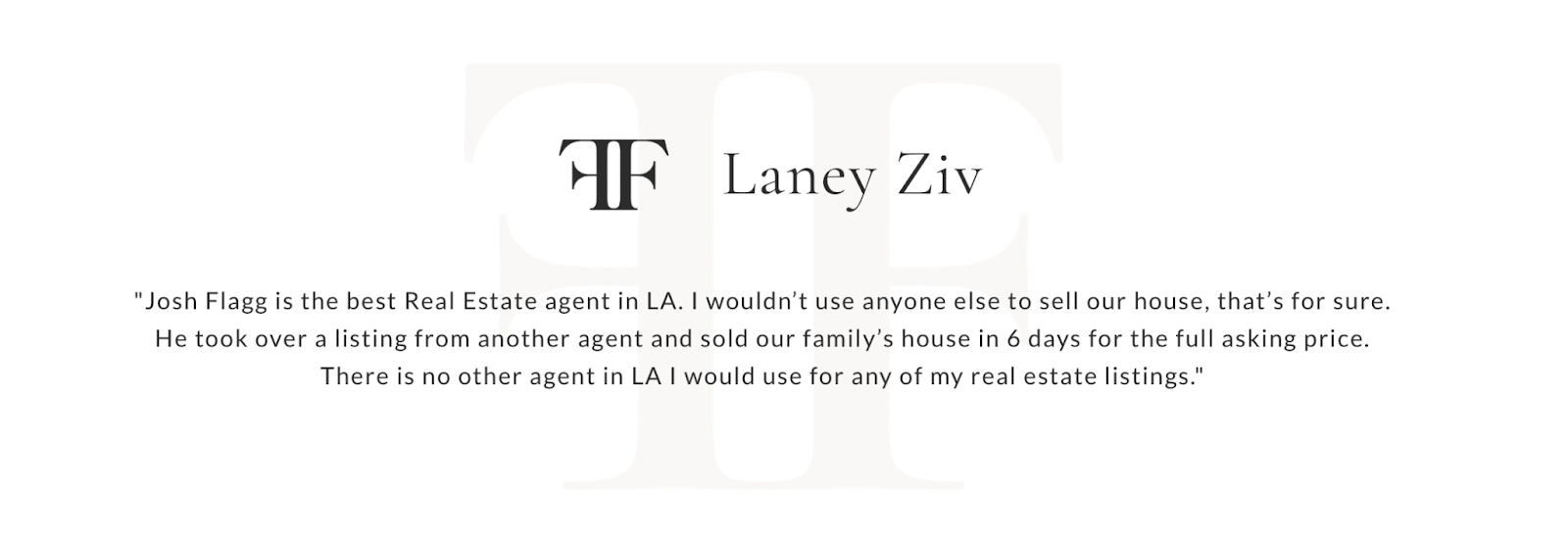
With your client’s permission, repurpose their survey responses as testimonials. Add them to your website, your email marketing, and your listing presentations. Top-producing agent Josh Flagg, for example, displays client testimonials prominently on his Luxury Presence website, turning post-close feedback into a visible trust signal for prospective clients.
Long-term trust does not happen by accident. It is built through consistent follow-up, and a post-close survey is one of the most natural ways to start that cycle.
Track satisfaction scores over time
Create a simple spreadsheet or use your survey platform’s built-in analytics to track your average satisfaction rating, your Net Promoter Score (NPS), and your testimonial conversion rate month over month. NPS, which measures how likely a client is to recommend you on a scale of 0 to 10, is one of the most widely used satisfaction benchmarks across industries and translates well to real estate. If you lead a team, incorporate these metrics into your monthly or quarterly performance reviews to keep everyone aligned on the client experience.
Sample real estate client satisfaction survey template
Click to make a copy of our sample real estate client satisfaction survey template, created in Google Forms. It is designed for quick, high-response outreach with room for deeper insights, and it is ready to customize for your brand. The nine questions are listed below.
Survey questions
- What type of transaction did you complete with us?
☐ Buying a home
☐ Selling a home
☐ Both
☐ Leasing/Rental
☐ Other (please specify) - On a scale of 1 to 5, how satisfied were you with the overall experience?
(1 = Very Dissatisfied, 5 = Very Satisfied) - How well did we understand and meet your needs throughout the process?
☐ Very well
☐ Adequately
☐ Poorly - Was communication timely and clear throughout your transaction?
☐ Always
☐ Most of the time
☐ Occasionally
☐ Rarely - What was the most helpful part of your experience working with us?
[Open text field] - Is there anything we could have done to make your experience better?
[Open text field] - How likely are you to recommend us to a friend or colleague?
☐ Definitely
☐ Maybe
☐ Unlikely - Would you be open to us sharing your comments as a testimonial?
☐ Yes
☐ No - Optional: Would you like a follow-up from our team regarding your feedback?
☐ Yes, please
☐ No, thank you
A few design tips to keep in mind: place the rating and multiple-choice questions first so respondents build momentum before hitting the open-ended fields. Keep the survey to a single page if your platform allows it. And always include question 8, the testimonial permission question, because it removes the awkwardness of asking for a testimonial separately later.
Making Survey Feedback Work After Closing
A well-timed client satisfaction survey helps you do more than collect opinions. It gives you a simple way to improve your process, strengthen relationships, and stay top of mind long after the transaction is complete. Keep it short, follow up thoughtfully, and use the feedback to make each client experience better than the last.
FAQs
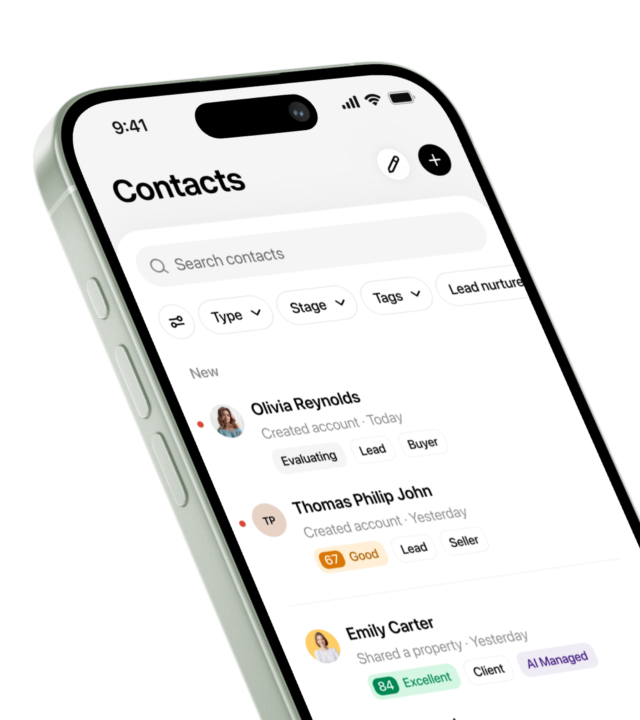
Introducing Presence® CRM
Activate your network’s full potential.
About the author

Marketing Manager
Kate Evans is a content marketing strategist at Luxury Presence, the leading growth platform for high-performing real estate professionals. She develops data-driven editorial content and supports SEO strategy and brand voice frameworks that help agents attract qualified leads and establish market authority. Her published work covers topics including CRM strategy, social media marketing, and digital growth, supporting thousands of agents in scaling their businesses through modern marketing.