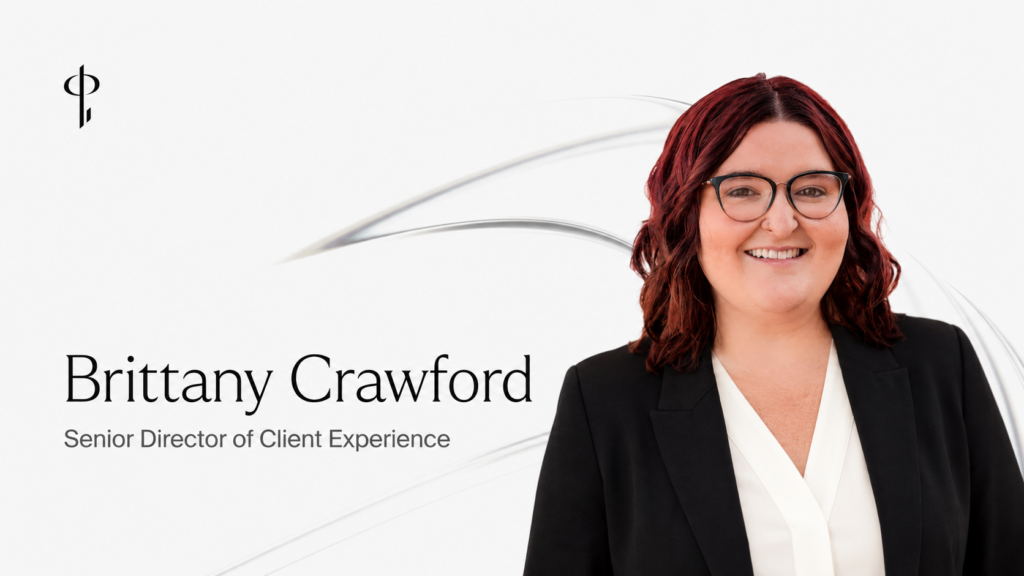
Every service organization has a story it tells itself about what's working and what isn't. The only way to know if that story is true is to go talk to clients. When I joined Luxury Presence, that was my first move.
I got on calls, took escalations, read through every channel where clients were sharing their experience. I wanted to understand the real picture before I built anything. What I found surprised me, and it had nothing to do with the people on our team.
What the clients were actually telling us
I came to LP with 15 years of contact center experience. I know how to run a support operation. But none of that mattered if I didn't first understand who our clients are and what they were going through.
When you grow as quickly as Luxury Presence did, systems that worked at one stage don't always keep up. I kept hearing from clients that they wanted faster answers. They loved the product, they liked the people they talked to, but the turnaround time on getting a resolution wasn't matching the quality of everything else we offered.
That gap told me something important. We had strong people and a strong product, but the infrastructure connecting clients to solutions hadn't scaled at the same pace. That's a solvable problem, and it's one that almost every fast-growing company runs into.
If you lead a team or run a brokerage, the principle is the same. Before you overhaul anything, go talk to the people you serve. Read the verbatims. Show up at the events where your agents will tell you the truth. You have to understand the actual problem before you start building solutions, because what you think needs fixing and what actually needs fixing are rarely the same thing.
Simplify the system and the speed follows
Once I understood what clients needed, I turned my attention to how our reps were actually doing their work day to day. I shadowed them, watched how they moved through cases, and mapped out the full tooling ecosystem.
What I found is common at fast-growing companies: as you scale, you add platforms. Each one solves a real problem at the time, but eventually your team is toggling between more systems than anyone can reasonably stay sharp on while also delivering great service.
We made a deliberate decision to consolidate. We reduced the number of tools and platforms, streamlined how cases were routed, and cut down the internal handoffs required to get a client to a resolution.
The goal was simply to make it easier for a rep to do the thing they were hired to do.
If you lead a team or run a brokerage, try this exercise today. Sit down and list every tool and platform your people need access to. If the number is more than ten, there's an opportunity to simplify. That one change will have an immediate impact on how fast and how well your team can serve the people who depend on them.
We built a service standard worth rallying around
Simplifying the tools was half of it. The other half was getting aligned on what great service actually looks like. We ran every client-facing person through customer service training built on the Ritz Carlton standard, and I'm talking about genuine concierge-level service.
We studied companies known for incredible customer experiences. We paid attention to how they solve problems on the spot, and we noticed they all follow a similar rhythm: listen, empathize, restate the problem, provide a solution, talk through next steps. We built our own training around that model, then reinforced it with role play and real scenarios.
A big part of the training was about human emotion. When a client calls in frustrated, that frustration is almost never directed at the person answering the phone. It's about something not working, something they can't figure out, something that's affecting their business.
We taught our team to recognize when someone is in a heightened emotional state, give them space to process, and then move toward a solution. That shift in approach changed everything about how conversations went.
We also did something that sounds simple but was surprisingly powerful. We wrote a mission statement together, as a team. We created a set of guiding principles specific to our group and made sure everyone, including new hires, understood them from day one.
Those values show up in our coaching conversations, our performance reviews, and the way we onboard people. Having that shared identity gave everyone a clear sense of purpose and direction.
What changed when we invested in the team
The results came faster than I expected. Within nine months, we'd cut turnaround time by nearly 80%. Client satisfaction climbed to 96%. Those numbers mattered, but the result I'm most proud of was what happened internally.
Our employee Net Promoter Score jumped over 100 points in two quarters. There's an old saying that happy employees create happy clients, and we watched that play out in real time. When we made the job easier and gave people the tools and training to succeed, they showed up differently. Clients felt that.
We also launched 24/7 support during this period, something almost unheard of in our industry. And we did it by reallocating our existing team to cover more of the day, which I think speaks to how bought in everyone was.
The client reaction was immediate. We started seeing verbatims from people who were genuinely surprised to get help on a weekend or at 10 p.m.
A conviction that keeps proving itself
I hold a belief that some people disagree with: the client isn't always right. But their perception of the problem is always valid. That distinction matters more than people think. When you accept that the client's perception is real and worth addressing, it changes how you approach the conversation. It takes away the "us versus them" friction that can build up in service teams. And it respects the dignity of everyone involved, the person asking for help and the person providing it.
The other thing I believe deeply is that customer service is the backbone of any business. I don't care what industry you're in, whether it's SaaS, real estate, or anything else. You can have a superior product, but if you can't have a kind, solution-oriented conversation with the people you serve, you will not survive long term. I've worked for companies where the product was terrible but the service was phenomenal, and clients stayed. That should tell you everything.
The approach we built for our support team at Luxury Presence is the same one I've since applied to our retention, client success, and client marketing teams, with similar results each time. It comes down to three things: understand the client, understand the job of the person serving that client, and make that job easier. When you get those three right, everything else follows.
Ready to grow?
Turn your content into your best lead source
See how Luxury Presence helps agents turn website visits into closed deals