
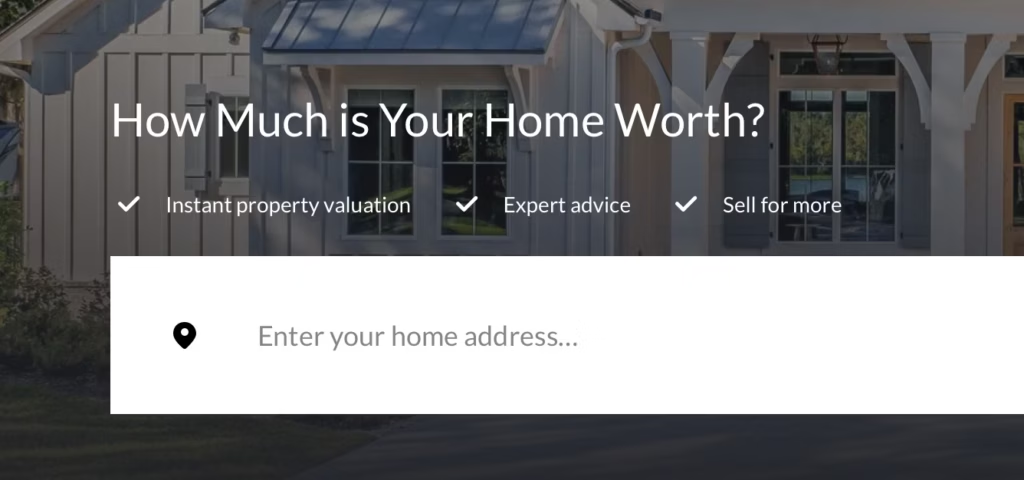
Home valuation tools are one of the most reliable ways to generate house value leads at the top of the seller funnel in 2026. Agents who deploy them correctly capture homeowner intent before a listing conversation ever begins. Whether you are a solo agent looking for differentiation or a large team focused on scale, a well-placed home valuation offer could be the highest-ROI lead magnet in your marketing stack. This guide breaks down why home valuation tools work, how to set them up for real conversion, and the follow-up systems that turn a form fill into a signed listing agreement.
Key takeaways
- Luxury Presence home valuation tools generated 28,290 high-intent seller leads across the platform in calendar year 2024, and that number continues to climb in 2026 as more agents adopt dedicated valuation landing pages.
- Nearly 40 percent of agents cited lead generation as their top challenge heading into 2025, according to Luxury Presence’s 2024 State of Real Estate Marketing Report. That pressure has only intensified in 2026.
- One Bay Area seller campaign built around a home valuation offer produced 144 leads at $24.50 per lead and converted two of those leads into signed listings within 98 days (Source: Luxury Presence Case Study: Seller Leads at $24.50 CPL in San Francisco).
- Automated Valuation Models (AVMs) capture intent instantly, while Comparative Market Analysis (CMA) follow-ups convert that intent into listing appointments.
- Dedicated landing pages, prominent navigation placement, and paid ad campaigns are the three highest-return deployment tactics for home valuation lead magnets in 2026.
Why now: Capturing seller attention in 2026
The market pressure agents face
Agents are operating in a market shaped by rate volatility, commission structure changes, and shifting buyer-seller dynamics. Each of these pressures makes a sharper marketing funnel a business necessity, not a nice-to-have. According to Luxury Presence’s 2024 State of Real Estate Marketing Report, 23.8 percent of surveyed agents predicted a seller’s market in 2025. As that prediction plays out across 2025 and into 2026, agents who positioned themselves early on the seller side are seeing the payoff.
Yet most marketing strategies still heavily favor buyer acquisition. That is a missed opportunity. Property owners looking to sell are just as hungry for information, and they are searching for it online. The home valuation tool sits at the exact intersection of that search intent and your ability to capture it.
Why your website matters more than a portal
Homeowners who search “What’s my home worth?” have dozens of places to land. Major real estate portals all offer instant estimates. The difference is who captures the lead. When a homeowner uses a portal, the portal owns that contact. When a homeowner uses your website, you own it.
That exclusivity is the entire point. A home valuation tool on your own site means every lead goes directly into your pipeline, not into a shared marketplace where you compete with five other agents for the same seller’s attention.
The psychology behind “What’s my home worth?”
Curiosity as a behavioral trigger
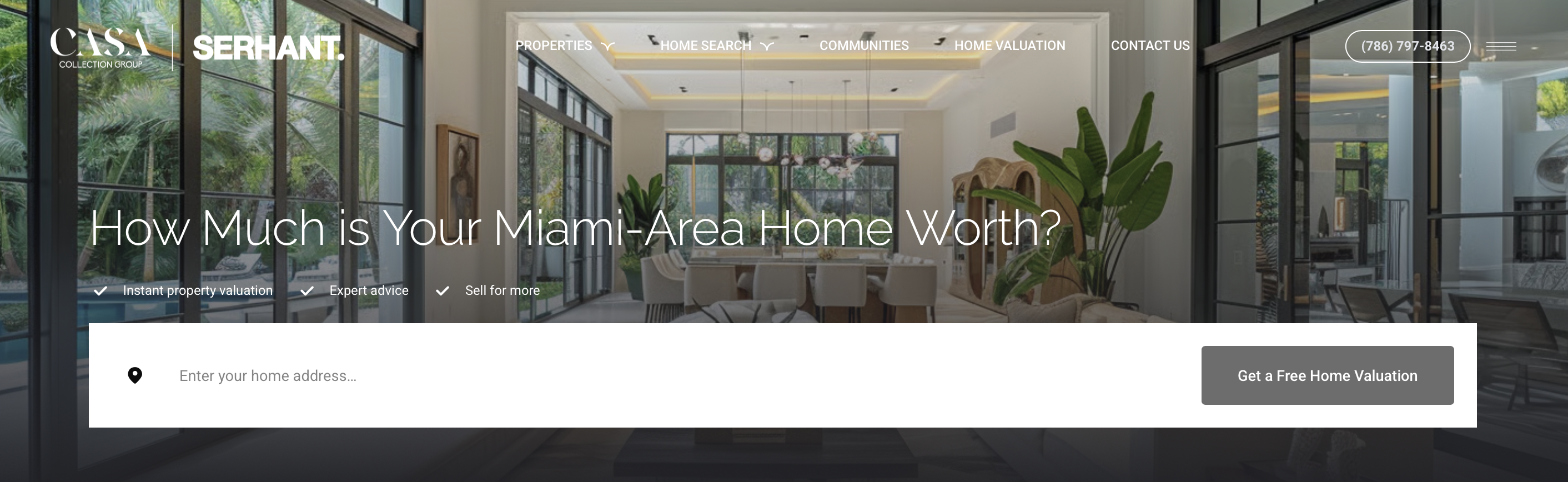
Homeowners’ curiosity about their property’s value is one of the most consistent behavioral triggers in real estate. Whether they are planning a sale, monitoring equity, or considering a refinance, this interest represents a moment of intent that agents can capture. In 2026, with home equity levels still near historic highs across many U.S. markets, the “What’s my home worth?” query remains a dominant search pattern.
Why generic widgets fall short
Capturing that attention requires more than a generic website widget buried in a footer. The home valuation feature must be both visible and valuable. When deployed well, it provides a combination of utility, branding, and lead capture that is rare in digital real estate marketing. A homeowner gets an answer to their question. You get their name, email, phone number, and property address. That exchange is the foundation of every seller relationship that follows.
The numbers behind the tool
According to a Luxury Presence analysis of seller leads captured across its platform in calendar year 2024, the home valuation tool generated 28,290 high-intent leads. These are not casual browsers. They are homeowners who entered their address and contact information because they wanted to know what their property is worth. That level of intent places them further along in the decision-making cycle than most other lead sources.
From gimmick to lead engine: Making home valuations work
The difference between a feature that sits idle and one that fills your pipeline is execution. Here is a four-step framework for turning your home valuation tool into a real estate lead magnet that generates seller leads consistently.
Step 1: Prominent placement
Do not bury the link. If seller leads are your priority, place the home valuation tool in your primary navigation bar. Visibility drives conversion. A link labeled “What’s My Home Worth?” or “Free Home Valuation” in your top nav gets clicked far more often than the same link tucked into a sidebar or footer.
Step 2: Dedicated landing page
Build a home valuation landing page for realtors that serves as the destination for ad campaigns and organic search traffic. A dedicated landing page improves SEO targeting for queries like “how much is my house worth in [city]” and provides a clean user experience with a single call to action: fill out the form.
Step 3: Smart copy and segmentation
Use direct language on the page. “Find out how much your home is worth, instantly” outperforms vague headlines every time. Once leads come in, segment them based on geography, property type, or price range. A condo owner in a downtown zip code needs a different follow-up sequence than a single-family homeowner in the suburbs.
Step 4: AVM plus agent insight
Offer an automated valuation model for speed, then follow up with a personalized CMA. This two-step approach satisfies the homeowner’s immediate curiosity and reinforces your local market knowledge. The AVM gets them in the door. The CMA gets you the listing appointment.
What the numbers look like in practice
To put that framework in concrete terms: one Bay Area seller campaign built around a home valuation offer produced 144 seller leads at $24.50 per lead and converted two of those leads into signed listings, all within 98 days and a total ad spend of $3,536. That is a cost per listing of $1,768, which compares favorably to portal lead costs that often run three to five times higher with lower exclusivity.
Inbound valuation leads are self-selecting. They arrive on your site because they searched for you or clicked your ad. That intent gap between an inbound valuation lead and a purchased portal lead is where conversion rates diverge.
How the valuation works: AVM vs. CMA in 2026
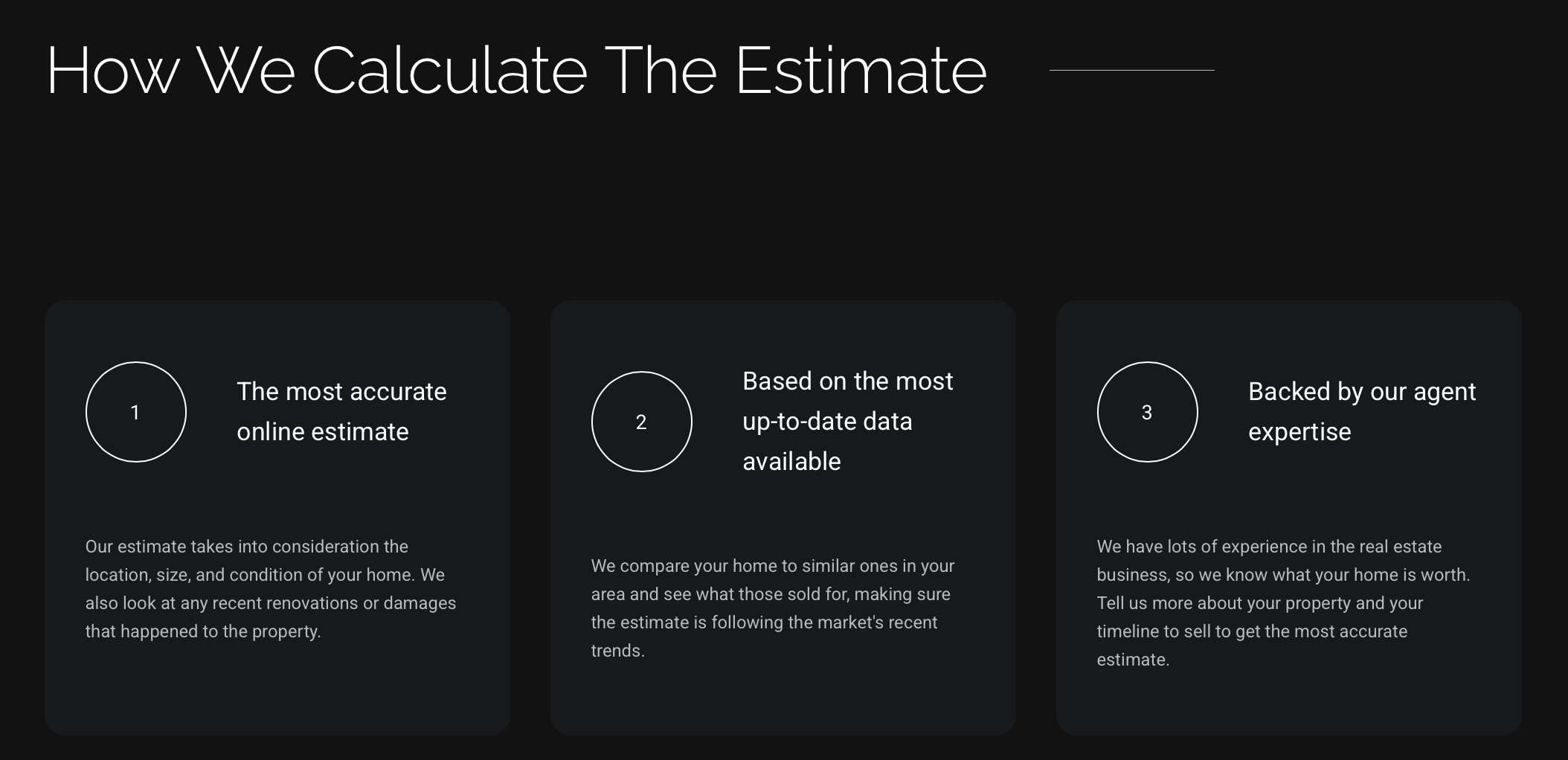
Luxury Presence websites offer two valuation pathways: one automated for instant engagement and one personalized for high-touch follow-up. Understanding when to use each, and how they differ, is the key to capturing seller leads from a home value estimator and converting them into listing appointments.
| Factor | Automated Valuation Model (AVM) | Comparative Market Analysis (CMA) |
| Speed | Instant | 24 to 48 hours |
| Accuracy | Nationwide dataset estimate | High, agent-verified |
| Personalization | Low | High |
| Data source | Automated nationwide data sets and market trends | Agent-selected comparable properties and hyperlocal market knowledge |
| Best use case | Top-of-funnel lead capture and paid ad campaigns | Listing presentations, follow-up conversations, and high-value sellers |
Automated Valuation Model (AVM) pathway
By default, the Instant Home Valuation tool on Luxury Presence sites uses an automated valuation model to deliver immediate, data-backed estimates for most U.S. residential properties. The AVM supports single-family homes, condos, townhomes, co-ops, and multi-family units. When a user inputs their address and contact details, the AVM delivers an instant estimate using nationwide data sets and market trends. This makes it a powerful tool for engaging homeowners at the moment their interest is highest, which is exactly why it works so well as the offer behind paid ad campaigns.
The exchange is straightforward: the homeowner gets a quick answer, and you get their contact information. That is the entry point for every follow-up conversation that follows.
Comparative Market Analysis (CMA) pathway
For agents seeking a more personalized approach, the comparative market analysis (CMA) presentation tool within the Presence platform, Luxury Presence’s integrated agent marketing suite, allows you to:
- Select and customize comparable property data
- Layer in hyperlocal market knowledge and your own analysis
- Create a branded, visually compelling presentation for each seller
CMA reports are the follow-up tool that turns a warm lead into a listing appointment. They work best for follow-up conversations, listing presentations, and sellers with higher-value properties who expect a detailed, data-backed analysis before choosing an agent.
Configuring the form for manual delivery
Agents can also configure the home valuation form to disable the instant estimate. This captures lead information without showing an AVM result, allowing you to deliver all valuations manually via CMA. This approach gives you full control over the narrative, the timing, and the presentation of the data. It works particularly well in markets where AVM accuracy is lower due to limited comparable sales or unusual property types.
After the form fill: Follow-up systems that convert house value leads
Automated nurture sequences
Once the valuation lead is captured, the next step is speed and consistency. Agents can plug that contact into automated email flows, custom SMS and email follow-ups, or personal video messages. The goal is to move from “here is your estimate” to “let me show you what your home could actually sell for” within the first 48 hours.
In 2026, automation and personalization are not optional. They are the baseline. Home valuation tools provide structured, first-party data (data collected directly from your own website, forms, and contacts) that makes timely, relevant follow-up possible at scale.
CRM integration and retargeting
Agents who implement these tools effectively integrate them into CRM workflows, custom email sequences, and retargeting ad campaigns. Luxury Presence’s CRM, built specifically for real estate workflows, allows agents to track each valuation lead from first contact through closing while maintaining a personal touch through agent-approved, automated touchpoints. The lead who filled out your valuation form three months ago and has been quietly receiving your market updates is often the lead who calls you when they are ready to list.
The follow-up sequence that works
- Deliver the AVM estimate instantly or the CMA within 24 to 48 hours.
- Send a personal email or video message within 24 hours introducing yourself and offering a deeper analysis.
- Add the lead to a seller-focused drip campaign with local market updates, recent sales data, and neighborhood insights.
- Retarget the lead with display or social ads featuring your brand and a “Get your updated home value” message.
- Follow up by phone at the 7-day and 30-day marks. The phone call is still where listings are won.
Your next listing starts here
Here is what the data tells us about home valuation lead generation for real estate agents in 2026:
- Home valuation tools generated 28,290 high-intent seller leads across the Luxury Presence platform in 2024, and adoption has accelerated through 2025 and into 2026.
- One Bay Area campaign using a valuation offer produced 144 leads at $24.50 CPL and 2 signed listings in 98 days.
- AVM tools capture intent instantly. CMA follow-ups convert that intent into listing appointments.
- Dedicated landing pages, prominent navigation placement, and paid ad campaigns are the three highest-return deployment tactics.
If your current home valuation implementation is half-buried in your footer, or if you have not added one to your site at all, the opportunity cost grows every day. Every homeowner who searches “What’s my home worth?” and lands on a portal instead of your website is a lead you will never see.
Luxury Presence can elevate your marketing strategy
Learn how we can help take your real estate business to the next level. Schedule a time to speak with one of our branding experts today.

FAQs
Ready to grow?
Turn your content into your best lead source
See how Luxury Presence helps agents turn website visits into closed deals