How to get real estate listings in 2026 comes down to eight repeatable tactics: working your sphere of influence, building a professional referral network, running targeted paid ads, calling FSBO and expired listing owners, turning every current listing into your next one, posting with authority on social media, deploying marketing campaigns across channels, and farming a specific geographic area. The agents who win listings consistently are not waiting for the phone to ring. They are running a system. This article gives you the playbook.
Key takeaways
- Your existing network is your lowest-cost, highest-conversion source of listing leads in 2026.
- FSBO, expired, and canceled listings are the highest-intent cold call targets for new listings.
- Paid search and social ads paired with automated lead follow-up can produce listings even in low-inventory markets.
- Every current listing you hold is a marketing asset that should generate your next one.
- Real estate farming requires consistent, value-driven outreach to a defined geographic area over months, not days.
- Social media authority and steady content position you as the local agent sellers call first.
How to get real estate listings: 8 tips for 2026
Listings control your business. They generate inbound calls, build your brand in a neighborhood, and create the kind of visibility that attracts more sellers. Buyer-side transactions pay the bills. Listings build careers. The eight strategies below are not theories. They are the same tactics top-producing agents use every week to keep their pipeline full.
Find It Fast
1. Tap into your existing network
The people you already know are the fastest path to your next listing. Your sphere of influence, meaning every friend, family member, past client, and casual acquaintance who knows you sell real estate, is your most cost-effective source of real estate lead generation. According to the National Association of Realtors, roughly 40% of sellers in 2026 find their agent through a referral from a friend, neighbor, or relative, and another significant share use the same agent they worked with before (NAR, 2025). That means your database is not just a list. It is a listing machine, if you work it.
The goal is simple: make sure every person in your sphere thinks of you first when real estate comes up. Here is how to do that:
- Call or text your top 50 contacts once a month and ask directly if they know anyone thinking about selling.
- Send a monthly email newsletter with local market data and recent sales.
- Congratulate past clients on home anniversaries and life milestones.
- Track every contact in a customer relationship management (CRM) tool so you remember personal details before each call.
If you are using Presence CRM, you can set up automated reminders for these touchpoints while keeping every message personal. Nothing sends without your approval, so the outreach still sounds like you.

2. Build a professional referral network
Your sphere of influence covers people who know you personally. A professional referral network covers people who send you business because you have earned their trust through repeated value. These are two different systems, and you need both to get real estate listings consistently.
Build relationships with real estate developers, attorneys, lenders, financial planners, and interior designers. These professionals talk to homeowners every day. When a client mentions they are thinking about selling, you want your name to be the one that comes up. The way to earn that spot is to refer business to them first, follow up regularly, and make it easy for them to hand off a warm introduction.
Build a network of professionals who trust you enough to put their own reputation on the line by recommending you. Start by identifying 10 local professionals outside of real estate who serve the same homeowner demographic you want to reach. Set up a coffee meeting with each one this month. Ask how you can send them business. Then follow through.
Also build alliances with fellow agents. An agent who focuses on buyers may happily refer listing leads your way if you reciprocate. Use LinkedIn, local board events, and direct outreach to start those conversations.
3. Use targeted lead generation platforms
Waiting for sellers to find you organically is a slow path. In 2026, the agents winning the most listings are running paid campaigns that put their name in front of homeowners who are already researching home values, local market conditions, or “sell my house” queries. Targeted lead generation platforms let you place ads on Google and social media, capture seller contact information on a landing page, and follow up before the competition even knows the lead exists.
When evaluating a platform, look for three things: precise audience targeting by geography and intent, landing pages that convert clicks into contact information, and a follow-up system that responds to inquiries within minutes, not hours.
Luxury Presence, a real estate technology and marketing platform, offers this through its Paid Advertising service and Lead Nurture Marketing. Real estate agent Taylor Lucyk ran a targeted Google Ads campaign through Luxury Presence over a three-month period in late 2024 and early 2025. The results: 180 leads, 40 appointment requests, a 22% warm handoff rate, and a $1.5 million listing, all from roughly $4,000 in ad spend. That translated to $45,000 in gross commission income and a 12.62X return on ad spend (Source: Luxury Presence Case Study: Taylor Lucyk, 2025).
| Metric | Result |
| Total leads generated | 180 |
| Appointment requests | 40 |
| Warm handoff rate | 22% |
| Listing secured | $1.5M |
| Approximate ad spend | $4,000 |
| Gross commission income | $45,000 |
| Return on ad spend | 12.62X |
The takeaway is not that one platform is the only option. The takeaway is that a disciplined paid ad strategy with fast follow-up can produce listings even in a tight-inventory market. If you are not running seller-intent ads in 2026, you are leaving listings on the table.
4. Cold call the right people
Cold calling is not dead. It is just done poorly by most agents. The agents who generate listings from outbound calls are not dialing random numbers. They are targeting three specific groups: for sale by owner (FSBO) sellers, expired listings, and canceled listings. Each of these homeowners has already signaled intent to sell. Your job is to show them why working with you gets the result they could not get on their own.
The goal of most cold calls is not to close on the phone. It is to earn a face-to-face meeting. Invite the homeowner to coffee, offer a free comparative market analysis, or ask if you can stop by for 10 minutes to share what similar homes in the neighborhood have sold for recently.
Here is a simple script framework for an expired listing call:
“Hi [Name], this is [Your Name] with [Brokerage]. I noticed your home at [Address] came off the market recently. I work with sellers in [Neighborhood] and wanted to ask: are you still interested in selling, or have your plans changed? If you are still open to it, I would love to share a few things I am seeing in the market right now that might help. Could we grab coffee this week?”
Keep it short. Keep it conversational. And do not skip the follow-up. Most agents quit after one attempt. The listing often goes to the agent who calls back a second or third time. Check out our full list of cold calling scripts for FSBO, expired, and circle prospecting scenarios.
5. Turn every current listing into your next one
Your current real estate listings are your most visible proof of competence. Every listing you hold should be generating your next one. If you are treating a listing as a single transaction instead of a marketing campaign, you are leaving money on the table.
Here is the playbook for turning one listing into two:
- Post high-quality photos and video walkthroughs of every listing on social media.
- Host open houses and invite neighbors, not just buyers.
- Send a just-listed postcard to the 100 closest homes with a free home valuation offer.
- After closing, send a just-sold postcard to the same radius with your sale price and days on market.
- Ask every satisfied seller for a written testimonial and permission to share it publicly.
- Write a short market update post explaining how local trends affected your recent sale.
Every one of these actions puts your name and your results in front of homeowners who may be thinking about selling. The more listings you market well, the more sellers see you as the agent who gets homes sold.
6. Post with authority on social media
Social media is not optional for agents who want to get real estate listings in 2026. It is where sellers research you before they ever pick up the phone. Your profile is your digital first impression, and it either builds confidence or raises doubt. The agents winning listings from social media are not posting randomly. They are posting with a plan.
Here are the content categories that attract sellers:
- Neighborhood spotlights with insider tips that position you as the local authority.
- Listing photos and video tours that showcase your marketing ability.
- Market data posts that share local market reports and your interpretation of the numbers.
- Q&A sessions or short-form videos answering common seller questions.
- Client testimonials and closed-deal announcements.
Consistency matters more than perfection. Posting three times a week with a clear point of view will outperform sporadic bursts of content every time. If creating content consistently is a challenge, Luxury Presence offers Social Media Marketing that keeps your profiles active with professional-grade content. You review and approve everything before it goes live, so your voice stays authentic.
The real conversion happens in the comments and direct messages. Reply to every comment on your posts. Like and comment on posts from people in your farm area. When someone asks a real estate question in a local Facebook group, be the first agent to answer with substance, not a sales pitch. That is how you become the agent people think of when they are ready to list.
7. Run marketing and advertising campaigns in 2026
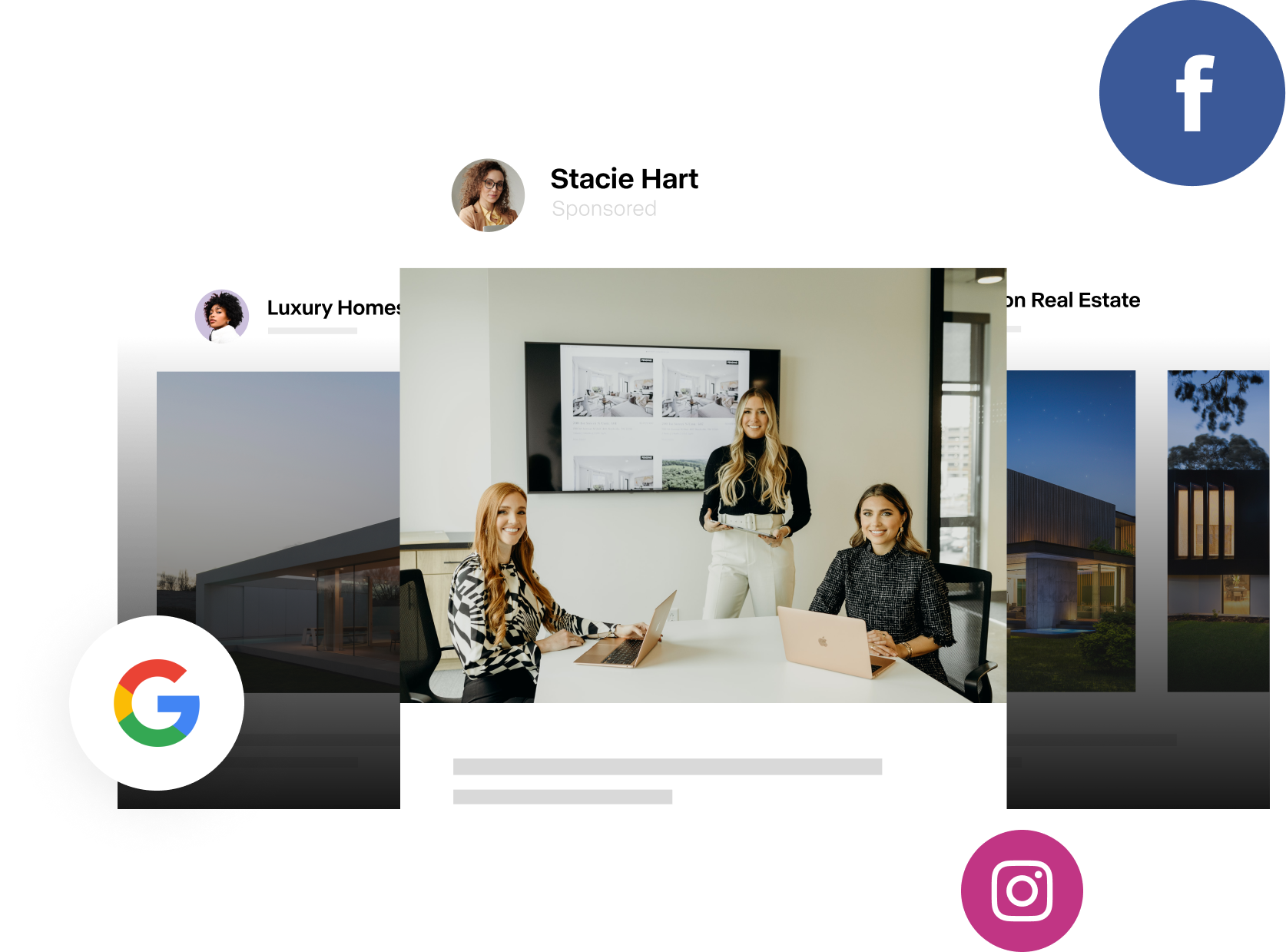
Paid advertising and multi-channel marketing campaigns are one of the fastest ways to generate new listing leads. The agents winning listings from ads are not just buying space. They are targeting the right sellers with the right message and following up before the competition does.
In 2026, the most effective listing-generation campaigns combine three channels:
- Paid search and social ads: Target homeowners searching for home values, “sell my house,” or local market conditions. Drive them to a landing page with a free home valuation offer. Paid Advertising through Luxury Presence handles the targeting and ad management with no management fees on ad spend.
- Email marketing: Once you capture a lead, nurture the relationship with a drip sequence that delivers local market updates, recent sales data, and seller tips. A well-built real estate marketing platform makes this repeatable.
- Direct mail: Postcards and real estate mailers still work, especially when they include a specific call to action like “Scan this QR code for your free home value estimate.” Pair them with your digital campaigns for maximum reach.
The key is measurement. Track which channel produces the most listing appointments, not just the most clicks. Then put more budget behind what works and cut what does not. If you are spending money on ads without tracking cost per listing appointment, you are guessing instead of growing.
8. Farm a specific geographic area
Real estate farming means becoming the recognized agent in a specific neighborhood or zip code. It is a long-term play, but it is one of the most reliable ways to build a listing pipeline that compounds over time. The agents who dominate a farm area are not just mailing postcards. They are showing up, adding value, and staying visible month after month.
Here is how to farm a neighborhood in 2026:
- Pick an area with 500 to 1,000 homes and a turnover rate of at least 5% per year.
- Mail a monthly market update with recent sales, average days on market, and a free home valuation offer.
- Attend every community event, school fundraiser, and neighborhood association meeting in your farm.
- Partner with local businesses for co-branded sponsorships that keep your name visible.
- Knock on doors to introduce yourself and offer a no-obligation market update for their home.
Farming works because repetition builds recognition, and recognition builds trust. Most homeowners will not need an agent the first time they see your name. But after six months of consistent presence, you become the default choice when they are ready to sell. Pair your offline farming with a professional website that reinforces your local authority when homeowners search your name after receiving your mailer.
Building a Reliable Listing Pipeline in 2026
The agents who consistently win listings in 2026 are the ones who treat lead generation like a system, not a one-time push. Whether you lean on your sphere, build referral relationships, call high-intent sellers, or market your current listings more effectively, the common thread is steady, repeated action. Focus on the channels that fit your business, stay consistent, and your listing pipeline will become much more predictable over time.
FAQs
Develop your lead nurturing strategy
Turn leads into clients with our free scripts, follow-up schedules, and communication tips.
About the author

Kate Evans is a content marketing strategist at Luxury Presence, the leading growth platform for high-performing real estate professionals. She develops data-driven editorial content and supports SEO strategy and brand voice frameworks that help agents attract qualified leads and establish market authority. Her published work covers topics including CRM strategy, social media marketing, and digital growth, supporting thousands of agents in scaling their businesses through modern marketing.