The three real estate presentations every agent needs to win more clients in 2026 are the listing presentation, the buyer's presentation, and the comparative market analysis (CMA). Each one serves a different audience and a different moment in the sales process, but they share a common purpose: proving you are the right agent for the job. In a market where the national median existing-home sale price has climbed above $400,000 and homes are spending a median of roughly 24 days on market before going under contract (NAR Existing Home Sales, 2025), the quality of your listing presentation and supporting materials is not a soft skill. It is a business variable that directly affects whether you walk out with a signed agreement or walk out empty-handed.
Key takeaways
- A strong listing presentation goes beyond slides and statistics. It delivers a firsthand brand experience that separates you from every other agent in the room.
- Your buyer's presentation should walk clients through the entire homebuying process, from pre-approval (a lender's conditional commitment based on a credit and income review) to closing, so they see you as their guide before you ever open a car door for a showing.
- A CMA presentation uses recent comparable sales, active listings, and market trend data to support a confident pricing recommendation, whether you are advising a seller on list price or a buyer on offer strategy.
- Design matters as much as content. Branded, high-quality visuals and printed leave-behind materials let clients focus on the conversation instead of scribbling notes.
- Every presentation should end with a clear call to action. Practice your delivery, prepare for objections, and follow up promptly after every meeting.
1. Real estate listing presentation in 2026
Your listing presentation is the single most important conversion tool in your business. It is the moment a seller decides whether to trust you with what is likely their largest financial asset. And here is the part most agents get wrong: they treat it like a slideshow instead of an experience.
That quote should reframe how you think about every slide, every handout, and every word you say in the room. A listing presentation is not a data dump. It is a controlled demonstration of what it feels like to be your client. Here are the elements that make it work.
- Professional branding: Open with a strong introduction that communicates your brand promise and sets a professional tone. Your cover slide, color palette, typography, and logo placement should all be consistent with your website and marketing materials.
- Market analysis: Present current market conditions using data no older than 30 days. According to NAR's monthly Existing Home Sales report, median days on market and sale-to-list price ratios shift meaningfully quarter over quarter, which means stale data undermines your credibility before you even get to pricing.
- Property details: Highlight the features and selling points of the specific home you want to represent. Speak to what makes this property competitive in its price range and neighborhood.
- Marketing plan: Outline exactly how you will promote the property. A strong marketing plan timeline looks like this: Week 1 covers professional photography, video production, MLS entry, and syndication to major portals through listing feeds. Week 2 launches social media campaigns and an email blast to your buyer database. Weeks 3 through 4 include the first open house and paid advertising. Ongoing activity includes weekly performance reports sent directly to the seller.
- Client testimonials: Incorporate reviews or short case studies from past clients. Specific results ("sold in 9 days, 4% above asking") carry more weight than general praise.
- Agent expertise: Showcase your credentials, transaction volume, and track record. If you have neighborhood-specific experience, lead with it.
- Clear pricing strategy: Present three pricing scenarios: an aggressive price targeting the top of the comparable range, a market-aligned price at or near the median of active comps (comparable properties that share similar characteristics with the subject home), and a conservative price designed to generate multiple offers quickly. This framework gives sellers a decision to make rather than a number to argue with.
- Communication and support: Spell out your update cadence. Will you send weekly reports? Bi-weekly calls? Sellers want to know they will not be left in the dark.
- Call to action: End with a direct ask. "Based on everything we have covered, I would like to move forward with a listing agreement (a contract authorizing you to market and sell the property). Can we set a signing date this week?" If you do not ask, you do not get.
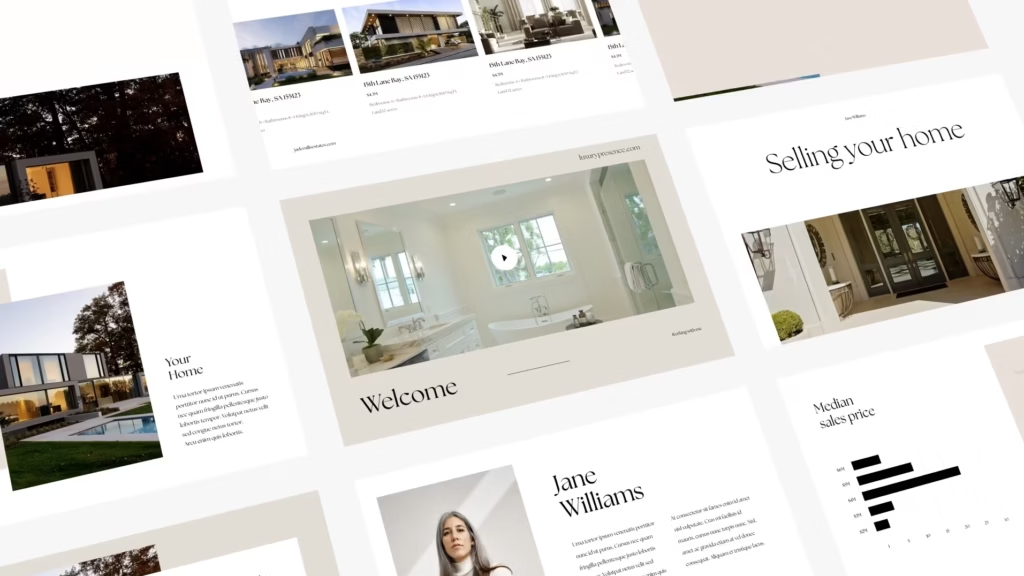
Sample listing presentation
2. Real estate buyer's presentation in 2026
Most agents skip the buyer's presentation entirely. They jump straight into showing homes, and then they wonder why the buyer ghosts them or signs with someone else. A buyer consultation is where you establish your role as the guide, set expectations for the process, and earn the right to represent that buyer before you ever unlock a front door. Here is what to include.
- Introduction and agenda: Start with a clear outline of what you will cover. Structure builds trust. When a buyer sees that you have a process, they stop worrying about whether you know what you are doing.
- Market overview: Present a snapshot of the local market, including inventory levels, median sale prices, and average days on market. Buyers who understand the competitive landscape make faster, more confident decisions.
- Homebuying process: Walk through every step from pre-approval (a lender's written confirmation that a buyer qualifies for a specific loan amount based on credit, income, and debt review) to closing. Most buyers, especially first-timers, do not know what happens between making an offer and getting the keys. Your job is to remove that uncertainty.
- Property search criteria: Use this section to define the buyer's priorities: location, size, amenities, school districts, commute times, and budget. Document everything so your property search is targeted from day one.
- Property tours: Explain how you schedule and structure showings. Tell buyers what to look for during tours and encourage them to give you candid feedback after each one so you can refine the search.
- Financing options: Cover the main mortgage types (conventional, FHA, VA, jumbo), down payment requirements, and current interest rate ranges. With 30-year fixed rates fluctuating throughout 2026 (Freddie Mac PMMS, 2026), buyers need a clear financing picture before they can write a competitive offer.
- Negotiation strategy: This is where you separate yourself from every other agent. Give the buyer a preview of your approach: "When we find the right home, I will pull the three most recent comparable sales within a half-mile radius and present you with an offer range. I will also research the seller's original purchase price and days on market so we can calibrate our opening offer with confidence."
- Closing process: Outline the timeline from accepted offer to closing day, including inspections, appraisal, title search, and final walkthrough. Buyers who know the timeline are less likely to panic when a lender requests additional documentation at the last minute.
- Follow-up support: Make it clear that your relationship does not end at the closing table. Whether it is a contractor referral six months later or a market update when they are ready to sell, you are their agent for life.
The sample below shows how to structure this conversation so buyers leave feeling informed and confident.
Sample buyer's presentation
3. Comparative market analysis (CMA) presentation
A CMA is a critical tool for real estate agents when determining accurate property prices. It gathers and analyzes current data on recent sales, active listings, and market trends, then uses that data to support a pricing recommendation grounded in evidence rather than guesswork.
In a 2026 market where inventory levels and interest rate expectations are shifting, the 30-to-60-day forward-looking window in your CMA is not optional. A comp from six months ago in a rate-sensitive market can misrepresent current buyer demand by a meaningful margin. Your CMA must reflect what is happening right now, not what happened last quarter.
CMAs are often included as a section within a listing presentation, but they can also stand alone. Whether you are bolstering your price recommendation to a seller or supporting your suggested offer price to a buyer, a well-built CMA gives your audience the data they need to make a confident decision. Here are the elements that make a CMA presentation credible.
- Accurate property information: Gather data points including year built, square footage, bedrooms, bathrooms, lot size, location, finishes, amenities, improvements, and overall condition.
- Active listings in the market: Review how competing properties are priced and how long they have been sitting. Active listings tell you what the market is asking. Sold listings tell you what the market is paying. You need both.
- Market trend analysis: Consider whether the market is appreciating, stabilizing, or softening, and how it might shift in the next 30 to 60 days. Frame your pricing recommendation within that trajectory.
- Selection of comparable properties: Choose comps that are similar enough in location, size, condition, and age to guide a reliable pricing estimate. Three to five strong comps are better than ten weak ones.
- Adjustments: Make dollar adjustments based on differences between the subject property and each comp. For example, if the subject property has 200 more square feet than the closest comp that sold for $850,000, and the local price-per-square-foot average is $400, you would adjust that comp upward by $80,000 to arrive at an adjusted value of $930,000 before weighting it against other comps.
- Pricing recommendation: Compile all of this data into a clean, branded deliverable that presents a pricing range from aggressive to conservative. Give your client a recommendation, not just a range. Tell them which number you would price at and why.
Presentation type comparison for 2026
Use the table below to quickly identify which presentation to prepare based on your audience, their stage in the process, and your conversion goal.
| Presentation type | Audience | Core sections to include | Primary goal | Best use case |
| Real estate listing presentation | Sellers considering listing their home | Professional branding, market analysis, marketing plan, pricing strategy, testimonials, call to action | Win the listing agreement | First meeting with a seller or competitive listing pitch against other agents |
| Real estate buyer presentation | First-time and repeat buyers | Market overview, homebuying process, property search criteria, financing options, negotiation strategy, closing process | Establish yourself as the buyer's advocate and guide | Initial buyer consultation before beginning property tours |
| Comparative market analysis (CMA) presentation | Sellers (pricing) and buyers (offer strategy) | Accurate property data, recent comps, active listings, market trend analysis, adjustments, pricing range | Support a confident, data-backed pricing recommendation | Standalone pricing consultation or embedded within a listing presentation |
Choosing the Right Presentation for Every Client
Whether you are meeting with a seller, guiding a buyer, or defending a price recommendation, the best real estate presentations do the same thing: they build trust, clarify the process, and make your value easy to see. When your branding, market data, and delivery all work together, you give clients a reason to move forward with confidence. Keep your materials current, keep your message clear, and always end with a direct next step.
FAQs
Luxury Presence can elevate your marketing strategy
Learn how we can help take your real estate business to the next level. Schedule a time to speak with one of our branding experts today.

Ready to grow?
Turn your content into your best lead source
See how Luxury Presence helps agents turn website visits into closed deals