
In 2026, the typical homebuyer visits nine different digital sources before moving forward on a real estate transaction (National Association of Realtors, 2023). That means a potential client might see your Instagram profile, your website, a Google listing, and a direct mail piece all in the same week. If those touchpoints look and sound like they belong to four different agents, you have a trust problem. Brand consistency across platforms is the practice of keeping your visual identity, messaging, and values uniform everywhere a client encounters you. It is the single most reliable way to build recognition, earn trust, and turn casual browsers into loyal clients.
When your brand looks and sounds the same on every channel, clients feel confident they know what to expect from you. That confidence shortens the path from first impression to signed agreement. This guide walks you through the specific elements of a consistent real estate brand, gives you a repeatable system for maintaining that consistency, and shows you what measurable results look like when you get it right.
Find It Fast
Key takeaways
- Brand consistency means using the same logo, colors, fonts, voice, and messaging across your website, social media, email, print materials, and video content.
- In 2026, increasing referrals has become the top marketing goal for real estate agents, surpassing general lead acquisition, and referrals are driven by the trust and recognition that consistent branding creates.
- A simple brand style guide covering your visual identity, tone of voice, and content themes removes guesswork and makes consistency a system rather than a daily decision.
- Agents who unified their digital presence with Luxury Presence saw a 673% increase in organic website impressions and a 48% increase in engaged leads in just six months.
- You do not need to be on every platform. Pick the channels where your audience is most active, then show up with the same look and voice on each one.
Why brand consistency matters for real estate agents in 2026
Brand consistency is the uniform use of your visual identity, messaging, and values across every client touchpoint, from your website to your yard sign. When you maintain it, you send a clear signal: this agent is organized, trustworthy, and worth paying attention to. When you don’t, potential clients notice the disconnect and move on.
Here is what consistent branding does for your business in practical terms:
- Builds credibility fast: A uniform brand image conveys professionalism. Clients are more likely to choose an agent whose online presence looks polished and intentional.
- Makes you memorable: Repeating the same colors, logo, and voice across platforms helps people recall your name when they are ready to buy or sell.
- Creates a reliable client experience: When your Instagram, website, and email all feel like the same person, clients trust that working with you will be just as consistent.
- Simplifies your marketing workflow: A well-defined brand removes daily guesswork about what to post, how to write it, and which colors to use.
What happens when brand consistency clicks: a case study
R1 Companies, a growing real estate group, struggled with a fragmented online presence. Their branding varied from platform to platform, and their marketing lacked a unified voice. After partnering with Luxury Presence to align their website, social media, and content under one cohesive brand, the results were measurable within six months: a 673% increase in organic website impressions, a 48% increase in engaged leads, and more than 79% reduction in marketing costs (Source: Luxury Presence Case Study: R1 Companies, 2024).
“Our online presence was inconsistent and poorly maintained. Now with Luxury Presence, we have polished, strategic content across all channels, aligned with our campaigns and voice.”
— Brianna Meyer, R1 Companies
That kind of turnaround does not require a massive budget or a full-time marketing team. It requires a system. The rest of this guide shows you how to build one.
Key elements of a consistent real estate brand
Consistency is not about being rigid. It is about making a set of decisions once, documenting them, and applying them everywhere. Focus on these three brand pillars.
1. Visual identity
Your visual identity is the fastest way a client recognizes you. Consistent use of color alone can increase brand recognition by up to 80% (Straits Research, 2023). The biggest brokerages in the country prove this point. According to a study cited by NAR:
- 91% of consumers correctly identified Coldwell Banker by its color scheme alone.
- 81% of consumers associated Keller Williams with its distinct brand colors.
- 90% recognized RE/MAX through its signature colors and balloon imagery.
You do not need a national brand budget to get this right. You need a short list of decisions applied everywhere:
- Logo: Use the same version of your logo on your website, social profiles, email signature, and print materials.
- Color palette: Choose two to three brand colors and use them everywhere. Save the hex codes in a shared document your whole team can access.
- Fonts: Pick one heading font and one body font. Use them on your website, social graphics, and listing presentations.
- Photography style: Decide on a consistent look for your listing photos and headshots. Bright and airy or dark and moody, pick one direction and stay with it.
2. Messaging and tone of voice
Your visual identity gets people to notice you. Your voice is what makes them stay. Every caption, email, and listing description should sound like the same person wrote it.
Here is how to define and protect your brand voice:
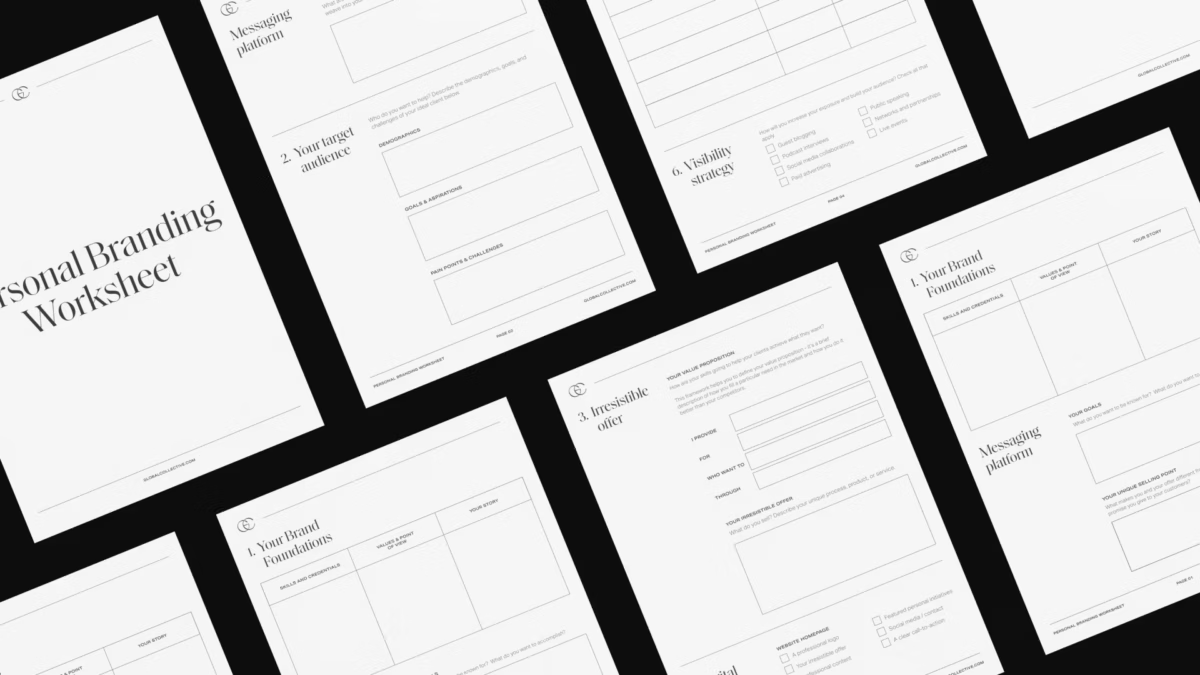
- Write a clear value proposition in one to two sentences. This is the promise you make to every client.
- Choose three to five adjectives that describe your tone. Are you warm and approachable? Direct and data-driven? Calm and reassuring? Write them down.
- Create branded templates for social media posts, emails, and listing presentations so your tone stays consistent even when you are short on time.
3. Content themes and strategy
A structured content plan keeps your brand consistent without requiring you to reinvent every post from scratch. Think of it as a repeatable system with clear guardrails:
- Audit your platforms first: Identify where your audience is most active before deciding where to publish.
- Map content types to each platform: Use market updates on LinkedIn, listing visuals on Instagram, and longer educational content on your blog.
- Set a posting cadence and stick to it: Define how often you publish on each platform and treat it as a non-negotiable part of your weekly schedule.
- Repurpose core content across formats: Turn one market report into a blog post, a social caption, and an email newsletter section.
- Track performance against clear benchmarks: Set specific metrics for each content type and replace underperforming formats within 90 days.
A simple content ratio can keep your feed balanced. Here is a starting framework:
| Content category | Percentage of posts | Examples |
| Educational | 50% | Market updates, homebuyer tips, neighborhood guides |
| Promotional | 30% | New listings, open houses, just-sold announcements |
| Engagement | 20% | Polls, behind-the-scenes content, client stories |
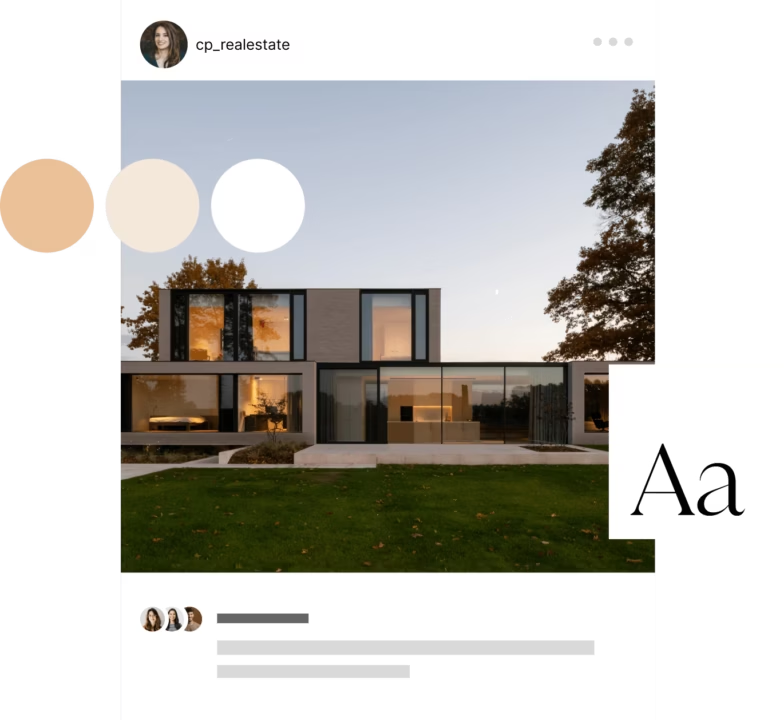
Post with confidence
Maintaining a consistent, on-brand social media presence is crucial in real estate. Download our social media calendar for 30 days of inventive content ideas tailored to the industry.
How to maintain brand consistency across platforms in 2026
Knowing what makes a consistent brand is one thing. Keeping it consistent across five or six different channels while also running a business is another. The good news: this does not require perfection. It requires a repeatable process. Here are five areas to focus on.
Start with your website
Your website is the hub of your online presence. Every other channel should point back to it, and it should reflect the visual identity and voice you have already defined. Apply your brand standards to every page:
- Use your logo, brand colors, and chosen fonts in the design, from homepage hero images to your blog layout to your favicon.
- Write a compelling bio and mission statement that matches the tone of your social media profiles.
- Keep all copy clear, direct, and in the same voice you use everywhere else.
Align your social media profiles
Each social platform has a different audience and format, but your branding should feel the same across all of them. A prospect who finds you on Instagram and then checks your Facebook page should instantly recognize you as the same agent.
- Use the same profile photo and bio across every platform.
- Maintain a consistent posting schedule so your audience knows when to expect new content.
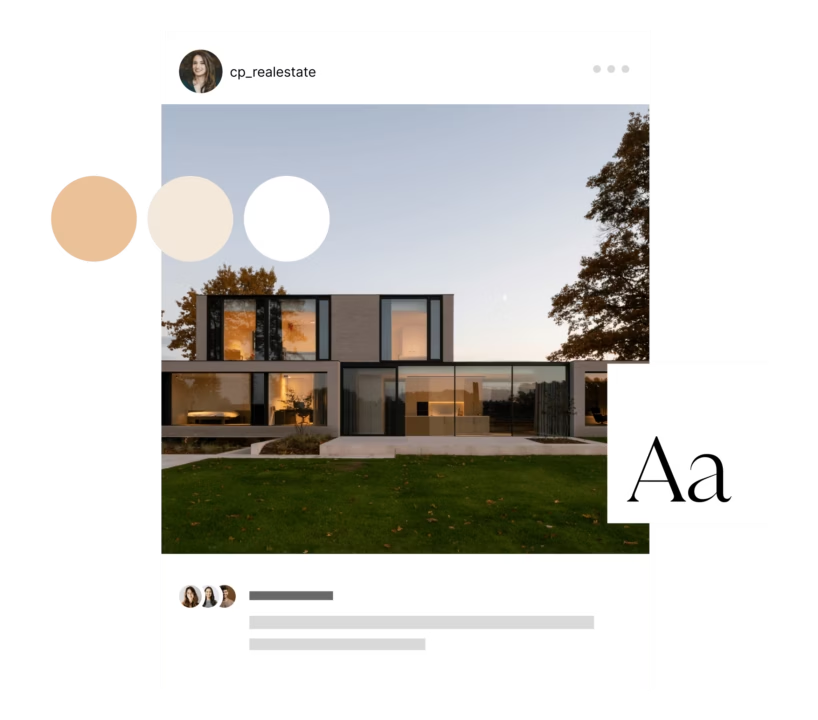
- Create reusable templates for social posts so your graphics always match your brand colors and fonts.
- Engage with comments and messages in a way that reflects your brand voice, not a generic reply.
Reinforce your brand through video
Video is one of the most powerful formats for building recognition in 2026. A viewer who watches your market update on YouTube and then sees your Instagram Reel should feel like they are hearing from the same agent. Here is how to keep your video content on brand:
- Use a branded intro and outro: Include your logo, brand colors, and a consistent opening line across all videos.
- Keep your tone steady: Whether your style is educational, conversational, or polished, carry that same energy into every video.
- Create a recurring series: Weekly market updates or homebuyer tip videos build familiarity and give your audience a reason to come back.
- Adapt for each platform without changing your look: Resize and reformat for YouTube, Instagram Reels, and TikTok, but keep the same colors, fonts, and lower-thirds (text overlays shown at the bottom of a video frame).
- Design consistent thumbnails: Use the same layout, font, and color scheme for every thumbnail so your videos are instantly recognizable in a feed.
- Match paid and organic video: Your paid video ads should follow the same branding guidelines as your organic content.
Keep email marketing on brand
Your email newsletters are one of the most direct lines of communication you have with past and potential clients. They should look and sound like an extension of your website and social media.
- Use a branded email template with your logo, colors, and fonts.
- Write subject lines and body copy in the same tone you use on social media.
- Keep the layout clean and scannable. If your website is minimal and modern, your emails should be too.
Align offline branding with your digital presence
Consistent branding across digital and print materials directly affects how clients perceive and remember you. Brand recall for direct mail is 70% higher among people who also see the same brand online (Cascade Print Media, 2022). In 2026, with direct mail still used by 47% of agents as a marketing channel, the connection between your print and digital presence matters more than ever.
Your printed materials, including business cards, postcards, and yard signs, should mirror your online branding. Same logo, same colors, same voice. When a homeowner receives your mailer and then visits your website, the experience should feel like one continuous conversation.
Brand consistency with Luxury Presence
Maintaining brand consistency across platforms is not about aesthetics alone. It is about building trust, earning recognition, and creating the kind of client relationships that lead to repeat business and referrals. At Luxury Presence, we help some of real estate’s biggest names build and maintain strong, consistent branding through website design, Social Media Marketing, Content Marketing, and Paid Advertising, all working together under one roof.
With Luxury Presence’s SEO & GEO, Social Media Management, and Paid Ad Management, your brand stays visible and consistent across channels without requiring you to spend hours each week creating content. Nothing publishes without your approval, so you stay in control of your voice while the system handles the heavy lifting. Agents who use these marketing solutions save 10 or more hours per week on marketing tasks, freeing up time to focus on clients and closings.
Luxury Presence’s CRM works alongside your marketing by keeping client relationships warm with automated, agent-approved touchpoints. From first contact through closing and beyond, every message reflects your brand voice and keeps you top of mind without adding to your daily to-do list.
“Our website looks fantastic, clean, modern, and built to truly showcase our brand. The social media posts are always timely and filled with relevant content that engages our audience. We’re seeing real results with quality leads coming in from our website.”
— Christine Lee, Luxury Presence Client
If you are ready to bring your brand into focus across every channel, see what a Luxury Presence website looks like or get in touch with our team to talk about your goals.
FAQs
Let’s chat
Choosing your website provider is a big decision, and you probably have questions.
About the author

Marketing Manager
Kate Evans is a content marketing strategist at Luxury Presence, the leading growth platform for high-performing real estate professionals. She develops data-driven editorial content and supports SEO strategy and brand voice frameworks that help agents attract qualified leads and establish market authority. Her published work covers topics including CRM strategy, social media marketing, and digital growth, supporting thousands of agents in scaling their businesses through modern marketing.