In the world of real estate acronyms, few cause more confusion than internet data exchange vs. MLS. Internet data exchange (internet data exchange) is the technology that allows agents to display MLS (multiple listing service) listings on their own websites. The MLS is the database itself. Internet data exchange is the bridge that brings that data to your site and puts it in front of buyers. Understanding the difference between the two, and how they interact, is foundational to building a website that generates leads in 2026. This article breaks down what each system does, how they work together, and what to look for when choosing an internet data exchange website for real estate agents.
Key takeaways
- The MLS is a cooperative database where agents and brokers share property listings. IDX is the technology that displays those listings on an agent's own website.
- IDX websites receive approximately four times as much traffic as real estate websites without IDX, according to Luxury Presence internal data.
- Not all MLS systems participate in IDX, so agents should confirm IDX availability with their local MLS before selecting a website provider.
- The National Association of Realtors (NAR) settlement that took effect on August 17, 2024, changed how buyer-agent compensation is communicated, removing offers of compensation from MLS displays.
- A well-built IDX website captures buyer contact information directly, reducing your dependence on third-party portals.
Multiple Listing Service (MLS)
The MLS is a collection of local databases used by real estate agents and brokers to share information about properties listed for sale or rent. It is a cooperative system. Participating agents can view each other's listings, which makes collaboration between buyer's agents and listing agents possible at scale.
Each local MLS covers a specific geographic area, whether that is a single city, a county, or an entire region. Agents and brokers pull from this shared pool and share relevant listings with their clients. MLS databases typically contain detailed property information including photos, descriptions, square footage, lot size, tax records, and sometimes historical sales data.
Because participating agents and brokers are contractually required to keep listing information current, MLS data is generally considered the most accurate source for active property listings, a point reinforced by MLS compliance requirements outlined by the National Association of Realtors (NAR).
Consumer-facing websites such as major third-party listing portals are not MLSs. They populate their sites with data pulled from MLS databases, often with a delay that can range from minutes to hours.
Two policy changes are worth noting for agents operating in 2026:
- According to NAR, sellers traditionally posted offers of buyer-agent compensation through the MLS. This practice is no longer permitted following the NAR settlement that took effect in the summer of 2024.
- The updated MLS policies and regulations related to the NAR settlement became effective on August 17, 2024. The settlement required, among other changes, that offers of buyer-agent compensation be negotiated outside the MLS and that buyers sign written agreements with their agents before touring homes.
The policy changes referenced above took effect on August 17, 2024. Agents should verify current compliance requirements directly with their local MLS, as individual boards may have adopted additional rules since then.
Internet Data Exchange in 2026
Internet data exchange is a technology and policy framework that allows real estate agents and brokers to display MLS listings on their own websites. The term covers both the software that transfers MLS data to a third-party site and the rules that govern how that data can be displayed.
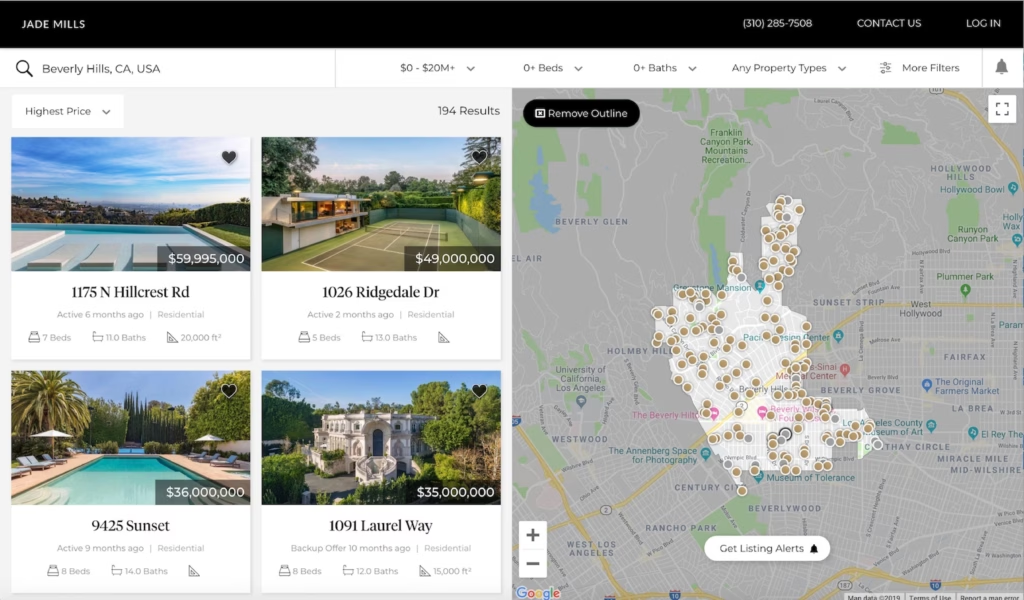
Before internet data exchange existed, buyers had to rely entirely on their agent or broker to share listings one at a time. Internet data exchange changed that by giving agents the ability to offer a searchable database of properties directly on their website. Buyers can filter by price, location, bedrooms, and dozens of other criteria without ever leaving the agent's site.
IDX also offers a degree of customization. Agents can tailor the search experience to their specific market or niche, highlighting waterfront properties, condos in a particular neighborhood, or homes within a certain school district.
One important caveat: not all MLS systems participate in internet data exchange. Participation may be subject to specific rules set by the local MLS board. Before investing in an internet data exchange website, confirm that your MLS supports internet data exchange data sharing and review any display restrictions that apply.
The internet data exchange system also features a variety of policies from NAR that real estate professionals must follow. For example, an agent or broker cannot upload a listing to the internet data exchange without the property owner's permission. Sellers also retain the right to disable automatic valuations of their property on third-party sites.
Internet data exchange vs. MLS: Key differences in 2026
The core distinction is straightforward. The MLS is the database. Internet data exchange is the delivery mechanism that brings MLS data to your website. Here is a side-by-side comparison of how they differ across the dimensions that matter most to agents:
| Feature | MLS | Internet Data Exchange |
| Purpose | Centralized database for listing cooperation among agents and brokers | Technology that displays MLS listings on an agent's own website |
| Who controls it | Local MLS boards and associations | The agent or broker (via their website provider or IDX plugin) |
| Data source | Agent and broker submissions, updated per MLS compliance rules | Pulls directly from the MLS via a data feed |
| Access requirements | MLS membership (typically requires a real estate license and board dues) | MLS membership plus an internet data exchange agreement with the local board |
| Consumer-facing | No. The MLS itself is not public-facing. | Yes. IDX displays listings on public-facing agent websites. |
| Update frequency | Listings updated by agents as status changes occur | Data refreshes vary by provider, typically every 15 minutes to a few hours |
| Cost to agents | MLS membership dues (varies by board, often $200 to $800+ per year) | IDX fees vary by provider, from $50 to $100+ per month, or included in website packages |
| Primary user | Real estate agents and brokers | Buyers searching for homes on an agent's website |
Think of it this way: the MLS is the warehouse where all the inventory lives. Internet data exchange is the storefront window that lets buyers browse that inventory from your website instead of someone else's.
The benefits of internet data exchange for real estate websites
Internet data exchange does more than display listings. It turns your website into a working lead-capture tool. According to Luxury Presence internal data, real estate websites with an internet data exchange tool receive approximately four times as much traffic as those without one. That traffic gap makes internet data exchange one of the highest-impact website decisions an agent can make in 2026.
Here is what internet data exchange and internet-data-exchange-powered websites deliver in practice:
- Automatically pull active MLS listings onto your website via listing feeds, eliminating manual data entry
- Give buyers a self-service searchable database of properties directly on your site, reducing dependence on third-party portals
- Create neighborhood and property-type landing pages that target specific search queries buyers are already using
- Signal to search engines that your site is a live, regularly updated source of local listing data
- Capture contact information from active buyers through built-in lead forms before they navigate to third-party portals
Internet data exchange solutions from your website provider
Website providers build internet data exchange solutions directly into their platforms. These solutions typically include lead capture features, which require active property seekers to submit contact information in exchange for full search access or saved-search alerts. Built-in website analytics tools give agents visibility into user behavior and listing performance, so you can see which properties attract the most views and which search filters buyers use most often.
By offering an internet-data-exchange-integrated website, real estate agents gain a measurable edge over competitors who rely solely on portal traffic. This signals a commitment to providing clients with a direct online search experience, which supports client retention and repeat referrals.
When evaluating internet data exchange website providers, look for three things: how frequently the internet data exchange feed refreshes from your local MLS, whether the provider supports forced registration or optional registration for lead capture, and how much control you have over the look and layout of property search pages. These three factors determine whether your internet data exchange website functions as a passive listing display or an active lead-generation engine.
Why internet data exchange website functionality matters in practice
The difference between a working internet data exchange website and a broken one is not abstract. It shows up in leads, traffic, and revenue. Consider the experience of Better Homes and Gardens Real Estate Lifestyles Realty, a brokerage that spent 13 years on a website that never generated a single lead.
Their previous site relied on a patchwork of plugins that could not properly filter MLS data. Buyers would attempt a property search and hit dead ends. The listing search tools were unreliable, and the site offered no meaningful search functionality.
After switching to a properly built internet data exchange real estate website, the brokerage generated 10 organic leads in its first week of launch. Within four months, site engagement reached 57%. That is the gap between a site with functioning internet data exchange and one without it (Source: Luxury Presence Case Study: BHGRE Lifestyles Realty, 2024).
The lesson is clear: internet data exchange is not a checkbox feature. The quality of the internet data exchange implementation, how fast it refreshes, how well it filters, and how cleanly it integrates with your site design, determines whether your website works for your business or sits idle.
Choosing the Right IDX Setup for Your Website
Understanding the difference between the MLS and internet data exchange gives you a clearer view of how listings move from a local database to a public-facing website. The MLS powers the data, while IDX determines how buyers experience it on your site and how effectively that experience supports lead generation. If you are evaluating a website provider, focus on compliance, refresh speed, search functionality, and the overall user experience so your site can work as both a listing hub and a business tool.
FAQs
Expert website design services
Every day, Luxury Presence creates and manages real estate websites for some of the biggest agents, teams, and brokerages in the country. Learn how we can transform your online presence.

Ready to grow?
Turn your content into your best lead source
See how Luxury Presence helps agents turn website visits into closed deals