

Real estate lead generation means getting your name and contact information in front of a potential buyer, seller, or investor before another agent does. The agents who consistently close deals in 2026 run several channels at once: digital, traditional, and AI-assisted. Rely on a single source of business and you're one algorithm change away from an empty pipeline.
This guide organizes 64 real estate lead generation ideas by category, with the effort and cost of each spelled out up front. Pick the mix that fits your market, your budget, and your calendar.
Key takeaways on real estate lead generation ideas
- A professional website, SEO, social media, and email are the foundation every lead generation system in 2026 is built on.
- Free and low-cost tactics (door knocking, a complete Google Business Profile, consistent social posting) can produce leads within weeks. They cost time, not budget.
- Paid channels like Google Ads and portal advertising produce leads faster, but the cost per lead only stays reasonable if you track it weekly and cut what isn't working.
- AI-assisted tools can follow up with new leads in minutes and cut hours off your weekly marketing load, but they work best layered on top of a real relationship-building system, not instead of one.
- Roughly 80% of closed business still traces back to an agent's sphere of influence. The agents who win that game aren't smarter or luckier. They're just more consistent about the follow-up.
- Two years of MLS data across 310 markets shows agents who run this kind of full, consistent strategy with the help of tools like those provided by Luxury Presence close nearly 3x more transaction value than peers in the same market.
Build your online presence
Your online presence is the hub everything else points back to. It's the one channel you fully own, and it works around the clock while you're at a showing.
1. Build a high-quality website
Effort: Medium
Cost: $$
Your real estate website should be mobile-responsive, fast, and built around a clear action on every page, like "Get a home valuation" instead of "Contact us." Treat it as your digital storefront. For most leads, it's the first impression you make.
Josh Flagg, luxury real estate agent, on why he treats a website as non-negotiable: "A great website is non-negotiable for those who care about their brand and business," he says. "A substandard website can be a significant red flag to prospects, potentially costing you valuable opportunities."
2. Invest in SEO
Effort: Medium to High
Cost: $ to $$
Local SEO still decides who shows up when someone searches "homes for sale in [neighborhood]." Build neighborhood-level pages, earn backlinks from local sites, and publish consistently. Google rewards the sites that keep showing up over the ones that post once and stop, so avoid the common mistakes that quietly cap how far your site can rank.
3. Start a blog
Effort: Medium
Cost: Free to $
A real estate blog turns you into a local authority and gives search engines a reason to keep crawling your site. Every post is a new door a lead can walk through months or years after you write it, which is what real authority looks like online.
4. Claim and maintain your Google Business Profile
Effort: Low
Cost: Free
A complete Google Business Profile, with photos, service areas, and regular updates, is one of the highest-return free tools available to agents. Ask satisfied clients to leave a review there. Reviews are often the deciding factor between a call to you and a call to your competitor.
Social media marketing
Social platforms let you show up in real time with the people already talking about your market. In 2026, short-form video and genuine community engagement outperform polished, infrequent posts.
Josh Flagg, luxury real estate agent, on why social media isn't optional anymore: "Social media isn't just a trend, it's a vital tool for real estate professionals," he says. "Start posting immediately. Don't overthink it."
5. Build a consistent engagement habit
Effort: Low to Medium
Cost: Free
Reply to every comment and DM within 24 hours, and show up in local community groups where real conversations happen. Consistency, not production value, is what keeps you top of mind.
6. Run Facebook and Instagram ads
Effort: Medium
Cost: $$
Meta's automated targeting handles most of the audience-building work now, so focus your effort on the offer and the landing page. A free home valuation or a downloadable buyer's guide converts better than "contact me." Check cost per lead weekly and shift budget away from what isn't converting.
7. Go live during events
Effort: Low
Cost: Free
Facebook Live, Instagram Live, or YouTube during an open house or market update creates urgency that pre-recorded content can't match. Viewers who show up live are already leaning in.
"I think that there is an insane amount of knowledge and power and lead generation on free social platforms right now," according to Sharran Srivatsaa, CEO of Aquisition.
8. Use AI-assisted ad targeting
Effort: Medium
Cost: $$
AI targeting tools refine who sees your ads based on real engagement instead of a demographic guess. One agent's cost per lead dropped from $17 to $4 after a few weeks of AI-driven adjustments. Treat every campaign as something to keep tuning, not something to set and forget.
9. Build a YouTube channel
Effort: Medium to High
Cost: $
Property tours, market analyses, and neighborhood guides all work as YouTube content, and YouTube Shorts is now a meaningful discovery channel in its own right. A decent phone gimbal and a mic are enough to start.
According to Aaron Grushow, our Senior Marketing Manager, Social Media, "YouTube is probably the most underutilized, biggest opportunity platform right now... It's hard to half-ass YouTube. You have to be all-in... If you get it right, that is the platform that can absolutely establish you as the mayor of your market."
10. Host recurring Q&A sessions
Effort: Low
Cost: Free
Answer the questions buyers and sellers are already asking, like "How much home can I afford?" or "What should I know before selling?" on a regular live schedule. It builds authority and gives viewers a low-pressure reason to book a consultation.
11. Use Pinterest for visual discovery
Effort: Low
Cost: Free
Boards of listings, staging ideas, and local lifestyle content drive long-tail search traffic that most agents never touch. Rich pins that link straight to your listings make this a slow but low-maintenance lead channel.
12. Network on LinkedIn
Effort: Low to Medium
Cost: Free
Share market data and investment analysis to reach investors, corporate relocators, and high-net-worth clients who aren't on Instagram. This channel earns its keep with commercial and luxury buyers especially.
13. Launch a podcast
Effort: Medium to High
Cost: $$
A podcast covering market trends or local stories builds a level of trust that a feed post can't. Listeners feel like they already know you before they ever call. Buzzsprout handles hosting and distribution to every major platform for less than $20 a month, so promoting each episode across your site, email list, and social channels is the only real work left.
14. Create shareable infographics
Effort: Medium
Cost: Free to $
Market stats and neighborhood data packaged visually get shared, and sometimes linked back to, far more than the same information in a paragraph. Free tools like Canva make this a weekend project, not a design-team project.
15. Produce a how-to video series
Effort: Medium
Cost: $
Walk first-time buyers through mortgage basics, the closing process, or how to write a competitive offer. Series content builds trust in stages and catches prospects at whatever stage of the buying process they're in.
16. Partner with local content creators
Effort: Medium
Cost: $ to $$
Local bloggers and creators who share your target audience can extend your reach faster than paid ads. Bring a clear proposal, like a sponsored post or a co-branded event, and track results by lead inquiries rather than follower growth.
17. Host online webinars and workshops
Effort: Medium
Cost: $
A webinar on the home-buying process or market trends, run with live polls and Q&A, keeps attendees engaged longer than a webpage ever could. Follow up afterward with the recording and a personal invitation to talk. That follow-up is where the lead actually converts.
Email marketing
Email still delivers some of the highest return of any channel available to agents, because it nurtures a relationship instead of chasing a single click.
18. Run a monthly newsletter campaign
Effort: Medium
Cost: $
Two emails a month, covering market updates, new listings, and useful tips, keep your whole database warm without becoming noise. Consistency here compounds the same way it does everywhere else on this list.
Top Producer and Netflix star, Tricia Lee told us, ”I love a newsletter…my newsletters are telling you what I’m doing now, what I’m up to, what I’ve been up to since we last connected, and I do them once a month.”
19. Build targeted drip campaigns
Effort: Medium to High
Cost: $
A drip sequence for seller leads might run a home-valuation offer, then a market update, then a recent case study, spaced over two weeks. Segment by buyer stage or geography so each message actually lands as relevant.
20. Automate follow-up with AI
Effort: Low to Medium
Cost: $$
AI-powered lead nurture can respond to a new lead within minutes, even while you're mid-showing, and personalize subject lines and send times based on how each contact engages. That speed is often the difference between a lead and a missed connection.
Advertising campaigns
Paid advertising reaches your market immediately and lets you measure spend with precision, but only if you're disciplined about tracking cost per lead.
Advertising channel quick comparison:
| Channel | Best for | Effort | Cost |
|---|---|---|---|
| Google Ads | High-intent buyers and sellers | Medium to High | $$$ |
| Facebook/Instagram Ads | Broad demographic targeting | Medium | $$ |
| Retargeting Ads | Re-engaging past visitors | Medium | $$ |
| Real Estate Portals | Active listing browsers | Medium to High | $$$ |
| Billboards/Signage | Local brand awareness | Medium | $$$ |
| Vehicle Branding | Hyperlocal visibility | Low | $ |
21. Run a Google Ads campaign
Effort: Medium to High
Cost: $$$
Google Ads puts you in front of people actively searching "homes for sale in [city]" or "real estate agent near me." Send that traffic to a dedicated landing page instead of your homepage. The landing page matters more than the ad itself.
As real estate advisor and top producer, Shannon Gillette, said. “Right away, when our listing is launched, we’re also running Google ads because Google ads are amazing. You can fine-tune these ads so well.”
22. Set up retargeting ads
Effort: Medium
Cost: $$
Retargeting reaches people who visited your site but didn't convert, following them across other sites and platforms. Because the audience already knows who you are, cost per lead here typically runs lower than cold advertising.
According to Brad Beyea, our Sr. Paid Media Manager for Brand Marketing, “even a small retargeting audience is more valuable per dollar than any cold prospecting campaign.”
23. Advertise on real estate portals
Effort: Medium to High
Cost: $$$
Portal ads put you in front of a large pool of active buyers and sellers. Track cost per lead by platform monthly and move budget toward whichever one is actually converting for your market.
24. Place local billboards and signage
Effort: Medium
Cost: $$$
A billboard in a high-traffic area near your farm works as brand awareness rather than direct response. The goal is a name that looks familiar when someone finally searches for you online, so pair it with a visual that reads clearly in under three seconds.
25. Brand your vehicle
Effort: Low
Cost: $
Decals with your name, photo, and contact info turn every drive through your farm area into a marketing impression. It's a one-time cost that keeps paying off for years.
Content marketing
Every piece of content you publish is an asset that keeps generating leads long after you hit publish.
26. Build an interactive quiz or assessment
Effort: Medium to High
Cost: $$
"What type of home fits your lifestyle?" or "Are you ready to buy?" quizzes trade a few minutes of a visitor's attention for their contact information. People who opt in this way tend to be warmer than a cold form-fill. Outgrow is built specifically for this kind of interactive lead capture and needs no coding to set up.
27. Create a lead magnet
Effort: Medium
Cost: $
An e-book, neighborhood guide, or homebuyer checklist works as gated content in exchange for an email address. The best ones solve one specific problem your audience has right now instead of offering a general overview they could get anywhere.
Tracy Tutor, real estate broker, on the trade-off between polish and lead capture: "Capturing leads doesn't mean sacrificing aesthetics," she says. "Forced registration helps ensure you're investing time wisely."
28. Use AI to speed up content production
Effort: Low to Medium
Cost: $$
AI drafting tools can get you to a first draft of a blog post, caption, or property description in minutes, though you should still review before it goes live. Quality and originality still matter for both readers and rankings. Most agents save 10 or more hours a week once the workflow is dialed in.
29. Send automated property recommendations
Effort: Medium
Cost: $$
When a lead views several three-bedroom homes in one zip code, an automated system can surface a curated list of similar properties without you lifting a finger. It's a small nudge that moves a browsing lead closer to booking a showing.
Direct marketing
Direct outreach builds a personal connection that digital channels can't fully replicate. It's slower, but it earns trust that compounds.
30. Go door knocking
Effort: High
Cost: Free
Door-to-door canvassing in your farm area, with flyers or a personal introduction, still gets you face to face with homeowners who might not respond to anything else. Aim for 50 doors a session and track your conversion rate over time so you know what's actually working.
31. Run direct mail campaigns
Effort: Medium
Cost: $$
Personalized letters or postcards sent monthly to the same farm area build the recognition that a one-off mailer never will. Include a specific call to action. A QR code to a free valuation works better than "call me."
32. Attend local networking events
Effort: Low to Medium
Cost: Free to $
Chamber of commerce meetings and industry gatherings put you in a room with attorneys, contractors, and financial advisors who all refer business. Follow up with every new contact within 48 hours, or the connection cools off fast.
Real estate coach, Brian Icenhower told us what actually works: "Farming fails when agents treat it like advertising," he says. The ones who win keep showing up through flyers, calls, door knocking, and events long enough that they stop being a stranger and start being the agent for that street."
Listing marketing and open houses
If you don't have your own listing, offer to host an open house for another agent in your brokerage. The format below works either way. Here are nine ways to make a standard open house memorable enough that neighbors talk about it.
33. Host an outdoor movie night
Effort: High
Cost: $$
Projecting a film on the lawn of a listed property turns an open house into a neighborhood event, drawing people who'd never walk through a traditional showing. A portable unit like a Soundcore Nebula projector is bright enough for outdoor use and packs up in one trip. The community atmosphere does the selling for you.
34. Run an architectural scavenger hunt
Effort: Medium
Cost: $
A checklist of design details and historical features turns a walkthrough into an activity, with small rewards for finishing. Buyers leave remembering the house and your creativity.
35. Host a stargazing night
Effort: Medium
Cost: $
Telescopes and astronomy guides on a property with real outdoor space create an experience no other listing on the MLS is offering. A big lot suddenly reads as a lifestyle instead of just square footage.
36. Collaborate with local artists on staging
Effort: Medium
Cost: Free to $
Original artwork in a staged home supports local artists and gives buyers a personalized, memorable atmosphere instead of generic decor. It's often a reciprocal arrangement: exposure for the artist, a distinctive showing for you.
37. Host a nighttime showcase
Effort: Medium to High
Cost: $$
Exterior lighting and string lights change the mood of a property entirely after sunset, and appeal to buyers who want to see how a home feels at night before they decide. It's a different showing, not a repeat of the daytime one.
38. Run a historical storytelling tour
Effort: Medium
Cost: Free
For older homes, a guided tour that narrates the property's history resonates with buyers who value character over square footage. The research time is the only real cost.
Real estate top producer and Netflix star, Josh Flagg, suggests, "Cast your potential clients as the main characters. Position yourself as the narrator guiding them to their happily ever after."
39. Host a culinary showing
Effort: High
Cost: $$$
Partnering with a local chef for tastings inside the property pairs two things people already love, food and a beautiful home, and generates word-of-mouth a standard open house rarely gets. It's the highest-cost idea on this list, and also the one most likely to get talked about.
40. Offer a home-focused workshop
Effort: Medium
Cost: $
DIY decor sessions or furniture-building classes held at a listing give you extended face time with buyers who are passionate about making a space their own. You buy more attention this way, at low cost, than a 20-minute walkthrough allows.
41. Run a smart-home tech demonstration
Effort: Medium
Cost: $
Letting buyers try voice controls, security systems, and automated features hands-on makes the property, and you, feel current. It appeals equally to buyers shopping for tech and sellers considering upgrades before listing.
Public relations and events
Real, in-person presence in your community builds the kind of trust that no ad campaign can manufacture on its own.
42. Host a community event
Effort: Medium to High
Cost: $$
Neighborhood picnics, charity drives, or holiday gatherings put you in front of residents in a setting where real conversations happen naturally. It's less efficient than a cold ad, but the relationships last longer.
43. Sponsor a local charity
Effort: Low to Medium
Cost: $
Aligning with a cause you actually believe in puts your name in front of an audience that already shares your values. If the cause relates to housing, it opens a natural door to talk about the market.
44. Publish a local print newsletter
Effort: Medium
Cost: $
A physical newsletter delivered to mailboxes and local businesses reaches the people in your farm area who aren't following you online. The build is slower than digital, but it reinforces you as the neighborhood's go-to resource.
45. Sponsor a local sports team
Effort: Low
Cost: $
Your name on a jersey or a banner, plus showing up at games, builds goodwill with families who share an interest outside of real estate entirely. It's low-cost, high-visibility, and compounds over seasons.
46. Create a neighborhood welcome package
Effort: Low to Medium
Cost: $
A personalized letter and local business coupons delivered to new residents makes a strong first impression, and new arrivals often know other people also thinking about a move. Hand-deliver when you can. A hand-delivered package signals more than a mailed one ever will.
47. Set up a booth at a farmer's market or yard sale
Effort: Low
Cost: $
A casual booth with your materials gets you low-pressure face time with people who already live in your target area. It costs a booth fee and a Saturday morning.
48. Host an energy-efficiency workshop
Effort: Medium
Cost: $
Solar panels, green construction, and energy-efficient upgrades are a growing draw for buyers. A workshop on the topic positions you as the agent who understands where demand is heading in 2026.
Networking and partnerships
The strongest partnerships are reciprocal. You send business their way, they send it back yours.
49. Market your services inside a local business
Effort: Low
Cost: Free
Coffee shops, gyms, and restaurants in your farm area are full of people who already spend time there. A business card display or a sponsored in-store event puts you in front of them without any ad spend.
50. Build senior-specific community connections
Effort: Medium
Cost: Free to $
Informational sessions on downsizing or aging in place open conversations that often lead to listings and referrals from adult children helping their parents through a move. It's a niche most agents overlook.
51. Sponsor a local school
Effort: Low to Medium
Cost: $
Sponsoring a school program or newsletter puts your name in front of families who see it repeatedly over a school year. Parents remember the name they've seen at pickup, not the one from a random ad.
52. Contribute real estate advice on local radio
Effort: Medium to High
Cost: Free to $$
A recurring segment or guest spot sharing market data reaches a broad local audience that overlaps very little with your social following. The authority builds slowly, but it lasts.
53. Partner with a home improvement store
Effort: Medium
Cost: Free
Joint workshops on staging or renovation tips, paired with a two-way referral arrangement, benefit both businesses without either one spending on ads. Display materials in-store and return the favor in your own newsletter or social posts.
54. Connect with relocation companies
Effort: Medium
Cost: Free to $
Corporate relocation services need agents who can offer neighborhood guides, virtual tours, and help with logistics like school enrollment. Build a pitch around how you simplify the whole move, not merely how well you can show houses.
55. Network with financial advisors
Effort: Medium
Cost: Free
Wealth managers with high-net-worth clients interested in property are a strong, steady referral source. A co-hosted seminar on real estate as an investment is a natural way in, and it lines up with what LP's research on the trust economy in real estate found: depth builds more business than volume ever will.
Technology-driven lead generation
AI, VR, and AR are standard tools now for agents who want to stand out and serve remote buyers well.
56. Film virtual property tours
Effort: Medium
Cost: $$
Virtual tours let out-of-town buyers explore a listing in detail before booking a flight, and they generate interest before a property even hits the market. Matterport is the platform most teams build these on, with capture plans starting around $12 a month. This is table stakes in most markets by now, not a differentiator.
57. Add AR property previews
Effort: High
Cost: $$$
AR apps that let buyers visualize furniture placement or new paint colors on their phone help them picture living there before they've made an offer. Matterport's AR viewing mode turns an existing 3D scan into this kind of experience without a separate build. It's a bigger differentiator than most agents attempt, which is exactly why it stands out when done well.
58. Create a VR scavenger hunt
Effort: High
Cost: $$$
Guiding buyers through a VR walkthrough to find hidden features keeps attention on a property longer than a standard tour ever could. Matterport's interactive tags let you plant clues or facts at specific points in an existing 3D scan, which is what makes a scavenger hunt possible without custom software. The production lift is still heavy, so save it for a signature listing.
59. Produce underwater showcases for coastal listings
Effort: High
Cost: $$$
Drone and underwater footage of a waterfront property's marine life and recreational access sells the lifestyle beyond the square footage. A QYSEA FIFISH underwater drone captures this footage without hiring a dive crew. It's still a niche investment that only makes sense for the right listing.
60. Build VR experiences for luxury estates
Effort: High
Cost: $$$
A VR walkthrough of a home theater, spa, or panoramic view creates an emotional connection that a photo gallery can't. Matterport capture paired with a VR headset at a listing event is the most common way teams pull this off. Reserve it for listings where the production cost is proportional to the price point.
61. Use predictive lead scoring
Effort: Medium
Cost: $$
Predictive analytics built into modern CRMs flag which leads are actually likely to convert based on behavior and history, so you spend your time where it counts instead of chasing everyone equally.
62. Deploy website behavioral analytics
Effort: Medium
Cost: $$
Understanding how visitors move through your site, what they linger on, what they skip, lets you personalize follow-up instead of sending the same message to everyone. It also tells you which content on your site is actually pulling its weight.
63. Implement a real estate-specific CRM
Effort: Medium
Cost: $$
A CRM built for real estate tracks the full client journey from first contact to closing, so no lead falls through the cracks between your inbox, your phone, and your memory. Most agents who've tried a handful of CRMs agree on one thing they all still get wrong, worth reading before you pick your next one.
64. Let AI CRM surface deals hiding in your existing database
Effort: Low
Cost: $$
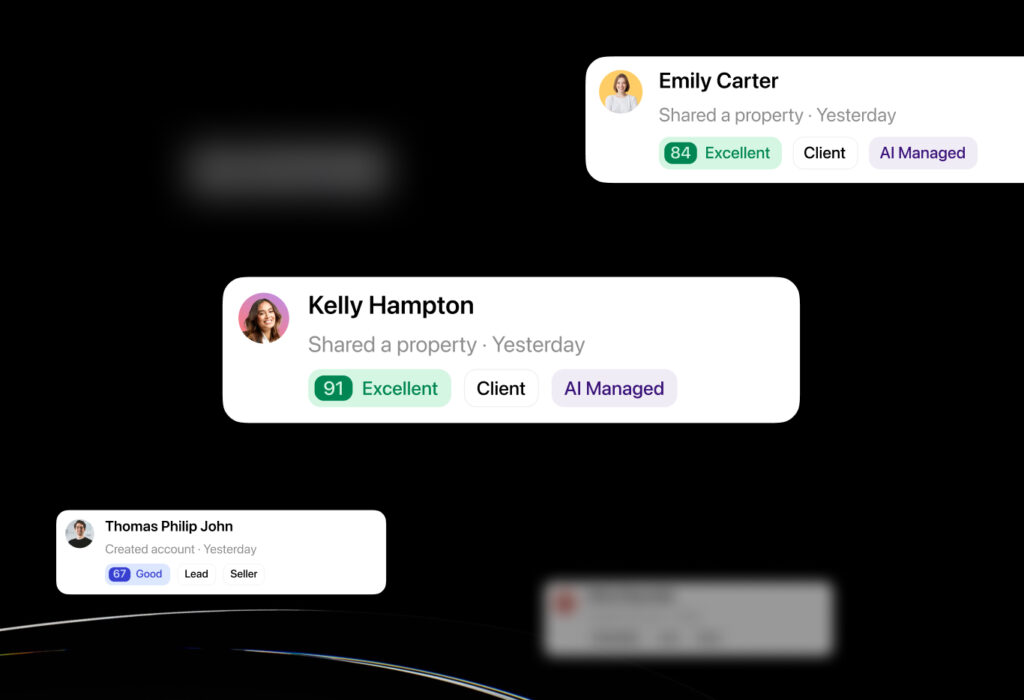
Luxury Presence's AI CRM reads signals across your contacts, like career changes, browsing spikes, and email activity, and its Smart Actions feature turns those into a ranked daily list of who to reach out to and what to say, drafted in your voice. It runs alongside whatever CRM you already use, so the win is finding deals hiding in a database you already have instead of building a new system from scratch.
Matt Breitenbach, luxury real estate agent, on why he treats his database as the job: "It amazes me that brokers are not using CRMs. There's so much power in automation," he says. His team built an email campaign that invites past leads into a private market database instead of letting them go cold. "That's the main thing agents should be doing: following up with past clients or business development. It should be more than 50% of your time."
Building a balanced lead engine
None of the strongest lead generation plans for 2026 lean on one tactic. They mix digital marketing, real-world outreach, community relationships, and technology, and they keep testing until the pipeline stays full.
Start with whatever fits your budget and your market today. The Free and Low-cost ideas above are enough to get moving this week. Layer in paid and technology-driven tactics once you have more to invest.
Ready to grow?
Turn your content into your best lead source
See how Luxury Presence helps agents turn website visits into closed deals