Find It Fast
Find It Fast
INTRODUCTION
Social media is not a place to chase vanity metrics. It is a baseline marketing strategy for modern real estate agents who want to build a durable, predictable book of business.
Your social presence operates as proof of your expertise, consistency, and relevance. Every buyer, seller, referral, and past client will look you up before reaching out. What they find determines whether you feel credible and worth contacting. Likes and views are signals. Demand is the outcome.
Tricia Lee summarizes this reality clearly: “I’ve worked with people [that say], I’ve followed you for six years and now I’m ready to buy a home.” Ricardo Rodriguez adds his perspective: “We are not doing it for the likes, we are not doing it for the views. We are doing it because we actually do get business out of that. If you are not at the forefront, you’re gonna be left behind.”
This playbook breaks down the systems high-performing agents use to create that momentum deliberately. When social media is treated as a growth asset rather than a popularity contest, every post has purpose and every interaction moves the business forward.
How to Use This Playbook
This playbook is designed to be used in motion. You do not need to read it top to bottom or master every platform before you begin. Real estate rewards consistent action, and this playbook is built to help you take it.
Each section contains a specific play. A play is a repeatable system that produces predictable results when run with intention. Some plays establish your foundation. Others help you create content, build authority, generate leads, or strengthen your personal brand. None require a marketing degree or a full production team. They do, however, require follow through.
You will see quotes from top agents and leaders throughout the playbook. These voices reflect the reality of modern real estate marketing and are included to reinforce what works in practice, not just in theory.
Move through the plays in the order that makes sense for you.
- If you are building your brand from the ground up, begin with the foundational plays.
- If you already have an established presence but lack consistency, go straight to the content systems.
- If your content performs well and you want to scale, focus on lead generation and paid advertising.
The only mistake is standing still. Pick a play. Run it fully. Review what happened. Then run it again. Over time, these small, repeatable actions become the engine of your digital presence and the foundation of a business that grows even when you are not on the phone or in a showing.
This playbook is here to help you build that engine. Let’s begin.
FOUNDATIONS
PLAY 1: Define Your Brand Position (in Just 30 Minutes)
Your brand position is the specific space you occupy in your market’s mind. Without clarity here, your content will feel generic and forgettable. This play helps you define exactly who you serve, what makes you different, and why clients should choose you.
Step 1: Identify Your Ideal Client (10 minutes)
Write down the specific person you serve best. Avoid broad categories like “first-time homebuyers” or “luxury sellers.” Get specific.
Answer these questions in writing:
- What is their age range and life stage?
- What is their household income and price range?
- What is their current housing situation?
- What keeps them up at night about real estate?
- What are their goals beyond just buying or selling?
- What do they value most in an agent?
- Where do they spend time online?
Example: Sarah is a 34-year-old marketing director earning $120,000 annually. She rents a two-bedroom apartment downtown and wants to buy her first condo in a walkable neighborhood under $450,000. She’s overwhelmed by the process, worried about making a bad investment, and needs an agent who explains everything clearly without talking down to her. She spends her time on Instagram and TikTok.
Step 2: Define Your Unique Value Proposition (10 minutes)
Your unique value proposition (UVP) is not “great service” or “going the extra mile.” Every agent claims those things. Your UVP is the specific, provable way you deliver value that others don’t.
Complete this sentence: “I help [ideal client] achieve [specific outcome] through [unique method or approach] so they can [ultimate benefit].”
Example: “I help overwhelmed first-time buyers in urban markets find the right property in under 30 days through my Confidence Buying System so they can stop renting and start building wealth without the stress.”
Step 3: Identify Your Differentiators (10 minutes)
List three things that genuinely set you apart. These should be specific and ownable.
Categories to consider:
- Your background before real estate (former teacher, contractor, finance professional).
- Your specialized knowledge (historic homes, new construction, investment properties).
- Your process (virtual tours, data-driven pricing, white-glove concierge).
- Your personality and values (no-pressure, hyper-responsive, community-focused).
- Your niche market expertise (specific neighborhoods, price points, buyer types).
Avoid generic claims like “honest” or “hardworking.” Everyone should be those things. Focus on what’s distinctively, probably you.
The Specialist Approach
Malte Kramer, founder and CEO of Luxury Presence, advises: “Pick a niche and make your brand and content about that niche. There are riches in niches.” When AI systems and consumers search for specific expertise, you want to be the undisputed authority in your chosen area.
The Personality-Driven Approach
If you have a strong personality or perspective, lean into it. The real estate industry is often seen as bland and sales-focused. Authenticity cuts through the noise.
Frances Katzen, top New York agent, embodies the straight-shooting approach: “I say what I think, not what they want to hear. I’ve had to master and learn how to be a chameleon in terms of learning when to say it, and when not to say it. You take away their choice when you’re not straight. I think New York is such a hard-hitting town. They don’t want to talk about the weather. They want to know what you’re going to do for me, and how you’re going to do it, and what’s the number.”
Visual Brand Consistency
Dawn McKenna, known for her distinctive pink branding, explains her strategy: “My biggest competitors are men, so how to stand out? Pink.” This simple but bold color choice made her instantly recognizable in her market.
Ricardo Rodriguez emphasizes visual consistency in luxury branding: “There is a visual connectivity to that luxury consistency. It feels like us. It looks like us.”
Document your brand position and refer to it before creating any content. Every post should reinforce this positioning.
PLAY 2: Build Your Strategic Content Pillars
Content pillars are the 3-5 core themes you’ll consistently create content around. They give your content strategy structure and ensure you’re not randomly posting whatever comes to mind. Your pillars should align with your brand position and serve your business goals.
The Framework: Education, Entertainment, Engagement, Authority, Community
Most successful real estate social accounts balance content across these five categories. You’ll emphasize different pillars based on your brand, but you need at least three active pillars to maintain audience interest.
Step 1: Choose Your Three Primary Pillars
Select three from the categories below. These will be your focus.
Education (teaching your audience)
- Market updates and trend analysis
- Home buying or selling process breakdowns
- Mortgage and financing education
- Neighborhood guides and local insights. Home maintenance and ownership tips
- Investment and wealth-building through real estate
This pillar positions you as a knowledgeable resource. It builds trust with people who aren’t ready to work with you yet.
Entertainment (showing your personality)
- Day-in-the-life content
- Behind-the-scenes of showings and deals
- Real estate humor and relatable situations
- Client stories and testimonials
- Local business spotlights and community events
- Your interests outside real estate
- Video house tours
This pillar makes you likable and memorable. People do business with people they feel connected to.
Engagement (sparking conversation)
- Questions and polls
- This or that choices
- Market predictions and hot takes
- Controversial topics (respectfully handled)
- Fill-in-the-blank prompts
- Caption this photo challenges
This pillar drives comments and shares, which boost algorithmic reach. It also helps you understand what your audience cares about.
Authority (establishing expertise)
- Complex transaction case studies
- Data analysis and market reports
- Speaking engagements and media features
- Award recognitions and milestone celebrations
- Thought leadership on industry trends
- Advanced strategy content
This pillar attracts referrals from other professionals and higher-end clients who want proven expertise.
Community (building local connection)
- Local events and happenings
- Neighborhood highlights and hidden gems
- Small business features
- Community issues and developments
- Local market statistics
- Resident and business owner interviews
Jonathan Spears built his brand around 30A, a collection of coastal communities in Florida: “Because we made ourselves the authority on 30A and branded it, we were able to generate so many [leads] that then turned to business. Being the mayor of your market is about picking a specific geography and just obsessing over it.”
This pillar establishes you as the mayor of your market. It’s particularly powerful for building long-term local brand equity.
The Local Expert as Storyteller
Tricia Lee demonstrates this with her Brooklyn storytelling: “I like to look up the history of the homes. I have found some of the most salacious, scandalous stories of these owners. I think you begin with what you do know. You lead strong with [that]. And then as your information grows, you share that along the way. You need to share what is new to you, what’s exciting to you, what you’re interested in.”
Her advice on building authority: “Who else is going to tell you where you live, what you do, where you hang out, what’s the right neighborhood for you, based on your interests,” but your real estate agent?
Step 2: Map Your Pillars to a Weekly Schedule
Assign each pillar to specific days of the week. This creates consistency your audience can rely on.
Example weekly schedule (pick 3-5):
- Monday: Market Update (Education)
- Tuesday: Behind the Scenes (Entertainment)
- Wednesday: Neighborhood Spotlight (Community)
- Thursday: Q&A or Poll (Engagement)
- Friday: Client Win or Case Study (Authority)
- Saturday: Local Business Feature (Community)
- Sunday: Personal/Lifestyle (Entertainment)
Step 3: Create a Master Content Bank
Under each pillar, brainstorm 20-30 specific content ideas. This bank becomes your idea library when you’re planning content.
Example for Education Pillar:
- How to read a comparative market analysis
- Five things that kill your home’s value
- What happens between offer acceptance and closing
- How to prepare your home for appraisal
- Understanding title insurance and why it matters
- The real cost of homeownership beyond the mortgage
- How to negotiate inspection repairs
- What credit score do you really need to buy
- How much should you offer over asking in this market
- The three documents every seller must have ready
Build out all three of your primary pillars with this level of specificity.
Step 4: Define Your Content Ratio
Decide how you’ll balance your content across your pillars. A good starting ratio:
- 40% Education
- 30% Entertainment
- 20% Community
- 10% Authority or Engagement
Adjust based on your goals. If you’re building local brand awareness, increase Community. If you’re establishing yourself as the luxury expert, increase Authority. If you’re growing a personal brand, increase Entertainment.
The Sustainable Cadence Formula
Aaron Grushow, Luxury Presence’s Senior Marketing Manager for Social Media, says “the more you post, the better. Especially on platforms like TikTok, where most of your viewers aren’t your direct followers. You really can’t post too much.”
He continues, “the more you post, the more you learn and improve. People always debate quality versus quantity, but I think quality comes from quantity. It’s hard to get better without putting a lot out there and refining what works and what doesn’t.”
Your content pillars are your strategic guardrails. They prevent reactive, random posting and ensure every piece of content serves your brand position and business goals.
PLATFORMS

PLAY 3: Choose Your Primary Platforms (Decision Framework)
The biggest mistake many agents make is trying to be everywhere at once. Spreading yourself thin leads to burnout and mediocre content across every platform. If you’re early in your social media journey, focus your efforts: choose one primary platform and one secondary platform based on where your ideal clients spend their time and which formats best match your strengths.
As you grow, establish a consistent workflow, and optimize your content production, you can expand strategically. Branching out to additional platforms becomes an effective way to scale your visibility, but only once you have a solid foundation and a repeatable system in place.
Step 1: Understand the Platform Differences
Each platform serves a different purpose and attracts different user behavior.
Instagram is the visual lifestyle platform. Users browse for inspiration, entertainment, and connection. The feed, Stories, and Reels each serve different functions. Best for agents who enjoy visual storytelling, lifestyle content, and building personal brands. Strong for residential real estate in desirable locations.
TikTok is the discovery and entertainment platform. Users scroll for quick hits of value or humor. The algorithm pushes content to new audiences aggressively. Best for agents comfortable with video, willing to show personality, and targeting younger buyers. Exceptional for agents who want rapid audience growth.
YouTube is the authority and depth platform. Users search for specific information and watch longer content. SEO makes your content discoverable for years. Best for agents who can commit to longer-form video content and want to build deep expertise positioning. Strong for complex topics like investing or luxury markets.
LinkedIn is the professional and referral platform. Users engage with career content and business insights. Strong for B2B relationships and professional credibility. Best for agents targeting relocating professionals, investors, or building referral networks with other professionals. Works well for agents with strong business backgrounds.
Facebook is the community and local platform. Users connect with friends, join local groups, and engage with community content. Older demographic than Instagram or TikTok. Best for agents focused on specific communities, older buyers and sellers, or hyperlocal branding. Strong for community event promotion and local business partnerships.
Step 2: Match Platforms to Your Ideal Client
Where does your ideal client spend their time online?
- If your ideal client is 25-40 years old and values design and lifestyle: Instagram primary, TikTok secondary.
- If your ideal client is 22-35 years old and discovering real estate: TikTok primary, Instagram secondary.
- If your ideal client is 35-55 and researching major decisions: YouTube primary, Instagram or LinkedIn secondary.
- If your ideal client is 30-50, career-focused, and relocating: LinkedIn primary, Instagram secondary.
- If your ideal client is 45-65 and deeply rooted in the local community: Facebook primary, Instagram secondary.
Step 3: Match Platforms to Your Content Strengths
Which format do you naturally gravitate toward?
- If you’re comfortable on camera and enjoy quick, personality-driven content: TikTok or Instagram Reels.
- If you prefer longer explanations and teaching in depth: YouTube.
- If you like mixing photos, graphics, and short videos: Instagram.
- If you’re strong at written content and professional insights: LinkedIn.
- If you’re deeply embedded in your community and love local storytelling: Facebook.
Step 4: Apply the Decision Matrix
Rate each platform on these three factors (1-5 scale):
- Audience alignment (where your ideal clients are)
- Content strength match (formats you can execute well)
- Consistency potential (can you sustain this platform long-term)
Choose the platform with the highest total score as your primary. Choose the second-highest as your secondary.
Step 5: Commit to the 90-Day Test
Once you choose your platforms, commit fully for 90 days before reconsidering. Platform-hopping every few weeks guarantees failure. Set these minimum benchmarks:
- Post to your primary platform 5-7 times per week
- Post to your secondary platform 2-3 times per week
- Engage daily with comments and direct messages on both platforms
- Track your analytics weekly
- At the 90-day mark, evaluate whether the platforms are delivering results. If not, assess whether the issue is platform choice or execution quality
Platform Plays
Instagram: The Everything Engine
Instagram functions as the Swiss Army knife of social media for real estate agents. The platform offers multiple content formats (feed posts, Stories, Reels, carousel posts) that each serve different strategic purposes.
Your success on Instagram comes from understanding how to use each format effectively and creating a cohesive brand presence.
The Instagram Content Mix
Your Instagram strategy should include all four content types, each serving a specific role.
Feed posts are your permanent portfolio. These are the polished, evergreen posts that tell your brand story to new visitors. Think of your feed as your visual resume. When someone discovers you, they’ll scroll your feed to decide if they should follow or reach out. Use feed posts for professional listings, client testimonials, market insights, and branded educational content.
Stories are your daily connection tool. Stories disappear after 24 hours, so the pressure for perfection is lower. Use Stories for behind-the-scenes content, quick tips, day-in-the-life moments, polls and questions, and real-time updates on showings or market news. Stories keep you top-of-mind with your existing audience without cluttering your feed.
Reels are your growth engine. The algorithm pushes Reels to non-followers aggressively. Reels are how you’ll attract new audience members. Use Reels for educational content, trending audio interpretations, neighborhood tours, property showcases, and personality-driven content. Reels should be your primary focus if you want to grow your following.
Carousel posts are your deep-dive education format. Carousels allow multiple images or graphics in a single post. The swipe-through format keeps people engaged longer, which the algorithm rewards. Use carousels for market reports, home buying or selling process breakdowns, neighborhood guides, listicles, and before-and-after transformations.
Instagram Live is your real-time trust builder. Live streams create immediacy and authenticity that polished posts cannot replicate. When you go live, your followers receive notifications, and the platform boosts your session for increased visibility. Use Instagram Live for interactive Q&A sessions, live market updates, virtual open houses, neighborhood walk-throughs, expert interviews, and behind-the-scenes looks at your process. Lives allow your audience to engage with you directly, ask questions in real time, and experience your expertise unfiltered. This format accelerates trust, deepens relationships, and helps convert passive followers into active clients.
Your Weekly Instagram Posting Schedule
The following schedule represents an optimal cadence for accelerating growth and maximizing reach. However, it is not required, especially for agents who are just beginning to build their social media presence. Start with what is sustainable, then scale up as you become more efficient and comfortable on camera.
Optimal for Growth:
- Post 5–7 Reels per week as your primary discovery content.
- Post 3–5 feed posts or carousels per week to build out your permanent brand portfolio.
- Post 5–7 Stories per day to maintain consistent visibility with your audience.
- Post to Instagram Live at least once a week.
- Engage with comments and DMs daily to strengthen relationships and signal algorithmic activity.
If You’re Just Getting Started:
- Aim for 2–3 Reels per week to build momentum.
- Post 1–2 feed posts or carousels per week to establish your visual identity.
- Share 3–5 Stories per day focusing on authenticity over perfection.
- Spend 10–15 minutes per day engaging thoughtfully with your audience.
- Start experimenting with Instagram Live.
This allows newer creators to build consistency without burnout, while providing a clear roadmap for scaling once systems and confidence are in place.
The Growth Strategy
Building an Instagram following requires proactive engagement, not just posting.
- Follow 20-30 accounts daily in your target audience (local residents, potential clients, complementary businesses).
- Comment meaningfully on 20-30 posts per day (not just emojis).
- Respond to every comment on your posts within the first hour.
- 2-3 Instagram Live posts.
- Send 5-10 thoughtful DMs per week to accounts that engage with your content.
- Collaborate with other local accounts through shared content or takeovers.
TikTok: The Discovery Engine
TikTok is unlike any other platform because the algorithm shows your content to people who don’t follow you. This makes it the fastest way to build an audience from zero. TikTok rewards consistency, authenticity, and value-driven content. Perfection doesn’t matter here. Speed and volume do.
Understanding the TikTok Algorithm
TikTok’s algorithm doesn’t care about your follower count. It tests every video with a small audience and promotes videos that perform well. The key metrics TikTok watches are watch time (do people watch to the end?), engagement rate (likes, comments, shares), and re-watches (do people watch multiple times?).
Your goal is to create videos that hook viewers immediately, deliver value quickly, and encourage interaction. If your first 100 views produce strong engagement, TikTok will push your video to thousands more.
The TikTok Content Formula
TikTok videos should follow this structure:
- Hook (first 1-3 seconds): Grab attention immediately. Use pattern interrupts, bold statements, or intriguing questions.
- Value delivery (next 20-45 seconds): Teach something, reveal something, or entertain. Get to the point fast.
- Call to action (final 3-5 seconds): Tell viewers what to do next (follow, comment, check your bio).
Also take advantage of TikTok Live, ideal for rapid-fire Q&A, reacting to real estate trends, or casually breaking down common misconceptions. The informal, spontaneous feel of TikTok Live allows your personality and expertise to shine, helping you build trust quickly and draw new viewers back to your main content and lead funnels.
The Posting Strategy
TikTok rewards frequent posting more than any other platform.
- Post 1-3 videos per day for maximum growth.
- Do 2-3 TikTok Live videos
- Post at consistent times when your audience is active (check your analytics).
- Batch-create content to maintain consistency without burnout.
YouTube: The Authority Engine
YouTube is the platform for agents who want to build deep, lasting authority. Unlike TikTok or Instagram, where content disappears into the feed after 48 hours, YouTube videos remain discoverable through search for years. YouTube is where you establish yourself as the go-to expert in your market.
Why YouTube Matters for Real Estate
People search YouTube when they’re researching major decisions. Home buying and selling are complex, high-stakes transactions. Buyers and sellers want to learn from knowledgeable experts before they reach out. YouTube lets you demonstrate expertise at depth.
Ben Belack emphasizes focusing on the right metrics: “The metrics that I look at and value most are who watched for longer than 30 seconds and what was the average watch time. As long as those metrics stay important to YouTube, they’re important to me.”
He explains that creators should treat YouTube like any other business investment and evaluate the outcome with a clear lens: “I think if you’re an entrepreneur [who is] going to deploy funds and time, you have to decide, what is my return of investment? Some of my colleagues in Los Angeles have incredible YouTube following, but I guarantee they’re not getting any leads from it.”
Your Publishing Schedule
YouTube rewards consistency, but doesn’t require daily posting like TikTok.
- Start with one video per week minimum.
- Increase to 2-3 videos per week as you build systems.
- Post on the same day and time each week to train your audience.
LinkedIn: The Professional Engine
LinkedIn connects you with decision-makers, executives, and high earners making significant real estate decisions. It’s ideal for attracting corporate relocations, building referral networks with professionals (lenders, attorneys, financial advisors), and establishing credibility.
Content Strategy
- Standard posts (3-5 per week): Market insights, client wins, professional updates
- Articles (1-2 per month): In-depth market reports or neighborhood guides
- Videos (1-2 per week): Market updates or property highlights
- Stories (3-5 per day): Quick visibility touchpoints
Growth Activities
- Engage with 20-30 posts daily through meaningful comments
- Send 5-10 personalized connection requests weekly to complementary professionals
- Join relevant local business and real estate groups
- Request recommendations from past clients
- Respond to all comments/messages within 24 hours
Focus: Position yourself as a trusted advisor through substantive content and strategic networking with professionals who become referral sources.
Facebook: The Community Engine
While younger users have migrated to Instagram and TikTok, Facebook is still where neighborhoods, local businesses, parent groups, and community organizations gather online. For agents focused on hyperlocal branding, community connection, and reaching homeowners aged 35+, Facebook is essential.
The platform’s strength lies in its group-based communities and its effectiveness for local advertising.
Content Strategy
- Personal Profile (5-7 per week): Community updates, local events, behind-the-scenes moments, personal milestones
- Business Page (3-5 per week): Listings, open houses, testimonials, market reports, educational content
- Groups (daily): Participate in 10-15 local community groups with helpful, non-salesy content
- Stories (3-5 per day): Quick stats, property previews, polls, behind-the-scenes
- Facebook Live (1-2 per week): Open house tours, Q&As, market updates, neighborhood walkthroughs
- Events: Create for every open house and community activity
Growth Activities
- Comment on 10-15 community posts daily with genuine, helpful responses
- Respond to all comments/messages within a few hours
- Share content from local businesses and organizations
- Use Facebook ads to boost high-performing posts to local audiences
- Consider creating your own group for your farm area or niche
Focus: Authentic community participation and accessibility, not just broadcasting content.
CONTENT SYSTEM

PLAY 4: The Monthly Content Sprint (Batch Workflow)
Most agents fail at social media because they try to create content daily. This approach is exhausting and unsustainable. The solution is batch content creation using a monthly sprint workflow. One focused day per month can produce 20-30 pieces of content.
The Batch Content Philosophy
Creating content in batches separates creation from publishing. This separation is critical. When you try to create and post in real time, you risk scrambling. When you batch create, you build a content library you can schedule and publish strategically.
Batch creation also may produce better content. When you’re in “creation mode” for several hours, you hit a flow state that generates ideas and quality you can’t achieve in 15-minute increments.
Step 1: Calendar Planning Day (1 hour, last week of the month)
Before you create any content, plan your calendar for the upcoming month.
- Review your content pillars and ensure you’re maintaining your pillar balance.
- Note any important dates (holidays, local events, market report releases, open houses).
- Identify content themes or campaigns for the month.
- Map out a publishing schedule noting which content types go out which days.
Step 2: Content Creation Day (4-6 hours, first week of the month)
Block off one day (or two half-days) for focused content creation.
- Turn off notifications and email.
- Lock yourself in a quiet space.
- Dress as you normally would for content to maintain visual consistency.
- Set up your filming space once and knock out multiple videos.
The batch creation order:
- Start with video content first. Videos require the most energy and setup. Record 8-12 short videos (Reels, TikToks, or Stories). Record 1-2 longer YouTube videos if applicable. Take 20-30 photos throughout the day (outfit changes, location changes).
- Create written content second. Write 4-6 carousel post scripts or captions. Outline 2-3 blog posts or long-form LinkedIn articles.
- Design graphics third. Create 5-10 branded graphics for educational content. Create quote graphics or data visualizations. Design any lead magnet graphics needed.
Step 3: Editing and Finalization (2-3 hours)
After your creation day, dedicate time to editing and finalizing your content.
- Edit all videos using a simple app like CapCut or InShot.
- Edit photos using Lightroom Mobile or VSCO for consistent filters.
- Write captions for all visual content.
- Add captions/subtitles to all videos for accessibility.
Create a consistent visual style across your content for brand recognition.
Step 4: Scheduling (1 hour)
Use a scheduling tool to load your content calendar for the month.
- Schedule your primary content at optimal posting times based on your analytics.
- Leave gaps for real-time content (open houses, spontaneous moments, trending topics).
- Build in flexibility to respond to market news or viral opportunities.
Batch content creation is the difference between sustainable consistency and burnout. One focused day per month will produce more and better content than scrambling daily.
PLAY 5: The Reverse Pyramid Content System (Repurposing)
The Reverse Pyramid system is a content repurposing framework that creates 15-20 pieces of content from a single long-form piece. Most agents create content horizontally (different topics across platforms).
Smart agents create content vertically (one topic across platforms in different formats).
The Concept: Start Long, Go Short
The traditional content approach is exhausting: Creating unique content for every platform. The Reverse Pyramid flips this. You create one substantial piece of content and then break it into smaller pieces optimized for each platform.
Ben Belack emphasizes this exact strategy: “Everything starts with YouTube because YouTube [content] can be made smaller and repurposed. If you create a podcast for YouTube, then you can transcribe that into a blog post, which helps for search engine optimization on Google. Then you can maybe chop up some of those episodes, make them a [lead magnet] ebook. You now have their email address. You can retarget them over time.”
Step 1: Create Your Pillar Content (The Peak)
Choose one substantial content piece to create each week or month.
Options for pillar content:
- A 10-20 minute YouTube video on an important market topic.
- A comprehensive blog post (1,500-2,500 words) about your local market or process.
- A detailed market report with data and analysis.
- A client case study or success story video.
- A neighborhood deep-dive with statistics and insights.
This pillar content should be valuable, evergreen, and comprehensive. It should fully address a topic your ideal client cares about.
Step 2: Break It Into Medium-Form Content
Extract key sections from your pillar content and reformulate them as standalone pieces.
From a YouTube video:
- Create a 5-slide Instagram carousel hitting the main points
- Write a LinkedIn post highlighting the most surprising insight
- Turn the video into a blog post with embedded video
- Create an email to your list summarizing the key takeaways
- Pull 3-5 quote graphics from your best soundbites
Step 3: Break It Into Short-Form Content
Take individual points from your pillar content and turn each into its own micro-content piece.
From a 15-minute YouTube video about “5 Mistakes First-Time Buyers Make”:
- Create 5 separate TikToks or Reels, one for each mistake
- Create 5 Instagram Stories, one per mistake
- Create 5 quote graphics for feed posts
- Write 5 separate tweets or LinkedIn posts
- Create 5 email snippets for a drip campaign
The Reverse Pyramid system is how small teams and solo agents compete with big brands. One great idea, expressed 20 different ways across 30 days, beats 30 mediocre ideas expressed once.
PLAY 6: High-Performance Captions (Fill-In Template + Examples)
Captions are where you build relationships with your audience. The visual content gets attention, but the caption drives engagement, builds trust, and converts followers into clients. Most agents treat captions as an afterthought, but high-performing agents know captions offer incredible opportunity for connection.
The Caption Formula
Every high-performing caption follows this structure:
- Hook (first line): Grab attention and entice the reader to click “more.”
- Body (3-5 sentences): Deliver value, tell a story, or teach something meaningful.
- Call to action: Tell readers exactly what to do next (comment, save, DM, click link).
- Engagement prompt: Ask a question or create a reason to comment.
The Hook: Your First Line is Everything
Instagram and Facebook show only the first 125 characters before the “more” button. Your hook must create curiosity or urgency.
Hook formulas that work:
- Bold statement: “Most agents won’t tell you this, but…”
- Question: “Want to know the real reason homes are sitting longer?”
- Contrarian take: “Unpopular opinion: Now might be the best time to buy.”
- Pattern interrupt: “STOP scrolling if you’re thinking about buying this year.”
- Numbered list: “Here are 3 mistakes costing buyers $20k+…”
- Story opener: “My client just lost out on their dream home. Here’s what happened.”
Avoid generic hooks like “Happy Monday!” or “Check out this listing.” They don’t create any reason to keep reading.
The Body: Deliver Substance
The body of your caption should provide real value. Avoid fluff and filler.
For educational posts:
- State the problem or question clearly
- Provide actionable information or insight
- Use short paragraphs and line breaks for readability
- Avoid jargon
- Write like you’re explaining to a friend
For storytelling posts:
- Set the scene with specific details
- Create tension or challenge. Resolve with a lesson or insight
- Connect the story to your reader’s experience
The Call to Action: Tell Them What To Do
Every caption should have a clear next step, or call to action. Don’t assume people will know what you want them to do.
CTA options:
- “Comment below with your biggest question about [topic].”
- “Save this post so you have it when you need it.”
- “Send this to someone who needs to see it.”
- “DM me the word [KEYWORD] to get my free [resource].”
- “Tap the link in my bio to [specific action].”
- “Share your experience in the comments.”
Use one primary CTA. Multiple CTAs create confusion and reduce action.
Great captions turn casual scrollers into engaged followers and engaged followers into clients. Invest time in your captions and your content will perform exponentially better.
VIDEO

PLAY 7: The 5 Core Video Types Every Agent Must Use
Video is no longer optional in real estate marketing. Buyers and sellers want to see you, hear you, and understand your expertise before they reach out. These five video types cover the full spectrum of what your audience needs to know, like, and trust you.
Video Type 1: The Educational Explainer
Purpose: Establish expertise and provide value without asking for anything in return.
Format: Short (30-90 seconds) teaching videos that answer one specific question.
Educational explainers are the foundation of your video content strategy. These videos position you as a knowledgeable resource by solving specific problems your ideal clients face. The key is to focus on one question per video and deliver a clear, actionable answer.
Educational content builds trust with people who aren’t ready to work with you yet. You’re providing value without asking for anything in return. This creates reciprocity. When they’re ready to buy or sell, you’re the knowledgeable, helpful expert they remember.
Video Type 2: The Property Showcase
Aaron Grushow, who has over 1.3 million followers on TikTok, says that “property tours are one of the best ways to build credibility and break into any market. They help position you as an expert in a specific property type or neighborhood and give you a chance to show off your personality if you’re comfortable getting in front of the camera. They’re also really engaging, especially when you highlight unique homes or interesting features. And if you don’t have your own listings, you can still create great content by featuring open houses or listings from other agents in your office, as long as you get their permission first.”
Format: 45-90 second property walkthroughs with narrative and context.
Filming Tips:
- Film during golden hour when possible for the best natural light.
- Use smooth camera movements (gimbal or steady hands).
- Add text overlays highlighting key features viewers might miss.
- Include lifestyle staging (coffee on counter, book on couch, fresh flowers).
- Use music that matches the property’s vibe (energetic for modern, classical for traditional).
- Keep tours under 90 seconds for social media (save full tours for YouTube).
Video Type 3: The Market Update
Purpose: Position yourself as the local market authority and trusted source for current conditions.
Format: 60-90 second data-driven updates on market conditions.
Market updates are your opportunity to demonstrate expertise and provide context that buyers and sellers desperately need. The key is not just reporting numbers, but interpreting what they mean for real people making real decisions.
- Monthly inventory levels and what they mean for buyers vs. sellers.
- Interest rate changes and their practical impact on affordability.
- Average days on market trends and timing strategies.
- Price per square foot analysis by neighborhood.
- Comparison of current conditions to same time last year.
- Predictions for the next 30-60 days based on data.
Effective structure:
- Opening (0-5 seconds): Hook with the most interesting insight. “Here’s what happened in [City] real estate this week” or “The market just shifted, and here’s what it means for you.”
- Key Statistics (5-35 seconds): Share 3-5 metrics with context. Inventory levels (up/down percentage). Average sale price vs. last month/year. Days on market trend. Offer competition levels (multiple offers, price reductions). Interest rate impact on monthly payments.
- Your Analysis (35-60 seconds): This is where you add value. Don’t just report numbers, explain what they mean. “With inventory down 12%, here’s what this means if you’re buying…” “Sellers are seeing fewer offers but higher quality buyers because…” Connect the data to actionable insights.
- Actionable Advice (60-80 seconds): Give specific guidance based on the data. “If you’re thinking about buying this spring, here’s what I’d do…” “Sellers, now is the time to…” Make it clear and practical.
- CTA (80-90 seconds): “Want a deeper analysis for your specific situation? Link in bio to schedule a call” or “Follow for weekly market updates.”
Most people don’t know how to interpret market data. When you explain it clearly and give context, you become the trusted expert they turn to. Market updates also demonstrate that you’re active, informed, and paying attention to conditions that affect your clients’ biggest financial decisions.
Video Type 4: The Behind-the-Scenes
Purpose: Humanize your brand and show what you actually do as an agent.
Format: 30-60 second glimpses into your daily work and life.
Behind-the-scenes content breaks down the mystery of what real estate agents actually do all day. Most people have no idea what your job entails beyond showing houses. Documenting your day builds intrigue, relatability, and demonstrates your work ethic.
Format and structure:
Capture 5-10 second clips throughout your day as moments happen. Compile into 60-90 second montages with music and text overlays. Don’t film continuously. Select the most interesting or representative moments. Create a dynamic narrative, not a boring real-time documentary.
Structure options:
- The timeline approach: “6 AM – Coffee and CRM check. 9 AM – Showing in [Neighborhood]. 11 AM – Offer strategy call. 2 PM – Staging consultation. 5 PM – Paperwork (always paperwork). 7 PM – Finally home.”
- The challenge approach: “POV: Your buyer’s offer just got rejected for the third time” then show how you rally and strategize.
- The reveal approach: “What I actually do as a real estate agent” then rapid-fire clips of the variety of tasks.
Behind-the-scenes content makes you approachable and human. It demonstrates that you’re busy and successful (social proof) while remaining relatable and down-to-earth. People get to know you before they ever meet you, which shortens the trust-building process significantly. It also educates potential clients about the value you provide beyond just unlocking doors.
Video Type 5: The Client Success Story
Purpose: Build social proof and demonstrate tangible results you deliver.
Format: 60-120 second storytelling videos featuring client wins.
Client success stories are your most powerful form of social proof. They show potential clients exactly what’s possible when they work with you. The key is telling the complete story, not just stating the outcome.
Content structure:
- Challenge (0-20 seconds): Describe the client’s situation and the obstacle they faced. “Meet Sarah and Mike. They’d lost 5 offers in 6 months and were ready to give up” or “My sellers needed to close in 30 days to make their cross-country move.”
- Solution (20-60 seconds): Explain your strategy and specific actions. “Here’s what we did differently…” Detail 2-3 specific tactics you employed. Show your problem-solving process. Highlight your expertise or unique approach.
- Result (60-90 seconds): Share the measurable outcome with specifics. “Last week, they got the keys to their dream home in [Neighborhood] for $15K under asking” or “We sold in 18 days and my clients got full price plus a rent-back.”
- Testimonial (90-120 seconds): Include the client’s actual words (video clip or text overlay with their quote). Their emotional reaction carries more weight than your description. Show their genuine excitement, relief, or gratitude.
Success stories provide concrete evidence that you deliver results. They address objections and fears by showing how you’ve helped others overcome similar obstacles. Stories are memorable in ways that claims aren’t. They also demonstrate your problem-solving ability, communication skills, and genuine care for clients. When potential clients see themselves in your success stories, they’re far more likely to reach out.
Master these five core video types and you’ll have everything you need to build trust, authority, and client relationships through video.
PLAY 8: The On-Camera Confidence Builder (Reps + Technique)
Every confident on-camera agent you see started exactly where you are, feeling awkward and self-conscious. This play gives you the system to build confidence quickly.
The Confidence Equation: Reps + Technique + Mindset
You cannot think your way to camera confidence. You must practice your way there.
As Nile Lundgren explains, “You think I was born like this? You know how many hours I spent in front of a mirror to understand how my facial expressions look and why and how that will make an audience feel?”
His confidence today is the result of deliberate repetition and experimentation: “This is calculated. This is by design.”
For agents who feel uncomfortable on camera, his advice is direct and empowering: “If you’re not good at it, get good at it.”
That growth comes from consistent practice and a willingness to learn through trial and error. As he puts it, “You have to practice and you have to try and you have to be okay with failing.”
Phase 1: The Private Practice Stage (Week 1-2)
Start by filming yourself without posting anything. The goal is to get comfortable seeing yourself on camera.
Daily practice routine (15 minutes per day):
Set up your phone on a tripod or stack of books. Hit record and talk about anything for 60 seconds (your day, what you had for lunch, a topic you know well). Watch the video back immediately. Delete it. Repeat 5 times.
What you’ll notice: The first video feels excruciating. By the fifth video, you’ll start to relax. By day 7, you’ll barely think about it.
This phase is about desensitization. You’re training your nervous system that the camera is not a threat.
The 100 Video Challenge
Commit to creating 100 videos. Track them in a spreadsheet.
What will happen:
- Videos 1-20: You’ll feel awkward and robotic.
- Videos 21-50: You’ll start to find your voice and rhythm.
- Videos 51-80: You’ll get comfortable and natural.
- Videos 81-100: You’ll wonder why you were ever nervous.
By video 100, you’ll be unrecognizable from video 1.
Camera confidence is a skill, not a personality trait. Anyone can develop it with consistent practice and the right technique. Your future clients are waiting to meet you on camera. Start today.
PLAY 9: The Mobile Video Production Setup (Under $150)
You don’t need thousands of dollars in equipment to create professional-looking video content. Your smartphone is capable of producing broadcast-quality video if you support it with a few key accessories. This play gives you the exact gear and setup to create polished content for under $150.
Top producer Jose Prats explains his approach simply: “We shoot everything on the iPhone. And also I think it helps with the algorithm because most people are viewing on the iPhone, right?”
His perspective reflects a strategic advantage. High quality content is achievable with the device you already carry, and native-feeling footage often performs better with viewers and platforms. With the right lighting, audio, and stability tools, your phone becomes a complete video production system.
The Core Equipment (Total: $120-150)
You need only four things to dramatically improve your video quality.
- Phone Tripod with Remote ($25-40): Your tripod stabilizes your shots and lets you film hands-free.
- Lapel Microphone ($20-35): Audio quality matters more than video quality. People will tolerate mediocre video, but not bad audio.
- Ring Light or LED Panel ($35-60): Good lighting transforms your video quality instantly.
- Smartphone Gimbal (Optional but Valuable) ($40-80): A gimbal stabilizes your phone for smooth, cinematic movement.
However, Aaron Grushow believes that the newer iPhones have built-in stabilization and with some practice, you can get extremely stable video by simply holding your phone in your hand. Gimbals, he says, often get in the way and complicate basic filming needs.
ENGAGEMENT & PSYCHOLOGY

PLAY 10: Build Trust Using the KLT System (Know-Like-Trust)
People do business with people they Know, Like, and Trust. Social media allows you to build all three at scale. The KLT System is a strategic framework for moving followers from awareness to conversion through intentional content design.
The KLT Framework
Every piece of content you create should serve one of these three purposes. Different content types build different levels of relationship.
Know (Awareness): Make People Aware You Exist
Goal: Get discovered by new people and communicate what you do.
Like (Affinity): Make People Enjoy Your Presence
Goal: Turn awareness into affinity by showing your personality and values.
Nile Lundgren emphasizes the power of imperfection: “Nobody likes perfect. You’ve got to have a little bit of an edge. You have to be willing to make fun of yourself a little bit. It’s okay not to take yourself too seriously. That’s endearing. People want to work with people who are funny, who are happy.”
Trust (Credibility): Make People Believe in Your Competence
Goal: Prove you deliver results and can be trusted with the biggest financial decision of someone’s life.
Roh Habibi explains his approach to building trust: “Call me. I’ll give you the answers. I’ll give you the tools. I’ll give you the resources, and then you could go speak back to them and you look like an absolute rockstar.” This advisor mentality builds lasting trust.
The KLT System is the psychological foundation of social media marketing. Use it intentionally, and you’ll turn strangers into clients systematically.
PLAY 11: The Save-Worthy Content Blueprint
Instagram and TikTok prioritize content that people save. Saves signal to the algorithm that your content has lasting value. When someone saves your post, the platform interprets it as “this is important” and pushes your content to more people. Save-worthy content is your most powerful growth tool.
Why Saves Matter More Than Likes
Likes are passive. Saves are intentional. When someone saves your content, they’re saying “I need this later.” This makes saves one of the strongest engagement signals for the algorithm.
The Save-Worthy Content Formula
Save-worthy content has three characteristics:
- Practical value: Teaches something actionable
- Evergreen relevance: Useful today and six months from now
- Easy-to-reference format: Organized clearly so people can find it again
Save-Worthy Content Types
Certain formats naturally drive saves because they provide reference value.
- Checklists and step-by-step guides
- Process breakdowns
- Cost breakdowns and calculators
- Template and script libraries
- Data and statistics
- Mistake avoidance content
- Comparison charts
- Resource lists
Save-worthy content builds your authority, extends your reach, and creates a library of valuable resources your audience can return to again and again. When you create content worth keeping, the algorithm rewards you with visibility.
PLAY 12: The Algorithm Optimization Checklist
Understanding how algorithms work is the difference between content that sits unseen and content that reaches thousands. Every platform’s algorithm is designed to keep users on the platform longer. Your job is to create content that aligns with that goal.
Universal Algorithm Principles (Across All Platforms)
While each platform’s algorithm is unique, they all prioritize similar signals.
Engagement Rate: Likes, comments, shares, saves relative to your reach. Higher engagement tells the algorithm your content is valuable.
Watch Time (for video): How long people watch your videos. The algorithm rewards videos people watch to completion.
He adds a critical insight: “Creating content is very hard. Documenting what you’re doing is very easy.”
Algorithm optimization is not about gaming the system. It’s about creating content that genuinely engages your audience in ways the platform rewards. Focus on value first, optimization second.
PERSONAL BRANDING
PLAY 13: Tell Your Origin Story (Template + Examples)
Your origin story is the narrative of why you became a real estate agent and what drives you. It’s one of the most powerful pieces of content you’ll ever create because it humanizes you, builds emotional connection, and differentiates you from every other agent posting listings.
Why Your Origin Story Matters
People connect with stories, not sales pitches. Your origin story answers the question every potential client has: “Why should I trust this person?” It reveals your values, motivations, and what makes you different.
Your Origin Story as Ongoing Content
Roh Habibi shares his powerful origin story: “For about eight nights in seven days, we traveled basically on donkeyback with these Sherpas over the Hindu Kush mountain range into Pakistan. We had to live there in a refugee camp for almost nine months.”
He explains his drive: “My ‘why’ is to not let everything that [my family] did be taken for granted. I want to be here, be present, and absolutely do everything that I possibly can to excel and milk the opportunity of what we like to call the American Dream.”
This vulnerability and authenticity create deep connections with clients who value his perspective and work ethic.
Your origin story is your competitive advantage. No one else has your exact background, experiences, and motivations. Own your story and share it boldly.
PLAY 14: Turn Client Wins into Case Studies (Story Framework)
Client success stories are your most powerful marketing tool. They provide social proof, demonstrate your competence, and show potential clients what’s possible when they work with you. But most agents waste this opportunity by posting generic testimonials. This play teaches you how to turn client wins into compelling case studies that sell.
Why Case Studies Work
Testimonials say “This agent is great.” Case studies say “This agent solved a specific problem and delivered a specific result.” Case studies are more convincing because they’re concrete and story-driven.
The Case Study Story Framework
Every case study should follow this narrative structure:
Part 1: The Challenge (Set up the problem)
- Who was the client? (Demographic, situation, no full names for privacy).
- What was their goal? (Buy their first home, sell quickly, downsize, invest).
- What obstacles were they facing? (Budget constraints, competitive market, unique property, tight timeline).
Part 2: The Approach (What you did differently)
- What strategy did you implement?
- What specific actions did you take?
- What expertise or resources did you bring to the table?
- How did you overcome the obstacles?
Part 3: The Result (The outcome)
- What was the measurable result? (Sold in X days, negotiated $X savings, closed in X weeks).
- How did the client feel about the outcome?
- Include a quote or testimonial if possible.
- What did this outcome mean for the client’s life beyond the transaction?
Part 4: The Lesson or Takeaway (What others can learn)
- What can potential clients learn from this story?
- What misconception does this case study challenge?
- What does this reveal about your approach?
Case studies transform your social proof from vague praise into concrete evidence of your problem-solving ability and results. Master this framework and you’ll turn every client win into a marketing asset.
LEAD GENERATION
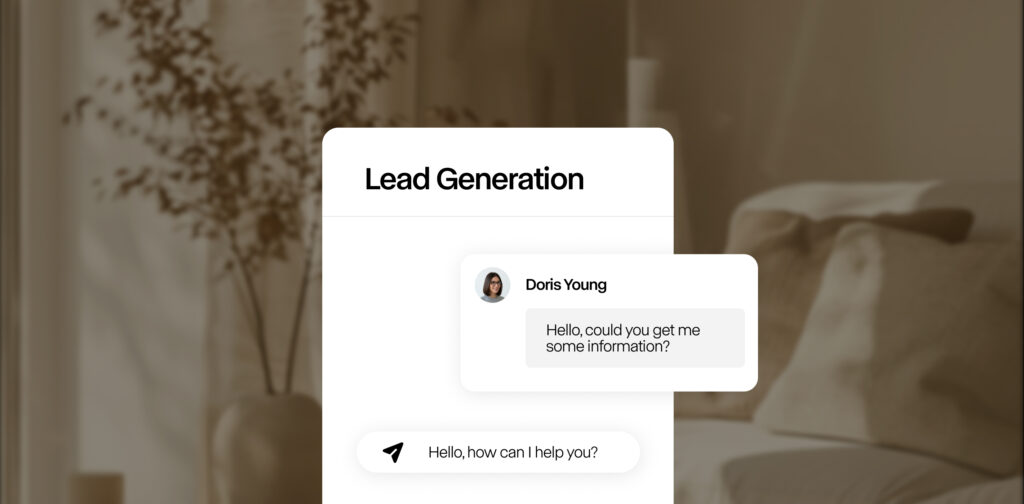
PLAY 15: The DM Funnel
Direct messages are the modern phone call. When someone reaches out through a DM with a question about the market or a property, they’re showing buying intent. Your ability to convert DM conversations into qualified leads determines whether social media generates real business or just vanity metrics.
The DM Funnel Philosophy
DMs are a lead qualification and nurture channel. Your goal is to move conversations from social media to a more personal channel (phone, email, in-person meeting) as quickly as possible without being pushy.
The DM funnel is where social media engagement becomes business. Master this skill and your social presence will generate consistent, qualified leads.
The DM Playbook in Action
1. Respond fast with a direct answer: A quick, helpful reply sets you apart immediately.
Goal: Build trust through responsiveness.
2. Ask one clarifying question: A single, simple question reveals motivation and timeline.
Goal: Determine whether the lead is real.
3. Offer a micro-win: Share one useful resource, insight, or property link.
Goal: Demonstrate expertise and create momentum.
4. Transition off social: Invite them to a call, text thread, or email.
Goal: Move the conversation to a channel where conversion happens.
5. Track the lead: Add the contact to your CRM with one note about what they asked.
Goal: Ensure consistent follow-up.
Why This Works
This funnel is simple, repeatable, and grounded in real buyer behavior. When you respond quickly, provide value, and guide the conversation with intention, social engagement becomes actual business.
PLAY 16: The Lead Magnet System (Creation + Distribution)
Lead magnets are valuable resources you offer in exchange for contact information. They bridge the gap between social media follower and CRM contact.
A well-designed lead magnet system converts passive audience members into active leads you can nurture over time.
When Lead Generation Makes Sense
Lead magnets work best when you have organic traction and genuine value to offer. They’re most effective for agents with established networks looking to expand their reach strategically, particularly for off-market opportunities or niche markets where scarcity creates demand.
Don’t create lead magnets as your first social media strategy. Build audience and trust first, then use lead magnets to capture and nurture the interest you’ve generated.
The Play: Build Your Lead Magnet System
1. Create one high-value resource: Choose a topic your ideal client cares about right now. Your goal is to offer something worth saving. Examples:
- First-Time Buyer Cost Guide
- Neighborhood Comparison Checklist
- Seller Pricing Strategy Workbook
2. Deliver it instantly: Set up a simple delivery method. Your goal is to make it effortless to receive the resource. Examples:
- Landing page with name and email
- DM automation triggered by a keyword
3. Follow up within 24 hours: Send a quick personal message.
Why this works
• The resource earns trust
• Instant delivery creates goodwill
• Personal follow-up converts interest into opportunity
PLAY 17: The Social-to-CRM Pipeline (Tracking + Follow-Up)
The gap between social media lead and closed transactions is where most agents lose money. You attract attention on social media, capture contact information through lead magnets or DMs, and then… nothing. The lead goes cold because you lack a systematic follow-up process.
Measuring What Matters
Maria Coukoulis from The Spears Group emphasizes the importance of tracking: “You could be spending thousands and thousands of dollars on social media, and you have no idea if that’s giving you a return on your investment. At a moment’s notice, you could know: I have converted 10 leads this year and I’ve made $50,000 off it.”
She adds about their success with digital leads: “From the very top, our internet leads through Luxury Presence have been incredible. We just closed on a $2.5 million listing; the lead came in about four months ago. Jonathan just ended a huge $6.7 million beachfront from an internet lead.”
The Social-to-CRM Pipeline Play
- Capture the lead immediately: Add their name or handle, where they contacted you, and what they asked for. Your goal is to ensure no lead gets lost in the feed.
- Assign a simple status and timeline: Categorize each lead so you always know who needs attention next. Your goal is to prioritize follow-up. Examples: Hot (active now); Warm (1–3 months); Cold (3–12 months)
- Create a predictable follow-up plan: Set one next action, one scheduled touch, and one identifying tag. Your goal is to create momentum and eliminate guesswork.
The social-to-CRM pipeline is where social media activity becomes predictable revenue. Build this system and your social presence will consistently generate closings, not just likes.
COMMUNITY & LOCAL AUTHORITY
PLAY 18: The Mayor Strategy (Local Influence Engine)
Position yourself as the champion of your city or neighborhood, not just someone who sells houses there. This play teaches you how to become the unofficial mayor of your market through strategic community content and genuine local advocacy.
The Mayor Mentality
Tricia Lee, known as the unofficial “mayor” of Brooklyn, built her brand on local passion: “I felt like the day I stepped into Brooklyn, the very day I was like, what is this? I need to live here. You’re not just selling them a home. You’re selling them a piece of Brooklyn life. You’re selling the food and the culture and the small business. The lifestyle.”
When asked about being called the mayor of her area, Lee responded: “If there were a mayor, I’d be her.” This wasn’t arrogance; it was the natural result of years of genuine community advocacy and content creation.
She emphasizes the value of omnipresence: “You should see me everywhere. Maybe you see me in your mailbox. Maybe you see me on a targeted ad on your Facebook. Maybe you see me at an event in the lounge room downstairs. I’m just in your mailbox every month. I’m just your coaster on your coffee table. That’s why you think that [I’m the top agent], because you’re constantly seeing me.”
How to enact the Mayor Strategy
- Choose your core geographic focus: Select the neighborhood or community you want to be known for and commit to showing up there consistently. Your goal is to become the person residents instinctively associate with insight, activity, and leadership.
Examples of what to highlight: new businesses, local stories, community events, and small details that only someone deeply invested in the area would notice.
- Create consistent local content: Share ongoing updates about what is happening in your chosen area and explain why it matters. Your goal is to help people understand their own community more clearly and to position yourself as the one who keeps them informed.
Content may include openings, developments, neighborhood history, lifestyle features, or commentary on changes residents are already discussing.
- Show up in the community: Attend events, support local businesses, and participate in activities that matter to residents. Your goal is to make your digital presence an extension of your real-world presence so that people see you everywhere.
Examples include farmers markets, school events, restaurant openings, neighborhood meetings, or any gathering where people engage with their community.
- Maintain steady visibility: Publish regularly, engage with local accounts, and interact with community conversations. Your goal is to stay top of mind through constant, authentic participation.
The Mayor Strategy is how you build unshakeable local authority that translates into top-of-mind awareness and endless referrals.
PLAY 19: The Collaboration Play (Local Businesses + Partners)
Strategic partnerships with local businesses and service providers multiply your reach, credibility, and community embeddedness without increasing your content production workload. This play shows you how to identify, approach, and activate collaboration opportunities that benefit everyone involved.
Collaboration Over Competition
Sharran Srivatsaa explains this strategy well: “I would go and talk to the five to 10 local businesses that have big social media presences, not just popular ones that have big media, and they say to them, Hey, let me interview you on Instagram live. As soon as you do that, they start to tag you, they start to promote you, they start to do all of that. I call this using other people’s audiences, right?”
This philosophy extends to community partnerships. Every collaboration should feel thoughtful and genuine, not transactional.
Enacting the Collaboration Play
- Identify partners with existing local audiences: Look for businesses, creators, and service providers whose followers include the people you want to reach. Your goal is to expand your visibility by tapping into audiences that already trust the voices you collaborate with.
Examples include coffee shops, boutique fitness studios, mortgage professionals, interior designers, contractors, or any local brand with a strong presence.
- Approach partners with a simple, mutually beneficial idea: Propose something easy to execute such as a short interview, a joint live session, or a shared post that highlights their work. Your goal is to make collaboration feel natural and low effort while giving the partner genuine value.
Examples may include “Can I feature your shop on my page this week” or “Let’s do a quick Instagram Live about the three most common renovation mistakes you see.”
- Create content that highlights the partner first: Lead with their story, their expertise, or their contribution to the community. Your goal is to demonstrate generosity, which increases the likelihood they will share the content with their audience.
Examples include a behind the scenes look at their business, a quick testimonial about their service, or a community recommendation.
- Engage in each other’s audiences after posting: Respond to comments, answer questions, and stay active in the conversation generated by the collaboration. Your goal is to convert borrowed attention into genuine familiarity.
Strategic collaborations expand your reach without expanding your workload. One great partnership can introduce you to thousands of potential clients who already trust your collaborator.
ANALYTICS

PLAY 20: The Weekly Analytics Review (What to Track + Why)
Most agents either ignore analytics completely or drown in data without knowing what matters. This play teaches you which metrics actually predict business outcomes and how to review them in a structured, disciplined way each week.
Beyond Follower Count
Follower count is the loudest metric, but not the most meaningful. Agents with 50,000 followers and no clients exist. Agents with 2,000 deeply engaged followers who close 30 transactions a year exist too. Your goal is to accumulate followers but even more, it is to build an audience that converts.
Focus your attention on the metrics that correlate with revenue, referrals, and real conversations.
Primary Metrics to Track
- Engagement Rate & Profile Visits: Signals audience quality and content relevance.
- Website Click-Through Rate: Measures intent and ability to drive traffic to owned assets.
- Watch Time Percentage: Critical for short-form video distribution and algorithmic reach.
- Save & Share Rate: Indicates high-value content that earns trust and grows reach passively.
- Lead Source Tracking: Shows which platforms or content types generate actual opportunities.
- DM Volume & Response Time: Reflects relationship-building and conversion potential.
These are the leading indicators of whether your content strategy is working.
The Role of Weekly Review (and Why You Must Interpret It Carefully)
Your Weekly Analytics Review is your business intelligence system. It helps you identify trends, remove guesswork, and make informed decisions. However, social metrics often lag behind the actual work. Consistency compounds slowly, then suddenly.
If you check your numbers too frequently or expect immediate results, you risk:
- Mistaking normal short-term fluctuations for failure
- Overcorrecting when you should stay the course
- Abandoning strategies that simply need time to work
- Shifting content direction prematurely
Growth metrics like reach, follower increases, and average watch time can take weeks of steady output to reflect strategic changes. Your weekly review should focus on directional signals, not day-to-day noise.
How to Use Weekly Data Without Overreacting
- Look for patterns over 4–6 weeks, not week-to-week volatility.
- Use weekly reviews to check consistency (Did you post the volume and type of content you planned?).
- Treat the analytics review as a calibration tool, not a mandate to overhaul your strategy.
- Make major changes only after observing a trend across multiple weeks.
What gets measured gets improved, but only when measured with discipline and proper context.
Commit to this practice and you will systematically optimize every aspect of your social media presence without falling into the trap of reactive decision-making.
PLAY 21: The A/B Testing Play (How to Improve Every Month)
Analytics tell you what happened. A/B testing tells you why and shows you how to improve. This play teaches you how to run systematic experiments that optimize every element of your content strategy.
Putting the Play into Action
Choose one variable to test: Select a single element such as the hook, caption length, posting time, or thumbnail style. Your goal is to isolate the effect of that one change so you can see what actually improves performance.
Create two versions of the same post: Keep the content identical except for the variable you are testing. Your goal is to ensure that any difference in results comes from the change itself, not from new content.
Post the versions at comparable times: Publish under similar conditions to avoid false signals caused by timing or audience fluctuations. Your goal is to get a fair comparison between the two versions.
Measure results after a set period: Compare metrics such as watch time, reach, saves, or profile visits. Your goal is to identify which version performed better and why.
Apply the winning version going forward: Use the insight to refine your next round of content and repeat the process with a new variable. Your goal is continuous improvement through small, consistent adjustments.
The Testing Mindset
Never guess. Test systematically and let data guide strategy.
The A/B Testing Play transforms you from content creator to content scientist. Every test makes you smarter. Every result either confirms your strategy or reveals a better path. Commit to systematic testing and your results will compound month over month.
AI & EFFICIENCY

PLAY 22: AI Content Workflow (Ideation → Creation → Editing)
AI tools are democratizing content creation. Agents running lean teams can now produce content at scales previously requiring dedicated marketing teams. This play shows you how to integrate AI into every stage of your content workflow without losing your authentic voice.
AI Is Changing Everything
Chirag Shah, a top real estate coach, puts it bluntly: “There are only two types of people left in the world in any industry, especially real estate. Agents that use AI and agents that don’t.”
He adds: “Having AI is like having an employee for $20 a month that is approximately 150 IQ in every different job field in the world.”
The Human + AI Formula
AI should enhance your efficiency, not replace your authenticity.
AI handles:
- Idea generation when you’re stuck
- First drafts of scripts and captions
- Technical editing and optimization
- Data analysis and reporting
- Repetitive tasks and scheduling
You handle:
- Final voice and personality
- Strategic direction and positioning
- Relationship building and conversations
- Complex problem-solving
- Authentic emotional connection.
The competitive advantage isn’t whether you use AI, but how strategically you integrate it while maintaining your authentic voice.
PLAY 23: Repurpose Long-Form Content With AI
AI tools have made content repurposing faster and more effective than ever. This play shows you how to use AI to transform one piece of long-form content into 20-30 pieces of platform-optimized content in under an hour.
The Content Repurposing Play
- Start with one substantial piece of content: Choose a long-form video, podcast, or written piece that covers a topic your audience cares about. Your goal is to create a single high-value source that can be broken into multiple smaller assets.
- Generate short-form videos and text excerpts: Convert the selected moments into clips, captions, and written insights that stand on their own. Your goal is to create multiple pieces of content without recreating ideas from scratch.
- Adapt each piece for different platforms: Adjust hooks, length, and tone so the content feels native to Instagram, TikTok, YouTube Shorts, or LinkedIn. Your goal is to maximize reach by matching each platform’s norms.
- Schedule the pieces across your content calendar: Spread the repurposed content over several days or weeks to keep your presence consistent. Your goal is to extend the life and impact of your original long-form asset.
The AI Repurposing Stack
AI-powered repurposing removes the bottleneck from content distribution. You’re no longer limited by editing time or creative energy. Create one great piece of content and let AI help you distribute it everywhere your audience lives.
Tools that can transform your content repurposing workflow include OpusClip, Descript, ChatGPT or Canva with AI features.
PAID ADVERTISING
PLAY 24: When to Use Ads
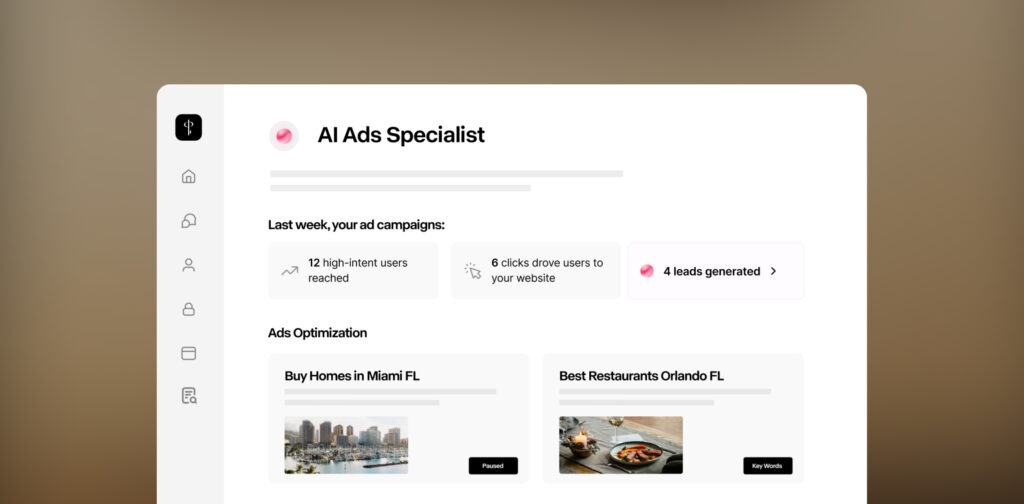
Paid advertising amplifies what works. It doesn’t fix what doesn’t. This play teaches you exactly when paid promotion makes strategic sense and when it’s a waste of money.
When Paid Makes Sense
Don’t spend money amplifying mediocre content or building awareness when you have no system to capture it. Paid advertising works best in specific scenarios.
Eric Haskell, a luxury agent, shares his approach: “I just wrote an expensive offer with someone. They’re like, oh, I saw you on social media. I’m like, oh shoot, it’s working.” He explains: “When you have that shift to that confidence that you should be there, then you can start to walk the walk.”
How to Implement Paid Ads
Confirm that your organic content is already performing: Review your recent posts and identify which ones received strong engagement, shares, or profile visits. Your goal is to amplify what is already resonating rather than trying to fix weak content through paid promotion.
Choose a single objective for the ad: Decide whether you want to increase awareness, generate leads, promote a listing, or drive traffic to a lead magnet. Your goal is to focus the campaign on one clear outcome so the ad platform can optimize effectively.
Promote your top-performing content: Select a post that has already gained traction and boost it to audiences that match your ideal client. Your goal is to extend the reach of content that has proven it can hold attention.
Target a specific local or interest-based audience: Set your geographic area or choose interests that align with buyers and sellers in your market. Your goal is to place your content in front of people most likely to convert.
Track results and adjust based on performance: Review key metrics such as cost per click, cost per lead, and engagement quality. Your goal is to scale what works and turn off what does not to protect your budget.
PLAY 25: Creating High-ROI Ad Campaigns
Once you’ve determined paid advertising makes strategic sense, execution determines ROI. This play provides proven templates and technical setups for campaigns that generate leads at profitable costs.
Tracking ROI from Paid Social
Matt Breitenbach, who built a billion-dollar team, emphasizes performance-driven thinking: “At the center of it is gaining more market share and being able to nurture and curate these listings at the end of the day. Always look at it with the end in mind. Being very performance-results-driven is so essential.”
He adds about his branded app and digital tools: “These things are expensive, but oh my God. The lead generation is bananas. We regularly see 10 to 15 inquiries a day from our website.”
How to Put Campaigns Into Action
- Define a single objective for the campaign: Choose whether the goal is lead generation, listing promotion, or driving traffic to a specific resource. Your goal is to give the ad platform one outcome to optimize for.
- Select high-performing content as your creative: Use a post or video that has already proven it captures attention organically. Your goal is to build on momentum rather than testing unproven creative with paid budget.
- Target a narrow and relevant audience: Set geographic filters and interest categories that match your ideal client profile. Your goal is to reach people who are most likely to convert based on intent and location.
- Set a modest initial budget and test multiple versions: Launch two or three variations that change only one element such as headline, hook, or call to action. Your goal is to identify the version that produces the lowest cost per lead or highest engagement.
- Scale the winning version and turn off the rest: Increase spend on the top performer and allow the platform to continue optimizing automatically. Your goal is to direct budget toward the creative and audience combination that reliably delivers results.
High-ROI ad campaigns require clear objectives, compelling creative, precise targeting, and relentless optimization. Master these elements and paid advertising becomes a predictable lead generation channel.
Using AI in Ad Campaign Management
The AI Ads Specialist from Luxury Presence automatically manages and optimizes your digital ad campaigns across platforms. It adjusts targeting, budget, and creative in real time so your best content reaches the right audience without constant manual oversight. For agents who want paid ads to perform consistently and efficiently, this tool maximizes return on spend and improves lead quality by letting AI handle daily optimization.
IMPLEMENTATION

The 30-Day Starter Plan
Social media success in real estate doesn’t happen in weeks or months; it compounds over 12-24 months of consistent effort. The question you should be asking isn’t “How do I go viral?” but rather “How do I become the obvious choice in my market over the next two years?”
Ben Belack shares his philosophy on getting started: “Inspiration comes after action, not the other way around. Everyone’s waiting for inspiration to strike, but frankly, it never comes. I cared so much less about making it perfect and more about it being done.”
The compound effect is real. Every post, every interaction, every piece of value you provide builds on the last.
Your 30-Day Action Plan
Week 1: Foundation
- Define your brand position (who you are, who you serve, what makes you different).
- Identify your 3-5 content pillars.
- Choose your 1-2 primary platforms based on audience and capability.
- Set up or optimize your profiles with clear branding.
- Create a content calendar template.
As Nile Lundgren reminds us: “If you’re not on the internet, you don’t exist.” Make sure your foundation is solid before building on top of it.
Week 2: Content Creation
- Dedicate 4-6 hours to batch-creating content.
- Write 15-20 captions following the formula in this guide.
- Film 10-15 short videos in various locations.
- Take 30-40 photos for future use.
- Create 5-7 carousel graphics or educational posts.
- Schedule content for the month using a management tool.
Week 3: Engagement Systems
- Set up ManyChat or similar DM automation.
- Create lead magnet(s) and landing pages.
- Install tracking pixels on your website.
- Set phone reminders to respond to comments within the first hour of posting.
- Create saved replies for common questions.
Week 4: Analysis and Optimization
- Review analytics from your first three weeks.
- Identify top-performing content by engagement and profile visits.
- Double down on what’s working.
- Adjust or eliminate what isn’t resonating.
- Test one new content format or topic.
- Plan your strategy for month two based on learnings.
The 12-Month Roadmap
Your 12-month roadmap should focus on building sustainable systems, not chasing viral moments.
Months 1-3: Foundation and Consistency
- Establish your brand position and content pillars.
- Build the habit of consistent posting.
- Learn your platforms’ features and best practices.
- Start tracking basic analytics.
- Create your first batch of evergreen content.
Months 4-6: Optimization and Growth
- Identify your highest-performing content types.
- Double down on what works, eliminate what doesn’t.
- Increase posting frequency as systems solidify.
- Begin A/B testing key variables.
- Develop your first lead magnets.
Months 7-9: Authority and Community
- Launch your Mayor Strategy for local authority.
- Establish strategic partnerships with local businesses.
- Create your first case study content series.
- Implement advanced engagement tactics.
- Consider first paid advertising tests.
Months 10-12: Scale and Systematize
- Refine your entire content workflow for maximum efficiency.
- Scale what’s working with paid advertising.
- Build out your full content repurposing system.
- Establish yourself as the go-to expert in your market.
- Document your systems for sustainable long-term growth.
Final Thoughts + Mindset for Year 1 and Beyond
The real estate industry is transforming. The agents who adapt to digital-first marketing will thrive. Those who cling to traditional methods exclusively will struggle.
But adaptation doesn’t mean abandoning your authentic self or becoming a full-time content creator. It means strategically using these tools to amplify who you already are, showcase the value you already provide, and connect with clients who need exactly what you offer.
Tricia Lee emphasizes the importance of presence in everything you do: “If I’m present, I’m marketing. It always comes back to not what you do, but how you do it. And I always take pride in how I do things.”
Nile Lundgren offers perspective on dealing with critics: “People are going to love you, they’re going to hate you. It’s going to be 50/50. Who cares? The fact is they’re watching you. Are you watching them? Extreme focus. Laser focus on exactly what you’re doing. I’m on my own mission.”
You don’t need to be on every platform. You don’t need to post ten times a day. You don’t need to go viral. You need to be consistent, authentic, strategic, and patient.
As Aaron Kirman reminds us: “Discipline is doing what you said you’re going to do. Consistency is doing it regardless of how you feel. And patience is knowing when you do one and two over time, that you’re going to win bigger than your goals.”
Your market is waiting for someone to become the obvious choice. The tools are in your hands. The strategies are proven. The only question is whether you’ll execute.
The playbook is complete. Now it’s time to build.