Real estate customer service is the single most controllable factor in whether a client refers you, returns to you, or forgets you. In 2026, buyers and sellers have more access to agent reviews, comparison tools, and market data than at any point in history. The agents who build lasting businesses are the ones who make every client feel like the only client. That does not happen by accident. It happens through a deliberate service strategy you execute from first contact through years after closing.
This article lays out 24 specific ways to deliver that kind of service, organized in the order a client typically experiences them. Each one is something you can implement this week. Together, they form a repeatable system that builds trust, earns referrals, and creates clients for life.
Find It Fast
Key takeaways
- Real estate customer service in 2026 is a system, not a series of random nice gestures. The agents who win repeat and referral business treat service with the same discipline they bring to lead generation.
- Your online presence is your first act of service. A website that answers questions, showcases local knowledge, and reflects your professionalism sets the tone before a prospect ever calls.
- Proactive communication during the transaction, including weekly updates, plain-language education, and quick response times, reduces client anxiety and builds deep trust.
- Post-close follow-up is where most agents disappear and where the best agents separate themselves. A 12-month anniversary message or a quarterly market update keeps you top of mind without being pushy.
- A CRM (Customer Relationship Management) system like Luxury Presence’s CRM helps you track client details, schedule follow-ups, and maintain a personal touch at scale, but nothing publishes or sends without your approval.
- Every tactic in this list can be turned into a repeatable workflow. Consistency is what turns good intentions into a referral-generating machine.
Build your personal customer service playbook
Before you read through the 24 strategies below, think of your client-centric approach not as a collection of random nice gestures but as a system. The most successful real estate professionals treat service with the same level of intention they bring to prospecting or marketing.
This article gives you the building blocks of your own client service playbook. Use it to:
- Identify gaps or missed touchpoints in your current workflow
- Create consistency across every client experience
- Set a clear standard for yourself and your team
- Build long-term relationships that lead to referrals and repeat business
As you go through each of the 24 ideas, ask yourself three questions:
- Where else in the client journey could I apply this?
- Is this something I already do but could sharpen?
- Could this idea become a repeatable system or template?
By the end, you will have a working blueprint for delivering high-touch real estate customer service at every stage of the journey.
Awareness and first impressions in 2026
These touchpoints shape how prospects discover and evaluate you before they ever pick up the phone. In 2026, your digital presence is often the first conversation a client has with you, even if you are not in the room.
1. Invest in assets that tell your story
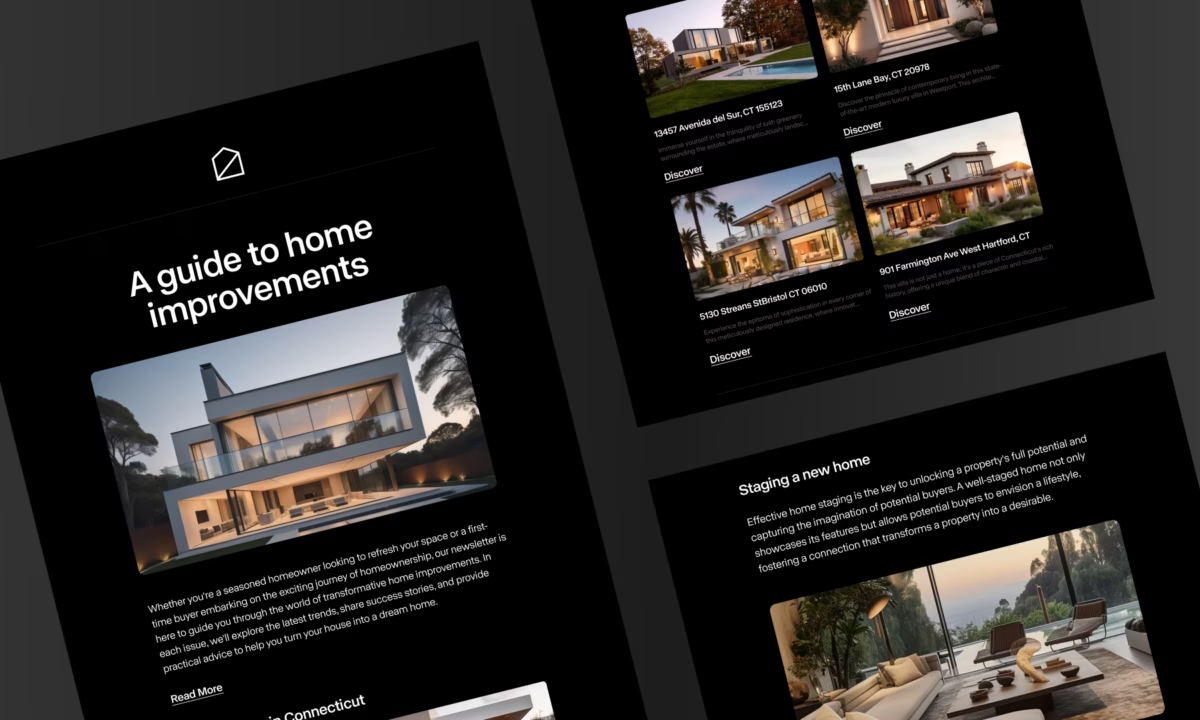
Before a prospect ever reaches out, they are sizing you up online. Your brand is your first impression, and it communicates how you do business before you say a word.
A clean, modern website that reflects your market knowledge and personality builds instant credibility. It reassures leads that you can handle their real estate needs and makes them more likely to call.
This is where Luxury Presence, a real estate technology platform that provides websites, marketing tools, and branding solutions for agents and teams, makes a difference. Luxury Presence real estate websites are designed to perform with clear navigation, lead capture tools, and search engine visibility. They also offer polished ways to showcase your listings, testimonials, and neighborhood knowledge. Whether you are marketing a waterfront estate or a first-time buyer condo, your online presence should match the caliber of service you promise.
2. Make your website a service hub

A great real estate website should solve problems and answer questions before prospects even have to ask. Think of your website as an extension of your client service that works around the clock. It should educate, guide, and support visitors at every stage of their journey.
To add real value, include resources like:
- Mortgage calculators to help buyers understand their budget
- Neighborhood guides that highlight schools, amenities, and local flavor
- Buyer and seller FAQs that demystify the process
- Interactive features like maps, saved search options, and custom home search portals
- Downloadable resources like checklists and home-prep guides
Each of these tools provides real utility. By meeting client needs upfront, you position yourself as a knowledgeable and thoughtful advisor. You reduce friction and show that you have anticipated what they need before they ask for it.
3. Share client wins on social (public recognition)
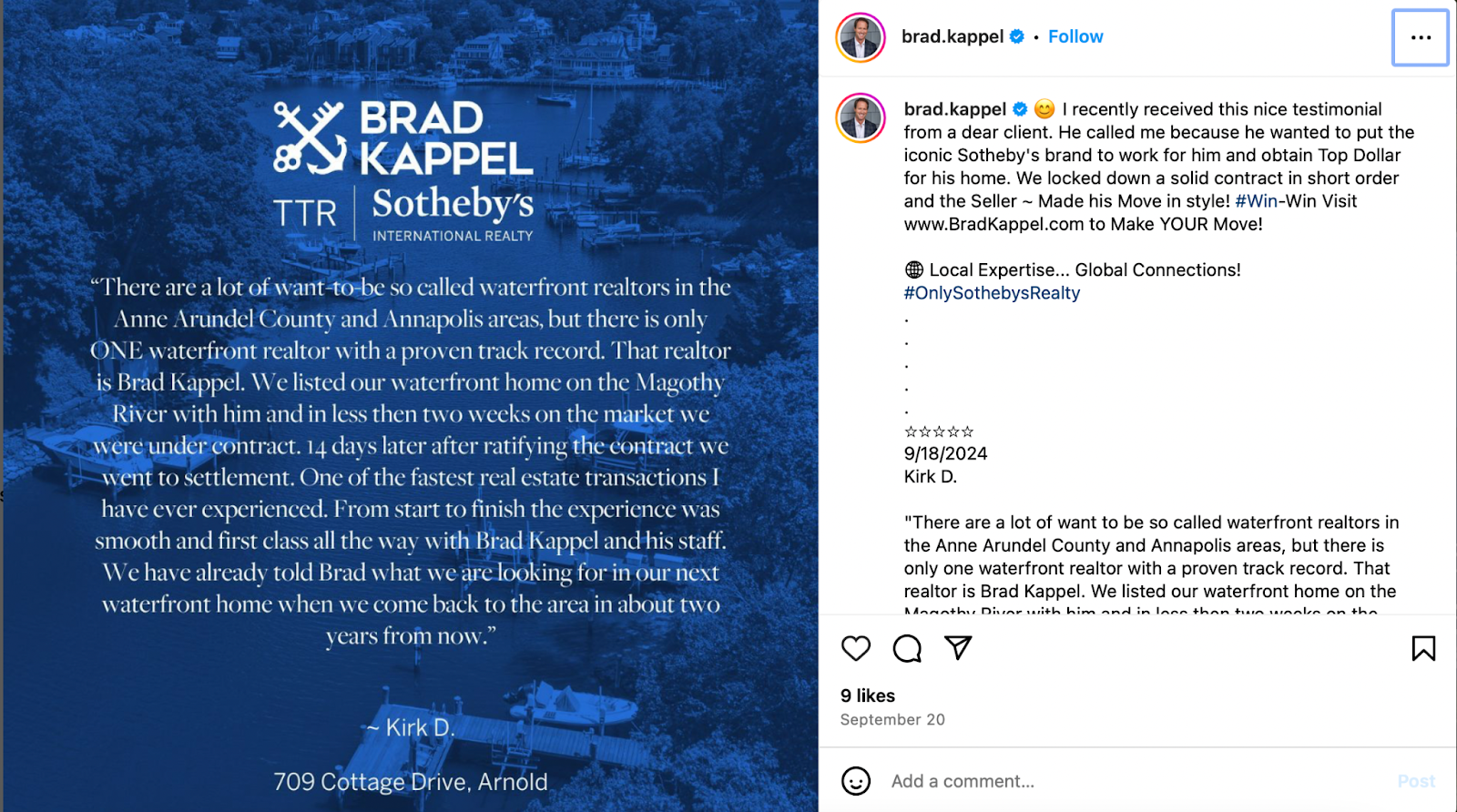
Using social media to celebrate your clients publicly is more than smart marketing. When you take time to recognize their milestones on your feed, your stories, and your channels, you show that you see them as more than a transaction. You are acknowledging a meaningful moment in their lives for the world to see.
Whether it is a heartfelt post congratulating a first-time buyer, a “just sold” reel showcasing a family’s next chapter, or a story featuring a client testimonial, these moments add a personal, emotional layer to your brand. They tell future clients: “This is how I treat the people I work with.”
The key is to make it about them, not you. Instead of “Another one closed,” focus on your client’s journey. What did they overcome? What were they most excited about? What does this moment mean for their family? Ask for their permission, tag them if they are comfortable, and be authentic in your storytelling. This tip is about public recognition. For private, direct-to-client milestone acknowledgment, see Tip 11.
Initial contact and onboarding
You are in conversation now. This is where trust is built or broken. The way you show up in the first 48 hours tells a client everything they need to know about how you will show up for the next 60 days.
4. Personalize everything
Personalization is the strategy. The client favorites file (Tip 23) is one way to execute it. Here, the focus is on communication: how you address clients, what you reference from past conversations, and how you tailor every touchpoint to their specific situation.
Personalization goes beyond auto-filled first names. Mention their relocation goals, their favorite style of architecture, or their dog’s name. These small details show that you are not treating them like a number. Personalization builds trust, deepens connection, and makes every interaction feel intentional rather than generic.
For a concrete way to implement this, see Tip 23 on building a client favorites file.
5. Build a memorable onboarding experience
The first few days of working together set the tone for the entire relationship. A well-crafted onboarding experience communicates professionalism and care from the start.
This could be a beautifully designed welcome email, a branded digital guide, or a thoughtful information packet. Include a personalized note, an overview of what is to come, and helpful resources that make the process feel clear and exciting rather than overwhelming.
6. Set clear expectations from the start
Make sure your communication is aligned with your client’s preferences. Do they want to hear from you regularly or only when there is news? Do they prefer texts or phone calls? Let them know the best way to reach you, and ask how they want to be reached.
Also give them a clear picture of what milestones lie ahead. Proactively explaining the process helps eliminate confusion and reduces anxiety, especially for first-time buyers or sellers. When clients know what to expect, they feel more confident and less likely to be caught off guard by the pace or complexity of a transaction.
7. Respond quickly, even when you do not have an answer
Timely replies show care, especially in an industry where emotions and stakes run high. Even if you are waiting on details or working through a complex issue, a quick message like “Got your note, working on it now” reassures clients that they are not being ignored.
According to the National Association of Realtors’ 2024 Profile of Home Buyers and Sellers, the vast majority of buyers and sellers said communication and responsiveness were among the most valued qualities in their agent. A fast reply sets a tone of responsiveness and reinforces that you are someone who follows through.
Real estate customer service during the transaction
This is where your systems, communication, and personal touch either hold up or fall apart. The transaction phase is the proving ground for everything you promised during onboarding.
8. Offer education, not just advice
Real estate is filled with unfamiliar terms, tight timelines, and complex decisions. Instead of simply giving instructions, take the time to explain why something matters and how it works.
Break down concepts like escrow (a neutral third-party account that holds funds during a transaction), appraisals, contingencies, and inspection timelines in plain language. Use analogies or visual aids when possible. An educated client feels more in control, less anxious, and far more confident in their choices. Smoother transactions and deeper trust are the direct result. Clients walk away feeling empowered, and that is the kind of experience they tell their friends about.
9. Communicate proactively, not reactively
One of the most direct ways to build trust is to offer information before clients have to ask for it. Regular updates, process checklists, or a Friday “here is what to expect next week” message help eliminate uncertainty and make clients feel supported every step of the way.
10. Use video messages for updates
A short, personalized video can do what a long email cannot. It conveys tone, empathy, and energy. Whether you are delivering good news, explaining next steps, or walking a client through a tricky inspection report, a video message feels human and high-touch.
In 2026, tools like Loom, BombBomb, and the video features built into many CRM platforms make it straightforward to record and send a 60-second update without any production overhead. This is especially valuable for clients who appreciate face-to-face reassurance but may be navigating the process remotely or on tight schedules.
11. Celebrate milestones (private recognition)
Every real estate journey has meaningful moments: getting pre-approved, submitting an offer, going under contract, closing the deal. Celebrating those milestones with something as simple as a congratulatory text, a GIF, or a photo moment reminds your clients that they are making progress and that you are cheering them on.
Unlike Tip 3, which focuses on public social posts, this is about what you send directly to the client. A text, a handwritten note, or a small gift that only they receive. These private touchpoints add joy to what can often be a stressful process and help cement you in their memory in a positive way.
12. Surprise and delight with small gestures (during the transaction)
Unexpected, thoughtful gestures can leave a lasting impression. A coffee from the local shop after a long day of showings. A handwritten thank-you note after a listing appointment. A gift card when a deal hits a rough patch.
These gestures happen during the active transaction or within the first 30 days of move-in. They are spontaneous and tied to a specific moment in the client’s current experience. They show you are not just focused on the sale. You care about the experience. These are the moments clients share with their friends.
13. Create a concierge-level referral network
Think of yourself not just as an agent but as a personal real estate concierge. Offering your clients a curated list of trusted professionals, including painters, cleaners, contractors, stagers, and mortgage brokers, makes their lives easier and positions you as someone who thinks beyond the closing table.
It also saves them hours of research and decision fatigue. That kind of thoughtfulness builds deep loyalty and gives clients another reason to recommend you.
14. Be the calm in the chaos
Real estate is emotional. Your clients may feel overwhelmed, anxious, or frustrated, especially when things do not go as planned. One of the most valuable services you can offer is your composure.
Practice active listening. Validate their concerns. Use phrases like “Here is what we can control” or “I have a plan for this.” Your steady tone and thoughtful communication help de-escalate anxiety and create space for better decisions. By showing up as their anchor in uncertain moments, you are not just managing a transaction. You are building trust they will never forget.
Closing and move-in
The transaction is nearly done, but your service should not be. This is the phase where most agents start to fade. The best agents lean in harder.
15. Show up on closing day
Closing day is more than a stack of signatures. It is the culmination of months of hopes, hard work, and emotions. Your physical presence reinforces that you are truly invested in their happiness.
Whether you are handing over keys, taking a photo for your social media, or simply offering a warm handshake and a smile, showing up adds a personal, celebratory touch that most clients do not expect but always remember. It is also the right moment to give a small closing gift and reinforce that you are there after the deal, too.
16. Provide a custom move-in guide
Your service does not stop at the sale. Help your clients feel instantly at home by giving them a move-in guide built for their specific neighborhood.
Include practical details like:
- Utility setup information
- Trash pickup schedules
- DMV (Department of Motor Vehicles) and voter registration resources
- Connections to local service providers: movers, locksmiths, internet providers
Then add your personal touch:
- Your favorite coffee shop
- Walking trails and dog parks
- Dry cleaners and pizza places that deliver late
Whether digital or printed, this resource saves clients time, eases their transition, and reminds them they chose an agent who cares about their next chapter.
After the sale in 2026
Most agents focus on the transaction. The best agents know that what comes after is where long-term success is built. In 2026, with more agents competing for fewer transactions in many markets, the post-close relationship is your greatest competitive edge. Few agents excel here. Stand out by showing up when others disappear.
17. Create a “client for life” strategy
Build a long-term communication plan that includes quarterly touchpoints like local market updates, annual home value reviews, or neighborhood spotlights. You can also segment clients by interest, such as investors, families, or relocators, and send content that is relevant to their situation.
The goal is to offer ongoing value so you remain their go-to advisor for years, not just one transaction.
That gratitude is real. And the best way to honor it is to keep showing up long after the keys have been handed over.
18. Host a client appreciation event
Whether it is a casual park picnic, a holiday happy hour, or a family-friendly summer BBQ, an annual or semi-annual gathering gives you the chance to reconnect with past clients in a relaxed, meaningful way. It builds community and creates natural opportunities for introductions and referrals without any hard sell.
19. Send a home anniversary message (long-term follow-up)
Mark the one-year milestone of your client’s closing with a handwritten card, a personalized email, or a small gift like a branded cutting board, candle, or home improvement gift card. Mention a detail from their journey, like how excited they were about the kitchen or backyard.
This is a scheduled, calendar-driven touchpoint that happens 12 months after closing, not during the transaction. It belongs to your long-term follow-up system, not your in-the-moment service toolkit. This unexpected gesture is memorable and keeps you top of mind without feeling pushy.
System support and feedback
These behind-the-scenes habits make great service feel consistent and repeatable. Without systems, even the best intentions fall apart when you get busy.
20. Use automation without losing the human touch
In 2026, our CRM can surface relationship signals, draft personalized follow-up messages for your review, and flag the right moment to reach out. It tracks the entire client journey from first contact to closing and beyond, all without requiring you to manually track every contact. Nothing sends without your approval.
Use your CRM to set reminders for birthdays, anniversaries, and check-ins. Create follow-up sequences for new leads or past clients. But never forget to add a sentence or two referencing your last conversation, their new puppy, or their renovation plans. Automation should support your relationships, not replace them.
21. Build systems for consistency
Create standard workflows and email templates for each stage of the client journey, from onboarding to post-close follow-ups. A consistent, high-touch process ensures no one falls through the cracks and gives every client the same level of care, regardless of how busy you are or how many deals you are managing.
Here is the bottom line. The agents who deliver great service once are good. The agents who deliver it every single time are the ones who build referral-based businesses.
22. Ask for feedback, then act on it
After closing, send a quick survey or ask a few open-ended questions like, “What is one thing I could have done better?” When you receive feedback, whether positive or constructive, thank them. Make adjustments. And let them know you implemented their input.
This shows humility and a genuine desire to grow. It also gives clients a reason to feel invested in your success, which deepens the relationship even further.
Unexpected touches that leave a lasting impression
These are the little things clients do not expect but never forget. They cost almost nothing and generate outsized loyalty.
23. Create a “client favorites” file
This is the tactical execution of the personalization strategy introduced in Tip 4. During your conversations, make note of your clients’ favorite wine, flower, dessert, or coffee order. Store this information in your CRM or in the Luxury Presence app notes, and surprise them later with a personalized closing gift or thank-you treat.
These unexpected details create delight and show that you truly listen. A $15 gift that matches their exact preference lands harder than a $100 generic basket.
24. Share in their non-real-estate wins
Follow your clients on social media and engage beyond business. Did they just welcome a new baby? Get promoted? Run their first marathon? Send a congrats text, leave a comment, or drop off a small gift.
It shows you value the person, not just the property. And it deepens the relationship in a way that no marketing campaign can replicate.
Strategy comparison table
Use this table to quickly compare all 24 tactics by journey stage, effort level, and the tools you need to execute them.
| Strategy | Journey stage | Effort level | Tools needed |
| 1. Invest in assets that tell your story | Awareness | High (one-time) | Website platform, branding assets |
| 2. Make your website a service hub | Awareness | Medium (one-time + updates) | Website CMS, content resources |
| 3. Share client wins on social | Awareness | Low (per transaction) | Social media accounts, client permission |
| 4. Personalize everything | Initial contact | Low (ongoing habit) | CRM notes, memory |
| 5. Build a memorable onboarding experience | Onboarding | Medium (one-time setup) | Email templates, branded guide |
| 6. Set clear expectations from the start | Onboarding | Low | Conversation framework, checklist |
| 7. Respond quickly | Onboarding / Transaction | Low (daily discipline) | Phone, CRM notifications |
| 8. Offer education, not just advice | Transaction | Medium | Visual aids, plain-language guides |
| 9. Communicate proactively | Transaction | Medium (weekly habit) | CRM reminders, email templates |
| 10. Use video messages for updates | Transaction | Low | Loom, BombBomb, or CRM video tools |
| 11. Celebrate milestones (private) | Transaction | Low | Text, card, small gift |
| 12. Surprise and delight | Transaction / Move-in | Low | Gift cards, coffee, handwritten notes |
| 13. Concierge-level referral network | Transaction | Medium (one-time build) | Vendor list, CRM or document |
| 14. Be the calm in the chaos | Transaction | Low (mindset + practice) | Active listening, prepared phrases |
| 15. Show up on closing day | Closing | Low | Calendar block, closing gift |
| 16. Provide a custom move-in guide | Move-in | Medium (one-time template) | Digital or printed guide template |
| 17. “Client for life” strategy | Post-close | Medium (ongoing) | CRM, email marketing, market data |
| 18. Host a client appreciation event | Post-close | High (1-2x per year) | Venue, invitations, budget |
| 19. Home anniversary message | Post-close (12 months) | Low | CRM reminder, card or gift |
| 20. Use automation with a human touch | All stages | Medium (one-time setup) | CRM (e.g., Luxury Presence’s CRM) |
| 21. Build systems for consistency | All stages | Medium (one-time setup) | Workflow templates, checklists |
| 22. Ask for feedback | Post-close | Low | Survey tool or direct conversation |
| 23. Client favorites file | All stages | Low (ongoing habit) | CRM notes |
| 24. Share in non-real-estate wins | Post-close (ongoing) | Low | Social media, text |
How we built this list
The 24 strategies in this article were drawn from analysis of agent workflows, client feedback patterns, and service practices observed across Luxury Presence’s network of real estate professionals. Each tactic was selected based on three criteria: its applicability across price points and markets, its repeatability as a system, and its direct connection to trust-building and referral generation.
FAQs
Let’s chat
Choosing your website provider is a big decision, and you probably have questions.
About the author

Marketing Manager
Kate Evans is a content marketing strategist at Luxury Presence, the leading growth platform for high-performing real estate professionals. She develops data-driven editorial content and supports SEO strategy and brand voice frameworks that help agents attract qualified leads and establish market authority. Her published work covers topics including CRM strategy, social media marketing, and digital growth, supporting thousands of agents in scaling their businesses through modern marketing.